
Medication Storage: How to Keep Your Drugs Safe, Effective, and Out of Harm's Way
When you buy medicine, you’re not just paying for the drug—you’re paying for its medication storage, the conditions under which a drug remains stable, potent, and safe to use. Also known as drug storage, it’s not just about keeping pills in a cabinet. Improper storage can turn life-saving drugs into useless—or even dangerous—substances. Heat, moisture, light, and even the air in your bathroom can break down active ingredients. Insulin, for example, loses potency if left in a hot car. Antibiotics like amoxicillin can become ineffective if stored in a humid bathroom. And if your child finds your pain pills in a drawer? That’s not just a mistake—it’s an emergency.
Temperature-sensitive medications, drugs that degrade quickly outside specific temperature ranges need special care. Think insulin, epinephrine auto-injectors, and some biologics—they’re not just fragile, they’re time-sensitive. The FDA requires these to be kept between 36°F and 46°F until opened. Once opened, some still need refrigeration. But what about your daily blood pressure pill? Most can handle room temperature, but never leave them on a windowsill or near the stove. Childproof storage, the practice of keeping all medications out of reach and sight of children and pets isn’t optional. Every year, thousands of kids end up in emergency rooms after swallowing pills they found in purses, nightstands, or open medicine cabinets. Even a single aspirin can be toxic to a toddler.
And it’s not just about safety—it’s about effectiveness. A study from the University of Michigan found that 40% of people stored their medications in places that compromised their potency. If your asthma inhaler sat in a hot car for a week, it might not work when you need it most. If your thyroid pill absorbed moisture from a bathroom drawer, your body might not get the right dose. Drug safety, the set of practices that ensure medications are used correctly and stored to preserve their integrity includes checking expiration dates, keeping original packaging, and never mixing pills into random containers. That pill organizer? Great for taking meds on time—but only if you refill it weekly and keep the rest stored properly.
You don’t need a pharmacy-grade safe to store your meds right. Just pick a cool, dry, dark spot—like a bedroom drawer or a shelf in a closet. Avoid kitchens and bathrooms. Use child-resistant caps. Keep a list of what you have and when it expires. And if you’re traveling, remember: your insulin needs a cooler, your pills need to stay dry, and airport security won’t let you toss them in your checked bag without labels. The posts below show you exactly how to handle everything from oral chemotherapy to prenatal vitamins, from traveling with meds to avoiding deadly interactions caused by poor storage. You’ll learn what to do when your medicine looks weird, smells off, or doesn’t work like it used to. This isn’t theory. It’s what keeps you—and your family—safe.
16
Feb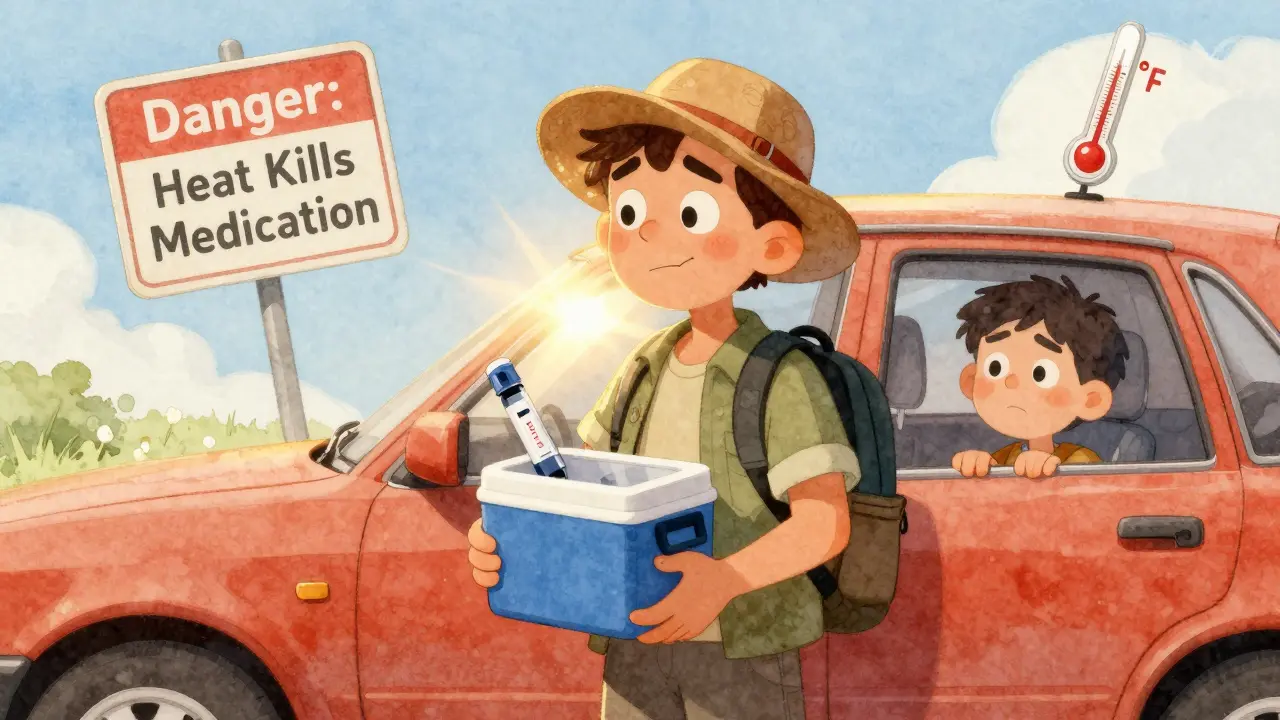
Managing Medication Storage in Hot Climates While Traveling: Essential Tips for Safe Drug Handling
Learn how to keep your medications safe in hot climates while traveling. From insulin to EpiPens, heat can destroy drug effectiveness-here’s what works, what doesn’t, and how to avoid dangerous mistakes.
READ MORE4
Dec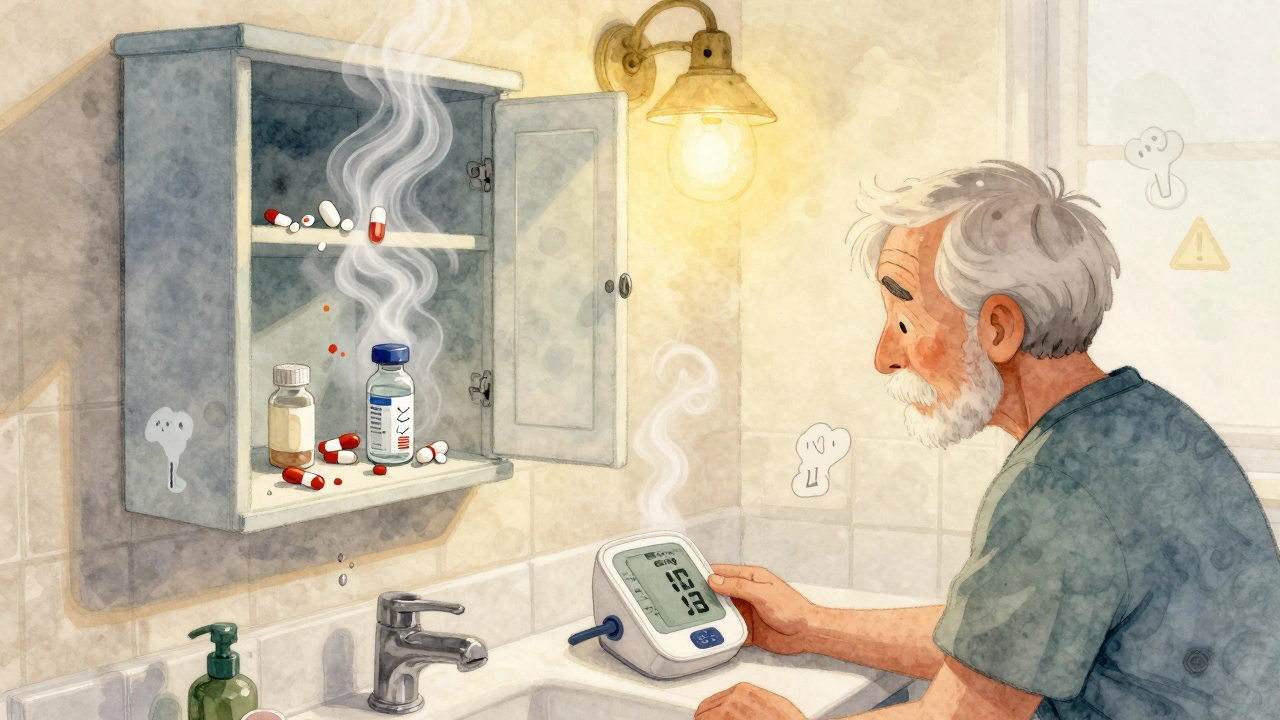
Why You Shouldn’t Store Medications in the Bathroom
Storing medications in the bathroom can make them less effective or even dangerous. Learn why humidity, heat, and easy access make this common habit risky-and where to store your pills safely instead.
READ MORE© 2026. All rights reserved.