
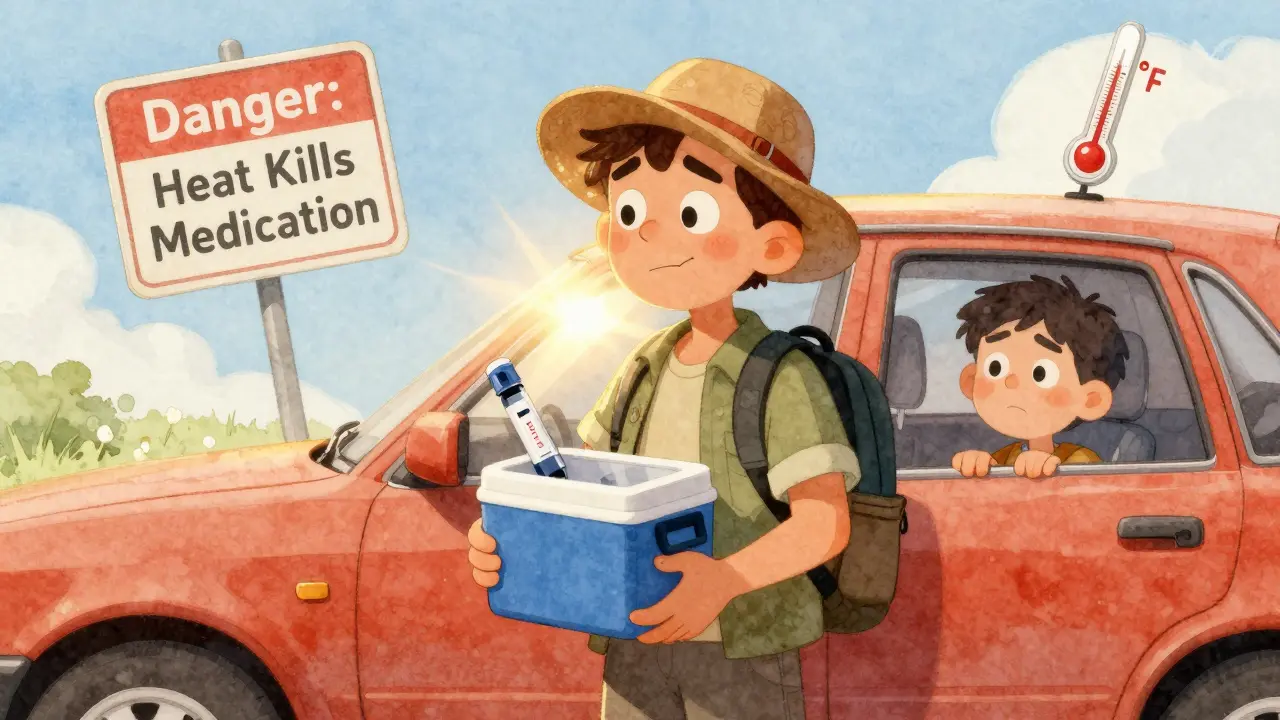
When you're traveling in a hot climate, your medication isn't just sitting in your bag-it's fighting for its life. Heat doesn't just make you sweat; it can wreck the drugs you rely on. A pill you took yesterday might be useless today if it spent 30 minutes in a car that hit 120°F. This isn't hypothetical. People have ended up in emergency rooms because their inhalers stopped working, their insulin lost potency, or their birth control failed-all because they didn't know how heat changes medicine.
Why Heat Destroys Medications
Most medications are designed to stay stable between 59°F and 77°F (15°C to 25°C). That’s not "room temperature" as most people think of it. On a summer day, your house might be 82°F. Your car? In 20 minutes, it hits 120°F. That’s enough to break down the chemical structure of sensitive drugs.Insulin, EpiPens, and hormonal contraceptives are especially vulnerable. Research from Cedars-Sinai shows these drugs begin degrading at 86°F (30°C). After 24 hours at 104°F (40°C), some lose up to 32% of their effectiveness. That’s not a small drop-it’s the difference between a life-saving dose and a useless one.
Even solid pills like antibiotics or blood pressure meds aren’t safe. The U.S. Pharmacopeia says any temperature spike over 15°F (8.3°C) above the recommended range is a critical failure. If your medicine was stored at 70°F at home and sat in a car at 95°F for hours, it may no longer work as intended.
What Happens When Medications Overheat
You won’t always see it. A pill looks the same. An EpiPen still clicks. But inside, the molecules are changing. Insulin can clump and stop absorbing. Epinephrine breaks down into inactive compounds. Birth control hormones can lose potency, leading to unexpected pregnancy. One nurse on Reddit shared a case where a patient’s birth control failed after being left in a car for two days on a 90°F road trip. She got pregnant six weeks later.Inhalers like albuterol are another hidden risk. A user on Drugs.com reported their inhaler stopped working after a beach day. They had an asthma attack and ended up in the ER. The device looked fine. The problem? Heat warped the propellant and altered the dose delivery.
The FDA’s 2022 Drug Stability Guidelines say if a medication was exposed to extreme heat for more than 24 hours, you should consult a pharmacist before using it. Don’t assume it’s still safe. There’s no way to tell by looking.
Where Not to Store Medication
Some spots are death traps for pills and injections:- Car glove compartment: On an 85°F day, this can hit 140°F in under 30 minutes (A4PC.org, 2021).
- Car trunk: Even worse. Metal absorbs heat and traps it. Temperatures there can climb past 150°F.
- Backseat windowsill: Direct sun turns glass into a magnifying lens. Medications left there can overheat in minutes.
- Checked luggage: Airplane cargo holds can drop below 20°F or spike above 120°F. Neither is safe.
These aren’t just bad ideas-they’re medical risks. A 2023 study in the Journal of Travel Medicine found that 63% of travelers who stored medications in luggage or cars reported issues with drug effectiveness.
How to Store Medication Safely on the Road
You need a system-not just a bag. Here’s what works:- Use an insulated cooler with phase-change material: Products like the MedActiv Travel Case ($34.99) or MyMediCarrier ($89.95) use special gels that stay cool for 48-72 hours without freezing. They maintain 59°F-77°F even in 100°F heat.
- For refrigerated meds, use two frozen cold packs: Wrap them in towels so they don’t freeze your insulin. This combo keeps meds safe for 8-10 hours. Don’t put ice directly against the vial-it can damage the drug.
- Use a smart cooler with Bluetooth monitoring: The TempSure Medication Cooler ($129.99) tracks temperature in real time and sends alerts to your phone. If it hits 80°F, you get a push notification. This isn’t luxury-it’s insurance.
- Carry a small thermometer: The American Society of Health-System Pharmacists now recommends this. A $10 digital thermometer lets you verify your cooler is working. If it’s above 80°F, take action.
Traveling by Air
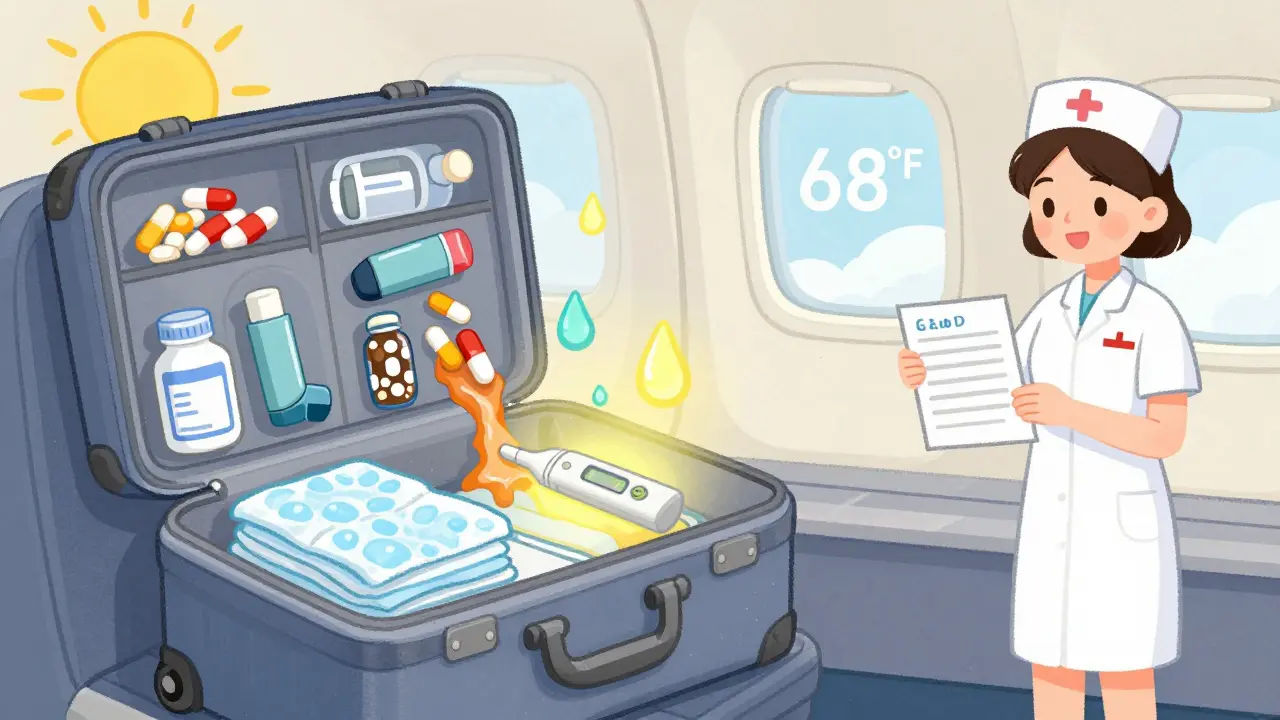
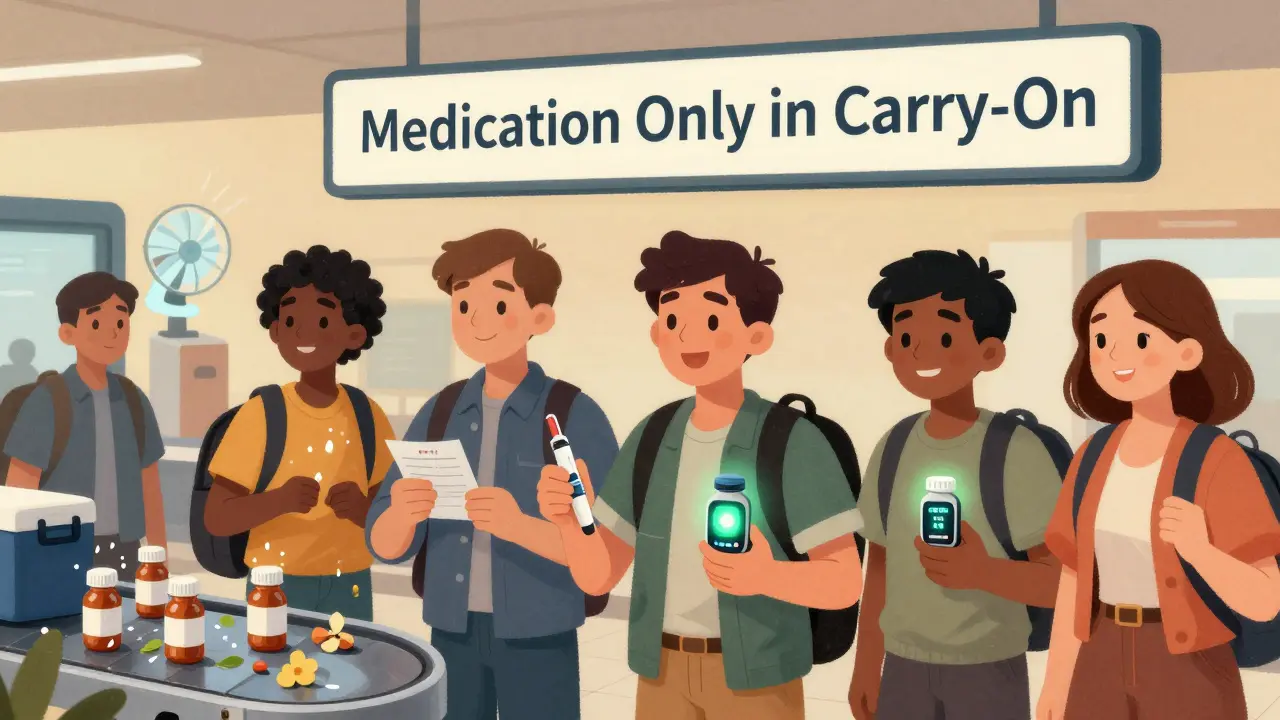
Never check medication. Always carry it in your personal item. The cargo hold is too cold or too hot. The cabin? Perfect-68°F to 75°F. That’s ideal.Keep meds in original bottles with pharmacy labels. TSA requires this. If you’re carrying insulin, EpiPens, or injectables, bring a doctor’s note. It saves time at security.
For long flights (over 5 hours), use a pharmaceutical-grade cooler. A 2022 study in the American Journal of Health-System Pharmacy found standard coolers failed 47% more often than medical-grade ones during flights. That’s a huge risk if you’re on insulin or chemotherapy.
Real-World Solutions That Work
People have tested these products in real heat:- Frio Insulated Wallet ($24.99): Used by 29 out of 37 users on Senior Helpers’ blog. Maintains under 77°F for 48 hours in 100°F heat. Great for insulin pens.
- MyMediCarrier: One Amazon reviewer said it kept insulin at exactly 42°F during a 102°F Arizona trip. Built-in thermometer confirmed it.
- TempTraq Medication Monitor ($49.95): Sales jumped 220% in Q2 2023. It sticks to your pill bottle and logs temperature history. Perfect for multi-day trips.
Pro tip: Use a portable fan. Senior Helpers tested pointing a small USB fan at a cooler. It dropped internal temps by 12°F-15°F. Cheap. Simple. Effective.
What to Do If Your Medication Gets Hot
If you suspect your medicine was exposed to extreme heat:- Don’t use it. Especially insulin, EpiPens, or hormones.
- Call your pharmacy. They can tell you if the drug is likely still safe based on exposure time and temperature.
- Get a replacement. Many travel insurance policies now cover medication replacement due to heat damage. Allianz Global Assistance saw a 37% rise in these claims from 2021-2022.
Some pharmacies now offer emergency refills for travelers. Ask before you leave.
What’s Changing in the Industry
The world is catching up. The FDA now requires manufacturers to list temperature stability on labels-full compliance started in November 2023. The International Pharmaceutical Federation released updated global guidelines in May 2023, urging travelers to plan ahead.By Q3 2024, airlines will install temperature-controlled compartments for medications in passenger cabins. That’s a big step. But until then, you’re still responsible.
And here’s the reality: climate change is making this worse. The WHO’s 2023 Climate and Health Report predicts medication storage failures will rise 15-20% each year. This isn’t a one-time fix. It’s a new travel rule.
Final Checklist Before You Go
- Check the temperature range for each medication (look on the label or ask your pharmacist).
- Pack meds in a quality insulated cooler-not a regular lunchbox.
- Use two frozen cold packs wrapped in towels for refrigerated drugs.
- Carry a small thermometer to verify internal temperature.
- Keep all meds in carry-on luggage, not checked bags.
- Bring extra doses in case of loss or failure.
- Know where to get replacements at your destination.
- Have your doctor’s contact info and a copy of your prescription.
Medication isn’t just a pill in a bottle. It’s your health on the line. In hot climates, storage isn’t optional-it’s survival.
Can I leave my medication in the car for a quick errand?
No. Even 10 minutes in a car on a 85°F day can push temperatures above 120°F. Insulin, EpiPens, and birth control can degrade in as little as 30 minutes. Always carry meds with you.
Do all medications need refrigeration?
No. Most tablets and capsules are fine at room temperature (68°F-77°F). But insulin, some antibiotics, hormones, EpiPens, and certain anti-seizure drugs must stay cool. Check the label or ask your pharmacist. If it says "refrigerate," treat it like a perishable food.
Is it safe to use ice packs directly on my insulin?
No. Freezing insulin can destroy its structure. Always wrap cold packs in a towel or cloth before placing them near medication. The goal is to keep it cool-not frozen.
What should I do if my medication was left in a hot car?
Stop using it immediately. Call your pharmacy or doctor. For insulin or EpiPens, get a replacement right away. Never guess-heat damage is invisible, but the consequences aren’t.
Are there any apps or tools to monitor medication temperature?
Yes. Devices like the TempTraq Medication Monitor ($49.95) and TempSure Cooler ($129.99) track temperature in real time and send alerts to your phone. They’re especially useful for long trips or if you’re managing multiple temperature-sensitive drugs.
Can travel insurance cover ruined medication?
Some policies now do. Allianz Global Assistance reported a 37% increase in claims for heat-damaged medication between 2021 and 2022. Check your policy or ask your provider before you travel. Always keep receipts and photos of damaged medication if you need to file a claim.
What’s the difference between "room temperature" and "ideal medication storage temperature"?
"Room temperature" for meds means 68°F-77°F (20°C-25°C). Most homes in summer are 80°F or higher. That’s too hot. Your meds need a controlled environment, not just a shelf in your bedroom.
Can I use a regular cooler from the store?
It’s risky. Standard coolers lose cold quickly and can fluctuate by 22°F. A 2023 study found they failed to maintain safe temperatures in over half of tests. Use a pharmaceutical-grade cooler designed for medication-it’s worth the investment.
Adam Short
February 17, 2026 AT 01:42Let me get this straight-you’re telling me I can’t leave my insulin in the car for 10 minutes while I grab coffee? In the UK, we’ve been doing this since the 80s and no one’s dropped dead yet. This article reads like a panic attack written by someone who thinks heat is a conspiracy. My grandad carried his pills in his jacket pocket through a Tunisian summer and lived to 92. Stop scaring people with corporate fear-mongering.
Sam Pearlman
February 17, 2026 AT 20:53Oh wow, another ‘you’re all idiots for not buying $130 coolers’ article. I’ve been on 12 trips to Phoenix, carried my EpiPen in my shorts pocket, and never once had a problem. You know what’s *actually* dangerous? Overthinking everything until you’re too scared to leave the house. Also, have you seen the price of these ‘pharma-grade’ coolers? I’m buying a $5 foam lunchbox and a $2 thermometer. Problem solved. Thanks for the FUD, though.
Linda Franchock
February 18, 2026 AT 10:22Y’all are so dramatic. I’m a nurse in Miami. I’ve seen people panic over a pill that got warm. Here’s the truth: most pills are fine. Insulin? Yeah, be careful. EpiPens? Don’t leave them on the dashboard. But if you’re sweating over every pill like it’s a baby, you’re missing the point. The real issue? People don’t check labels. They just assume ‘room temp’ means their living room. Read the fine print. It’s not rocket science. Also-yes, a $10 thermometer beats a $129 gadget. Simple. Cheap. Works.
Prateek Nalwaya
February 19, 2026 AT 16:42Wow. This is like a symphony of science and survival. I’ve traveled through Rajasthan in 48°C heat with my asthma inhaler, and let me tell you-no cooler, no fancy gadgets. Just a cotton cloth, a shade under a tree, and a prayer. But honestly? The science here is solid. I’ve seen insulin turn cloudy in a taxi seat. It’s invisible until it’s too late. I love how this piece doesn’t just scare-it educates. The Frio wallet? I carry two. One for me, one for my cousin with diabetes. We’re not just storing medicine-we’re storing trust. And trust? It doesn’t survive 140°F.
Dennis Santarinala
February 20, 2026 AT 10:25So… I’ve been using a regular insulated lunchbox for my meds for years… and I’ve never had an issue. But now I’m second-guessing everything. I mean, I get it-science says heat degrades stuff. But I also know people who’ve been fine. Maybe… maybe it’s not binary? Like… maybe some meds are more fragile than others? And maybe… maybe it’s okay to be chill? But also… maybe I should get a thermometer? I’m so confused. I just want to go on vacation without feeling like I’m carrying nuclear waste. Help? 😅
Haley DeWitt
February 20, 2026 AT 12:18OMG YES. I left my birth control in the glovebox during a road trip to Texas and didn’t realize until I got my period two weeks early. I cried. Then I Googled. Then I bought the TempSure cooler. It’s expensive, but worth it. I now have a little app that tells me my pills are safe. It’s like a baby monitor for my hormones. 🤍 Also, the fan trick? Genius. I point mine at my purse on the car seat. It’s weird, but it works. You’re not crazy for caring. You’re smart.
Steph Carr
February 21, 2026 AT 10:51Let’s be real: this isn’t about medication. It’s about control. We’ve turned every aspect of life into a risk-management spreadsheet. You want to travel? Fine. But first, buy a $130 Bluetooth cooler, carry a thermometer, a doctor’s note, a backup prescription, and a spare insulin pen… and pray the airline doesn’t misplace your carry-on. Meanwhile, in Nigeria, a woman in a village carries her antiretrovirals in a woven basket under her arm, 40°C heat, no fridge, no tech-just faith and a routine. Are we protecting health… or performing it? The real crisis isn’t heat. It’s the belief that safety requires money, gadgets, and fear. Sometimes, the simplest thing-knowing your medicine-is enough.
Brenda K. Wolfgram Moore
February 23, 2026 AT 08:50This is exactly why I’m starting a nonprofit. I’ve seen too many people-especially elderly travelers and low-income families-assume their meds are fine because they ‘look okay.’ I’ve helped people replace $2000 worth of insulin after a 2-hour car ride. The FDA guidelines? Good. The products? Overpriced. The solution? Education. I’m handing out free thermometer stickers with the phrase: ‘If it’s hotter than your coffee, it’s too hot for your pills.’ Simple. No apps. No gadgets. Just awareness. You don’t need to be rich to stay alive. You just need to know.