
What Exactly Is Treatment-Resistant Depression?
When someone has tried at least two different antidepressants at the right dose for long enough-usually six to eight weeks each-and still feels hopeless, exhausted, or numb, they might be dealing with treatment-resistant depression (TRD). This isn’t about not trying hard enough. It’s about biology. About brain chemistry that doesn’t respond the way doctors expect. About a condition that keeps slipping through the cracks of standard care.
Research from the STAR*D trial, which followed nearly 3,000 people over five years, showed that about one in three people with depression won’t get better after two tries. That’s not rare. That’s common. And for many, the next step isn’t more pills-it’s a different kind of strategy entirely.
Augmentation: Adding Something, Not Switching Everything
Augmentation means sticking with what’s already working and adding something else to boost it. Think of it like turning up the volume on a song that’s almost there, not starting over with a new track.
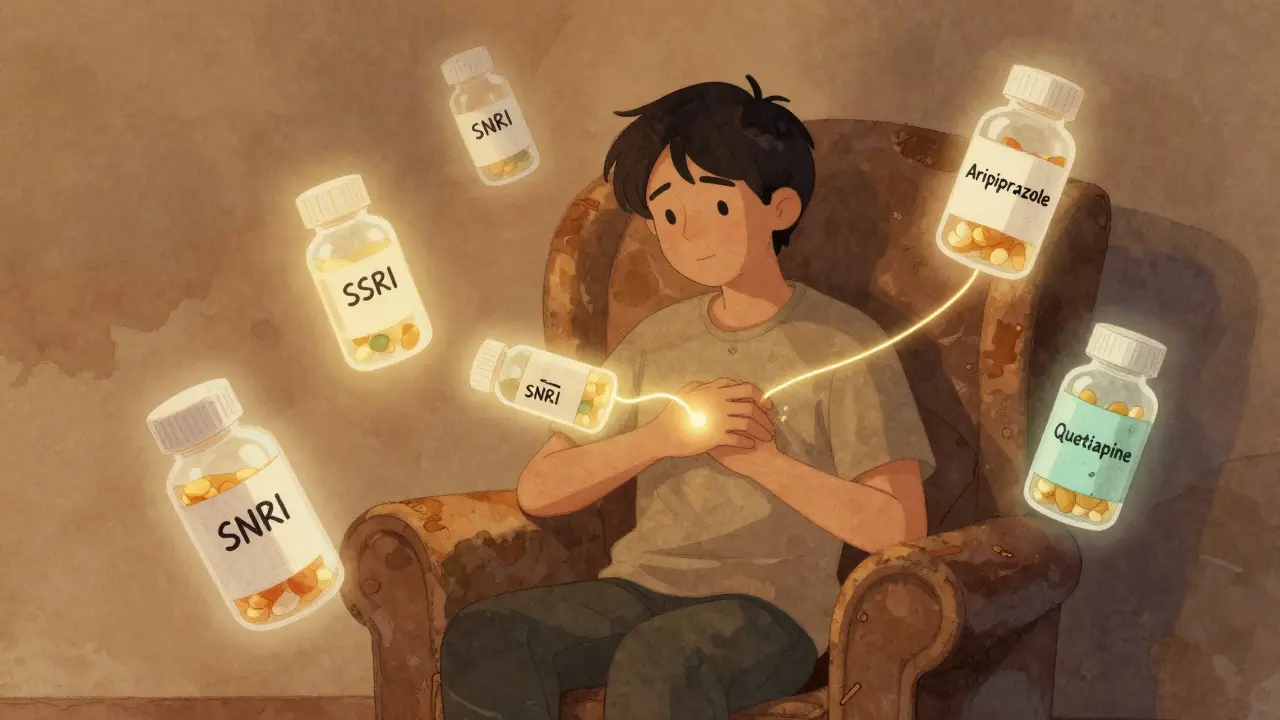
The FDA has approved a few options specifically for this:
- Aripiprazole (Abilify): Added to an SSRI or SNRI. Works for about 25% of people who didn’t respond before. Side effects? Restlessness, trouble sitting still-akathisia-happens in 15-25% of users.
- Brexpiprazole (Rexulti): Similar to aripiprazole but often better tolerated. Doses are lower, and sedation is less common.
- Quetiapine XR (Seroquel XR): Used at 150-300 mg/day. Can make you sleepy, but for people with insomnia and anxiety along with depression, that’s actually helpful. One study showed nearly half of patients responded when added to an SSRI.
- Olanzapine-fluoxetine (Symbyax): A combo pill. Effective, but weight gain is a real issue-up to 7% of body weight over months.
These aren’t magic bullets. But they’re backed by data. The VAST-D trial, which studied over 1,500 veterans, found aripiprazole led to a 24.8% remission rate after 12 weeks. That’s better than switching to another antidepressant alone.
Lithium and Thyroid Hormone: The Old School Options That Still Work
Before all the fancy new drugs, doctors used lithium and low-dose thyroid hormone (liothyronine) to boost antidepressants. They’re not glamorous, but they’re reliable.
Lithium has been used since the 1970s. It’s cheap. It’s effective. But it’s tricky. You need blood tests every few months to make sure your levels are in the safe zone: 0.3 to 0.6 mEq/L. Too low? No effect. Too high? Tremors, kidney stress, even toxicity.
Liothyronine (T3) is another quiet hero. Studies show it nearly triples the odds of response compared to placebo. It’s especially useful for people who feel sluggish, cold, or mentally foggy-even if their thyroid tests look normal. It doesn’t fix thyroid problems. It helps the brain use what’s already there.
What About Therapy? Yes, It Counts Too
People think medication is the only path when depression doesn’t lift. But therapy isn’t just for mild cases. When paired with medication, cognitive behavioral therapy (CBT) has an effect size of 1.58-stronger than many drugs. That means it doesn’t just help a little. It helps a lot.
And it’s not just about talking. CBT teaches you to catch negative thoughts before they spiral. It rewires how you respond to stress. For someone with TRD, that skill can be the difference between staying stuck and starting to move.
Other therapies like interpersonal therapy (IPT) and mindfulness-based cognitive therapy (MBCT) also show solid results, especially when used long-term to prevent relapse.
Esketamine: The Fast-Acting Breakthrough
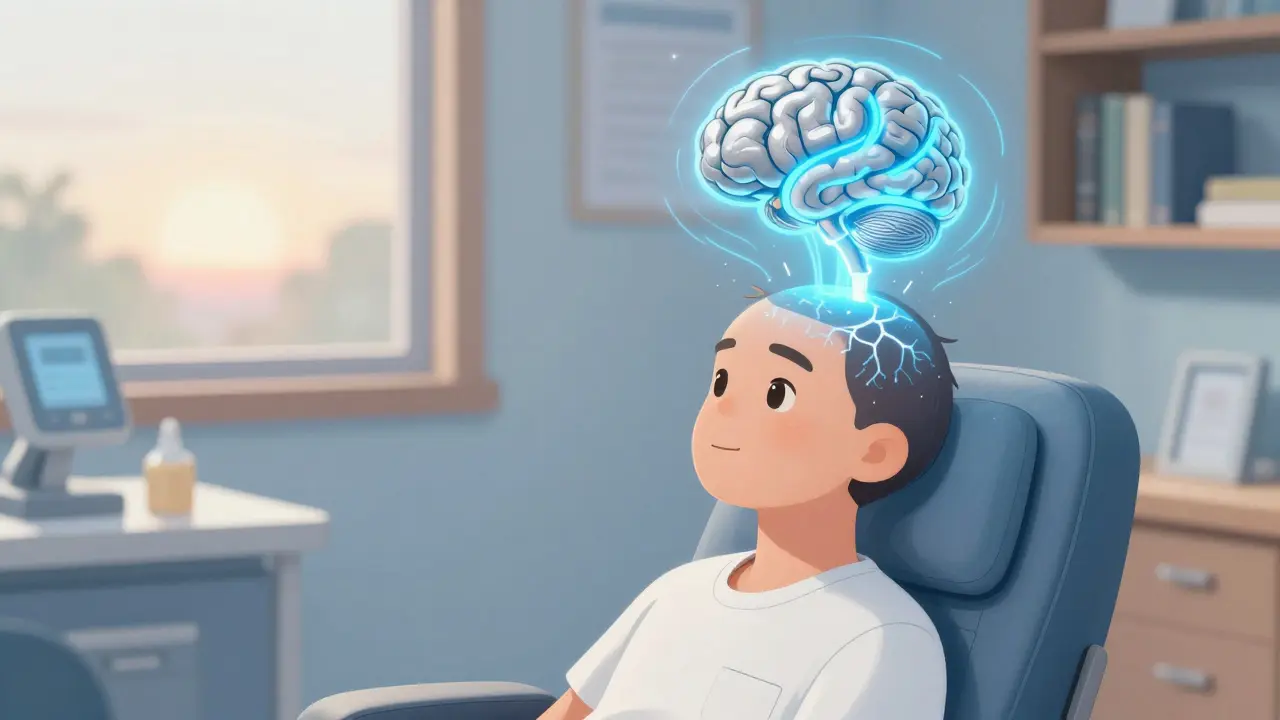
Before esketamine, it took weeks for antidepressants to work. Esketamine (Spravato) changes that. In 24 hours, some people feel lighter. Less numb. More like themselves.
The FDA approved it in 2019 after a trial showed 70% of people responded within four weeks-compared to 47% on placebo. That’s a big jump.
But there’s a catch. You can’t take it at home. You have to go to a certified clinic. You’re monitored for two hours after each spray because it can cause dissociation-feeling detached from your body or reality. About 60% of users report this. It’s temporary, but it’s intense.
It’s not for everyone. But for those who’ve tried everything else and still can’t get out of bed? It’s a lifeline.
rTMS: A Non-Invasive Brain Stimulator
Imagine using magnets to gently stimulate parts of your brain that are underactive in depression. That’s repetitive transcranial magnetic stimulation (rTMS).
It’s done in a doctor’s office. No anesthesia. No memory loss. You sit in a chair. A device clicks against your scalp. You hear a tapping sound. Each session lasts about 40 minutes. You do it five days a week for four to six weeks.
Over 50 studies show it works. About half of TRD patients respond. One in three go into full remission. That’s comparable to ECT-but without the seizures, the confusion, or the memory gaps.
Insurance often covers it. It’s not a cure. But for many, it’s the first time in years they’ve felt real relief.
Advanced Options: DBS, Psilocybin, and Inflammation
For the small group who still don’t respond? The door opens to even more advanced tools.
Deep brain stimulation (DBS) involves surgically placing electrodes in the brain. One small study targeting the subcallosal cingulate cortex found 92% of patients improved after two years. But it’s still experimental. Only done in research centers. Risky. Expensive.
Psilocybin-the active ingredient in magic mushrooms-showed a 71% response rate in a 2020 JAMA Psychiatry trial. People felt better within days. But it’s not legal yet. Clinical trials are ongoing.
And then there’s inflammation. New research suggests depression isn’t just a chemical imbalance-it’s sometimes an immune problem. A 2022 study found that people with high inflammation markers responded better to infliximab, an anti-inflammatory drug. For them, it cut depression in half. This isn’t theory anymore. It’s a new direction.
Why Do Some Treatments Work for Some and Not Others?
Here’s the hard truth: we still don’t fully understand why.
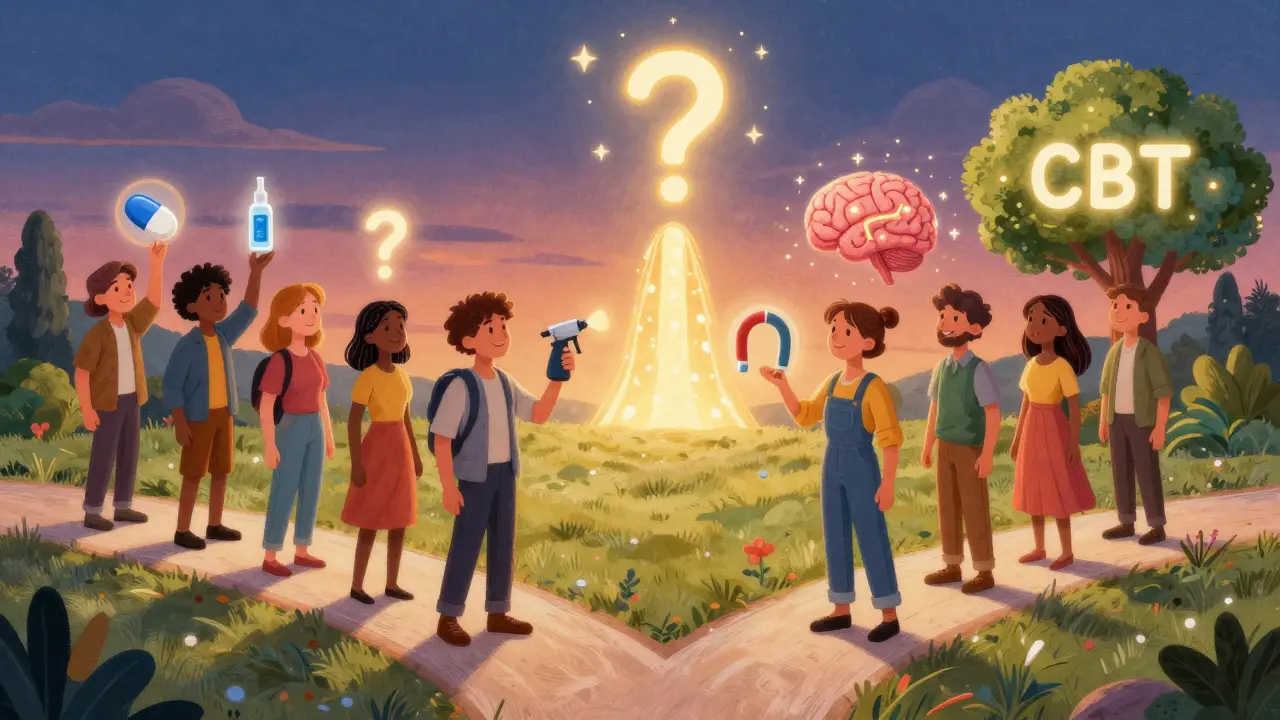
One person gets better with lithium. Another needs esketamine. A third responds only to rTMS. The same diagnosis. Different biology.
That’s why personalized treatment matters. Are you fatigued? Maybe try liothyronine. Anxious and restless? Aripiprazole might help. Insomnia and low energy? Quetiapine. High inflammation? Look into anti-inflammatory options.
There’s no one-size-fits-all. That’s why guidelines from the American Psychiatric Association and CANMAT stress matching treatment to symptoms, side effect history, and patient preference.
What Doesn’t Work as Well as People Think
Not everything labeled as an “augmentation” has solid proof.
Some drugs-like ziprasidone, mirtazapine, and cariprazine-have high dropout rates. People stop taking them because of side effects. Others, like modafinil or lisdexamfetamine, show promise but aren’t FDA-approved for TRD. They’re used off-label.
And here’s a sobering number: even with all these tools, only about 28% of TRD patients achieve lasting remission in real-world settings. That means most still struggle. That’s why research is racing forward.
What Comes Next?
The future of TRD treatment isn’t just about more drugs. It’s about smarter choices.
Biomarkers-like inflammation levels, brain scans, or genetic profiles-might soon tell us which treatment will work before we start. Blood tests could guide prescriptions instead of guesswork.
Combining therapies is also key. rTMS + CBT. Esketamine + talk therapy. Lithium + lifestyle changes.
For now, the path forward is clear: don’t give up. TRD is hard. But it’s not hopeless. There are options. And more are coming.
What counts as treatment-resistant depression?
Treatment-resistant depression (TRD) is diagnosed when a person has tried at least two different antidepressants, each at an adequate dose for six to eight weeks, without meaningful improvement. It’s not about failing to try-it’s about the illness not responding to standard treatments.
Is esketamine safe for long-term use?
Esketamine is approved for short-term use in TRD, with maintenance doses allowed after initial response. Long-term safety data is still being collected. The main risks are dissociation during administration and potential abuse. It’s only given in certified clinics under supervision to reduce those risks.
Can rTMS cause memory loss like ECT?
No. Unlike electroconvulsive therapy (ECT), rTMS doesn’t induce seizures or require anesthesia. Studies show no significant memory loss or cognitive decline with rTMS. Most people report mild scalp discomfort or headaches, but nothing that lasts.
Why is lithium still used if it requires blood tests?
Lithium remains a top choice because it’s one of the few treatments proven to reduce suicide risk in depression. While it needs monitoring, it’s effective, affordable, and works well for people with mixed features or a family history of bipolar disorder. Many patients tolerate it well with regular checkups.
Are there any natural or lifestyle approaches that help with TRD?
Yes-but they’re supplements, not substitutes. Regular exercise, sleep hygiene, omega-3s, and vitamin D support brain health and can improve outcomes when combined with medical treatment. Light therapy helps if depression worsens in winter. But none replace medication or brain stimulation for true TRD.
Joe Bartlett
December 17, 2025 AT 08:37Naomi Lopez
December 17, 2025 AT 09:01Marie Mee
December 18, 2025 AT 05:31Salome Perez
December 19, 2025 AT 15:21Martin Spedding
December 19, 2025 AT 15:33Raven C
December 19, 2025 AT 23:57Donna Packard
December 21, 2025 AT 19:39Patrick A. Ck. Trip
December 23, 2025 AT 08:27Jessica Salgado
December 24, 2025 AT 23:07Chris Van Horn
December 25, 2025 AT 09:13Peter Ronai
December 25, 2025 AT 19:08Steven Lavoie
December 27, 2025 AT 01:56Michael Whitaker
December 29, 2025 AT 00:04