
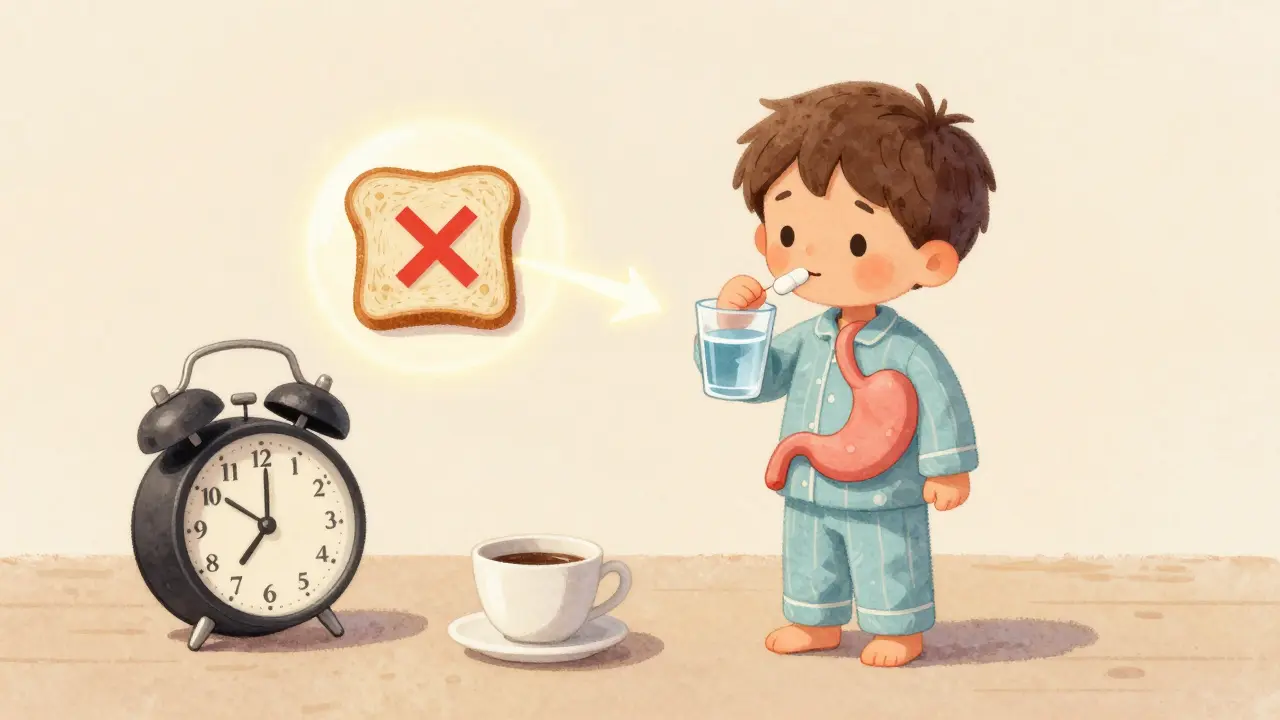
Medication Food Timing Checker
Ever taken a pill with your morning coffee and wondered why it didn’t seem to work? You’re not alone. Around 25% of prescription medications have strict rules about when to take them relative to food-and ignoring those rules can cut their effectiveness by up to half. For some drugs, getting it wrong isn’t just inconvenient-it’s dangerous.
Why Food Changes How Medicines Work
Food doesn’t just fill your stomach-it changes how your body handles medicine. When you eat, your stomach pH rises from about 1-2 (super acidic) to 3-5. That might sound small, but it’s enough to break down acid-sensitive drugs like penicillin V before they even get absorbed. High-fat meals slow down gastric emptying by 90 to 120 minutes, which delays when the drug reaches your bloodstream. Meanwhile, calcium in dairy or iron in supplements can bind to antibiotics like tetracycline and turn them into useless compounds.On the flip side, food helps some drugs work better. Fat boosts absorption of lipophilic (fat-loving) drugs like griseofulvin by up to 50%. Eating also coats your stomach lining, which cuts irritation from NSAIDs like ibuprofen by 50-70%. The science isn’t guesswork-it’s built into every drug’s approval process. Since 2020, the FDA has required food-effect studies for nearly all new drugs, testing them against high-fat meals (800-1,000 calories) to see exactly how food changes absorption.
Medications That Must Be Taken on an Empty Stomach
Some drugs simply don’t work if food is around. Here are the big ones:- Levothyroxine (Synthroid): Food can reduce absorption by 20-50%. A 2022 meta-analysis found that taking it with breakfast is like missing a quarter of your daily dose. Many patients report wild TSH fluctuations until they switch to taking it first thing in the morning, 90 minutes before anything else.
- Alendronate (Fosamax): This osteoporosis drug absorbs 60% less when taken with food. It also causes severe esophageal irritation if not followed by a full glass of water and upright posture for 30 minutes.
- Sucralfate (Carafate): It works by forming a protective film over ulcers. Food blocks that coating, making it useless. Take it 1 hour before meals.
- Ampicillin: Food drops peak blood levels by 35% and total exposure (AUC) by 28%. Take it 30 minutes before or 2 hours after eating.
- Zafirlukast (Accolate): Absorption drops 40% with food. The label says take it at least 1 hour before or 2 hours after meals.
- PPIs like omeprazole and esomeprazole: These block acid production triggered by eating. Take them 30-60 minutes before breakfast. (Pantoprazole is the exception-it works fine with food.)
For these, the rule is simple: 1 hour before or 2 hours after a meal. That’s the standard definition used by the American Pharmacists Association. And yes, that includes coffee, juice, milk, and even chewing gum-anything that triggers digestion.
Medications That Need Food to Work Right
Other drugs are like vitamins-they need a meal to get absorbed properly or to avoid wrecking your stomach.- NSAIDs (ibuprofen, naproxen): Without food, these can cause stomach ulcers. Studies show food reduces GI complications by 50-70%. The American College of Gastroenterology estimates 10,000-20,000 hospitalizations a year from NSAID damage-most preventable with simple timing.
- Aspirin (high-dose): For pain relief, taking it with food cuts stomach irritation from 25% down to 8%.
- Duloxetine (Cymbalta): Nausea drops by 30% when taken with food. Many patients quit because they didn’t know this trick.
- Statins (atorvastatin, simvastatin): Food improves absorption. But avoid grapefruit juice-it can spike blood levels by 300-500%, raising the risk of muscle damage by 15 times.
- Mesalamine: Used for IBD, this drug causes nausea on an empty stomach. Taking it with meals reduces symptoms from daily to once a month for many users.
For these, the rule is: take it during or within 30 minutes of a meal. A meal doesn’t need to be big-just 500-800 calories, roughly the size of a sandwich with chips and a yogurt.
What Happens When You Get It Wrong
Ignoring food timing isn’t just a minor mistake-it’s a serious health risk.For thyroid patients, taking levothyroxine with breakfast can lead to TSH levels that are 30% higher than they should be. That means your doctor might think you’re undermedicated and increase your dose-when you actually just need to wait 90 minutes after eating.
NSAID users who skip food risk bleeding ulcers. In one 2022 survey of 10,000 patients, 58% admitted taking ibuprofen without food. Of those, 73% reported stomach pain. And it’s not just pain-it’s ER visits, blood transfusions, and long-term damage.
Even something as simple as taking antibiotics with milk can render them useless. Tetracycline binds to calcium in dairy, reducing absorption by 50-75%. That’s not just a wasted pill-it’s a missed opportunity to kill an infection, leading to resistance.
The Institute for Safe Medication Practices estimates 12,000-15,000 medication errors each year are tied to food timing. Thyroid meds alone make up 22% of those errors. And the cost? Around $290 billion a year in wasted healthcare spending due to non-adherence.
How to Get It Right Every Time
The good news? You don’t need to memorize a list. Here’s how to make food timing easy:- Use the 2-1-2 Rule: For empty stomach meds, take them 2 hours after eating, or 1 hour before your next meal. For food-required meds, take them during or right after eating.
- Label your pill organizer: Use stickers or labels: “AM: empty stomach,” “PM: with food.” A 2022 study showed this improves adherence by 35%.
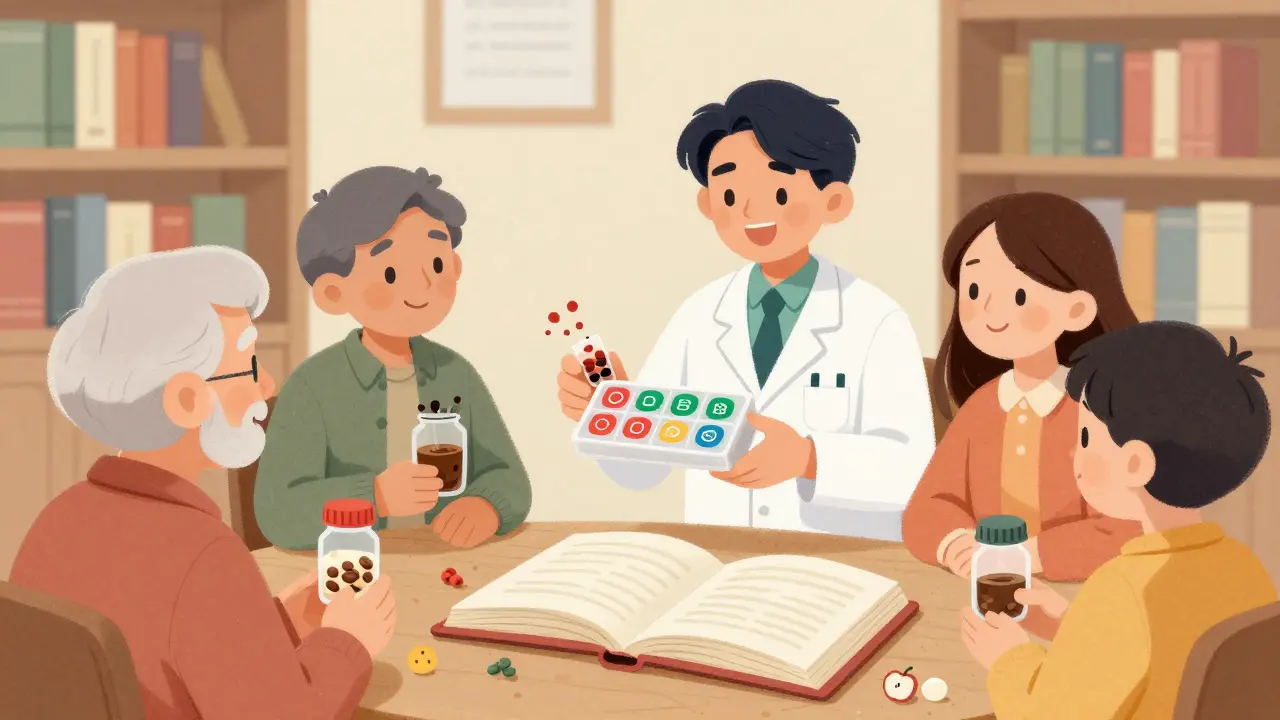
- Check your pharmacy label: CVS and Walgreens now use color-coded stickers: red for empty stomach, green for with food. One pilot study showed this boosted correct use from 52% to 89%.
- Use a medication app: Apps like Medisafe and GoodRx send alerts: “Take your pill 1 hour before breakfast.” Users who use them cut errors by 28%.
- Ask your pharmacist: Pharmacists are trained on this stuff. A 2021 JAMA study found 92% of pharmacists give clear food timing advice-compared to just 45% of doctors.
For complex regimens, stagger your meds. Take your empty-stomach pill at 7 AM, then eat breakfast at 8 AM. Take your statin with lunch, your NSAID with dinner. Your body can handle it-as long as you space them out.
The Future: Medications That Don’t Care About Food
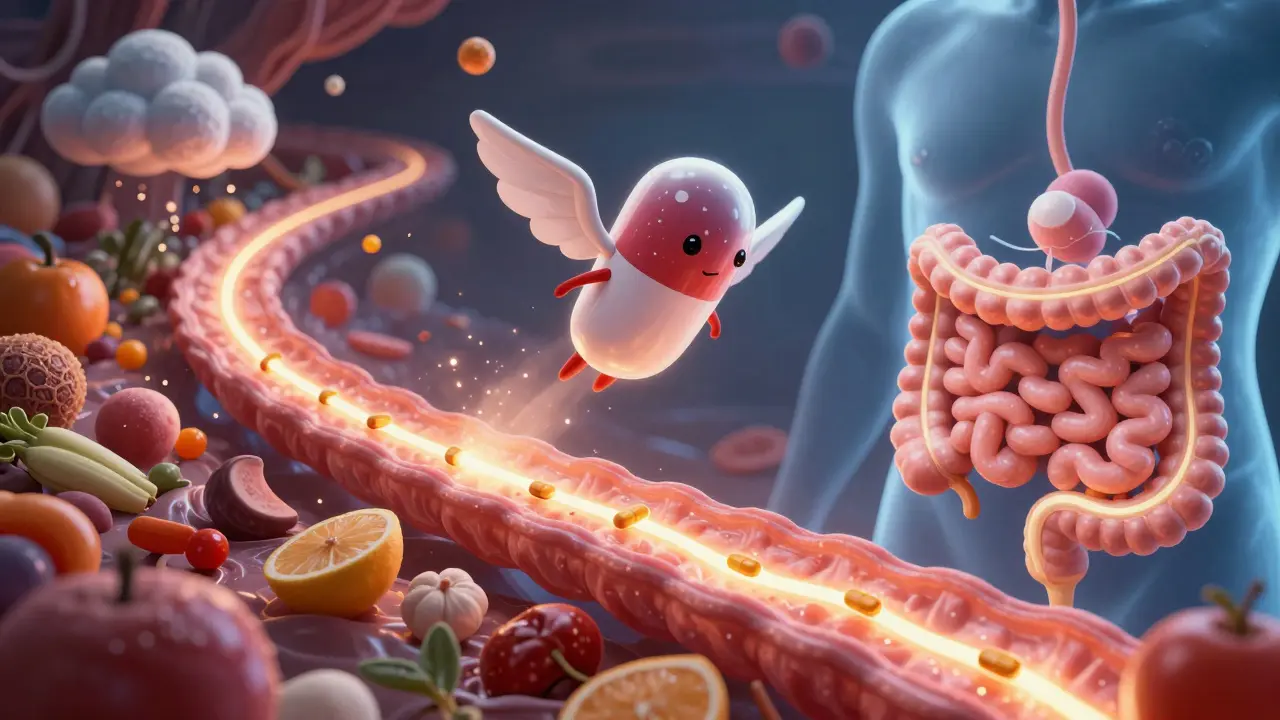
Science is catching up. New drug formulations are being designed to ignore food entirely.Johnson & Johnson’s Xarelto Advanced uses a pH-sensitive coating that releases the drug consistently, whether you’ve eaten or not. In trials, it showed only 8% variability-down from 35% in the old version.
Researchers at the University of Michigan are testing nanoparticle levothyroxine that sticks to the gut lining, bypassing stomach acid and food interference. Early results show 92% consistent absorption in fed and fasted states.
The FDA is even considering dropping mandatory food-effect testing for 37% of drugs where data shows no real impact. That could speed up generic approvals by months.
But here’s the catch: even with these advances, 75% of today’s prescriptions still require food timing. So learning the rules isn’t just helpful-it’s essential.
What to Do Right Now
If you’re on any prescription, do this today:- Look at your pill bottles. Do they say “take on empty stomach” or “take with food”?
- Check your last pharmacy label. Did they put a color sticker on it?
- Open your medication app (if you use one). Are there food alerts turned on?
- Call your pharmacist. Ask: “Does my medication need food? When exactly?”
- Write down your answers. Stick them on your fridge.
You don’t need to be a scientist to get this right. You just need to be a little more careful. The difference between taking a pill with food and without it isn’t just science-it’s your health, your energy, and your future.
Can I take my medication with just water?
Yes-water is always fine. In fact, it’s preferred. Avoid milk, juice, coffee, or alcohol unless your doctor says otherwise. Water doesn’t interfere with absorption. For empty-stomach meds, take them with a full glass of water and wait 30 minutes before eating.
What if I forget and take my pill with food?
Don’t panic. Don’t double up. If you took a food-required drug without food, wait until your next meal and take it then. If you took an empty-stomach drug with food, wait 2 hours after eating and take your next dose on time. Never take two doses close together unless your doctor says so.
Does chewing gum or sucking on candy count as eating?
Yes. Even sugar-free gum or hard candy can trigger saliva and gastric enzymes, which start digestion. For strict empty-stomach meds like levothyroxine or alendronate, avoid anything that stimulates your digestive system for at least an hour before and after taking the pill.
Can I take my vitamins with my medications?
Usually not at the same time. Calcium, iron, and magnesium in supplements can bind to antibiotics and thyroid meds, blocking absorption. Take vitamins at least 2 hours apart from your medications. If you’re unsure, ask your pharmacist.
Why do some pills say “take with food” but don’t specify what kind?
Because the goal is to reduce stomach upset or boost absorption-not to trigger a specific reaction. A light meal (like toast and yogurt) is usually enough. You don’t need a full breakfast. But avoid grapefruit juice, high-fat fast food, or alcohol unless told otherwise.
Kelly McRainey Moore
January 21, 2026 AT 11:14Just took my levothyroxine with my oat milk latte this morning and now I’m wondering if I just wasted $80 a month. 😅 Guess I’m learning the hard way.
Yuri Hyuga
January 21, 2026 AT 17:28Knowledge like this should be mandatory in high school. 🧠💊 We’re taught to take pills like candy, but no one tells us that coffee is basically a chemical saboteur. This isn’t just advice-it’s a public health revolution waiting to happen. Let’s make food timing part of the national conversation!
Coral Bosley
January 22, 2026 AT 15:20I’ve been taking my ibuprofen on an empty stomach for years because I’m too lazy to wait. Now I’ve got a stomach that feels like it’s been marinated in vinegar. Thanks, science. Thanks a lot.
MAHENDRA MEGHWAL
January 22, 2026 AT 22:39This is a profoundly well-researched and clinically significant exposition. The integration of FDA guidelines, pharmacokinetic data, and practical behavioral interventions demonstrates exceptional rigor. I commend the author for elevating patient education to an art form.
Sangeeta Isaac
January 23, 2026 AT 08:10so like… i took my zafirlukast with a donut last week and thought ‘huh, weird, i still feel like crap’ 😂 turns out i was just eating my meds like snacks. thanks for the laugh and the reality check, doc.
Alex Carletti Gouvea
January 24, 2026 AT 00:13Why are we letting pharmaceutical companies make us jump through hoops? Just fix the damn drugs. If your medicine can’t work without a schedule this strict, it’s not medicine-it’s a liability.
Philip Williams
January 24, 2026 AT 23:29The data presented here is compelling. I am particularly intrigued by the nanoparticle levothyroxine research from the University of Michigan. Could you elaborate on the phase of clinical trials and anticipated FDA submission timeline? This innovation could significantly reduce healthcare disparities in medication adherence.
Ben McKibbin
January 26, 2026 AT 01:14People treat meds like they’re candy because they don’t realize how delicate the chemistry is. I used to take my statin with grapefruit juice because ‘it’s healthy.’ Now I know why my muscles felt like they were melting. This post saved me from a hospital trip. Thank you.
Uju Megafu
January 26, 2026 AT 21:08Of course the rich people get fancy pH-coated pills while the rest of us are stuck reading labels like we’re decoding ancient scrolls. This is capitalism in action: make people suffer so Big Pharma can profit from confusion.
Amber Lane
January 28, 2026 AT 13:03Water is fine. Coffee isn’t. That’s it.
Ashok Sakra
January 29, 2026 AT 03:57Why do you people care so much? I take my pills whenever I remember. If I feel sick, I take more. If I feel better, I stop. Simple. Why make it complicated?
Andrew Rinaldi
January 29, 2026 AT 06:34I appreciate the nuance here. It’s easy to judge people who forget or mix things up, but the system is designed to be confusing. The color-coded labels and app reminders? Brilliant. Small changes that actually help. Thank you for not making us feel stupid.
Gerard Jordan
January 30, 2026 AT 15:24As a pharmacist’s kid who grew up watching my mom explain this stuff to seniors, I’m so glad this is getting attention. One of my favorite moments? When an 82-year-old woman told me, ‘I didn’t know my pills needed a lunch date.’ We laughed. Then she got her labels. Now she’s sleeping better. That’s the win.