
Medication-Food Interaction Checker
Check Your Medication
Many people pop their pills with a glass of water, no matter what time of day it is. But what if that habit is making your meds less effective-or worse, causing stomach pain, dizziness, or nausea? The truth is, taking medication with food isn’t just a suggestion. For a lot of drugs, it’s the difference between feeling fine and ending up in the ER.
Why Food Changes How Your Body Handles Medicine
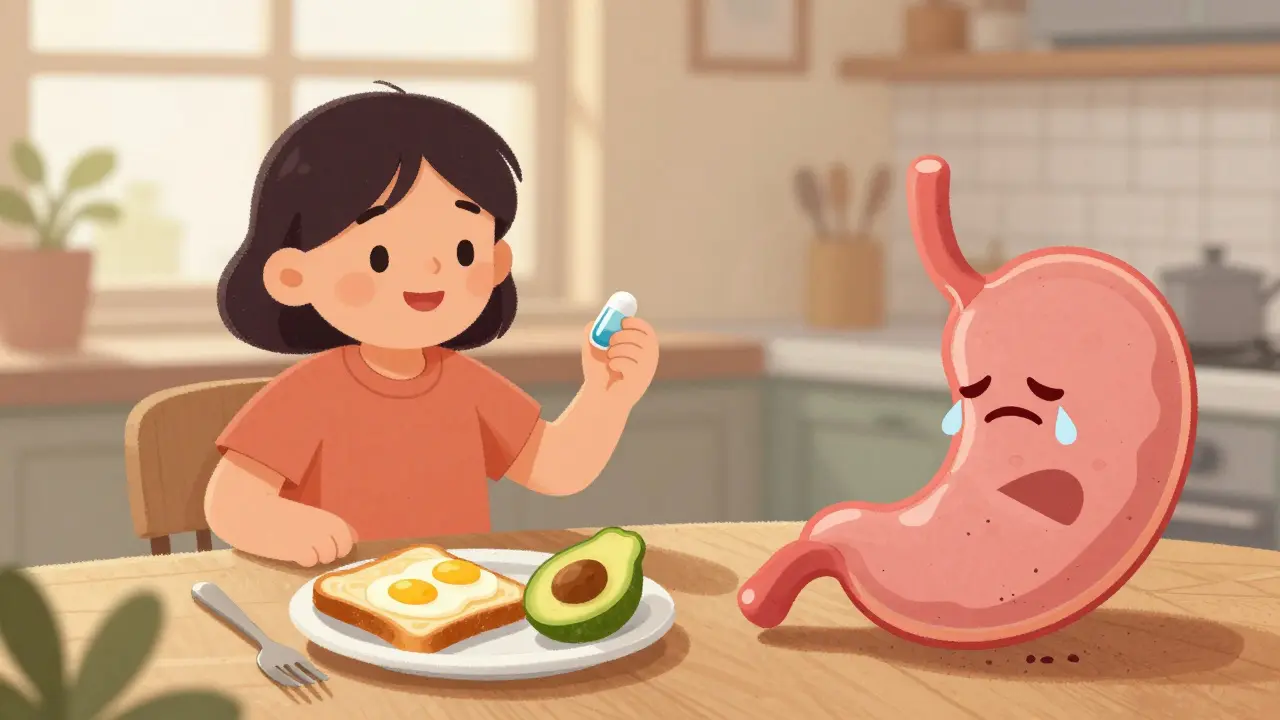
Your stomach isn’t just a place where food sits. It’s a chemical factory. When you eat, your body releases acids, enzymes, and hormones that change how drugs are absorbed. Some medications need that acid to break down. Others get blocked by it. Food slows down how fast your stomach empties, giving drugs more time to be absorbed in the small intestine-where most of them actually enter your bloodstream. Take ibuprofen, for example. If you take it on an empty stomach, you’re 38% more likely to develop tiny tears in your stomach lining, according to endoscopic studies. That’s why the Arthritis Foundation says taking it with food cuts gastric ulcers by more than half. The food acts like a buffer, protecting your stomach lining from irritation. Same goes for many antibiotics and painkillers. Food doesn’t always make the drug stronger-it just makes it safer.When Food Makes Medicine Work Better
Some drugs simply won’t absorb well without food. Griseofulvin, an antifungal used for stubborn nail infections, needs a high-fat meal to be absorbed properly. Without it, the drug might as well be water. Studies show absorption can jump by 15-30% when taken with fatty foods like avocado, nuts, or eggs. Statins like simvastatin behave the same way. A high-fat meal can boost blood levels by 9 to 15 times. That sounds good-until you realize it also raises your risk of muscle damage and liver stress. That’s why doctors tell you to take simvastatin at night with your dinner. But pravastatin? It doesn’t care what you eat. It works the same whether you’re full or fasting. Even mental health meds like clozapine absorb much better with food. Patients report feeling more sedated, which sounds bad-but for those with severe schizophrenia, that sedation is part of the treatment. Without food, the drug might not reach the level needed to control symptoms.When Food Stops Medicine from Working
Not all food helps. Some foods actively block drugs from working. Calcium is a big offender. If you take tetracycline or ciprofloxacin with milk, yogurt, or calcium-fortified orange juice, the calcium binds to the antibiotic and traps it in your gut. Your body absorbs up to 50% less of the drug. That means the infection doesn’t get treated-and bacteria start building resistance. Levothyroxine, the hormone replacement for hypothyroidism, is even more sensitive. It needs to be taken on an empty stomach, at least one hour before breakfast. If you take it with your morning coffee, cereal, or multivitamin, absorption drops by 30-55%. Patients who do this often end up with fatigue, weight gain, and high cholesterol-even though they’re “taking their medicine.” Grapefruit juice is another silent saboteur. It shuts down an enzyme in your gut called CYP3A4, which normally breaks down dozens of drugs. Without it, drugs like cyclosporine, some statins, and certain blood pressure meds build up to toxic levels. One glass can mess with your system for 72 hours. That’s why Mayo Clinic warns: even if you drink grapefruit juice at breakfast, and take your pill at night, you’re still at risk.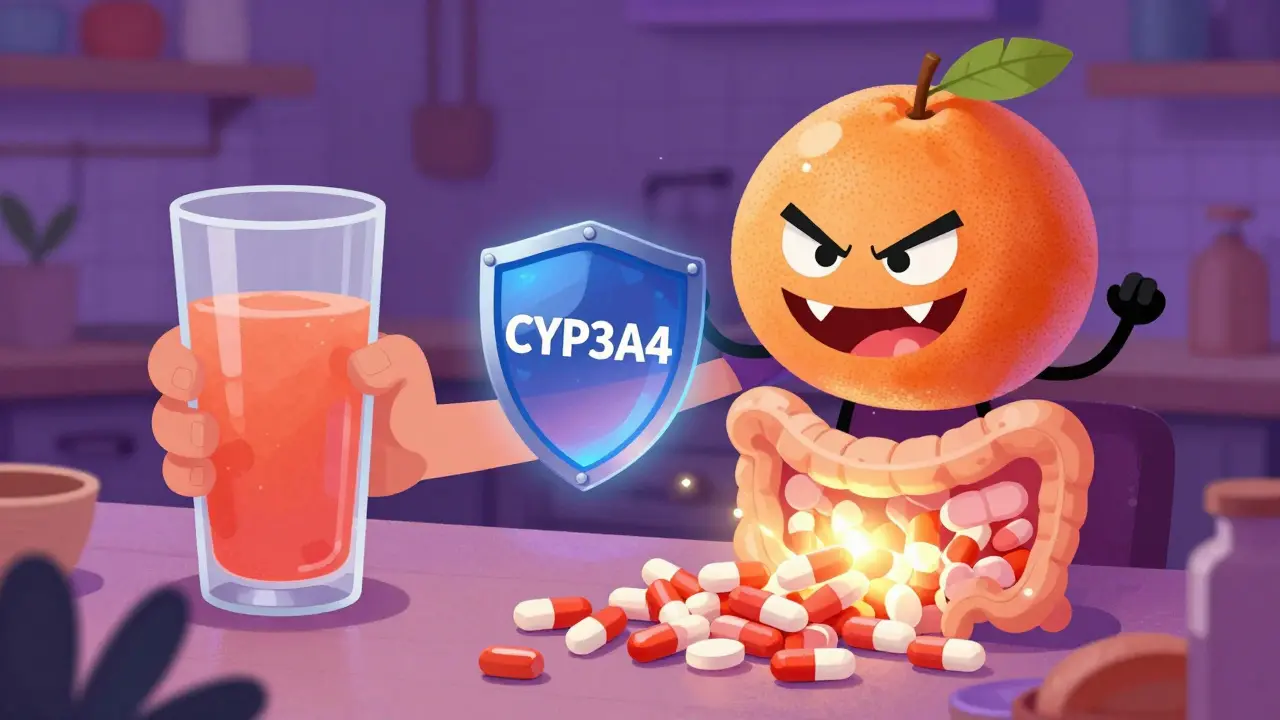
What About Warfarin and Leafy Greens?
Warfarin is a blood thinner. It’s tricky because it’s sensitive to vitamin K, which is found in spinach, kale, broccoli, and Brussels sprouts. Vitamin K helps your blood clot. Warfarin stops it. If you eat a big salad one day and no greens the next, your INR (a measure of blood clotting time) swings wildly. That’s dangerous-it can lead to clots or dangerous bleeding. The fix isn’t to avoid greens. It’s to eat them consistently. If you normally eat spinach every day, keep doing it. If you rarely eat greens, don’t suddenly start. Your doctor can adjust your dose based on your usual diet. A study in the New England Journal of Medicine found that patients who stabilized their vitamin K intake had 30% fewer hospital visits for bleeding or clotting issues.Who’s Most at Risk?
Older adults take the most medications-and they’re the least likely to know how food affects them. A Mayo Clinic study found that 68% of patients over 65 had no idea their meds needed to be taken with or without food. Only 22% got clear instructions from their doctor. People on five or more medications are in the danger zone. One pill might need food, another can’t have it, and a third warns against grapefruit. Managing that without a system is nearly impossible. The American Pharmacists Association says 68% of medication-related hospitalizations come from these kinds of mistakes. Even young people aren’t safe. A Drugs.com analysis of 15,000 reviews showed that 63% of metformin users had severe nausea and diarrhea when they took it without food. That’s common for diabetes meds. But many people skip meals to lose weight-and then wonder why they feel awful.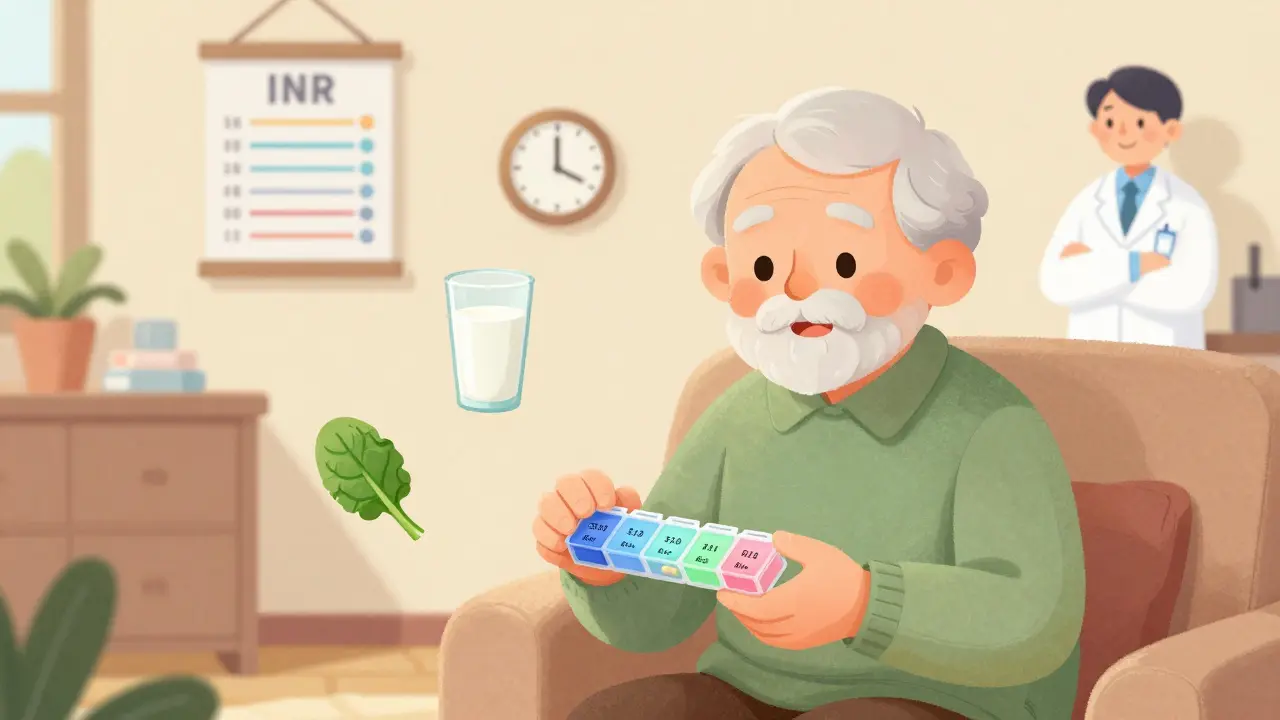
How to Get It Right
There’s no one-size-fits-all rule. But here’s how to avoid mistakes:- Read the label. “Take with food” means at least 250-500 calories-not a cracker and a sip of juice. “Take on empty stomach” means 1 hour before or 2 hours after eating.
- Ask your pharmacist. They’re trained to spot food-drug conflicts. Don’t assume your doctor told you everything.
- Use a medication app. Apps like Medisafe send reminders and flag interactions. Clinical trials show they reduce errors by 37%.
- Keep a food and med log. Note what you ate and when you took your pills. If you feel off, you’ll know what to change.
- Don’t mix grapefruit juice with anything unless you’re sure it’s safe. Even “natural” or “cold-pressed” juice can cause problems.
The Bigger Picture
This isn’t just about avoiding nausea. Food-drug interactions cost the U.S. healthcare system over $177 billion a year. That’s not just money-it’s hospital stays, missed work, and preventable suffering. New tech is helping. CVS now includes food interaction alerts on every prescription label. Walgreens’ app gives personalized timing tips. The FDA now requires food interaction warnings on 92% of new prescriptions-up from 67% just five years ago. The future? Personalized plans based on your genes and gut bacteria. Companies like Vitagene already offer DNA tests that tell you how your body reacts to certain drugs with certain foods. For $149-$299, you can get a report that says, “Avoid dairy with your antibiotic” or “Take this statin with avocado.” But you don’t need a DNA test to stay safe. Just ask. Read. Track. Be consistent. Your body doesn’t care if you’re busy, tired, or forgetful. It reacts to what you give it-and what you don’t.Can I take my pill with just a small snack?
It depends on the drug. "Take with food" usually means at least 250-500 calories-a small snack like a banana or a handful of nuts won’t cut it. For drugs like griseofulvin or clozapine, you need a proper meal with fat and protein. Check your prescription label or ask your pharmacist.
What if I forget to take my medicine with food?
If you’re supposed to take it with food and you forgot, wait until your next meal and take it then. Don’t double up. If you’re supposed to take it on an empty stomach and you ate, wait at least 2 hours before taking it. Never take it right after a big meal if it’s meant to be taken on an empty stomach-it might not work at all.
Is it okay to take all my pills at once with breakfast?
No. Some meds need to be taken separately. For example, levothyroxine must be taken alone, at least an hour before anything else. Calcium, iron, and antacids can block absorption of antibiotics and thyroid meds. Spread them out. Use a pill organizer labeled with times, or use a medication app to track spacing.
Why does grapefruit juice affect some drugs but not others?
Grapefruit blocks an enzyme called CYP3A4 that breaks down certain drugs in your gut. Drugs like simvastatin, cyclosporine, and some blood pressure meds rely on this enzyme. Others, like pravastatin or metformin, use different pathways. Always check if your drug is on the list of grapefruit-sensitive meds. If you’re unsure, assume it’s risky.
Do over-the-counter meds need food too?
Yes. Many OTC pain relievers like ibuprofen and naproxen cause stomach upset when taken empty. Even some antacids and supplements like iron or zinc work better with food. Always read the label-even if it’s not prescription. Side effects add up.
Janette Martens
December 28, 2025 AT 19:11Marie-Pierre Gonzalez
December 29, 2025 AT 13:42Louis Paré
December 29, 2025 AT 18:26Samantha Hobbs
December 30, 2025 AT 23:03Nicole Beasley
December 31, 2025 AT 02:38Mimi Bos
December 31, 2025 AT 16:17Payton Daily
January 1, 2026 AT 13:27Kelsey Youmans
January 2, 2026 AT 11:31Bradly Draper
January 4, 2026 AT 06:13Gran Badshah
January 4, 2026 AT 19:41Ellen-Cathryn Nash
January 5, 2026 AT 11:11sonam gupta
January 7, 2026 AT 10:07Julius Hader
January 8, 2026 AT 04:40Vu L
January 8, 2026 AT 10:50James Hilton
January 10, 2026 AT 09:05