
Proper Medicine Storage: Keep Your Drugs Safe, Effective, and Ready to Use
When you buy medicine, you’re not just paying for the drug—you’re paying for its proper medicine storage, the conditions required to keep a drug stable, potent, and safe until it’s taken. Also known as drug storage conditions, it’s the invisible step that makes your prescription work—or fail. A pill left in a hot bathroom or a bottle sitting in direct sunlight can lose strength, break down into harmful compounds, or even turn into a poison. The FDA doesn’t just test drugs for safety in the lab—they test how they hold up in real homes. And most people get it wrong.
Think about your insulin, a temperature-sensitive biologic that breaks down quickly if not kept cool. One study found that insulin left at room temperature for more than 28 days lost up to 20% of its potency. That’s not a small drop—it’s the difference between control and crisis. Or consider nitroglycerin, a life-saving heart medication that degrades in light and moisture within weeks. If it’s not in its original glass bottle with the cap tightly sealed, it might not save your life when you need it most. Even common pills like antibiotics or painkillers can become ineffective or toxic if stored near humidity, heat, or direct light. Your medicine cabinet above the sink? That’s the worst place in the house.
It’s not just about the bottle. Kids, pets, and accidental overdoses are just as dangerous. Over 60,000 children under six are treated in U.S. emergency rooms every year for medicine poisoning—most from unlocked cabinets or grandma’s purse. child-proofing, the practice of securing medications out of reach and sight, isn’t optional. It’s basic safety. And don’t forget expiration dates. A 2020 study from the FDA showed that 78% of expired antibiotics still had some potency, but 12% had degraded into compounds that could cause kidney damage. You don’t need to toss everything the day it expires, but you do need to know which ones are risky.
So what does proper medicine storage actually look like? Cool, dry, dark. A bedroom drawer, not the bathroom. A locked box if you have kids or visitors. Original containers with labels intact—no dumping pills into snack bags. And always check the leaflet: some meds need fridge storage, others must stay away from freezing. If you’re traveling, keep your meds with you—not in checked luggage. Heat in a cargo hold can wreck them. And never, ever leave them in a hot car.
Below, you’ll find real-world advice from people who’ve dealt with this firsthand—how to store chemo pills at home, what to do when insulin runs out of refrigeration, why generic drugs are just as sensitive as brand names, and how to avoid dangerous mix-ups with kids’ meds. These aren’t theory pieces. These are lessons from families, caregivers, and patients who learned the hard way. You don’t need to make the same mistakes.
4
Dec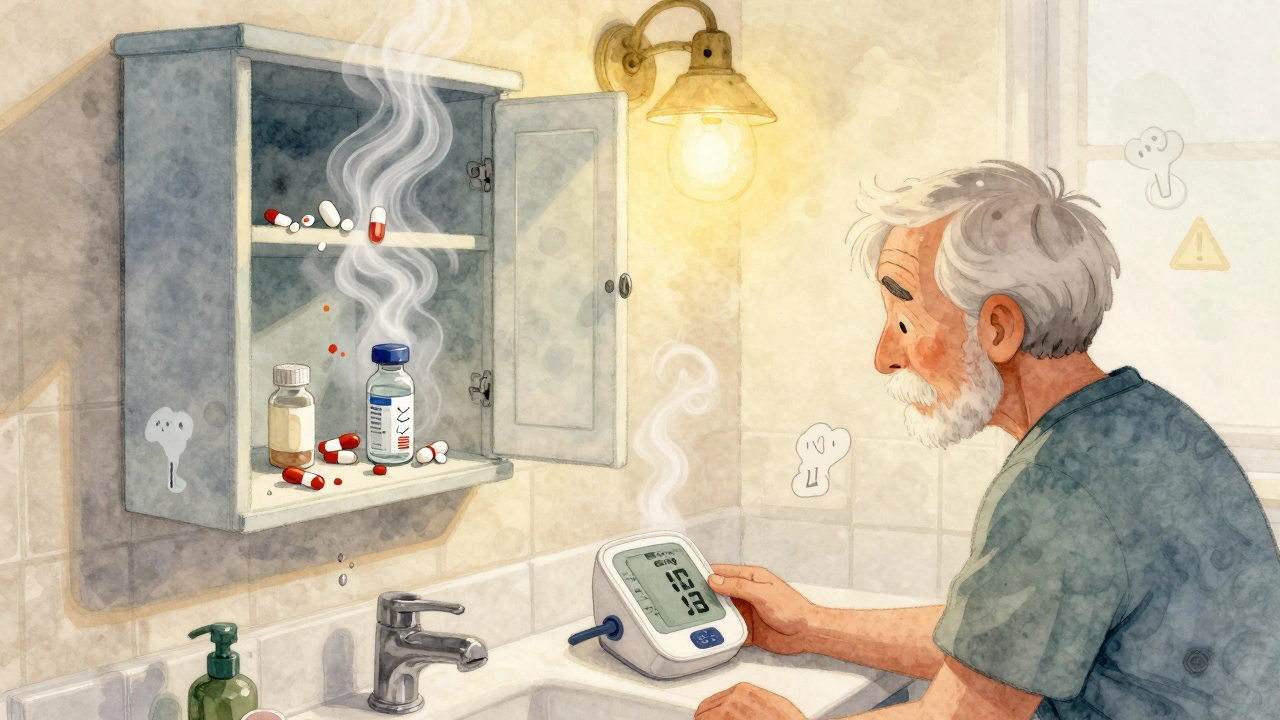
Why You Shouldn’t Store Medications in the Bathroom
Storing medications in the bathroom can make them less effective or even dangerous. Learn why humidity, heat, and easy access make this common habit risky-and where to store your pills safely instead.
READ MORE© 2026. All rights reserved.