
Multiple Sclerosis: Causes, Treatments, and What You Can Do
When your body’s immune system starts attacking the protective coating around your nerves, you’re dealing with multiple sclerosis, a chronic autoimmune disorder that disrupts communication between the brain and body. Also known as MS, it can cause fatigue, muscle weakness, vision problems, and trouble with balance — but it doesn’t mean your life has to stop. Unlike infections or injuries, MS isn’t caused by something outside your body. It’s your own immune system turning against you, damaging the myelin sheath that helps nerves send signals fast and clear.
This damage leads to scattered scars — or lesions — in the brain and spinal cord. That’s why symptoms vary so much from person to person. One person might struggle with numbness in their hands, another with walking or memory issues. What connects them? The root cause: an overactive immune response. That’s why treatments often focus on immunosuppressants, drugs that calm down the immune system to reduce flare-ups. These aren’t cure-all pills — they come with risks, like increased infection chances or even hair loss — but for many, they’re the only way to slow the disease.
Over the last decade, biologic therapy, targeted treatments that block specific immune proteins involved in MS damage has changed the game. Drugs like ocrelizumab or natalizumab don’t just suppress the whole immune system. They hit the exact troublemakers — the cells and proteins that attack nerves. That means better control with fewer side effects for many patients. These aren’t new, but they’re still misunderstood. Some think biologics are experimental. They’re not. They’re now standard care for moderate to severe MS.
What’s missing from most discussions? The fact that MS isn’t just about drugs. It’s about daily choices — how you sleep, what you eat, whether you move your body, and how you handle stress. The same people taking biologics are also managing fatigue with pacing techniques, using heat-sensitive cooling vests, or adjusting their diets to reduce inflammation. You won’t find one magic fix, but you will find dozens of small, proven steps that add up.
The posts below cover real-world issues people with MS face: how immunosuppressants affect hair, why biologics work better than older pills, how to avoid dangerous drug interactions, and what alternatives exist when treatments stop working. You’ll see what actually helps — not what sounds good on a brochure. This isn’t theory. It’s what people are doing right now to keep living well.
2
Dec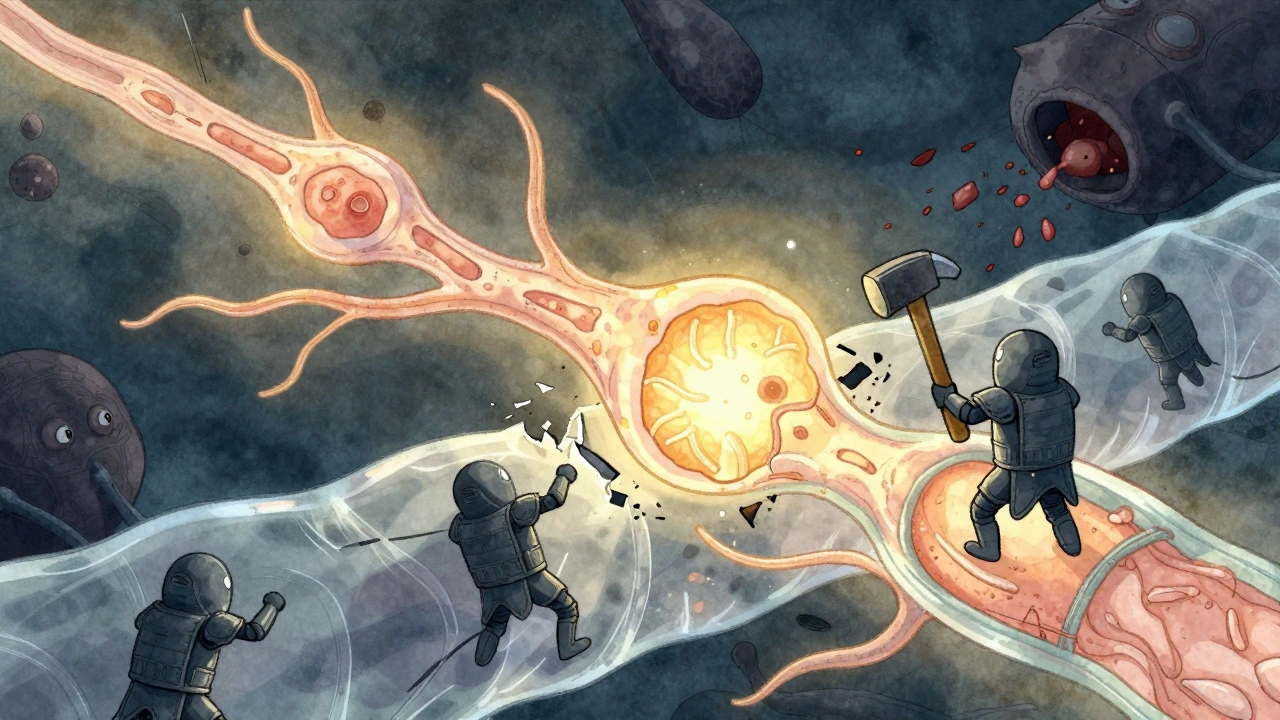
Multiple Sclerosis: How the Immune System Attacks the Nervous System
Multiple sclerosis is an autoimmune disease where the immune system attacks the myelin sheath around nerves, causing vision loss, numbness, and mobility issues. Learn how it develops, what triggers it, and how modern treatments are changing outcomes.
READ MORE© 2026. All rights reserved.