
MS Symptoms: What They Are, How They Change, and What to Watch For
When you hear multiple sclerosis, a chronic condition where the immune system attacks the protective covering of nerves. Also known as MS, it doesn’t look the same in two people. One person might struggle with numbness in their hands, another with sudden vision loss or trouble walking. That’s because MS symptoms depend on where the nerve damage happens in the brain or spinal cord. There’s no single test that catches it early—just a pattern of strange, shifting signs that keep coming back or getting worse over time.
Common neurological symptoms, changes in how nerves send signals to the body include tingling that won’t go away, muscles that feel stiff or weak, and balance problems that make stairs or uneven ground risky. Fatigue isn’t just being tired—it’s a crushing exhaustion that shows up even after a full night’s sleep. Some people see double, or feel like their face is numb, or lose bladder control without warning. These aren’t random glitches. They’re signals from a nervous system under attack. And they often come in waves: a flare-up lasts days or weeks, then fades, leaving you wondering if it’s over—until it comes back again.
What makes MS flare-ups, periods when existing symptoms get worse or new ones appear so tricky is how unpredictable they are. Stress, heat, infections—even a bad night’s sleep—can trigger them. That’s why tracking your symptoms matters. Writing down when things change helps doctors spot patterns and decide if your treatment needs adjusting. It also helps you avoid things that make it worse, like sitting in the sun too long or skipping your meds.
Many people delay getting checked because they think their symptoms are just stress, aging, or a pinched nerve. But if you’ve had unexplained numbness, vision issues, or muscle weakness that comes and goes for more than a few days, don’t wait. Early diagnosis means early treatment, and that can slow down the damage before it becomes permanent. The right care won’t cure MS, but it can help you keep moving, thinking clearly, and living your life.
Below, you’ll find real stories and clear explanations about how MS affects daily life—from hair loss caused by immune treatments to how medications interact with other health issues. These aren’t just medical facts. They’re practical insights from people who’ve lived through it.
2
Dec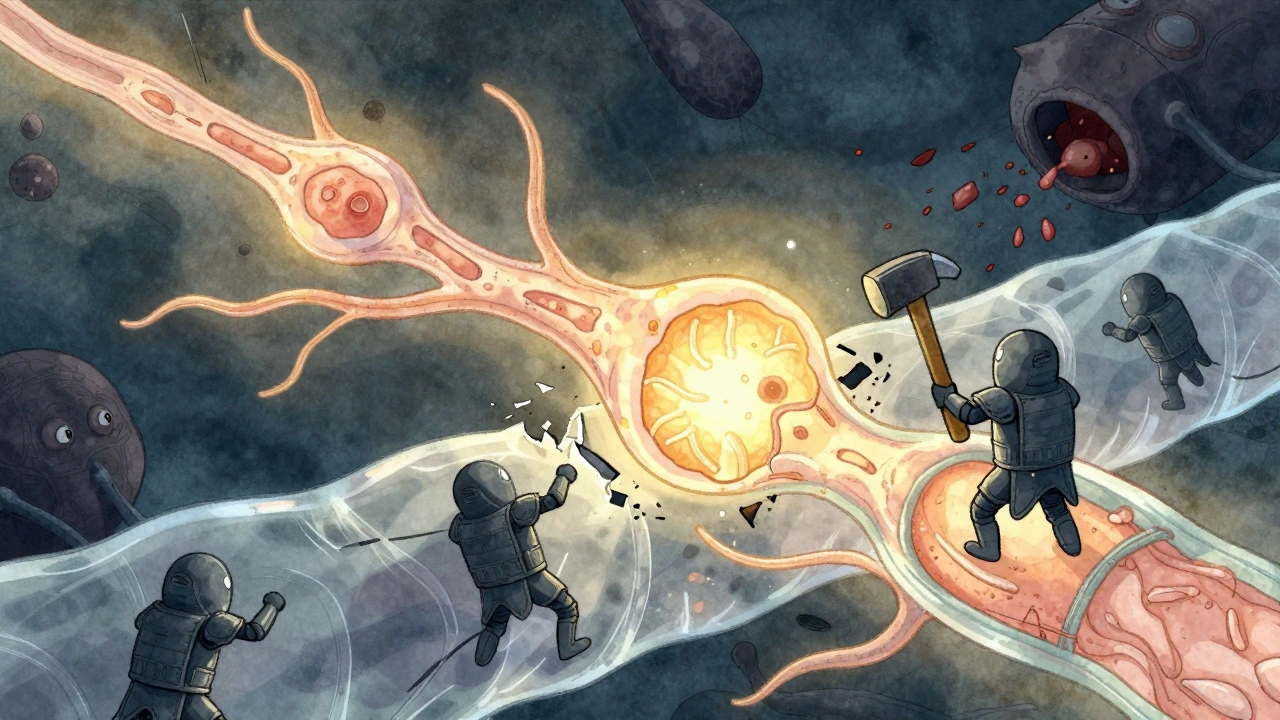
Multiple Sclerosis: How the Immune System Attacks the Nervous System
Multiple sclerosis is an autoimmune disease where the immune system attacks the myelin sheath around nerves, causing vision loss, numbness, and mobility issues. Learn how it develops, what triggers it, and how modern treatments are changing outcomes.
READ MORE© 2026. All rights reserved.