
Hypoglycemia Unawareness: Why You Don't Feel Low Blood Sugar and What to Do
When your blood sugar drops too low, most people feel shaky, sweaty, or dizzy—signs your body screams for help. But for some people with hypoglycemia unawareness, a condition where the body stops sending warning signals during low blood sugar episodes. Also known as impaired hypoglycemia awareness, it’s not just inconvenient—it’s dangerous. Without those early warning signs, you could pass out, have a seizure, or even face life-threatening complications before you realize anything’s wrong.
This isn’t rare. It happens often in people who’ve had diabetes, a chronic condition where the body struggles to manage blood glucose levels for years, especially those on insulin, a hormone therapy used to lower blood sugar in type 1 and some type 2 diabetes cases. The more frequently your blood sugar drops—even if it’s mild—the more your brain tunes out the signals. Over time, your body stops releasing adrenaline, the chemical that normally triggers sweating, hunger, or heart palpitations. That’s not just a glitch—it’s a survival mechanism gone wrong. And once you lose those cues, getting them back isn’t easy. It takes careful planning, consistent glucose monitoring, and sometimes a break from tight blood sugar targets.
People with blood glucose, the amount of sugar circulating in your bloodstream, measured in mg/dL or mmol/L levels that are too tightly controlled are at highest risk. If you’re aiming for a number below 70 mg/dL every single day, your body learns to treat that as normal. But low blood sugar isn’t normal. It’s a red flag. And ignoring it for too long turns a manageable issue into a silent threat. That’s why checking your glucose with a meter or continuous monitor isn’t optional—it’s your new early warning system. Even if you feel fine, checking before driving, exercising, or sleeping can save your life.
There’s no magic fix, but there are proven ways to regain some awareness. Slowing down your glucose targets—even just a little—gives your body time to relearn the signs. Avoiding lows for 2–4 weeks can help reset your brain’s sensitivity. Talking to your doctor about switching from insulin to other medications, using a CGM with alerts, or even trying glucagon rescue kits can make a real difference. This isn’t about perfection. It’s about safety.
The posts below cover everything you need to know about managing blood sugar safely: from hidden drug interactions that can trigger lows, to how insulin and other medications affect your body over time. You’ll find real advice on preventing accidents, understanding what your glucose monitor is really telling you, and how to protect yourself when your body stops warning you. These aren’t theory pieces—they’re practical, tested strategies from people who’ve been there.
7
Dec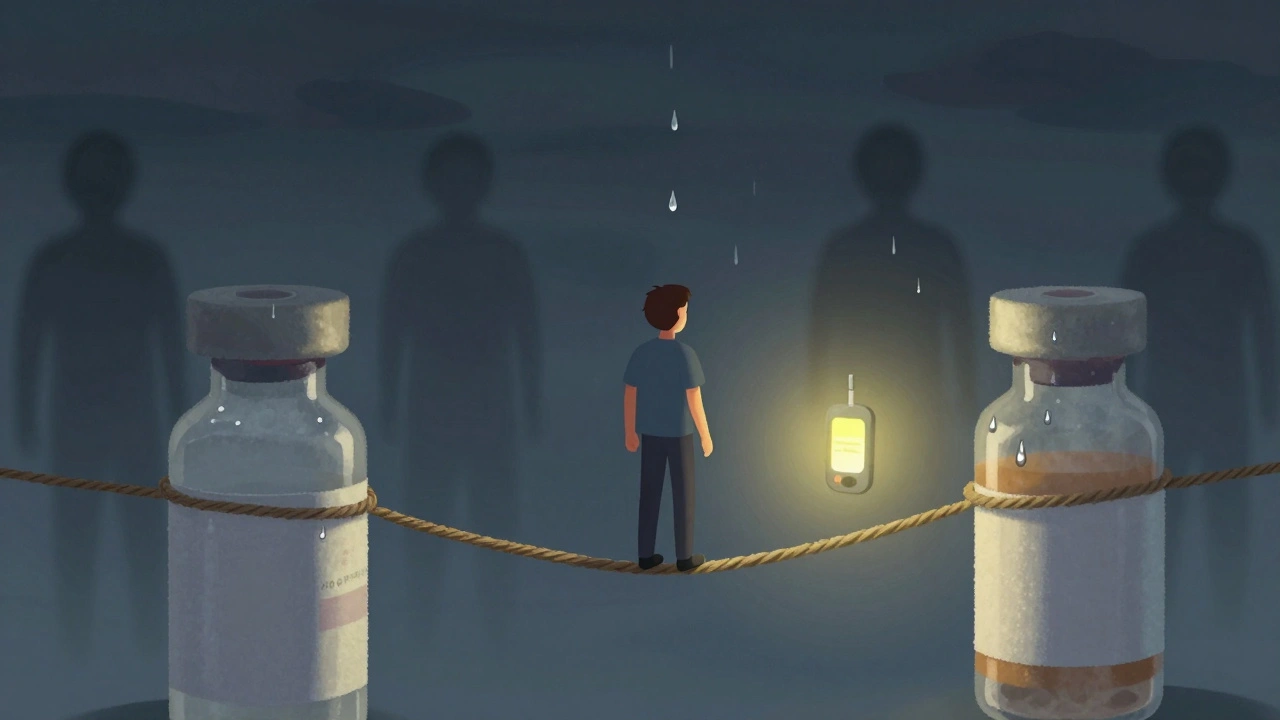
Insulin and Beta-Blockers: What You Need to Know About Hidden Hypoglycemia Risks
Combining insulin with beta-blockers can hide the warning signs of low blood sugar, increasing the risk of dangerous hypoglycemia. Learn how to stay safe with the right medication choices, monitoring, and key symptoms to watch for.
READ MORE© 2026. All rights reserved.