
Autoimmune Disease: Causes, Treatments, and What You Can Do
When your body turns on itself, that’s autoimmune disease, a condition where the immune system mistakenly attacks healthy tissues. Also known as autoimmune disorders, these diseases don’t just cause discomfort—they can change how you live, work, and move every day. It’s not just one illness. It’s a whole group: Crohn’s disease, dermatitis herpetiformis, rheumatoid arthritis, lupus, and more. Each one targets different parts of your body—your gut, skin, joints, even your thyroid. But they all share the same root problem: your immune system lost its way.
What makes this worse is that many treatments come with trade-offs. biologic therapy, a targeted treatment that blocks specific immune signals causing inflammation has changed the game for people with Crohn’s disease and other chronic conditions. It doesn’t just mask symptoms—it stops the damage before it spreads. But it’s not magic. These drugs lower your defenses, and that’s why immunosuppressants, medications that calm an overactive immune response like tacrolimus can cause side effects like hair loss or increased infection risk. You’re trading one problem for another, and that’s why knowing your options matters.
Some autoimmune conditions have surprising triggers. Dermatitis herpetiformis, for example, isn’t just a skin rash—it’s your body’s reaction to gluten. That’s why a gluten-free diet isn’t just a trend here; it’s part of the treatment plan. Other conditions, like those linked to chronic inflammation, respond better to drugs that block TNF-alpha or other immune messengers. The goal isn’t to shut down your immune system entirely—it’s to fine-tune it. And that’s where the real science lives: in matching the right drug to the right person, not just the right diagnosis.
You’ll find posts here that break down how these drugs actually work, what they cost, and what real people experience when they take them. Some articles dig into how biosimilars are making expensive biologics more affordable. Others show how generic drug pricing tricks can affect your out-of-pocket costs. There’s even a piece on how hair loss from immunosuppressants isn’t always permanent—and what you can do about it without stopping your treatment. These aren’t theory pieces. They’re practical, real-world guides for people living with these conditions every day.
Whether you’re newly diagnosed, managing long-term symptoms, or helping someone else navigate this, you’ll find clear answers here—not marketing fluff or vague advice. This collection gives you the tools to ask better questions, spot red flags in treatment plans, and understand what’s really happening inside your body when you take these medications.
2
Dec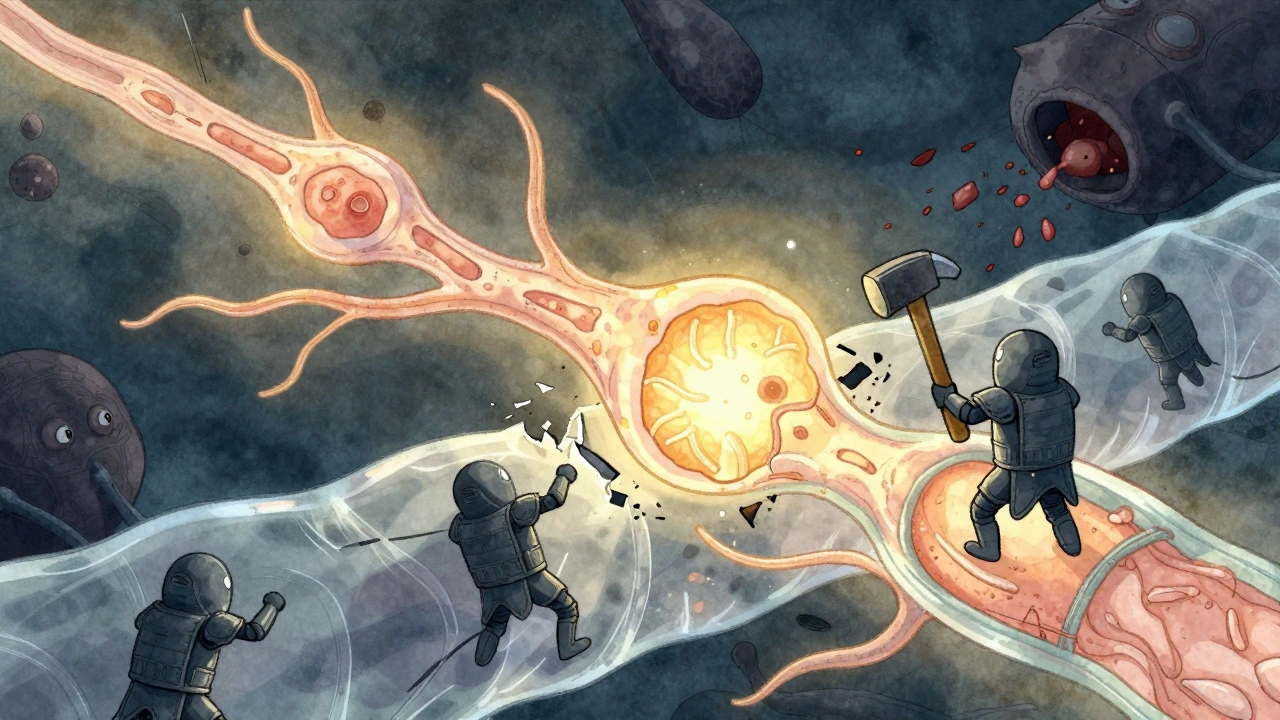
Multiple Sclerosis: How the Immune System Attacks the Nervous System
Multiple sclerosis is an autoimmune disease where the immune system attacks the myelin sheath around nerves, causing vision loss, numbness, and mobility issues. Learn how it develops, what triggers it, and how modern treatments are changing outcomes.
READ MORE© 2026. All rights reserved.