
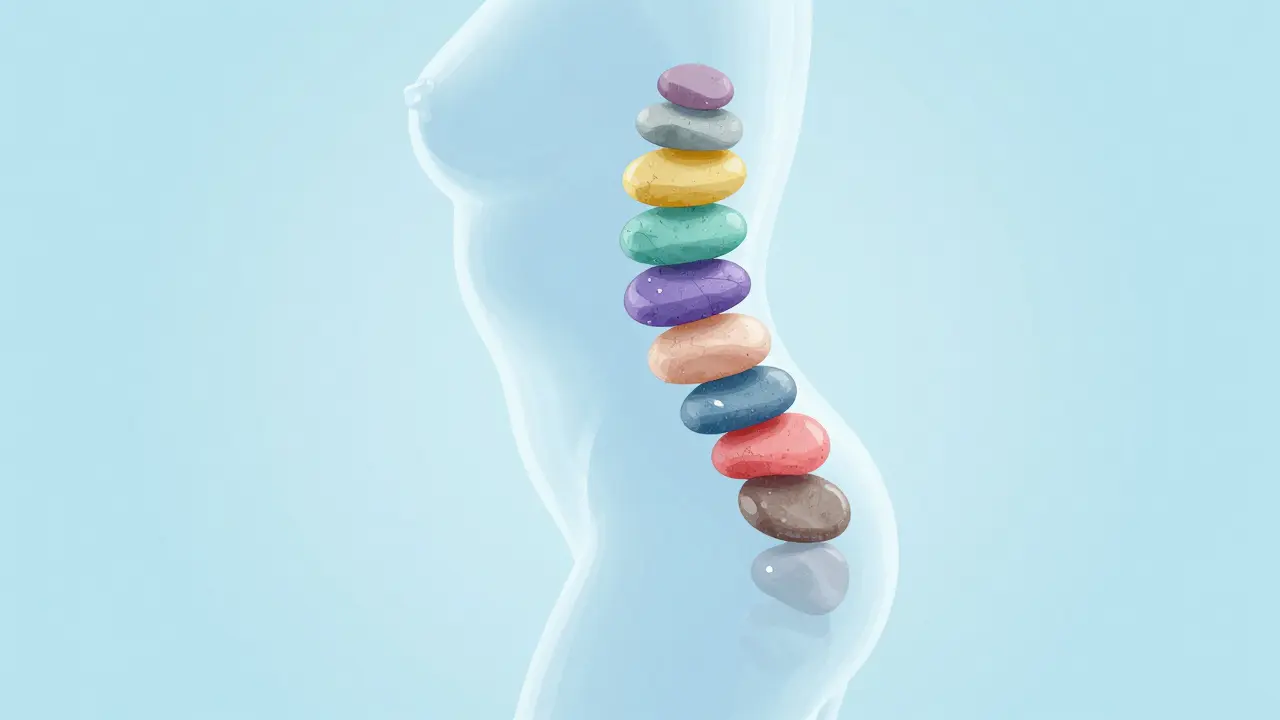
| Key Point | Detail |
|---|---|
| Common Location | L5-S1 (Lower Lumbar Spine) |
| Main Symptom | Lower back pain, often mimicking muscle strain |
| Primary Treatment | Physical therapy and core strengthening |
| Surgical Gold Standard | Interbody Spinal Fusion |
Why did my spine slip? Understanding the types
Not all slips are created equal. Depending on why the bone moved, your treatment path will look very different. Most adults over 50 deal with Degenerative Spondylolisthesis, which happens when arthritis wears down the cartilage and joints, causing the vertebra to lose its grip and slide. This accounts for roughly 65% of adult cases. Then there's the athletic side of things. If you were a gymnast, football player, or weightlifter as a kid, you might have Isthmic Spondylolisthesis. This is caused by a stress fracture in the pars interarticularis, the small bridge of bone that connects your vertebrae. When that bridge breaks due to repetitive hyperextension (arching your back), the bone is free to slide. Other less common types include:- Dysplastic: You're born with abnormally shaped joints that don't hold the spine steady.
- Pathologic: Bone diseases or tumors weaken the spine, making it prone to slipping.
- Traumatic: A sudden, violent accident causes a fracture that shifts the bone.
How to spot the symptoms and grade the slip
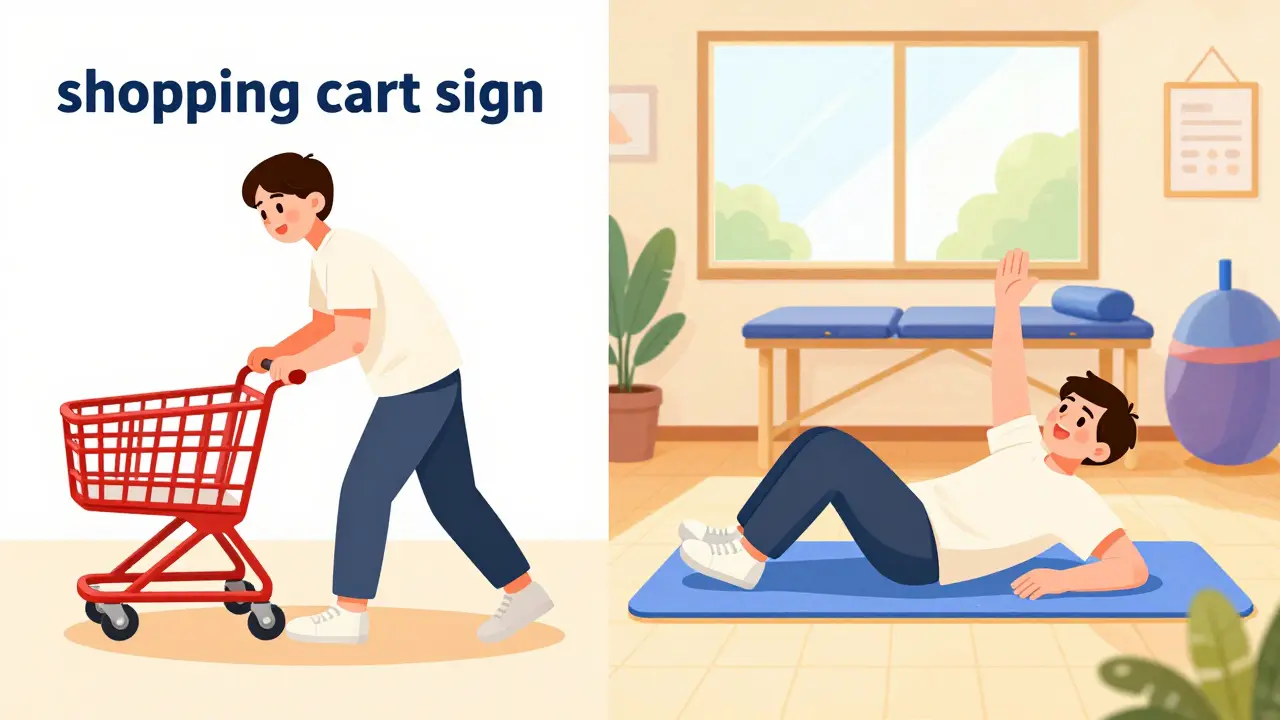
Here is the strange thing about this condition: nearly half of the people who have it never feel a thing. But for the other 50%, the pain is very real. Most people describe it as a deep ache in the lower back that feels like a pulled muscle. It usually gets worse when you stand up or walk and feels much better when you sit down or lean forward-think of how a shopping cart helps a person with back pain stay upright. As the slip gets worse, you might notice your hamstrings becoming incredibly tight. In fact, about 70% of symptomatic patients struggle with this. If the slip is severe, you might even notice a change in your posture, developing a "swayback" (lordosis) or, in advanced cases, a "roundback" (kyphosis). Doctors use the Meyerding Classification to measure exactly how far the bone has traveled. It's a percentage game:- Grade I: 0-25% slip (Mild)
- Grade II: 26-50% slip (Moderate)
- Grade III: 51-75% slip (Severe)
- Grade IV: 76-100% slip (Extreme)
- Grade V: The vertebra has completely fallen off the one below (Spondyloptosis)
Can physical therapy actually fix it?
While PT can't "push" the bone back into place, it can make the surrounding muscles so strong that the slip doesn't matter as much. The goal is stability. If your core muscles are acting like a natural brace, they take the pressure off the unstable joint. Effective conservative management usually involves:- Core Strengthening: Focusing on the transversus abdominis and multifidus muscles to stabilize the lumbar region.
- Hamstring Stretching: Since tight hamstrings are so common, keeping them flexible reduces the pull on your pelvis and lower back.
- Activity Modification: Avoiding movements that arch the back excessively.
- Medical Support: Using NSAIDs for inflammation or epidural steroid injections to calm down angry nerves.
The big decision: When to choose spinal fusion
Surgery isn't just about the "slip"; it's about the symptoms. Research shows that the age of your discs and how long you've had pain are often better predictors of your needs than the actual grade of the slip. However, when the instability causes nerve compression, Spinal Fusion is the primary answer. This process essentially welds two vertebrae together so they can no longer move independently. There are three main ways surgeons do this:- Posterolateral Fusion: The most common approach (55% of cases). It's great for Grade I and II slips, with a success rate of about 75-85%.
- Interbody Fusion (PLIF/TLIF): This involves placing a spacer (cage) between the vertebrae. This is the gold standard for severe slips because it restores the height of the disc and opens up the nerve channels. Success rates are higher here, often reaching 85-92%.
- Minimally Invasive Techniques: These use smaller incisions and are becoming more popular, though they are used in only about 10% of procedures.
| Technique | Success Rate (Grade I-II) | Success Rate (Grade III-IV) | Best For... |
|---|---|---|---|
| Posterolateral | 75-85% | 60-70% | Mild instability |
| Interbody | ~90% | 85-92% | Severe slips & nerve compression |
| Dynamic Stabilization | 76% (5-yr data) | Low | Motion preservation (Mild cases) |
Preparing for surgery and what happens after
If you decide to go through with a fusion, the work starts before you even enter the OR. Your surgeon will likely insist on a few things to ensure the bone actually fuses. Smoking is a massive risk factor-smokers have over three times the rate of pseudoarthrosis (where the bone fails to fuse). Weight management is also key, as a BMI over 30 increases complication risks by nearly 50%. Recovery is a slow process. You'll typically have 6 to 8 weeks of restricted movement, followed by several months of physical therapy. While the overall satisfaction rate is high (around 80% after two years), there is a catch called Adjacent Segment Disease. Because the fused section of your spine no longer moves, the vertebrae above and below it have to work harder. About 18-22% of patients develop new problems in these neighboring segments within five years.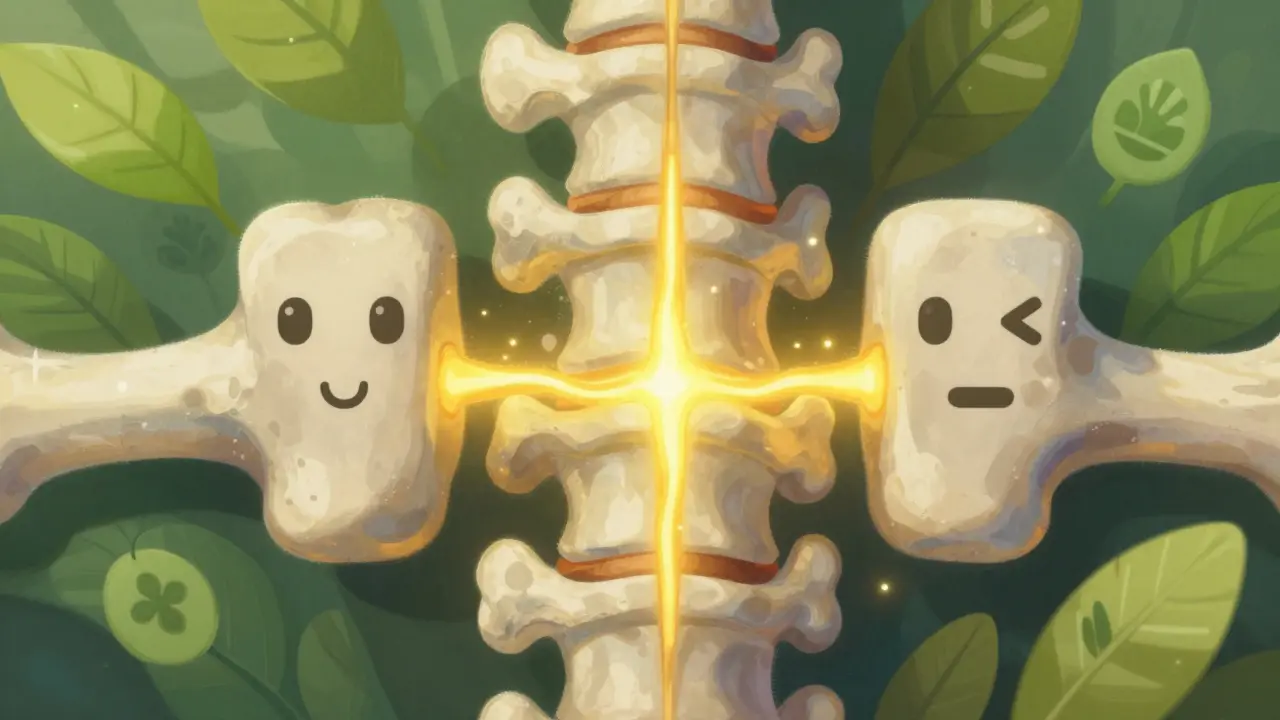
What's new in spinal care?
We are moving away from the "one size fits all" approach. New FDA-approved interbody devices are showing better fusion rates (89% vs 82%) by better mimicking natural bone structure. We're also seeing the use of Bone Morphogenetic Protein (BMP-2), a biologic that encourages bone growth. In high-risk patients, using BMP-2 has pushed fusion rates up to 94%. There's also a push for motion-preserving options. Instead of a rigid fusion, some surgeons use dynamic stabilization devices. While they aren't as successful as full fusion for severe cases, they allow the spine to keep some flexibility, which can prevent that "adjacent segment disease" mentioned earlier.Can spondylolisthesis be cured without surgery?
You cannot "cure" the slip itself without surgery-the bone will not move back on its own. However, many people successfully manage the symptoms with physical therapy, core strengthening, and lifestyle changes, meaning they live pain-free lives despite the anatomical slip.
Is a Grade I slip dangerous?
Generally, no. Grade I slips are the mildest form and often cause no symptoms. They are typically managed conservatively unless they cause significant nerve pain or instability.
How long does it take to recover from spinal fusion?
While most people return to light activity within 2-3 months, full recovery and complete bone fusion can take between 12 and 18 months.
What is the difference between spondylolysis and spondylolisthesis?
Spondylolysis is the actual stress fracture in the pars interarticularis. Spondylolisthesis is the subsequent step where that fracture allows the vertebra to actually slide forward.
Does weight affect the severity of the slip?
Excess weight increases the mechanical load on the lumbar spine, which can accelerate degenerative wear and increase the risk of complications during and after surgical intervention.