
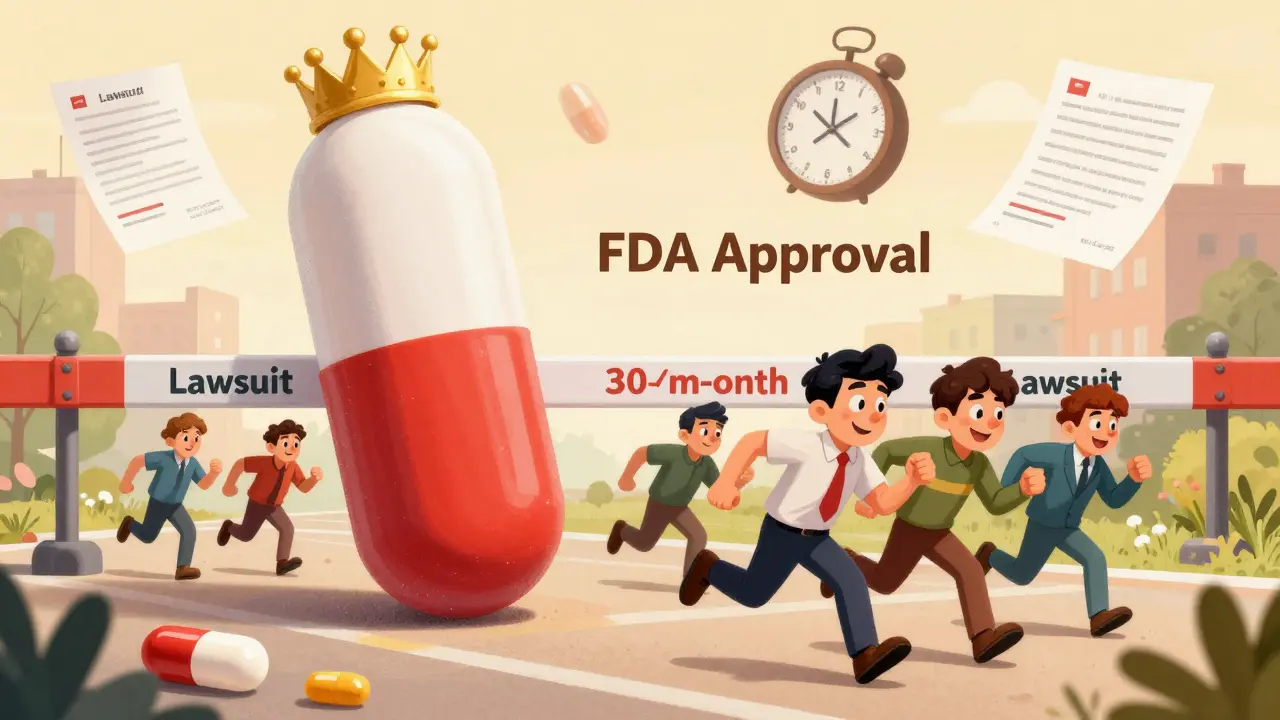
When a brand-name drug’s patent runs out, prices don’t just drop-they collapse. Often by 80% or more. That’s not speculation. It’s fact. And if you’re in pharmaceuticals-whether you make the brand or the generic-you need to know when that drop is coming. Not just roughly. Not just "next year." But down to the month. Because getting it wrong can cost hundreds of millions.
Why Timing Matters More Than You Think
The moment a patent expires, the race begins. Generic manufacturers file applications with the FDA. The first one to win approval gets 180 days of exclusive market access. That’s a goldmine. They can charge almost as much as the brand, while everyone else waits. But if you’re the brand company, that’s your revenue cliff. You’ve got maybe 12 to 18 months to prepare before sales start cratering. Most companies think they can just wait for the patent date on the FDA’s Orange Book and plan from there. That’s like trying to predict a storm by looking at the sky at noon. You’ll get caught in the downpour. Real forecasting looks at far more than expiration dates. It tracks lawsuits. It watches FDA approval timelines. It analyzes how many other companies are already in line. And it doesn’t stop there.The Hidden Delays No One Talks About
Patent expiration is just the starting line. The finish line is when the first generic hits the market. And that gap? It’s full of roadblocks. Take litigation. If the brand sues the generic maker for patent infringement, the FDA can’t approve the drug for up to 30 months. That’s not a glitch-it’s built into the system. And it happens in 42% of cases. On average, those lawsuits delay entry by 18.7 months. Then there’s "product hopping." Some brands don’t wait for the patent to expire. They quietly switch patients to a new version of the drug-a slightly modified pill, a different delivery system, even a new color. Then they stop making the old one. Patients get pushed over. Prescriptions shift. And suddenly, the generic can’t replace the original because it’s not approved for the new version. This tactic delayed generic entry by 18 to 24 months in 63% of the top 100 drugs. Don’t forget pediatric exclusivity. If a company studies a drug in children, they get six extra months of market protection. It’s legal. It’s common. And 28% of drugs have it. Miss that, and your forecast is off by half a year. And then there’s the FDA itself. Approval times have improved since 2018, but backlogs still happen. During the pandemic, generic approvals slowed by over seven months. That’s not a one-off. It’s a risk you have to model.How Forecasting Actually Works
There are two kinds of models: simple and smart. Simple models use patent dates and market size. They’re cheap. They’re easy. And they’re wrong about 60% of the time. If you’re using just the Orange Book, your forecast is likely off by 11 months on average. One company lost $220 million because their model predicted entry 11 months later than it actually happened. Smart models? They use game theory. They track Paragraph IV certifications-those are the legal notices generics file saying they believe the patent is invalid or won’t be infringed. They monitor litigation outcomes. They factor in therapeutic equivalence codes. They track how many other companies have submitted ANDAs (Abbreviated New Drug Applications). And they adjust for the drug’s class. Oncology drugs? They take longer. On average, 32% longer than cardiovascular drugs. Why? Because they’re complex. Because they have tighter safety rules. Because fewer companies want to risk the R&D. Biosimilars? Even harder. They’re not generics. They’re copies of biologic drugs-made from living cells. The approval process takes 12 to 18 months longer than for small-molecule drugs. And even after approval, doctors don’t automatically switch patients. So price drops are slower. Only 25-35% after three competitors, versus 85% for small-molecule generics by the sixth entrant.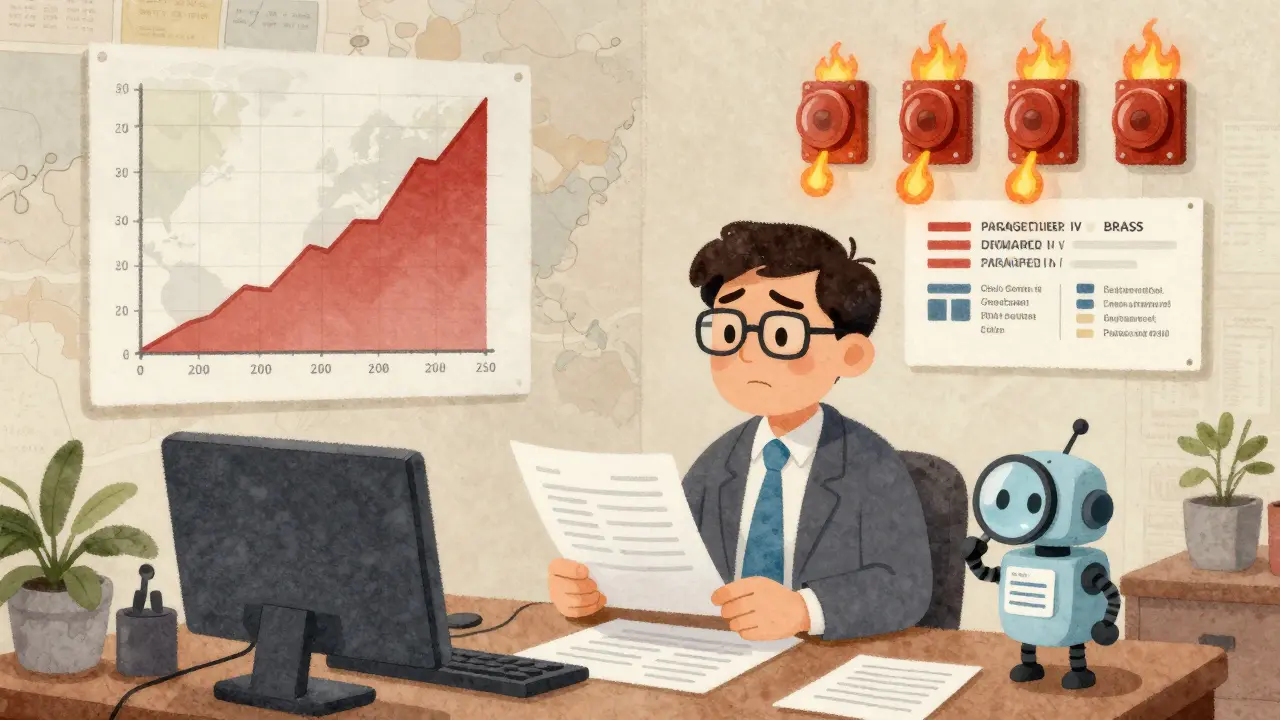
What Data You Actually Need
You can’t forecast without data. And you need more than you think. Start with the FDA’s Orange Book. It lists every patent and exclusivity period. Updated weekly. But it’s not enough. You need:- ANDA submission dates
- Paragraph IV certifications
- Patent litigation records
- Approval timelines from past drugs in the same class
- Market size-drugs over $1 billion in annual sales attract generics 11.3 months faster
- State substitution laws-California’s rules slow price drops by 8.2% compared to national averages
- Authorized generics-when the brand company launches its own generic, it happens in 41% of cases, but only 22% of models predict it
Who’s Doing This Right
The top pharma companies don’t rely on one person or one spreadsheet. They build teams. And those teams have:- Patent attorneys who understand litigation trends
- Regulatory specialists who track FDA behavior
- Economists who model competitor behavior using game theory
The New Frontier: AI and Machine Learning
AI isn’t replacing analysts. It’s making them better. New models use natural language processing to scan thousands of patent filings, court documents, and FDA letters. They learn from 15 years of approval data. They spot patterns humans miss-like how certain law firms always win certain types of cases, or how specific FDA reviewers slow down approvals for drugs with certain chemical structures. By 2026, AI-driven forecasts are expected to cut prediction errors in half-from 11.4 months to 6.8 months. But here’s the catch: AI can’t predict human behavior. It can’t foresee a brand company convincing doctors to switch patients to a new drug just before generics arrive. That’s what AbbVie did with Humira and Skyrizi. Even with multiple biosimilars approved, Humira kept 65% of the market because patients were moved over.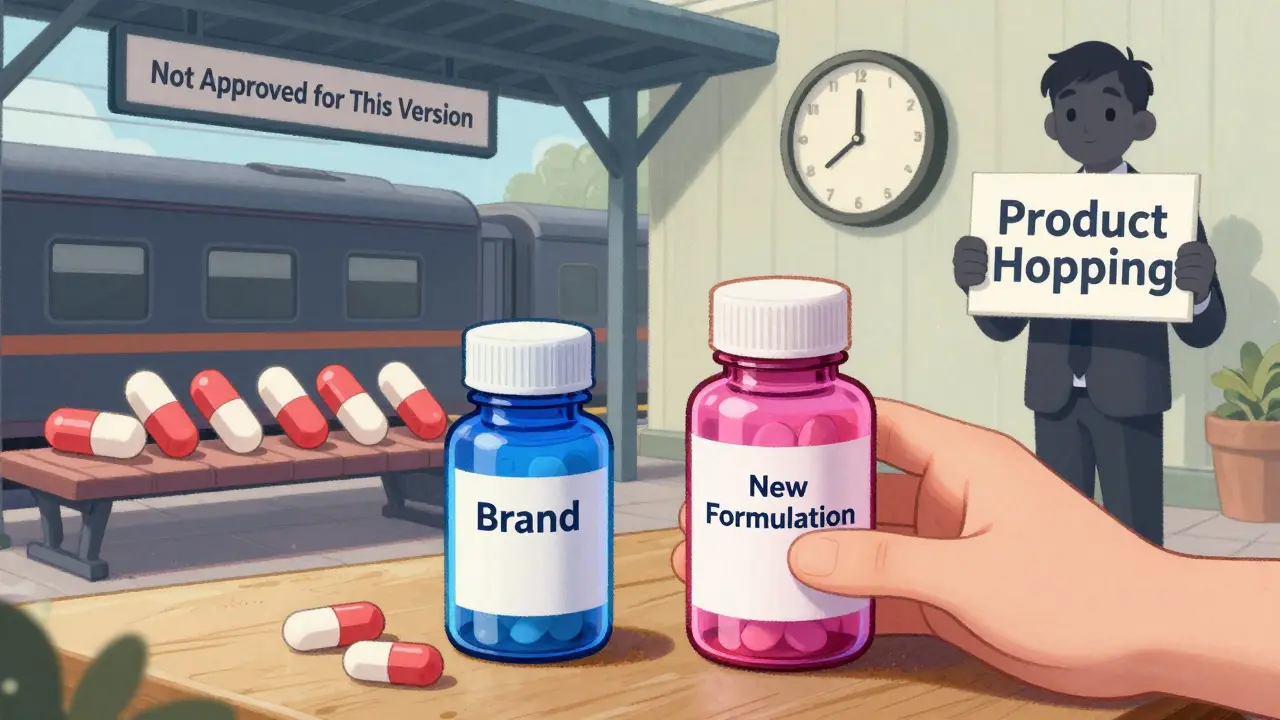
What Happens After Entry?
The first generic drops the price by 39%. The second one knocks it down to 54% below brand. By the sixth generic, prices are 85% lower. That’s the classic cascade. But it’s not always that clean. If the brand launches an authorized generic, prices drop faster-but the brand keeps the profit. If state laws restrict substitution, the drop is slower. If the drug has complex delivery (like inhalers or injectables), approval takes longer and fewer companies enter. And now, with the Inflation Reduction Act allowing Medicare to negotiate drug prices starting in 2026, the game changes again. If a drug is negotiated, generic manufacturers may hold back, waiting for the negotiated price to be set. That could reduce price erosion by 15-20% for those drugs.How to Start Forecasting-Even If You’re Not a Big Company
You don’t need a $1 million platform to get started. 1. Check the Orange Book. Find the patent and exclusivity dates. Write them down. 2. Search for Paragraph IV certifications. Go to the FDA’s website. Look for any ANDAs filed with a Paragraph IV challenge. That’s your signal someone is coming. 3. Look up past lawsuits. Use PACER or public court records. Did similar drugs face litigation? How long did it take? 4. Track approval times. Find similar drugs approved in the last five years. What was their timeline from ANDA submission to approval? 5. Watch for product hops. Did the brand release a new version in the last two years? Check if it’s listed in the Orange Book under a new patent. 6. Monitor state laws. If you’re selling in California, New York, or Texas, their substitution rules matter. You won’t get 85% accuracy. But you’ll get 60%. And that’s better than most companies.Final Reality Check
No model is perfect. Not even the best ones. The industry has $394 billion in patents expiring by 2027. That’s a lot of money at risk. And every year, companies find new ways to delay generics-patent thickets, pay-for-delay deals, citizen petitions, REMS programs. But here’s the truth: if you’re not forecasting, you’re gambling. And the house always wins. The companies that survive the patent cliff aren’t the ones with the biggest budgets. They’re the ones who started early. Who tracked the data. Who understood that the clock doesn’t start on the patent expiration date-it starts the day the first generic files its application. Know when your drug will face competition. Or be left behind.How long does it usually take for a generic drug to enter the market after a patent expires?
It varies. On average, the first generic enters 6 to 12 months after patent expiration. But delays from lawsuits, FDA backlogs, or regulatory exclusivity can push that to 18-30 months. The fastest entries happen when no litigation occurs and the drug is a simple small molecule with high market value.
What is a Paragraph IV certification?
A Paragraph IV certification is a legal statement filed by a generic manufacturer with its ANDA. It says the generic company believes the brand’s patent is invalid, unenforceable, or won’t be infringed. This triggers a 45-day window for the brand to sue. If they do, FDA approval is automatically delayed up to 30 months. It’s the biggest signal that a generic launch is imminent.
Can a brand company stop generics from entering the market?
Not permanently, but they can delay it. They can sue for patent infringement, which triggers a 30-month stay. They can also launch an authorized generic (their own version) to undercut competitors. Or they can switch patients to a new formulation-a tactic called "product hopping"-which blocks generic substitution. These tactics can delay competition for years, but they don’t stop it forever.
Why do some drugs take longer to get generics than others?
Complex drugs-like inhalers, injectables, or topical creams-take longer because they’re harder to copy. The FDA requires more testing to prove they’re equivalent. Biologics, like Humira, take even longer-up to 12 years of exclusivity-and biosimilars face lower substitution rates. Drugs with high revenue attract more generic makers, so they enter faster. Low-revenue or niche drugs may never get competition.
What’s the difference between a generic and a biosimilar?
Generics are exact copies of small-molecule drugs made from chemicals. Biosimilars are similar-but not identical-to biologic drugs made from living cells. Because biologics are complex, biosimilars can’t be exact copies. The approval process is longer, costlier, and requires more clinical data. Price drops are also smaller: 25-35% after three competitors, compared to 85% for generics.
How accurate are generic entry forecasts today?
Simple models using only patent dates are about 40-50% accurate. Advanced models that include litigation, FDA timelines, and market data are 78-85% accurate within a six-month window. AI-driven models expected by 2026 aim to reduce errors to under 7 months. But no model can fully predict strategic behavior like product hopping or pay-for-delay deals.
What should a small pharma company do if they can’t afford expensive forecasting tools?
Start with free FDA resources: the Orange Book and the ANDA database. Look for Paragraph IV certifications. Track past approval times for similar drugs. Monitor patent litigation in public court records. Check if the brand released a new version. Even with basic data, you can get within 12 months of the real entry date-which is enough to start planning pricing, inventory, or licensing deals.
Amber Daugs
January 28, 2026 AT 15:13Wow. Just... wow. You act like this is some groundbreaking revelation, but anyone who's worked in pharma for more than two years knows this stuff cold. Patent cliffs? Generic races? Product hopping? Please. This is basic industry 101. If you're still surprised by how pharma manipulates the system, maybe you're in the wrong field.
And don't get me started on those 'smart models'-they're just fancy spreadsheets with buzzwords. The real game is who you know at the FDA and which law firm you hire to drag out litigation. Data doesn't win wars-connections do.
Ambrose Curtis
January 28, 2026 AT 23:39bro i read this whole thing and my brain hurt but in a good way??
like i work in med sales and i had no idea about paragraph iv certs or how much lawsuits delay things. i thought it was just ‘patent expires = generics roll in’.
now i’m going back to my boss and asking why we’re not tracking ANDA filings. thanks for the wake-up call.
also-authorized generics?? that’s wild. so the brand just turns into the generic?? that’s next level greed.
Linda O'neil
January 30, 2026 AT 09:06This is such an important topic and I’m so glad someone laid it out this clearly. So many people think generics are just ‘cheaper versions’ without realizing the entire system is engineered to delay competition.
And honestly? The fact that companies can legally manipulate patient transitions with product hopping? That’s not innovation-that’s exploitation. Patients aren’t pawns. We need better regulation, not just better forecasting.
But yes-start with the Orange Book. It’s free. Use it. Your company’s bottom line depends on it.
Robert Cardoso
January 30, 2026 AT 12:43Let’s be honest: the entire generic entry forecasting industry is a shell game. You’ve got consultants selling $1M platforms that use the same public data you can scrape from the FDA in 20 minutes. The R² of 0.85? That’s statistical theater. Correlation isn’t causation, and none of these models account for the fact that regulators are humans with biases.
Also, AI? Please. If you think NLP can predict whether a judge will side with AbbVie because his brother-in-law used to work for their outside counsel, you’re delusional. The only thing AI predicts is how much money you’ll lose buying overpriced software.
James Dwyer
January 31, 2026 AT 09:37Love this breakdown. Seriously. Even if you’re not in pharma, this is a masterclass in how systems get gamed-and how to fight back with data.
Start small. Track one drug. One patent. One ANDA. You don’t need a team or a million-dollar tool. Just curiosity and a little discipline.
And if you’re a small company? You’ve got the advantage-you can move faster than the giants. Don’t wait for permission. Just start.
jonathan soba
January 31, 2026 AT 18:45Interesting. But I must point out that the entire premise assumes the FDA operates with neutrality. In reality, the agency is heavily influenced by industry lobbying, especially when it comes to biosimilars. The 12-year exclusivity for biologics? That wasn’t science-it was a gift from Congress to Big Pharma.
And don’t forget: the Inflation Reduction Act’s price negotiation clause will likely be gutted in court. So all this forecasting? Might be irrelevant by 2027.
Still, the data is useful. Just don’t mistake it for justice.
matthew martin
February 1, 2026 AT 18:29Man, this post felt like someone cracked open the hood of the pharma machine and said, ‘here’s the greasy, tangled mess inside.’
I used to think generics were just cheaper pills. Now I get it-they’re like gladiators running through a gauntlet of patents, lawsuits, and sneaky reformulations just to get to the starting line.
And the part about product hopping? That’s not business strategy. That’s psychological warfare on patients who don’t even know they’ve been switched. Feels dirty.
But hey-if you’re smart, you can turn this chaos into an edge. Just don’t forget: behind every data point is a real person trying to afford their meds.
Chris Urdilas
February 2, 2026 AT 04:24So let me get this straight-you spent 2,000 words explaining that Big Pharma is full of liars and lawyers, and the only thing that saves you is… doing your homework?
Wow. Groundbreaking. I’m shocked. Who knew that if you actually look at the documents instead of trusting the press release, things make sense?
Next up: ‘How to Tell If Your Car Has Gas in It: A Comprehensive Guide.’
Jk. Actually, this is super useful. Thanks for not sugarcoating it.
Jeffrey Carroll
February 3, 2026 AT 07:43While the technical analysis presented here is thorough and largely accurate, I would urge caution in over-relying on predictive models. The pharmaceutical landscape is not merely a function of legal and regulatory variables-it is deeply entwined with ethical, sociopolitical, and economic forces that resist quantification.
Moreover, the emphasis on competitive advantage may inadvertently incentivize exploitative practices. One must ask: at what cost do we optimize for market entry timing? The patient, after all, is not a variable in the equation.
Nevertheless, the operational framework provided is sound and deserves serious consideration by stakeholders.
Phil Davis
February 4, 2026 AT 22:26They really did turn drug development into a chess match where the rules keep changing and the pieces are people’s lives.
And the worst part? The people who lose are the ones who can’t afford to play.
I get why companies do it-profits, pressure, shareholders-but it still feels like watching someone steal your lunch money and then charge you for the napkin they wrapped it in.
Katie Mccreary
February 6, 2026 AT 18:51Wait, so if a brand company launches its own generic, they’re basically just cutting their own throat… or are they? Are they just keeping the profit and pretending to be the good guy?
And why does no one talk about how the FDA approves generics faster if the brand company submits it themselves? That’s not fair. That’s rigged.
Also-how many people know this? Probably none. That’s why we’re all paying too much.
fiona vaz
February 7, 2026 AT 02:15This is exactly the kind of clarity the industry needs. So many people think generics are ‘cheap and dangerous’-but the real danger is the lack of transparency.
Start with the Orange Book. It’s free. It’s public. And it’s your first weapon.
Also, check the litigation dockets. If a company sues a generic within 45 days of a Paragraph IV filing? That’s your signal. Don’t wait for the patent date. Watch the filings.
John Rose
February 7, 2026 AT 10:33One thing missing from this analysis: the role of pharmacy benefit managers (PBMs). They’re the middlemen who decide which generics get pushed to patients. Even if a generic is approved, if the PBM doesn’t incentivize substitution, it won’t move the needle.
And they’re not required to disclose their rebate structures. So your forecast might be perfect-but if the PBM favors the brand, the price drop never happens.
Still, great foundation. Just add PBM data to the model.
Lexi Karuzis
February 7, 2026 AT 19:20THIS IS A COVER-UP. THE FDA IS IN BED WITH PHARMA. THE PATENT SYSTEM IS A SCAM. THEY’RE USING ‘PRODUCT HOPPING’ TO TRICK PATIENTS INTO THINKING THEY NEED A NEW DRUG-WHEN IT’S JUST A DIFFERENT COLOR. AND THE GOVERNMENT LETS THEM DO IT BECAUSE THEY’RE PAYING OFF LAWMAKERS.
AND AI? HA! AI IS JUST A TOOL TO MAKE THE LIES SOUND SMARTER. THEY’RE NOT PREDICTING-THEY’RE MANIPULATING.
YOU THINK YOU’RE BEING SMART? YOU’RE JUST A GHOST IN THE MACHINE.
THEY’RE LYING TO YOU. AND THEY’RE LYING TO ME.
AND THEY’RE LYING TO EVERYONE WHO NEEDS MEDS.
Brittany Fiddes
February 8, 2026 AT 08:40Oh, so now we’re pretending the US has a ‘fair’ pharmaceutical system? Please. In the UK, we have the NHS-price controls, transparency, and no patent games. Generics hit the market within weeks. Patients get affordable meds. Doctors aren’t pressured to switch patients because a pill changed color.
You Americans act like this chaos is normal. It’s not. It’s a failure of governance. And you’re all just… accepting it?
Pathetic.