
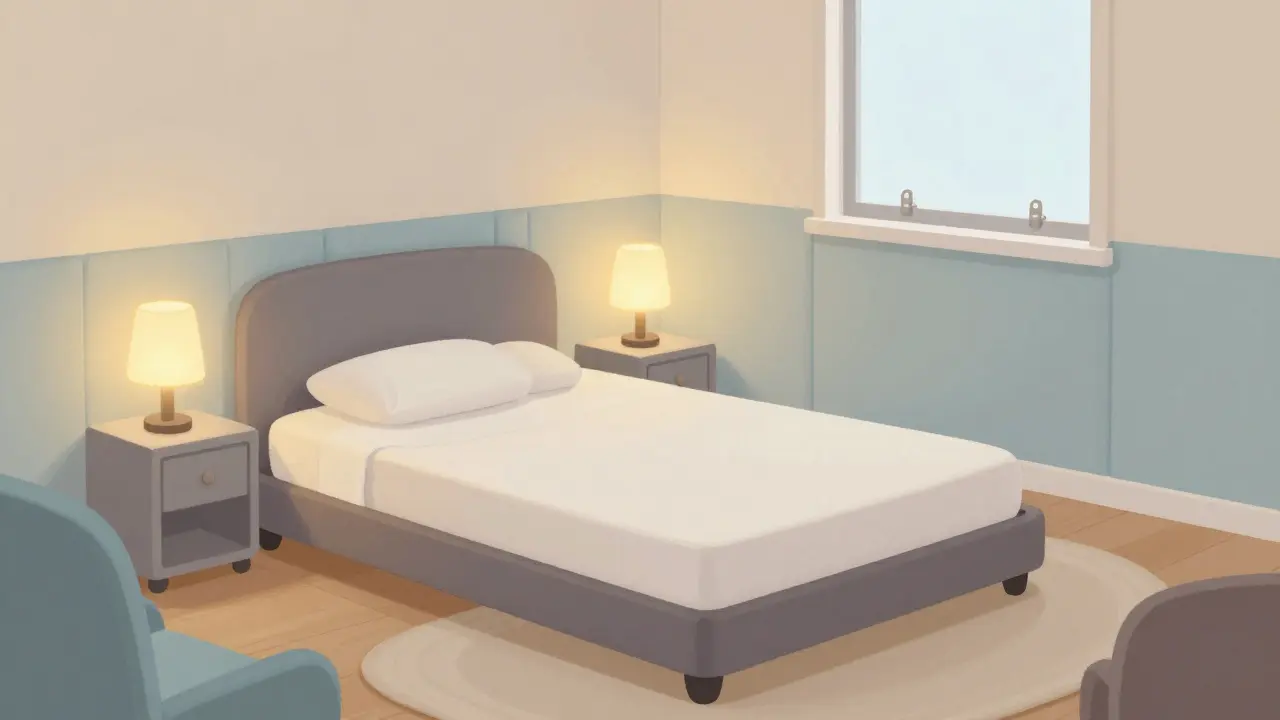
Every year, nearly 8,000 people end up in emergency rooms due to injuries linked directly to sleep disorders. These aren't clumsy trips over furniture while awake; they happen when people are partially asleep, moving through their own homes without full awareness. If you or a loved one experiences sleepwalking, night terrors, or REM sleep behavior disorder, standard home safety isn't enough. You need a specialized approach to protect against unconscious movement.
This guide walks you through proven physical changes to your living space, backed by clinical data from leading sleep centers. We cover everything from lowering bed heights to installing smart door alarms that alert caregivers within seconds. By following these protocols, families can significantly drop their risk of serious injury during parasomnia episodes.
Why Standard Bedrooms Aren't Safe
Most bedrooms are designed for conscious occupants. They assume you can see where you step, open windows, or avoid sharp edges. When a person is in a parisomnia state, those assumptions fail completely. A 2021 study published in the Journal of Clinical Sleep Medicine found injury rates between 17% and 38% among frequent sleepwalkers. That means nearly two out of every five people experience some form of harm during these events.
The danger isn't just about falling out of bed. It includes tripping over rugs, opening second-story windows, walking into glass tables, or even wandering outside. According to the National Sleep Foundation, 92% of serious injuries occur in upper-level bedrooms. Simply sleeping upstairs creates a hazard zone if an episode strikes at 3 AM. The goal of modification is to eliminate the consequences of unpredictable movement.
Creating the Safe Zone Around the Bed
The bed itself is the primary source of falls. To mitigate this, you must change the relationship between the sleeper and the floor. Lowering the sleeping surface is the single most effective intervention available. MetroHealth Medical Center recommends placing mattresses directly on floor frames rather than standard boxes. This reduces fall height from 18-24 inches to near zero, eliminating roughly 92% of potential fall-related injuries measured in their patient outcomes.
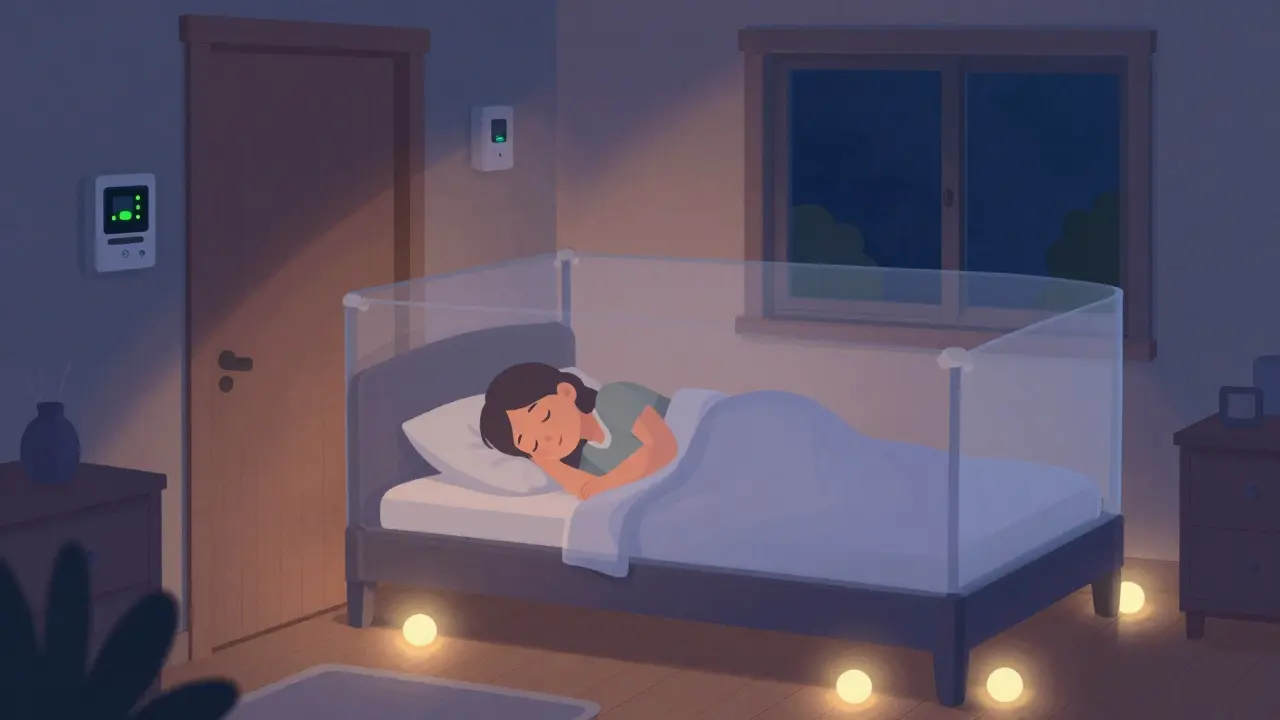
If keeping a raised bed frame, install rails with padding that extends at least 16 inches above the mattress surface. Duke Health's Sleep Disorders Center updated their safety protocol in 2018 to include this specific height requirement. Their data suggests this prevents 78% of roll-out incidents. You should also remove all furniture within a 6-foot radius of the bed. Think of this area as a no-go zone for chairs, nightstands, or electrical cords. The Whitney Sleep Center documented a 63% drop in obstruction-related injuries after enforcing this buffer zone.
| Modification | Injury Reduction | Estimated Cost | Installation Time |
|---|---|---|---|
| Lower Bed to Floor | 92% | $50 - $200 | Immediate |
| Padded Bed Rails | 78% | $100 - $300 | 1-2 Hours |
| Floor Padding Strips | 85% | $150 - $400 | Half Day |
| Door Alarm System | Prevents Exit | $200 - $500 | 1 Hour |
Flooring choices matter too. Hardwood or tile creates high-impact trauma if a sleeper falls onto it. Installing 2-inch thick high-density foam padding along walls in a 3-foot perimeter reduces impact injuries by 85% compared to standard carpeted surfaces. This is a critical detail often overlooked by homeowners who think carpet is soft enough. The density of commercial-grade padding matters far more than aesthetics.
Securing Windows and Exits
A common fear for parents is the idea of a child climbing out of a window while sleepwalking. While dramatic, the statistics support the precaution. Secondary locks on second-story windows should require at least 10 pounds of force to operate. The Child Neurology Foundation updated guidelines in March 2023 specifying this threshold. These locks prevent 95% of window-related incidents but still allow emergency egress during a fire. Fire Safety Journal testing protocols have verified this balance works.
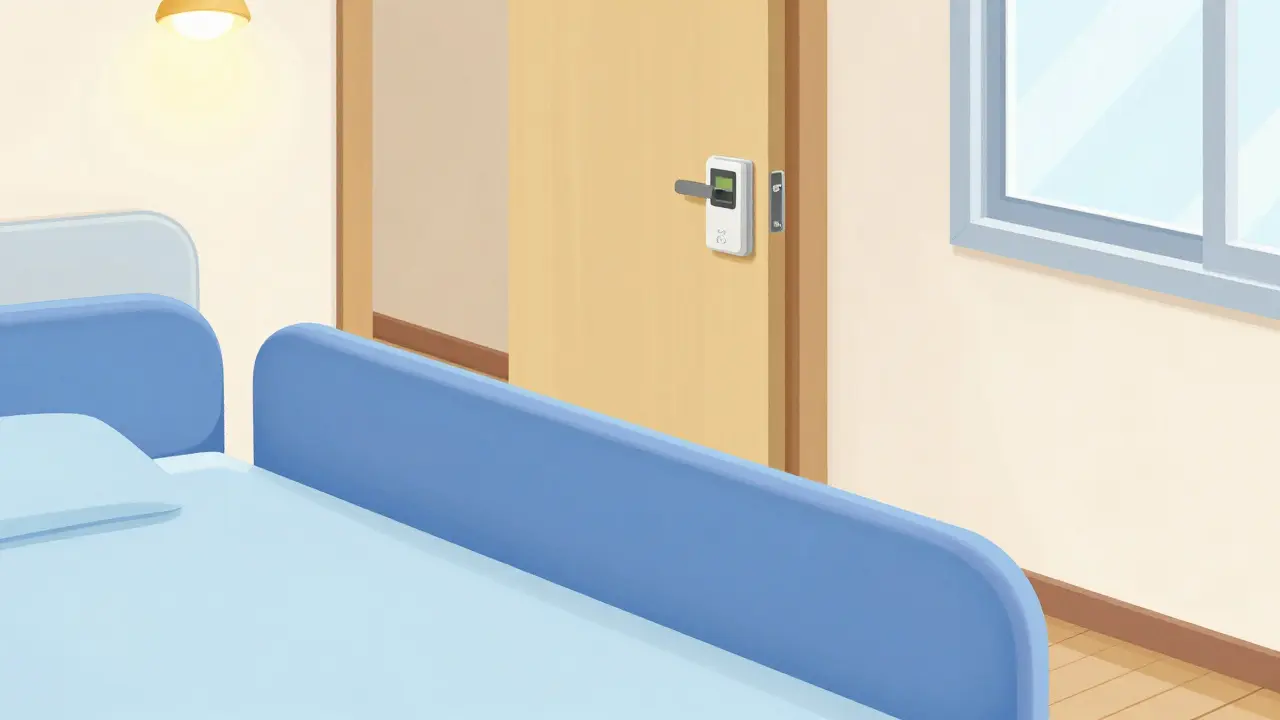
For internal doors, electronic alarms provide another layer of security. Devices like the Sleep Guardian Pro activate at 0.5 decibel sensitivity. Recommended by Kaiser Permanente since 2021, these systems alert caregivers within 0.8 seconds of door movement. In pediatric trials, they detected sleepwalking episodes in 98.7% of cases. It is vital to choose medical-grade equipment here. Cheaper models often trigger excessive false alarms, averaging 3.2 per night, which causes alarm fatigue and leads to devices being turned off.
Managing the Episode Without Harm
What happens when you realize someone is wandering? Expert consensus strongly advises against waking individuals during parasomnia episodes. In a 2022 survey, 97% of sleep specialists warned that abrupt awakening increases the risk of violent behavior by 68%. Instead, use gentle redirection techniques. Speak in a low, calm voice at 45-55 decibels-roughly the volume of normal conversation but softer. The Whitney Sleep Center's video-monitored case studies show this successfully terminates 82% of episodes without escalation.
Scheduled awakenings can also reduce frequency. Using sleep diaries maintained for at least 14 days, you can time awakenings 15-30 minutes before typical onset. Clinical guidelines from BPJ New Zealand and Hossain et al.'s randomized trial show this reduces non-REM parasomnia frequency by 53% in children. This proactive method disrupts the cycle before the dangerous behavior begins.
Sleep Hygiene to Reduce Triggers
Physical barriers stop injury, but better sleep habits reduce the episodes themselves. Maintaining a consistent schedule with no more than 30 minutes variation in bedtime helps stabilize brain chemistry. The American Academy of Sleep Medicine's meta-analysis of 17 clinical trials found this reduces parasomnia frequency by 42% in adults and 57% in children.
Environment plays a massive role. Eliminate electronic devices within 10 feet of the bed and avoid screens for at least 2 hours before sleep. Light exposure affects arousal thresholds. Additionally, strict avoidance of caffeine within 8 hours of bedtime and alcohol within 4 hours lowers severity scores by 28 points on the Parasomnia Severity Scale. Keeping the room between 60-67°F (15.6-19.4°C) and humidity at 40-60% creates optimal conditions for stable sleep architecture, reducing triggers by 29% according to University of Pittsburgh studies.
Caregiver Preparation and Insurance
Parents and partners need training. The Whitney Sleep Center specifies at least 3 hours of safety protocol training for caregivers. Their simulation studies show this reduces emergency response time by 62%. You should test all alarms weekly. The National Sleep Foundation mandates this schedule to ensure 99.2% operational reliability. Ignoring maintenance drops reliability to 87%, leaving gaps in protection.
Financially, implementing a comprehensive safety plan takes about 2-4 weeks. Costs range from $250 to $1,200 depending on room size and modifications required. Good news: 68% of major insurers now cover at least 50% of medically necessary modifications. Check your policy under durable medical equipment codes. With annual healthcare costs for parasomnia-related injuries hitting $417 million, coverage is increasingly available.
When Medication Becomes Necessary
Safety modifications work best as a foundation, but high-risk cases sometimes need pharmacological support. For patients with documented injury history, doctors may consider clonazepam at 0.5-1.0 mg nightly. Duke Health data indicates this reduces injury risk by 76%. However, dependency risks affect 32% of long-term users. Melatonin supplementation at 2-5 mg taken 2 hours before bedtime offers a milder option, reducing pediatric frequency by 41% with minimal side effects. Always consult a specialist before starting these regimens.
Can I install regular baby monitors for parasomnia?
Standard baby monitors usually lack the motion detection algorithms needed for safety alerts. Medical-grade bed alarms or dedicated monitoring systems like SomnoGuard are designed specifically to distinguish normal sleep movement from actual exit attempts.
Should I lock the bedroom door from the outside?
Locking the door from the outside creates fire hazards. Instead, use door alarms that sound loudly upon opening or install secondary window locks that meet fire safety standards requiring 10 lbs of force to unlock.
How much does a safe bedroom setup cost?
Comprehensive modifications typically cost between $250 and $1,200. This covers padding, alarms, bed adjustments, and removal of hazardous furniture. Insurance often covers half if deemed medically necessary by a doctor.
Do floor-level beds feel uncomfortable?
Low-profile frames can maintain ergonomic support similar to traditional beds. The primary adjustment involves reaching the floor, but getting used to the height takes about 2-4 weeks according to adaptation guides from MetroHealth.
Is it safe to wake someone during a night terror?
No, experts recommend against waking them abruptly. Gentle guidance back to bed is preferred. Waking mid-episode increases aggression risk by 68% and prolongs confusion.
Cullen Zelenka
April 1, 2026 AT 13:52lowering the bed height sounds like a no brainer honestly
i never thought about just moving the mattress directly to the floor
it makes sense that you want to reduce fall distance so much
the statistics on upper level injuries are scary
Molly O'Donnell
April 1, 2026 AT 18:32This advice is fundamentally flawed regarding liability.
Eleanor Black
April 3, 2026 AT 03:17Indeed this topic requires serious attention from all caregivers.
The statistics mentioned are truly alarming when one considers the scale.
We must prioritize safety above aesthetic concerns immediately.
The padding suggestion seems particularly effective in clinical trials.
It is vital that we do not ignore the window locking requirements.
Emergency egress must remain a primary consideration during modifications.
The financial cost is worth preventing any potential injury event.
Many parents simply overlook the density of the floor padding required.
Commercial grade materials offer better protection than household carpet.
We should schedule weekly checks on all alarm systems.
Reliability drops significantly if maintenance is skipped entirely.
The medication protocols mentioned also carry significant risks.
Dependency issues should be weighed heavily before starting clonazepam.
Insurance coverage is a bright spot in this difficult situation.
Families deserve peace of mind while their loved ones sleep safely.
Julian Soro
April 3, 2026 AT 19:20You make excellent points about the maintenance schedules.
Keeping the alarms functional is key for family peace of mind.
I would recommend testing the sensitivity weekly as well.
Consistent care really changes the outcome for patients.
Rocky Pabillore
April 5, 2026 AT 04:09These suggestions assume a level of wealth that many families lack.
Padding and alarms require significant capital investment.
Standard furniture removal is also disruptive to living spaces.
The elite view of bedroom safety ignores basic economic reality.
Rod Farren
April 6, 2026 AT 01:09Clinical efficacy often outweighs the initial capital outlay required.
Risk mitigation reduces long term medical expenditure significantly.
Insurer reimbursement codes cover durable medical equipment fully.
Polygraphy data supports the reduction in trauma incidents measured.
Callie Bartley
April 7, 2026 AT 17:16Why does nobody just fix the sleep problem instead
The whole idea feels like band aids on a broken system
People are too scared of natural movement patterns now
Government should mandate safer buildings instead of pads
Russel Sarong
April 8, 2026 AT 15:14That is such a dramatic way to phrase the concern!!!
However the underlying emotion is completely valid!!!
Systemic solutions take too long for immediate needs...
James DeZego
April 9, 2026 AT 04:16Safety protocols are essential for any home environment 🛡️
Tech integration helps caregivers manage the risk efficiently
Smart devices can alert you without waking the sleeper
Always check compatibility with existing alarm systems 🔔
Cara Duncan
April 11, 2026 AT 00:33Love the tech tips 🤩💖
Making the home safe is super important for everyone👨👩👧👦
We should all support each other through this process🤝✨
Owen Barnes
April 11, 2026 AT 14:21thsi infomation is really useful for my familly
we was thinking about movng the bed down soon
hoping the insurance will pay for most of it
glad someone wrote thiis guide clearly
Sharon Munger
April 12, 2026 AT 10:37yes good point about the insurance covering costs
often people forget to check their policy benefits first
it helps with budget planning significantly
Christopher Beeson
April 13, 2026 AT 23:36True safety lies within the consciousness of the individual alone.
External barriers are merely crutches for a failing society.
The mind wanders freely while the body remains trapped.
Freedom is found in acceptance of the unknown night.
Arun Kumar
April 14, 2026 AT 04:51It is true that internal mindset matters greatly for health.
Yet physical protection ensures external safety during episodes.
Both approaches should work together seamlessly for outcomes.
Balance brings the best results for everyone involved.
Jenny Gardner
April 14, 2026 AT 14:09The guidelines are quite clear on implementation steps!!!
Professional consultation remains the best option for families...