
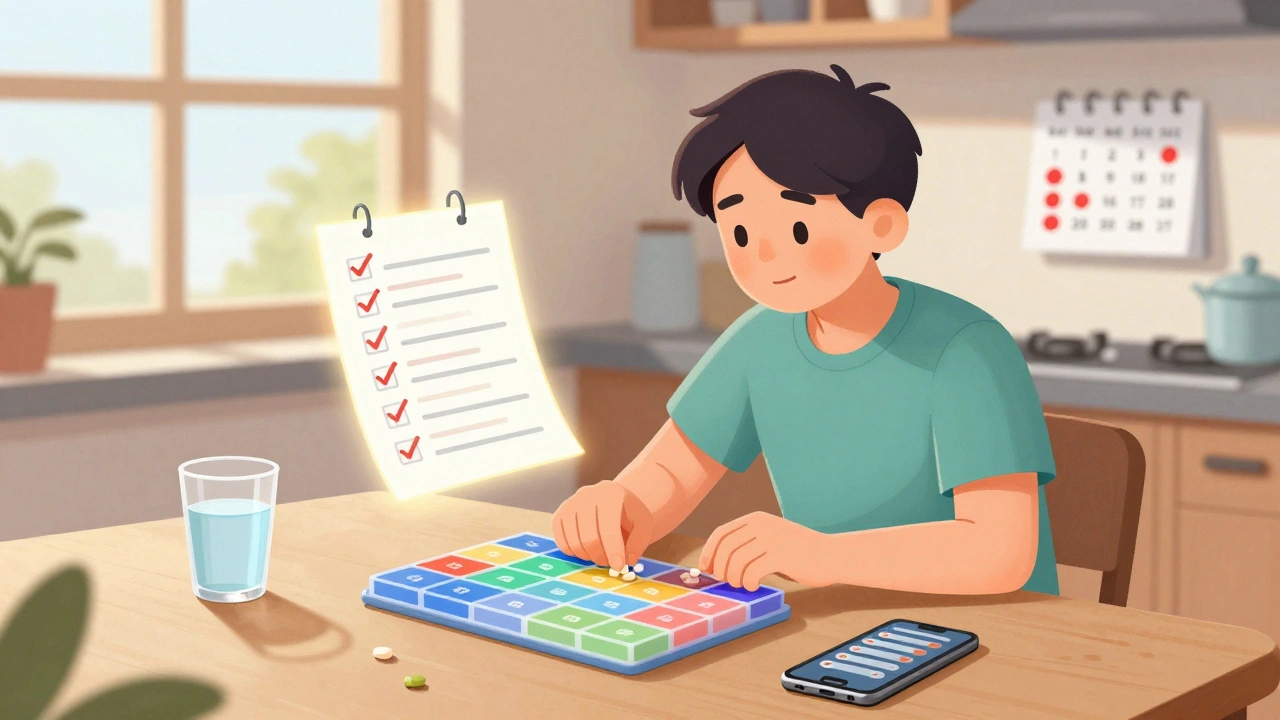
More than half of all new cancer drugs approved in the last five years are taken by mouth. That means more patients are managing powerful cancer treatments at home-no IV bags, no clinic visits, no nurses. Just pills. But what looks like convenience can quickly turn into a hidden risk if you don’t know what you’re doing. Oral chemotherapy isn’t just a simpler version of IV chemo. It’s a different kind of battle-one where your daily choices make the difference between healing and harm.
Why Oral Chemotherapy Feels Easier (But Isn’t)
On paper, oral chemotherapy sounds perfect. Take a pill at home. Skip the drive to the hospital. Save hours each week. That’s true. Patients using oral chemo save an average of 3.7 hours per treatment cycle compared to IV therapy. For someone already tired from cancer and treatment, that’s huge.
But here’s the catch: when you’re in charge of your own chemo, you’re also in charge of every mistake. No nurse double-checks your dose. No pharmacist watches you swallow it. If you forget a pill, take it with food when you shouldn’t, or mix it with an antacid, the drug might not work-or worse, it could hurt you.
Studies show only 55% to 75% of patients take their oral chemo exactly as prescribed. That’s not a small gap. It’s the difference between treatment working and treatment failing. In IV chemo, adherence is 85% to 95%. With pills, you’re on your own.
How Oral Chemo Works-And Why It’s So Sensitive
Oral chemo drugs don’t all work the same way. Some, like cyclophosphamide and capecitabine, are traditional cytotoxic agents. They attack fast-growing cells-both cancer and healthy ones. Others, like imatinib and dasatinib, are targeted therapies. They lock onto specific proteins in cancer cells, leaving more healthy tissue alone.
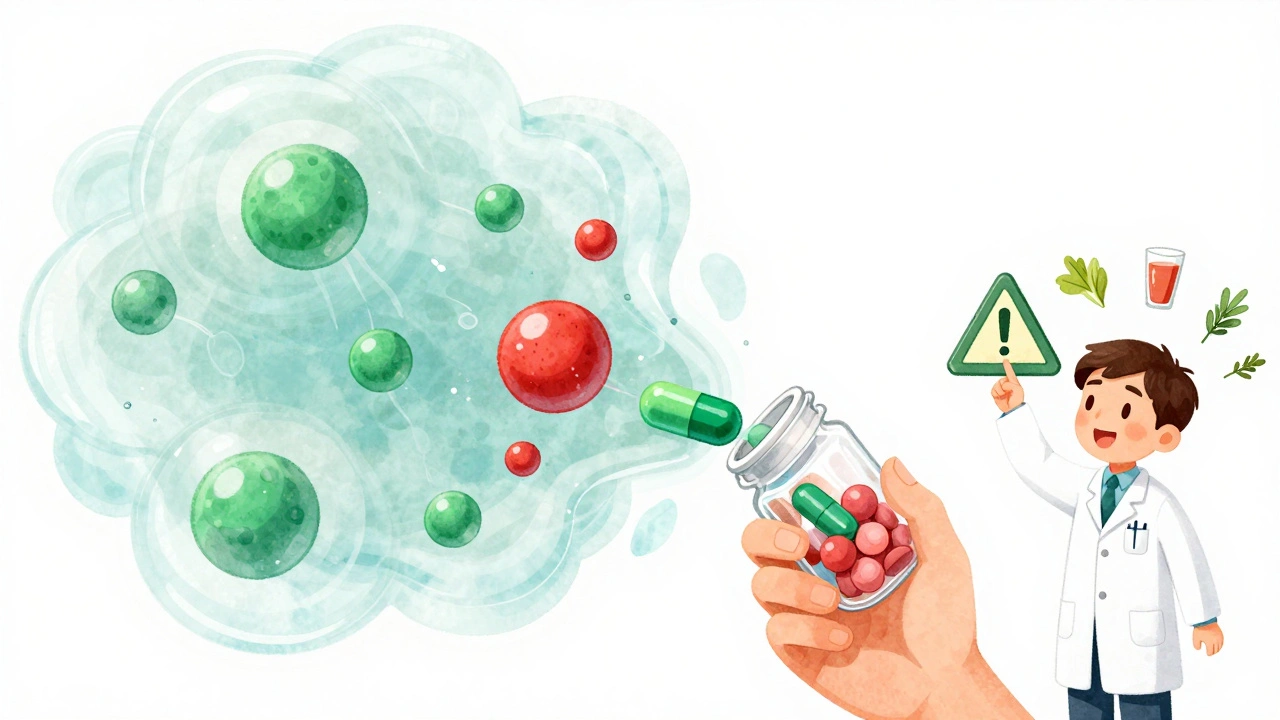
But even targeted drugs are fragile. Their absorption depends on stomach acid, food timing, and other meds you’re taking. For example:
- Capecitabine must be taken on an empty stomach. If you take an antacid or proton pump inhibitor within two hours before or after, your body absorbs 30% to 50% less of the drug.
- Nilotinib requires you to fast for two hours before and after each dose. Eating even a snack can cut its effectiveness.
- Dasatinib drops by 80% if you take it with rifampin (a common antibiotic). Ketoconazole (an antifungal) can spike lapatinib levels by over 300%-leading to dangerous toxicity.
These aren’t rare cases. They’re standard warnings for most oral chemo drugs. The CYP3A4 enzyme system in your liver processes most of them. Anything that boosts or blocks this system-herbs, supplements, OTC meds, even grapefruit juice-can change how the drug works.
The Most Common Side Effects (And What to Do About Them)
Side effects from oral chemo vary by drug, but some show up again and again.
- Myelosuppression: Low blood counts. This happens in 65% of people on cyclophosphamide and up to 78% on dasatinib. You might feel weak, get infections easily, or bruise without reason. Weekly blood tests are often required.
- Hand-foot syndrome: Redness, swelling, peeling, or pain in your palms and soles. It affects over half of patients on capecitabine. Avoid hot water, tight shoes, and heavy pressure on your hands. Cool compresses help.
- Diarrhea and mucositis: Severe diarrhea happens in 45% of cases. Mouth sores occur in 30%. Stay hydrated. Use alcohol-free mouthwash. Call your team if you have more than four loose stools a day or can’t eat.
- Liver damage: 15% to 25% of patients develop elevated liver enzymes. You won’t feel it-only blood tests catch it. Never skip your liver function tests.
- Skin rashes: EGFR inhibitors like erlotinib cause rashes in 75% to 90% of users. They’re not just cosmetic-they can be painful and signal the drug is working. Don’t ignore them. Use gentle moisturizers and sunscreen.
- Hypertension: VEGF inhibitors can raise blood pressure in 25% to 35% of patients. Check your BP at home. If it’s over 140/90, contact your doctor.
Here’s the key: don’t try to tough it out. Side effects are not a sign you’re “not strong enough.” They’re a signal your body is reacting. Early intervention prevents hospitalizations.
Why Adherence Is the Biggest Risk-And How to Beat It
You might think forgetting a pill once isn’t a big deal. But with chemo, timing matters. Many oral drugs have narrow windows where they’re effective. Missing a dose can let cancer cells recover. Taking too much can poison you.
Here’s what works:
- Use a pill organizer with labeled compartments for each day and time. Don’t just rely on memory.
- Set phone alarms for every dose-even if you think you’ll remember. Set two: one for the time, one 15 minutes later.
- Keep a written log. Mark off each dose as you take it. If you miss one, write why. This helps your team adjust your plan.
- Never double up. If you miss a dose, call your nurse or pharmacist before taking another. Some drugs require a 12-hour gap. Others can’t be made up at all.
- Store pills properly. Most need to stay at room temperature (20-25°C). Don’t keep them in the bathroom or car. Some require refrigeration-check the label.
- Dispose safely. Never flush chemo pills. Use FDA-approved medication disposal bags. Your pharmacy can give you one.
Patients who get structured support-like weekly check-in calls, visual calendars, and teach-back education-have 82% adherence rates. Those who don’t? Only 58%. That’s a 24-point gap. One phone call can save your treatment.
What Your Care Team Must Do (And What You Should Demand)
Oral chemo isn’t just a prescription. It’s a full care program. The National Comprehensive Cancer Network now requires all accredited cancer centers to have a formal oral chemotherapy management plan. That means:
- A pharmacist or nurse must sit with you for at least 45 minutes before you leave with your first prescription.
- You must get written instructions with pictures-not just a sheet of paper.
- You must be asked to repeat back what you’ll do. (“Tell me how you’ll take your pills this week.”)
- You’ll get scheduled follow-ups: day 3, day 7, day 14.
- Pharmacy refill records are tracked to spot missed doses.
- You have a direct line to someone who can answer questions 24/7.
If your center doesn’t offer this, ask why. You’re not being difficult. You’re protecting your life.
New Tools Making Oral Chemo Safer
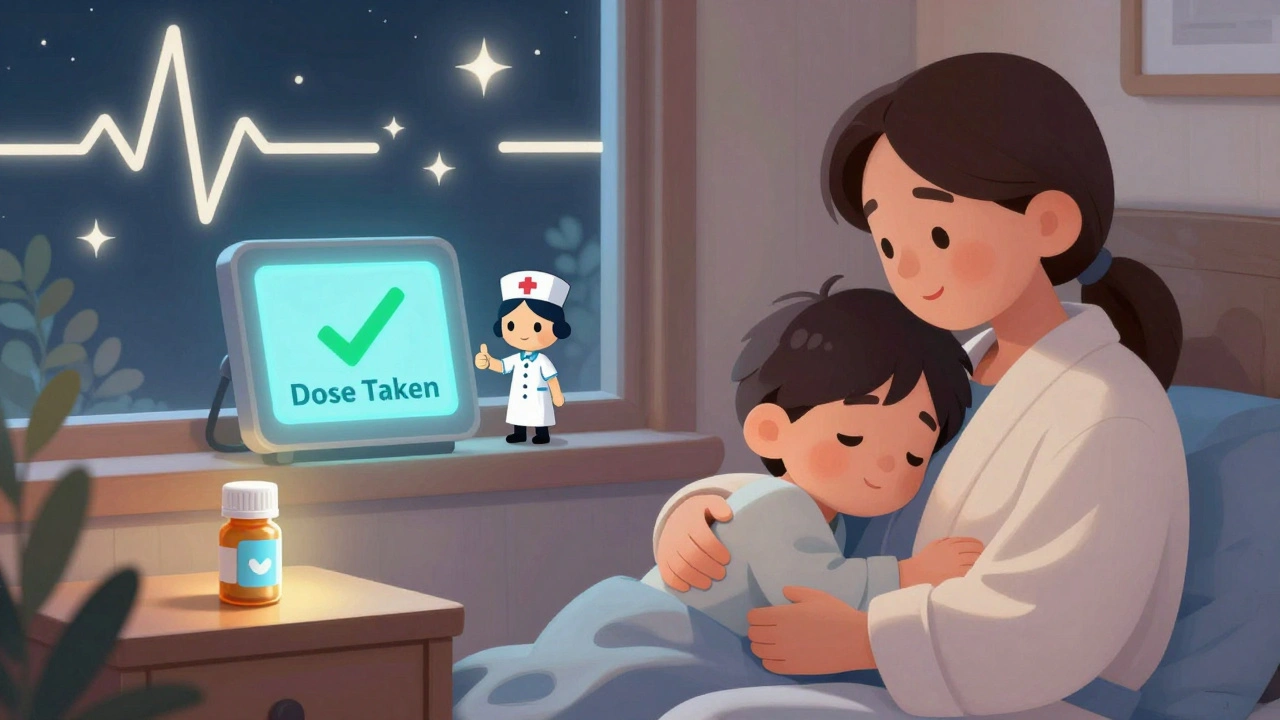
Technology is catching up. The FDA approved the Proteus Discover system in 2021-a tiny sensor inside the pill that sends a signal to a patch on your skin when you take your dose. Your care team gets a notification. No guesswork.
Smart pill bottles with Bluetooth are in phase 3 trials. They track when you open the cap and send alerts if you miss a dose. One study showed 92% accuracy in predicting adherence.
And genetic testing? It’s becoming routine. Before you take fluoropyrimidines like capecitabine, you may get tested for DPYD gene mutations. If you have them, your dose is lowered-cutting severe toxicity by 72%.
These aren’t sci-fi. They’re real, available tools. Ask your oncology team if any are right for you.
When to Call Your Doctor Immediately
You don’t need to wait for your next appointment. Call right away if you have:
- Fever over 100.4°F (38°C)
- Uncontrollable diarrhea or vomiting
- Bleeding from gums, nose, or in stool
- Severe pain in hands or feet
- Confusion, dizziness, or trouble breathing
- Any rash that spreads or blisters
These aren’t “wait and see” symptoms. They’re red flags. Oral chemo moves fast. Your care team needs to act faster.
Final Reality Check
Oral chemotherapy gives you freedom. But freedom without responsibility is dangerous. It’s not just about taking a pill. It’s about understanding how it works, how it interacts with everything else in your life, and how to spot trouble before it’s too late.
The drugs are more precise. The side effects are different. The risks are hidden. But the stakes? Just as high as IV chemo.
Ask for the full support package. Use the tools. Track your doses. Never guess. You’re not just a patient-you’re the most important part of your treatment team.
Can I take over-the-counter painkillers with oral chemotherapy?
Some are safe, others aren’t. Avoid NSAIDs like ibuprofen or naproxen unless approved by your oncologist-they can increase bleeding risk and kidney stress. Acetaminophen (Tylenol) is usually okay, but never exceed 3,000 mg per day. Always check with your pharmacist before taking any OTC drug, supplement, or herbal remedy.
What if I vomit after taking my chemo pill?
Don’t take another dose. Call your care team immediately. If vomiting happens within 30 minutes of taking the pill, they may advise a replacement dose. If it’s later, they’ll likely skip the dose and adjust your schedule. Never assume you need to make it up yourself.
Can I drink alcohol while on oral chemotherapy?
Most oncologists recommend avoiding alcohol completely. It can worsen liver damage, increase dehydration, and interact with chemo drugs that are processed by the liver. Even moderate drinking can interfere with drug metabolism. If you’re unsure, ask your pharmacist-some drugs have strict no-alcohol rules.
How do I know if my oral chemo is working?
You won’t feel it directly. Unlike IV chemo, where side effects can signal effectiveness, oral chemo works silently. Your oncologist will track progress through blood tests, imaging scans (CT, MRI, PET), and tumor marker levels. Never judge effectiveness by how you feel-always rely on your care team’s data.
Is it safe to be around children or pregnant people while taking oral chemotherapy?
Yes, but with precautions. Oral chemo drugs can be present in sweat, urine, and vomit for up to 48 hours after taking them. Wash your hands thoroughly after using the bathroom. Flush the toilet twice. Avoid sharing towels or utensils. If you’re handling your pills, wear gloves and wash your hands after. Keep pills locked away and out of reach of children.
What happens if I run out of pills and can’t get a refill?
Don’t wait. Contact your oncology nurse or pharmacist immediately. Many cancer centers have emergency supply programs. Skipping doses-even one-can allow cancer cells to grow back. If you’re having trouble with insurance or access, ask for a patient navigator. They specialize in helping you get your meds on time.
Mayur Panchamia
December 6, 2025 AT 09:44Let me tell you something-this whole 'oral chemo at home' thing is a corporate scam dressed up as convenience! They don’t care if you live or die-they just want to cut costs and shift responsibility onto patients who are already broken! You think they’d give you a nurse? Nah! They give you a pill bottle and a website link to a 40-page PDF written in legalese! And don’t even get me started on those 'smart pill bottles'-they’re just tracking devices for Big Pharma to monetize your compliance! This isn’t medicine-it’s surveillance with a side of chemotherapy!
Chris Park
December 6, 2025 AT 14:12Actually, the data here is misleading. The 55-75% adherence rate? That’s because most patients are being poisoned by the very system meant to save them. The CYP3A4 enzyme isn’t just sensitive-it’s manipulated. The FDA approved the Proteus sensor? That’s not innovation-it’s data harvesting. Every time you take a pill, your biometrics get fed into a database owned by a pharmaceutical conglomerate that also owns your insurance. This isn’t about safety-it’s about control. And the 'emergency supply programs'? They exist because the system is designed to fail you slowly-so you keep coming back for more pills, more tests, more fees.
Saketh Sai Rachapudi
December 7, 2025 AT 17:54Bro this is so true but also so sad 😭 I mean like why are we even letting pharma companies run our health? I saw a guy on TikTok say he missed a dose and his cancer came back worse-now he’s in ICU and the hospital is charging him $12k for a single blood test! And what about those ‘pills’? They’re probably laced with something to make you dependent! I’m from India and we have ayurveda for this-why are we swallowing western poison? My uncle took neem and turmeric and his tumor shrunk-no pills, no sensors, no corporate BS! Stop trusting these labs and start trusting nature!
joanne humphreys
December 9, 2025 AT 01:27I’ve been on oral chemo for 18 months. The pill organizer and dual alarms saved my life. I also keep a handwritten log-just a small notebook with dates and notes. My oncology team checks it during visits and adjusts my plan. I didn’t know about the CYP3A4 interactions until my pharmacist sat down with me for 45 minutes. That’s the difference. It’s not about being perfect-it’s about being consistent. And yes, grapefruit juice is a hard no. I replaced it with green tea. Small changes, big impact.
Nigel ntini
December 9, 2025 AT 20:17Hey, this is exactly the kind of info that needs to be shouted from the rooftops. You’re not just a patient-you’re the captain of your own treatment ship. And if your team isn’t giving you the full support package? Push back. Hard. I’ve seen people get dismissed because they ‘asked too many questions.’ But here’s the truth: if you’re not asking questions, you’re gambling with your life. Use the pill organizer. Set the alarms. Write it down. Call when something feels off. You’re not being a burden-you’re being smart. And if you’re struggling? Reach out. There are people who want to help. You’re not alone.
Priya Ranjan
December 10, 2025 AT 13:24Most people don’t deserve to survive cancer. They don’t take their meds. They drink. They eat junk. They ignore symptoms. I’ve seen it. This post is full of facts, but it’s also full of hope for people who don’t earn it. If you’re too lazy to set alarms or too careless to read labels, maybe you shouldn’t be on chemo at all. The system isn’t broken-it’s exposing weakness. You want to live? Act like it. No excuses. No drama. Just discipline.
Gwyneth Agnes
December 12, 2025 AT 09:03Don’t take NSAIDs. Don’t drink. Call if you vomit. Use the organizer. That’s it.
Ashish Vazirani
December 13, 2025 AT 17:15My sister took oral chemo… and died. Not because the drugs failed-but because the system failed her. She called her nurse three times about the rash-it spread. She asked about the fever-‘just monitor it.’ She missed a dose because the pharmacy lost her refill-no one called. She was alone. The pills were in a drawer. The alarms? Set-but she was too weak to hear them. The ‘support team’? A voicemail. I’m not angry at the doctors-I’m angry at the system that lets this happen. We treat cancer like a spreadsheet. But it’s not. It’s a person. And people don’t die from cancer alone. They die because no one cared enough to hold their hand when they were too tired to hold the pill.