
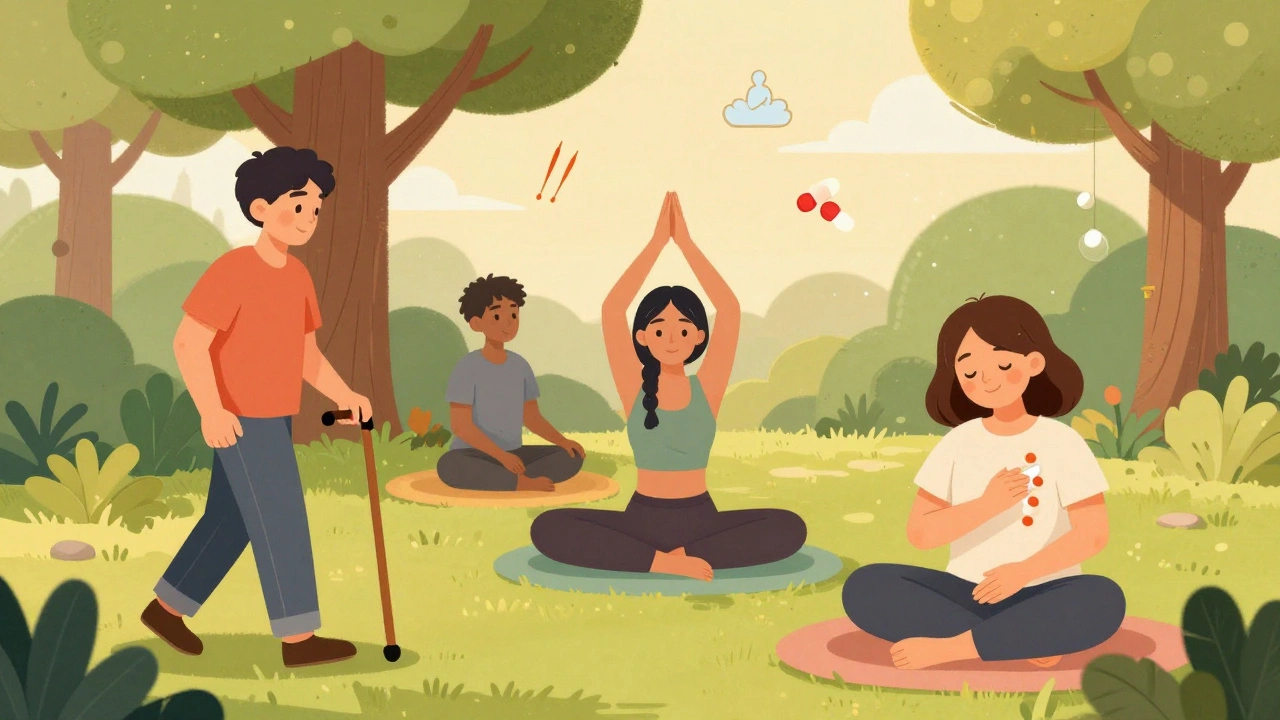
For millions of Americans living with chronic pain, the idea of reaching for an opioid prescription is fading. Not because it’s harder to get - but because better, safer options now exist. The opioid crisis didn’t just leave a trail of addiction; it forced a complete rethink of how we treat pain. Today, doctors are no longer starting with pills like oxycodone or hydrocodone. Instead, they’re turning to a wide range of non-opioid strategies that actually work - without the risk of dependence, overdose, or long-term harm.
Why Move Away From Opioids?
Opioids might feel like a quick fix, but they don’t solve chronic pain over time. In fact, the CDC found that after three months, most people don’t get better pain relief from opioids - they just get more side effects. In 2021, nearly 17,000 deaths in the U.S. were tied to prescription opioids. That’s not just a statistic. It’s someone’s parent, sibling, or neighbor. The 2022 CDC clinical guidelines made it clear: non-opioid treatments should be the first choice for chronic pain. Why? Because they’re safer, and for many conditions, just as effective.A 2022 study in JAMA Network Open followed over 200 people with chronic back or joint pain. Half got opioids. The other half got non-opioid meds like ibuprofen, acetaminophen, and antidepressants. After a year, both groups reported similar levels of pain relief. But the opioid group had nearly twice as many side effects - dizziness, constipation, nausea, and mental fog. The non-opioid group? Far fewer problems, and better quality of life.
Non-Drug Options That Actually Help
You don’t need a prescription to start feeling better. Many of the most effective pain treatments are lifestyle-based and backed by solid science.- Exercise therapy: Walking, swimming, or strength training just 2-3 times a week for 6-8 weeks can reduce pain from arthritis or back issues. Physical therapists design programs tailored to your limits - no need to push through pain.
- Yoga, tai chi, and qigong: These mind-body practices don’t just stretch muscles. They retrain how your brain processes pain signals. Studies show they’re as effective as physical therapy for lower back pain.
- Cognitive behavioral therapy (CBT): This isn’t just “thinking positive.” CBT teaches you how to break the cycle of pain-related fear and avoidance. Most people see results after 8-12 weekly sessions. It’s covered by Medicare and many private insurers.
- Acupuncture: Once dismissed as pseudoscience, acupuncture is now recommended by the CDC and the American College of Physicians. It works for osteoarthritis, migraines, and neck pain. One study found 60% of chronic pain patients reported meaningful relief after 10 sessions.
- Mindfulness and meditation: Daily 20-minute sessions using apps like Headspace or UCLA’s free mindfulness program can reduce pain intensity by 30% over 6-8 weeks. It doesn’t erase pain, but it changes how you react to it.
These aren’t “nice-to-have” extras. They’re first-line treatments. The problem? Access. In rural areas, finding a physical therapist or psychologist can be hard. Insurance often limits you to 15-20 visits a year. But if you’re willing to start small - even 10 minutes of walking daily - you can build momentum.
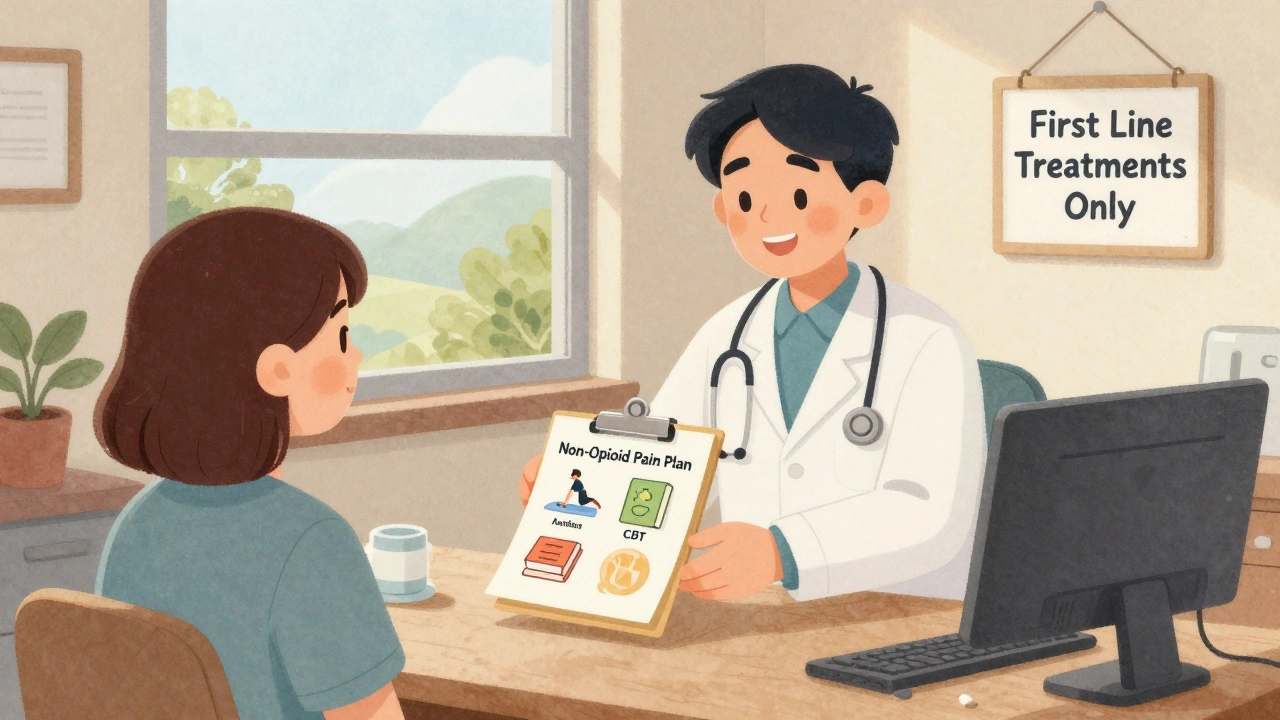
Medications That Work Without Opioids
When you need something stronger than a walk, there are plenty of non-opioid pills and patches that work well.- NSAIDs (ibuprofen, naproxen): Great for inflammation-based pain like arthritis or sprains. But don’t use them long-term if you have kidney issues, high blood pressure, or a history of stomach ulcers. Maximum daily dose: 3,000-4,000 mg of acetaminophen, 1,200 mg of ibuprofen.
- Acetaminophen: Safer on the stomach than NSAIDs, but too much can damage your liver. Stick to 3,000 mg a day if you drink alcohol, and never combine it with other cold or sleep meds that also contain it.
- Duloxetine (Cymbalta) and venlafaxine (Effexor): These SNRI antidepressants are FDA-approved for chronic musculoskeletal pain and fibromyalgia. They don’t make you “happy” - they change how pain signals travel in your nerves. About 30-50% of users get at least 30% pain reduction.
- Pregabalin (Lyrica) and gabapentin: First-line for nerve pain from diabetes, shingles, or sciatica. Side effects? Drowsiness and weight gain. But for many, it’s worth it. One study showed 40% of patients with neuropathic pain cut their pain in half.
- Topical treatments: Capsaicin cream (from chili peppers) and lidocaine patches deliver relief right where you need it - no system-wide side effects. Great for localized joint or nerve pain.
In October 2023, the FDA approved a new drug called suzetrigine (brand name Journavx). It’s the first non-opioid painkiller in over 20 years with a completely new mechanism - blocking sodium channels in nerves. It’s meant for moderate to severe acute pain, like after surgery or injury. It doesn’t treat chronic pain yet, but it’s a sign of big changes ahead.
What Doesn’t Work as Well - And Why
Not every alternative is right for everyone. Some have limits you need to know.NSAIDs? Fine for short-term flare-ups. Not for daily use if you’re over 65 or have kidney disease. About 15% of older adults can’t take them safely.
Antidepressants for pain? They take 4-6 weeks to kick in. If you expect instant relief, you’ll get frustrated. Stick with it.
Acupuncture? Works for some, not all. If you’ve tried it once and felt nothing, give it 6-10 sessions. It’s not magic - it’s neurobiology.
Supplements like turmeric or CBD? Some people swear by them, but the science is still shaky. The FDA hasn’t approved CBD for pain, and many products are mislabeled. Stick to evidence-based options first.
Insurance, Cost, and Getting Started
Cost is a real barrier. Many non-opioid treatments aren’t covered well - or at all.- Medicare covers 80% of physical therapy after you meet your $240 deductible in 2024.
- Private insurance often caps physical therapy at 20 visits a year and requires pre-approval for acupuncture.
- CBT sessions can cost $100-$150 each without insurance. But some community health centers offer sliding-scale rates.
- Generic gabapentin costs as little as $5 a month. Duloxetine runs $15-$30. Suzetrigine? Around $300 a month - and insurance approval can take weeks.
Start with your primary care doctor. Ask: “What non-opioid options do you recommend for my type of pain?” Then, request referrals to physical therapy, pain clinics, or behavioral health specialists. The American Chronic Pain Association and U.S. Pain Foundation offer free guides and support groups.
The Bigger Picture: What’s Next
The NIH has poured over $1.3 billion into developing non-addictive pain treatments. Right now, 47 new drugs are in clinical trials. Scientists are working on blood tests that could identify your specific pain type - nerve pain, inflammatory pain, or central sensitization - so you get the right treatment from day one.By 2030, the global non-opioid pain market is expected to hit $58 billion. That’s because more people are demanding safer care. More doctors are trained in multimodal pain management. And more insurers are finally covering what works.
You don’t have to live in pain. And you don’t have to risk addiction to get relief. The tools are here. It’s not about finding one magic solution. It’s about building a plan - combining movement, mind techniques, and smart meds - that fits your life.
Can non-opioid treatments really work as well as opioids for chronic pain?
Yes, for most types of chronic pain - especially back pain, osteoarthritis, and fibromyalgia. A 2022 study found that people using non-opioid treatments reported the same level of pain relief as those on opioids, but with far fewer side effects. Opioids don’t improve long-term function, and they carry serious risks. Non-opioid options like exercise, CBT, and certain medications address the root causes of pain without addiction potential.
What’s the fastest way to get pain relief without opioids?
For acute pain, topical treatments like lidocaine patches or capsaicin cream can work within hours. For inflammation, a single dose of ibuprofen or naproxen often brings relief in 30-60 minutes. For nerve pain, gabapentin or pregabalin may take days to weeks. The fastest, safest long-term strategy? Combine movement (like walking or water therapy) with mindfulness - both can reduce pain perception within a few weeks.
Are there any non-opioid pain meds that are addictive?
None of the standard non-opioid pain medications - like NSAIDs, acetaminophen, gabapentin, or antidepressants - are addictive in the way opioids are. However, some people develop dependence on sleep aids or muscle relaxants that are sometimes prescribed alongside pain meds. Always ask your doctor if a medication has abuse potential. Suzetrigine, the new 2023 FDA-approved drug, has no known abuse potential based on current data.
Why isn’t my doctor offering non-opioid options first?
Some providers still rely on old habits or face time constraints. Others may not have access to physical therapists or psychologists in their network. But guidelines have changed since 2016, and by 2022, 67% of primary care doctors started with non-opioid treatments. If your doctor doesn’t bring it up, ask directly: “What non-opioid options do you recommend for my pain?” You have the right to know all your choices.
Is acupuncture worth trying for chronic pain?
Yes, if you’re willing to give it a fair shot. The CDC and American College of Physicians both recommend acupuncture for chronic low back pain, neck pain, and knee osteoarthritis. Studies show about 60% of patients experience meaningful pain reduction after 6-10 sessions. It’s not a cure, but it’s low-risk and often covered by insurance if you have a referral. Look for licensed acupuncturists with experience in pain management.
What should I do if non-opioid treatments don’t help enough?
Don’t give up - reassess. Pain is complex. You may need a combination of therapies: physical therapy + CBT + a low-dose nerve pain medication. Consider seeing a pain specialist. They use a biopsychosocial model - looking at your body, mind, and environment together. Sometimes, a small change - like improving sleep or reducing stress - makes the biggest difference. Opioids should only be considered if all else fails, and even then, only at the lowest dose for the shortest time.
Managing pain without opioids isn’t about replacing one quick fix with another. It’s about rebuilding your relationship with your body - slowly, safely, and sustainably. You’re not alone. Millions are doing it. And the tools to help you succeed are more available now than ever before.
Gillian Watson
December 4, 2025 AT 14:22Best decision I ever made.
Jessica Baydowicz
December 5, 2025 AT 02:10Chase Brittingham
December 5, 2025 AT 17:18Meanwhile, opioids were handed out like candy.
Yasmine Hajar
December 6, 2025 AT 06:38Jordan Wall
December 7, 2025 AT 02:56Gareth Storer
December 7, 2025 AT 09:33Dematteo Lasonya
December 8, 2025 AT 21:24Jenny Rogers
December 10, 2025 AT 11:51Joe Lam
December 10, 2025 AT 16:16Pavan Kankala
December 11, 2025 AT 05:11Chase Brittingham
December 12, 2025 AT 19:32