
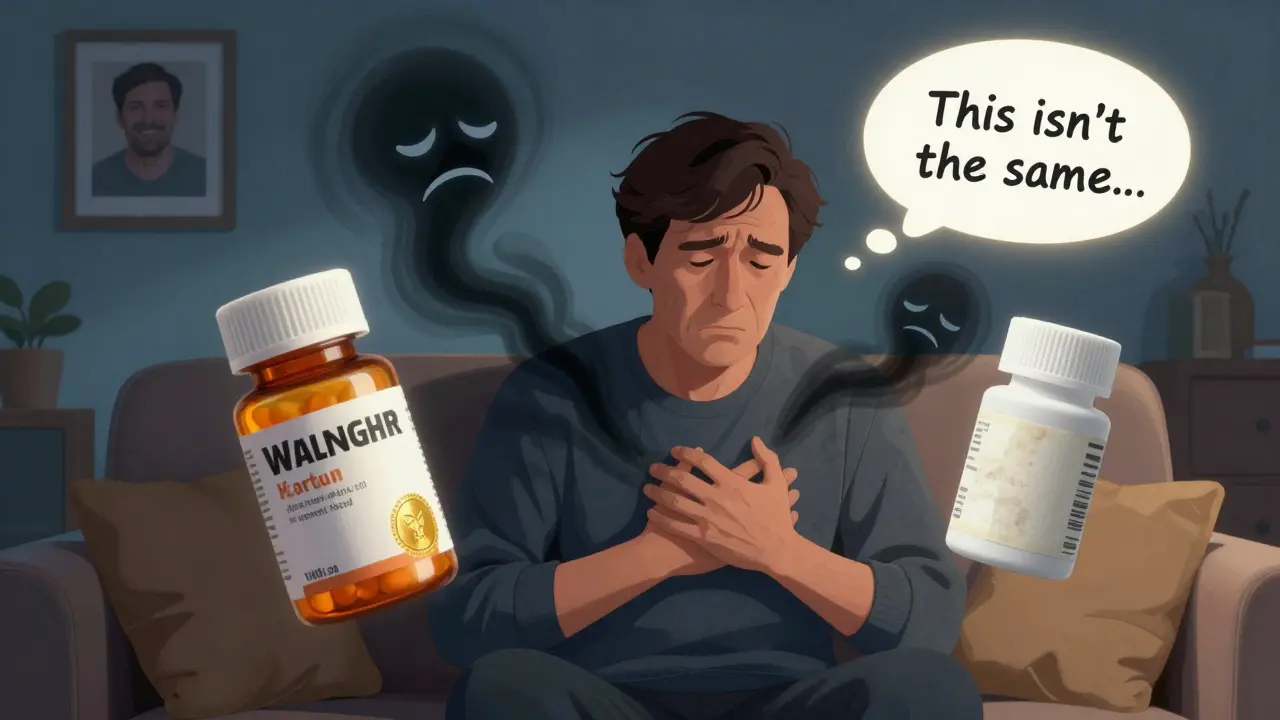
Imagine this: you’ve been taking your blood pressure pill for years. It works fine. Then your pharmacy switches you to a cheaper version - same active ingredient, same dosage, same manufacturer, just a different label. A week later, you feel dizzy. Your muscles ache. You think, “This generic must be inferior.” So you stop taking it. You go back to your doctor. You end up paying three times more for the brand-name version. And here’s the kicker - you never actually had a reaction to the drug. Your body didn’t change. Your brain did.
This isn’t rare. It’s the nocebo effect - and it’s costing people their health and the system billions.
What Exactly Is the Nocebo Effect?
The word comes from Latin: “nocebo” means “I shall harm.” It’s the dark twin of the placebo effect. Placebo is when you feel better because you believe a treatment will work. Nocebo is when you feel worse because you believe it will hurt you.
It’s not in your head - it’s in your body. Brain scans show that when people expect pain or side effects, areas linked to anxiety and pain processing light up. Your nervous system literally starts producing symptoms because you’ve been told to expect them. And with generic medications, this is happening more than you think.
Studies show that about 1 in 5 people taking a sugar pill in clinical trials report side effects like headaches, nausea, or fatigue. Almost 1 in 10 drop out of trials because they think the drug is making them sick - even though there’s no active ingredient. That’s the nocebo effect in action.
Why Generics Trigger the Nocebo Effect
Generic drugs are identical to brand-name drugs in every way that matters: same active ingredient, same dose, same absorption rate. They’re tested to prove they work the same. But here’s the problem: they look different.
Color. Shape. Size. Packaging. Even the name on the label. These changes trigger subconscious associations. If your old pill was a big blue capsule and now it’s a small white tablet, your brain says: “This isn’t the same. It’s cheaper. It must be worse.”
And it gets worse when doctors or pharmacists say things like:
- “This is the generic version - it might not work as well.”
- “We’re switching you because the insurance won’t cover the brand.”
- “Some people have trouble with generics.”
These aren’t lies. But they’re not helpful either. They plant seeds of doubt. And once those seeds are planted, your body starts to grow symptoms.
One study found that patients told beta-blockers could cause sexual side effects were 3 to 4 times more likely to report them - even when they were taking a placebo. Another study showed that when people were switched from brand-name to generic statins, the rate of reported muscle pain was identical to those taking a sugar pill. The drug didn’t change. The belief did.
The Real Cost of the Nocebo Effect
It’s not just about feeling bad. It’s about stopping treatment.
When patients believe generics are inferior, they stop taking them. That leads to worse health outcomes. High blood pressure isn’t controlled. Cholesterol spikes. Depression returns. Emergency visits go up. Hospitalizations follow.
In the U.S., where 90% of prescriptions are generics but only 24% of drug spending goes to them, the nocebo effect is costing the system an estimated $1.2 billion a year. That’s billions spent on unnecessary brand-name prescriptions, extra doctor visits, and avoidable complications.
And it’s not just the U.S. In New Zealand, when the national health system switched patients from brand-name venlafaxine to a generic version, reports of side effects didn’t spike until the media started running stories about “problems with the new pills.” The medication hadn’t changed. The narrative had.
One patient on Reddit described how his muscle pain vanished the moment he went back to the brand-name statin - even though his doctor confirmed the generics were identical. He kept taking the brand for years, paying extra, because he was convinced the cheaper version made him sick.
How Healthcare Providers Make It Worse
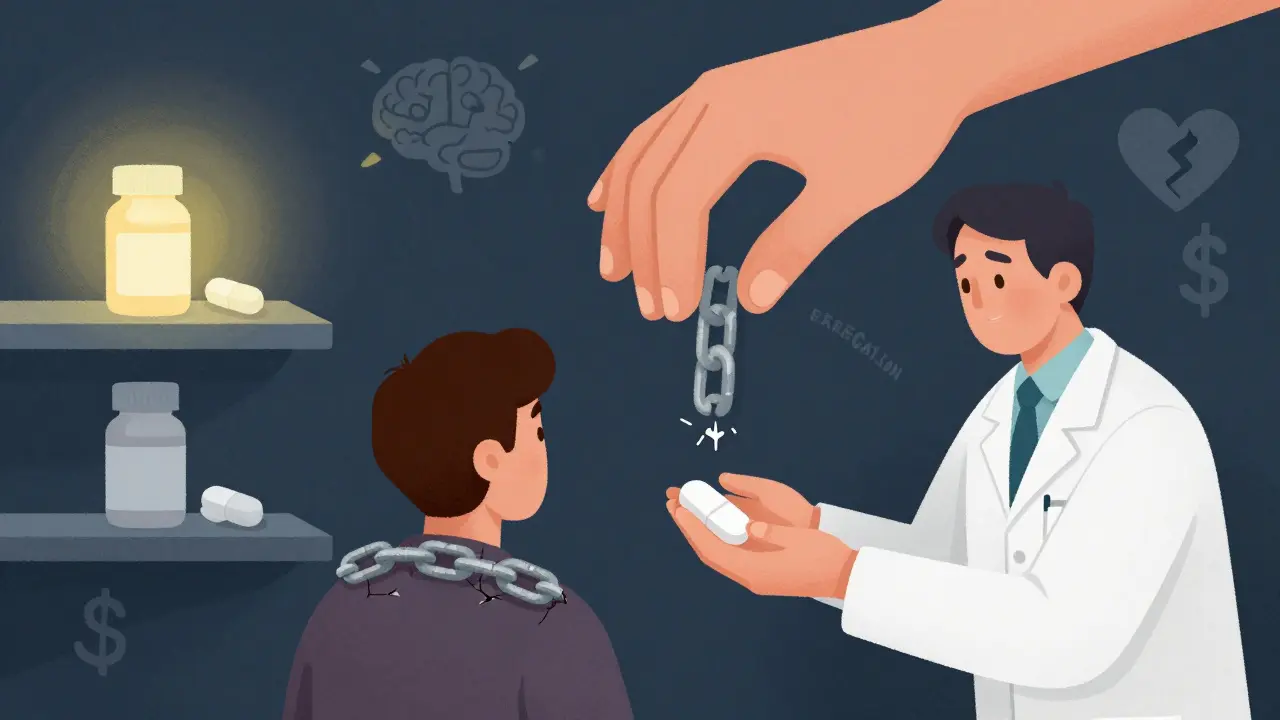
Doctors and pharmacists aren’t trying to harm patients. But many still believe generics are less effective. That belief leaks out in tone, wording, and hesitation.
Research shows that when a provider says, “This is a generic,” with a sigh or a shrug, patient-reported side effects jump by 65%. But when they say, “This is the exact same medicine - just cheaper and just as safe,” side effects drop by 37%.
It’s not about what’s said - it’s how it’s said. The language matters more than the science.
Some clinics have started training staff in “nocebo-aware communication.” Instead of saying, “We’re switching you to a generic,” they say, “We’re switching you to the same medicine, which will save you money and still work just as well.” Simple shift. Big difference.
A 2022 study found that after this training, physicians reduced patient-reported side effects during generic switches by 28%. That’s not magic. That’s communication.
What You Can Do - If You’re Switching to a Generic
If you’re being switched to a generic, here’s what actually helps:
- Ask what’s in it. “Is the active ingredient the same?” If the answer is yes, that’s all you need to know.
- Ask about testing. “Was it tested to prove it works the same?” If yes, it has passed strict bioequivalence standards - the same ones brand-name drugs had to pass.
- Ask how it’s made. Most generics are made by the same companies that make brand-name drugs. The only difference is the label.
- Don’t Google it. Search “generic [drug name] side effects” and you’ll find horror stories. Most of them are nocebo responses.
- Wait two weeks. If you feel something new, give it time. Symptoms from real drug reactions usually show up fast. Nocebo symptoms often creep in slowly - and they’re tied to expectation.
And if you’re already feeling off after switching? Don’t assume it’s the pill. Ask your doctor: “Could this be my brain reacting to the change?”
The Future: AI, Genetics, and Better Communication
Researchers are now using AI to personalize how patients are told about generics. A 2023 trial tested a tool that scans a patient’s past behavior, beliefs, and language use to tailor the message. For someone who’s anxious about medications, it uses calming, reassuring language. For someone who’s skeptical, it gives clear data. Result? A 41% drop in nocebo responses.
Harvard is also looking at genetics. Early data suggests people with certain versions of the COMT gene may be more prone to nocebo effects. That could one day help doctors predict who needs extra support during a switch.
The FDA and EMA now require patient leaflets for generics to avoid language that might trigger negative expectations. No more “may cause” lists without context. No more comparisons to brand-name drugs. Just facts: same drug. Same effect. Same safety.
By 2025, 75% of healthcare systems that use generics will have formal nocebo mitigation programs. That’s not just progress - it’s a necessary fix.
Bottom Line: Your Mind Is Powerful - Use It Right
Generics aren’t inferior. They’re not second-rate. They’re not “cheap versions.” They’re the same medicine, sold at a fair price.
But if you believe they’re not as good, your body will act like they’re not. You’ll feel side effects that aren’t there. You’ll stop taking medicine that works. You’ll pay more. You’ll get sicker.
The nocebo effect isn’t about the pill. It’s about the story you tell yourself.
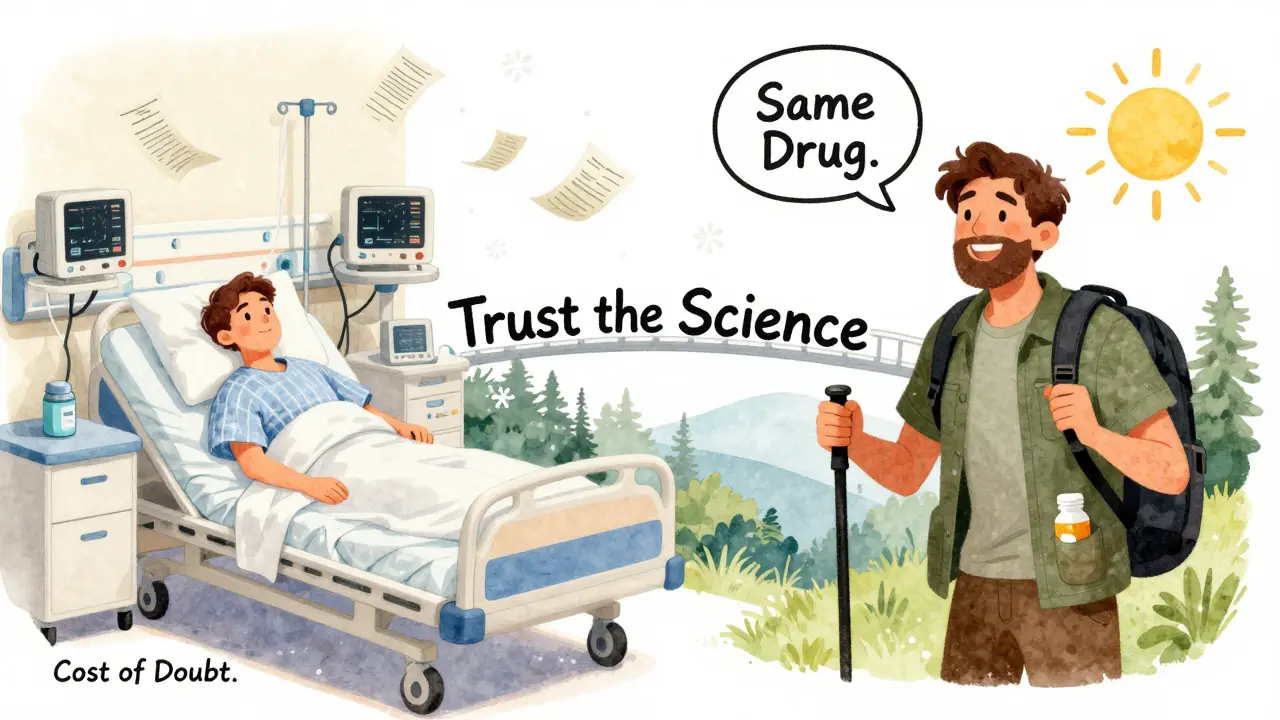
So next time you’re handed a new pill, ask: “Is this the same drug?” If yes, then trust the science - not the fear.