
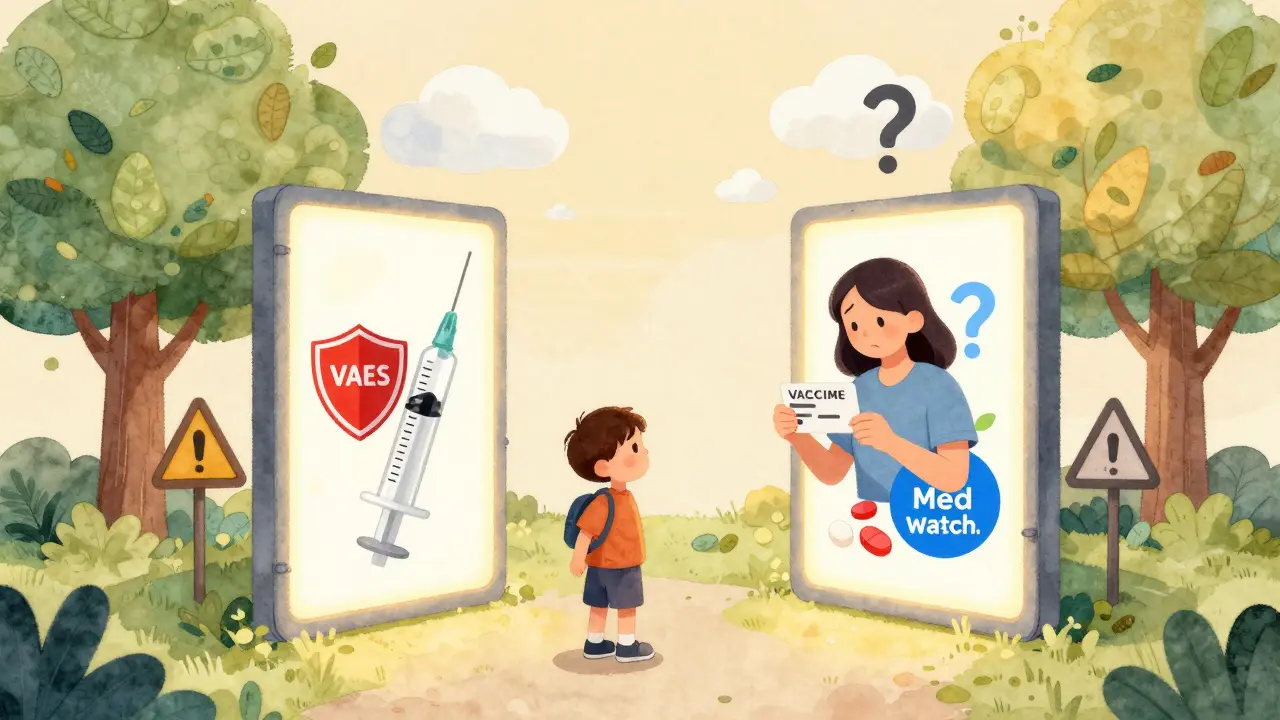
VAERS vs MedWatch Reporting Guide
Which Reporting System Should You Use?
This tool will help you determine the correct reporting system for side effects related to vaccines, prescription drugs, medical devices, or other products. The right system matters because:
When something goes wrong after taking a pill or getting a vaccine, who do you tell? And does it even matter which system you use? Many people don’t realize that reporting a side effect isn’t one-size-fits-all. If you had a reaction to a flu shot, you report it to VAERS. If you had a bad reaction to your blood pressure medicine, you report it to MedWatch. Mixing them up can delay important safety checks - and that’s not just a paperwork error. It’s a public health risk.
What Is VAERS and Why Does It Exist?
VAERS stands for Vaccine Adverse Event Reporting System. It’s run by the CDC and FDA together, and it’s the only official place in the U.S. where you can report problems after getting a vaccine. It doesn’t matter if you’re a doctor, a parent, or someone who just felt weird after the shot - you can file a report. You don’t need proof it was the vaccine. You just need to describe what happened.
VAERS was built to catch early warning signs. For example, if 20 people in different states report sudden paralysis within 48 hours of getting the same flu vaccine, that’s a red flag. VAERS doesn’t say the vaccine caused it. But it says: Look closer. That’s how the Moderna and Pfizer COVID-19 vaccines were monitored for rare heart inflammation cases in young men. The signal showed up in VAERS first. Then scientists used other systems to confirm it.
VAERS collects details like: which vaccine brand and lot number, when it was given, symptoms, age, medical history, and whether the person was hospitalized. Serious events - like death, hospitalization, or permanent disability - get extra follow-up. But here’s the catch: VAERS only gets about 1% of actual side effects reported. Most people don’t know how to report, or think it’s not worth it. That means the system is full of gaps. A single report doesn’t prove anything. But patterns? Those matter.
What Is MedWatch and How Is It Different?
MedWatch is the FDA’s system for everything that isn’t a vaccine. That includes prescription drugs, over-the-counter medicines, medical devices like pacemakers or insulin pumps, dietary supplements, and even tobacco products. If you took a new antibiotic and broke out in hives, or your blood sugar monitor gave wrong readings, you report it to MedWatch - not VAERS.
Unlike VAERS, MedWatch has legal teeth. Manufacturers, pharmacies, and hospitals are required by law to report serious problems. If a drug company finds out one of their pills caused liver damage in 15 patients, they have to tell the FDA within 15 days. That’s mandatory. For patients and doctors, reporting is voluntary - but still critical.
MedWatch reports include details like: the brand and generic name of the drug, dosage, how long you took it, symptoms, and whether you were taking other meds. It’s designed to spot trends across thousands of users. For example, when the diabetes drug Avandia was linked to heart attacks, MedWatch reports helped trigger a safety review that changed prescribing guidelines.
Why You Can’t Report a Vaccine Reaction to MedWatch
This is where people get it wrong. If you had a fever after your tetanus shot and you submit it to MedWatch, it won’t go to the right team. It’ll sit in a pile of drug reports, get buried, and likely never be analyzed with vaccine data. The CDC and FDA keep VAERS and MedWatch completely separate for a reason: vaccines are different.
Vaccines are given to healthy people - often children - to prevent disease. That means the bar for safety is higher. A side effect that’s acceptable for a cancer drug might be unacceptable for a flu shot. So the monitoring systems are built differently. VAERS is tuned for rapid, population-wide signals. MedWatch is built for long-term, chronic-use drug safety.
Also, vaccine lot numbers matter. If a specific batch of vaccine has more reports, that’s a red flag. MedWatch doesn’t track lot numbers for drugs because it’s not usually relevant. But for vaccines? It’s essential. That’s why VAERS asks for it. Submitting a vaccine report to MedWatch means that data is lost.
Who Should Report and What Counts as a Reportable Event?
You don’t need to be a doctor to report. If you or someone you care about had a reaction, report it. The FDA doesn’t expect you to be an expert. They just want the facts: what happened, when, and what you were taking or getting.
For VAERS, report anything unusual after a vaccine: high fever, seizures, difficulty breathing, fainting, swelling at the injection site that spreads, or even a new diagnosis like Guillain-Barré syndrome. Even if you think it’s unrelated - report it. The system is designed to catch the unexpected.
For MedWatch, report: allergic reactions, liver damage, kidney failure, unusual bleeding, heart palpitations, or device malfunctions. If your blood pressure monitor gives you a reading that doesn’t match how you feel - report it. If your insulin pump stops working after a software update - report it. These aren’t just inconveniences. They’re safety issues.
Doctors and pharmacists are required to report serious events. But patients? They’re the eyes on the ground. No one knows your body better than you.
What Happens After You Submit a Report?
Nothing dramatic. No one will call you. No one will blame you. But your report gets added to a national database. Analysts look for clusters. If 50 people report the same symptom after taking the same generic drug, the FDA may investigate. If 30 people report fainting after a specific flu vaccine, the CDC may pause use of that lot.
It’s not about individual blame. It’s about patterns. One person’s report might not change anything. But 10,000? That’s how drug recalls and vaccine warnings happen. In 2020, VAERS reports of anaphylaxis after the Pfizer-BioNTech vaccine led to updated guidance on observation periods after vaccination. That saved lives.
Both systems are passive. They don’t go out and find problems. They wait for you to tell them. That’s why your report matters.
Common Misconceptions About VAERS and MedWatch
People often think VAERS data proves vaccines cause harm. That’s not true. The system includes reports of events that happened after vaccination - not because of it. Someone gets a flu shot and then has a heart attack two weeks later. That’s reported. But that doesn’t mean the shot caused the heart attack. Age, lifestyle, and genetics play a bigger role. That’s why scientists use VAERS only as a starting point.
Another myth: MedWatch is for “bad drugs.” It’s not. It’s for tracking real-world outcomes. Most drugs are safe. But even safe drugs can have rare side effects. MedWatch finds those. It’s how we learn that a drug that works for 99% of people might cause a dangerous reaction in 1 in 50,000.
And no - reporting doesn’t mean you’re suing anyone. It doesn’t affect your insurance. It doesn’t trigger an investigation into your doctor. It’s just data. Neutral. Quiet. Powerful.

How to Report: Simple Steps
Reporting takes less than 15 minutes. Here’s how:
- For vaccines: Go to vaers.hhs.gov. Click "Report a Vaccine Reaction." Fill out the form. You’ll need: vaccine name, date, lot number (if you have it), symptoms, and your contact info (optional).
- For drugs or devices: Go to fda.gov/medwatch. Click "How to Report." You can report online, by phone, or by mail. You’ll need: product name, dosage, date of use, symptoms, and your contact info.
- For healthcare providers: You have legal obligations to report serious events. Use the same portals. Make sure you include all clinical details.
You don’t need medical records. You don’t need a diagnosis. Just tell them what happened.
Why This Matters for Public Health
Every report you file helps protect someone else. Maybe it’s your neighbor’s child. Maybe it’s your elderly parent. Maybe it’s you, next time you get a new prescription.
The FDA doesn’t have a crystal ball. They don’t know what happens to 300 million people after they take a drug or get a shot - until you tell them. That’s why VAERS and MedWatch aren’t just government tools. They’re community tools. You’re not just reporting a side effect. You’re helping build a safer system for everyone.
Don’t wait for the news to break. Don’t assume someone else will report it. If something felt off - report it. Even if you’re not sure. Even if it’s small. The system only works if we all use it.
Can I report a side effect if I’m not sure it was caused by the drug or vaccine?
Yes, absolutely. VAERS and MedWatch are designed to collect reports even when the connection isn’t clear. In fact, that’s the whole point. Many serious safety signals were first noticed because someone reported an unusual event they couldn’t explain. You don’t need to prove causation - just describe what happened.
Do I need a doctor’s note to report?
No. Neither VAERS nor MedWatch requires medical documentation to file a report. You can report based on your own observations. However, if you have medical records or lab results that help explain the event, including them can improve the quality of the report - but it’s not required.
Will reporting a side effect affect my insurance or medical care?
No. Reporting to VAERS or MedWatch is completely confidential and separate from your medical records or insurance claims. The FDA does not share individual reports with insurers, employers, or healthcare providers unless you give explicit permission. Your report is used only for public health monitoring.
What if I report to the wrong system by mistake?
If you accidentally send a vaccine report to MedWatch or a drug reaction to VAERS, the system will still receive it - but it may be misfiled or ignored. VAERS and MedWatch are separate databases. To ensure your report is reviewed properly, always use the correct system. If you’re unsure, check the official websites or call the FDA at 1-800-FDA-1088 for help.
How long does it take for a report to lead to action?
There’s no set timeline. Some reports are reviewed within days if they match a known pattern. Others sit for months or years until enough similar reports appear. The system is designed to find signals - not to respond to single events. The more people report, the faster patterns emerge. Your report adds to the data pile - and that pile is what drives safety changes.
What to Do Next
If you’ve ever had a side effect you didn’t report - do it now. It takes 10 minutes. It could save a life.
If you’re a parent, check your child’s vaccine records. If you’re on medication, know what to watch for. If you’re a healthcare worker, make reporting part of your routine.
The system doesn’t work unless you do.