
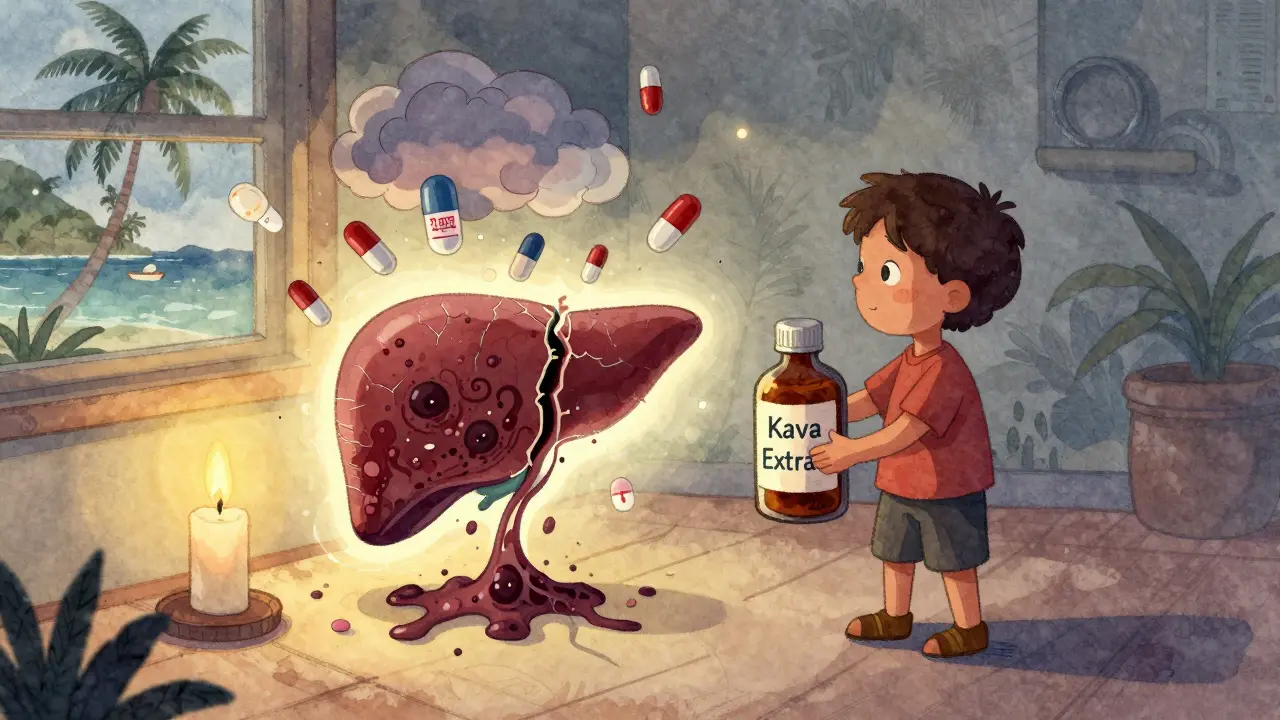
Kava Medication Interaction Checker
This tool helps you understand the potential risks of combining kava with your medications. Kava can interact dangerously with many common drugs and significantly increase the risk of liver damage.
Important Safety Information
WARNING: Kava can interact with multiple medications and cause serious liver damage. If you're taking any of these medications, avoid kava entirely.
Based on FDA and WHO guidance: Patients taking medications metabolized by CYP3A4, CYP2C9, or CYP2C19 should avoid kava completely.
Select medications you're currently taking
When you’re trying to manage anxiety without prescription drugs, kava might seem like a safe, natural choice. It’s been used for centuries in the South Pacific, and many people swear by its calming effects. But here’s the truth most supplement labels won’t tell you: kava can seriously harm your liver-especially when you’re already taking other medications.
What Kava Does to Your Liver
Kava comes from the roots of Piper methysticum, a plant native to islands like Fiji and Vanuatu. Traditionally, it’s made by grinding the root and mixing it with cold water. That method has been used for thousands of years with very few reports of liver damage. But the kava sold in U.S. stores today? It’s often extracted with alcohol or acetone. These organic solvent extracts are the real problem.
These extracts concentrate compounds called flavokawains, which aren’t present in traditional water-based kava. Flavokawains interfere with your liver’s ability to detoxify chemicals. They also drain your liver’s main antioxidant-glutathione. Without enough glutathione, your liver cells start dying. That’s not theoretical. Between 1999 and 2002, over 100 cases of kava-related liver injury were reported worldwide. At least 11 people needed liver transplants. Some died.
Why Medications Make Kava More Dangerous
Kava doesn’t just hurt your liver on its own. It messes with the enzymes your body uses to break down drugs. Specifically, it blocks CYP3A4, CYP2C9, and CYP2C19-three key liver enzymes. If you’re taking anything processed by these enzymes, kava can cause dangerous buildups of those drugs in your blood.
Take acetaminophen (Tylenol). It’s safe at normal doses. But when combined with kava, even a regular dose can trigger acute liver failure. One documented case involved a patient taking kava (240 mg daily), acetaminophen, and birth control pills. Within 17 weeks, their ALT liver enzyme spiked from 17 U/L to 2,442 U/L-over 140 times the normal level. They needed a transplant.
Other risky combinations include:
- Antidepressants (SSRIs, SNRIs)
- Benzodiazepines (Xanax, Valium)
- Statins (Lipitor, Crestor)
- Antibiotics like erythromycin
- Anti-seizure meds (carbamazepine, valproate)
- Blood thinners (warfarin)
It’s not just about dosage. Even low amounts of kava can be dangerous if you’re on these drugs. One Reddit user reported their ALT jumped to 300 after taking kava tea with high blood pressure medication. Their doctor had never heard of kava causing this-but the lab results didn’t lie.
Who’s at Highest Risk?
Not everyone who takes kava gets liver damage. But some people are far more vulnerable:
- People using alcohol solvent extracts (most store-bought capsules and tinctures)
- Those already taking liver-metabolized medications
- People with pre-existing liver conditions (fatty liver, hepatitis, etc.)
- Heavy drinkers
- Those with genetic variations in CYP enzymes (you won’t know unless you’ve been tested)
- Anyone taking kava for more than 4 weeks
The FDA and WHO both warn that combining kava with other hepatotoxic substances multiplies the risk. A 2022 study from the American Association for the Study of Liver Diseases (AASLD) concluded: “Patients taking medications metabolized by CYP3A4, CYP2C9, or CYP2C19 should avoid kava entirely.”
What About Traditional Water-Based Kava?
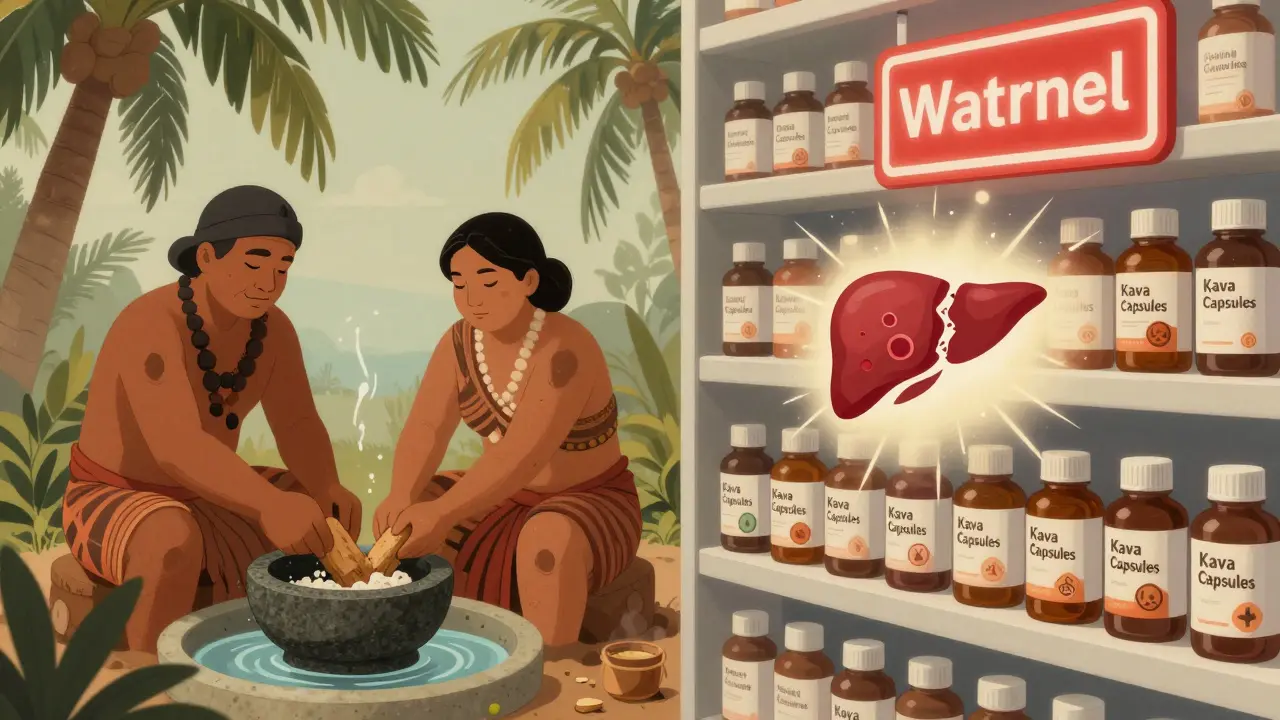
Yes, Pacific Islanders have safely consumed water-extracted kava for millennia. But here’s the catch: they don’t take it daily for months. They use it ceremonially, occasionally, and in controlled amounts. Their preparation doesn’t include alcohol, acetone, or concentrated extracts. And they don’t combine it with pharmaceuticals.
The problem isn’t kava itself-it’s how it’s processed and used in Western markets. A 2020 FDA scientific memorandum confirmed that organic solvent extracts are linked to nearly all documented cases of liver failure. Water-based kava has far fewer reports of harm. But here’s the catch: most U.S. supplements aren’t water-based. You can’t tell just by reading the label. Unless it explicitly says “water extract” or “aqueous extract,” assume it’s made with alcohol or acetone-and avoid it.
How to Spot Kava in Your Supplements
Kava doesn’t always show up clearly on ingredient lists. Look for:
- Piper methysticum root
- Kava extract
- Kavalactones (the active compounds)
- “Kava root powder” or “kava tea”
Check the extraction method. If it says “ethanolic extract,” “acetonic extract,” or “standardized to 70% kavalactones,” that’s a red flag. Water extracts should say “water-based” or “aqueous.” If it doesn’t say, assume the worst.
Also, be wary of products labeled “for anxiety” or “natural calming.” Many are blends with other herbs like valerian or passionflower-which can also stress the liver. Kava’s danger isn’t just standalone. It’s the combo.
What to Do If You’ve Been Taking Kava
If you’ve been using kava and are on any medication, stop immediately. Don’t wait for symptoms. Liver damage often shows up too late.
Ask your doctor for a liver panel: ALT, AST, bilirubin, alkaline phosphatase. Normal ALT is under 17 U/L. If yours is above 40, you’ve already got inflammation. Above 100? You’re in danger zone. One patient in a Sacramento County case study had ALT jump from 17 to 519 in just 16 weeks. Within a week, it hit 2,442.
If you’ve had symptoms like:
- Yellowing skin or eyes (jaundice)
- Dark urine
- Abdominal pain
- Unexplained fatigue
- Nausea or vomiting
-get tested now. These aren’t normal side effects. They’re signs your liver is failing.
Discontinuing kava often reverses early damage. In the Sacramento County study, patients who stopped kava and got supportive care recovered fully-if they didn’t need a transplant.
Alternatives to Kava for Anxiety
You don’t need kava to feel calm. Safer, better-studied options exist:
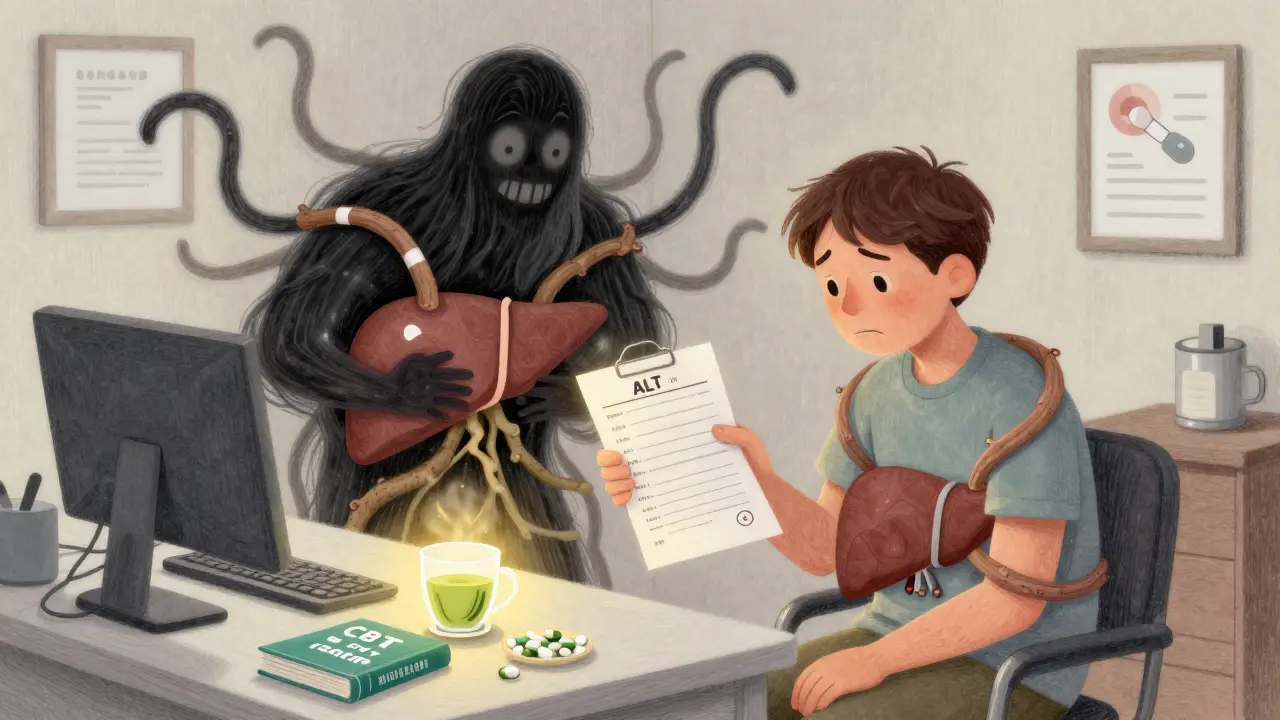
- Therapy: CBT is proven to reduce anxiety as effectively as benzodiazepines-with zero liver risk.
- Magnesium glycinate: 200-400 mg daily helps regulate GABA, the brain’s calming neurotransmitter.
- L-theanine: Found in green tea, it promotes relaxation without drowsiness or liver stress.
- Exercise: Just 30 minutes of brisk walking five days a week lowers cortisol and boosts serotonin.
- Adaptogens: Ashwagandha and rhodiola have strong data for anxiety relief and no known liver toxicity.
None of these carry the same risk profile as kava. And unlike kava, they’re not hidden in “calming blends” with unknown ingredients.
What Doctors Need to Know
Most doctors don’t ask about supplements. But they should. In one study, 13 out of 16 kava-related liver injury cases were missed because patients didn’t mention kava use. They thought it was “just tea.”
If you’re a patient: tell your doctor you’re using kava-even if you think it’s harmless. If you’re a provider: ask every patient with unexplained liver enzyme elevations, “Are you taking any herbal supplements?” Don’t assume it’s alcohol or acetaminophen. Kava is a silent killer.
Bottom Line
Kava isn’t a safe alternative to prescription anxiety meds. It’s a hidden risk-especially when mixed with other drugs. The science is clear: organic extracts + medications = liver disaster. Water-based kava may be safer, but it’s nearly impossible to find in the U.S. market. And even then, long-term use is risky.
If you’re taking any medication, avoid kava entirely. There are better, proven, safer ways to manage stress. Your liver doesn’t need this gamble.
Can kava cause liver damage even if I don’t take any medications?
Yes. While the risk is higher with medications, kava-even on its own-can damage the liver. Most documented cases of liver failure involved people taking kava supplements made with alcohol or acetone extracts. Even without other drugs, prolonged use (over 4 weeks), high doses, or genetic factors can lead to serious injury. Cases of transplant and death have occurred in people who took kava alone.
Is kava tea safer than kava capsules?
It depends on how it’s made. If the tea is prepared from raw kava root using cold water (like traditional Pacific Island preparation), it’s significantly safer. Most commercial kava teas, however, are made with extracts, not whole root. Capsules are almost always alcohol or acetone extracts. Always check the label for “water extract” or “aqueous.” If it doesn’t say, assume it’s risky.
How long does it take for kava to damage the liver?
Liver damage can appear as early as 4 weeks, but most cases occur between 8 and 16 weeks of daily use. One documented case showed liver enzymes rising from normal to over 2,400 U/L in just 17 weeks. Symptoms like jaundice or fatigue often appear after damage is already advanced. That’s why waiting for symptoms is dangerous.
Can I take kava occasionally, like once a week?
Even occasional use carries risk if you’re on medications. Kava inhibits liver enzymes for days after use. So if you take kava on Monday and your blood pressure pill on Wednesday, the interaction can still happen. There’s no proven safe frequency. If you’re on any prescription drug, avoid kava completely.
What should I do if I think kava hurt my liver?
Stop taking kava immediately. Get a liver panel test (ALT, AST, bilirubin) from your doctor. Don’t wait for symptoms. If your ALT is above 40, you already have inflammation. If you have jaundice, dark urine, or severe fatigue, go to the ER. Early detection can prevent the need for a transplant. Report your case to the FDA’s MedWatch program to help others.
Are there any safe kava supplements on the market?
There are no reliably safe kava supplements in the U.S. market. Even products labeled “water extract” aren’t always verified. Independent testing has found some labeled as water-based still contain traces of alcohol or acetone. The safest approach is to avoid kava entirely. If you want anxiety relief, choose alternatives with proven safety records-like L-theanine, magnesium, or therapy.
Becky M.
February 2, 2026 AT 19:27also why do these supplements even get sold like candy?
jay patel
February 3, 2026 AT 03:31Ansley Mayson
February 4, 2026 AT 11:50Hannah Gliane
February 6, 2026 AT 04:16and i was so proud of myself for 'choosing natural' instead of 'big pharma' 😭
thanks for the reality check. i just threw out my whole stash. also i'm telling my mom to stop taking it with her blood pressure med. she thinks it's 'just tea'. it's not. it's a silent assassin with a cute logo.
Murarikar Satishwar
February 7, 2026 AT 00:52Ellie Norris
February 7, 2026 AT 21:12Marc Durocher
February 9, 2026 AT 00:17clarissa sulio
February 9, 2026 AT 23:27