

When you pick up a prescription for insulin or a biologic drug like Humira, you might not realize the bottle in your hand could be a different version of the same medicine - and that it was swapped without your doctor’s knowledge. That’s because of something called interchangeability, a special FDA designation that lets pharmacists swap a brand-name biologic for a biosimilar without asking the prescriber. It’s not the same as generics. It’s not even the same as regular biosimilars. And understanding this difference could save you money - or, if you’re not careful, disrupt your treatment.
What Exactly Is an Interchangeable Biosimilar?
An interchangeable biosimilar isn’t just another copy of a biologic drug. It’s a biosimilar that has passed extra tests proving it can be switched back and forth with the original drug - multiple times - without increasing risk or reducing effectiveness. The FDA requires switching studies where patients alternate between the reference product and the biosimilar at least twice. The data must show no clinically meaningful difference in safety, immune response, or how the drug works in the body after those switches. This isn’t just paperwork. It’s a rigorous process. While all FDA-approved biosimilars are as safe and effective as the original biologic, only a small fraction have this extra stamp of approval. As of November 2023, out of 41 approved biosimilars in the U.S., only 10 are interchangeable. The first was Semglee, an insulin glargine product approved in July 2021. The first interchangeable monoclonal antibody biosimilar, Cyltezo (for adalimumab), followed in August 2023.Why Doesn’t Every Biosimilar Get This Designation?
Because biologics are made from living cells - not chemicals in a lab like traditional generics. Even tiny changes in manufacturing can affect how the drug behaves in your body. That’s why a generic version of metformin can be swapped freely: every pill is chemically identical. But a biosimilar? It’s more like a hand-knitted sweater made by two different artisans. They look the same, feel the same, and keep you warm - but only if the yarn and stitching are perfectly matched can you swap them without risk. To get interchangeable status, manufacturers must prove their product behaves identically to the original after multiple switches. That means running clinical trials where patients alternate between the reference drug and the biosimilar. The FDA requires pharmacokinetic and pharmacodynamic data showing no spike in side effects or drop in effectiveness. It’s expensive, time-consuming, and adds years to the approval process. That’s why most biosimilars stop at being “biosimilar” - they don’t pursue interchangeability unless they’re targeting a high-volume market like insulin or adalimumab.How Is This Different From Generics?
Generics are chemically identical to their brand-name counterparts. The FDA considers them bioequivalent - meaning they work the same way, in the same amount of time, with the same results. That’s why your pharmacist can swap out brand-name Lipitor for generic atorvastatin without asking your doctor. It’s built into the law since the 1984 Hatch-Waxman Act. Biosimilars? They’re not identical. They’re highly similar. And that’s why interchangeability is a separate, additional hurdle. A biosimilar without interchangeability status can still be prescribed - but your doctor has to write it specifically. If you’re on Humira and your doctor prescribes Hadlima (a biosimilar), your pharmacy can’t swap it for Cyltezo without a new prescription. But if your doctor prescribes an interchangeable biosimilar like Cyltezo, your pharmacist can swap it for Semglee - if that’s what’s in stock - without calling your doctor.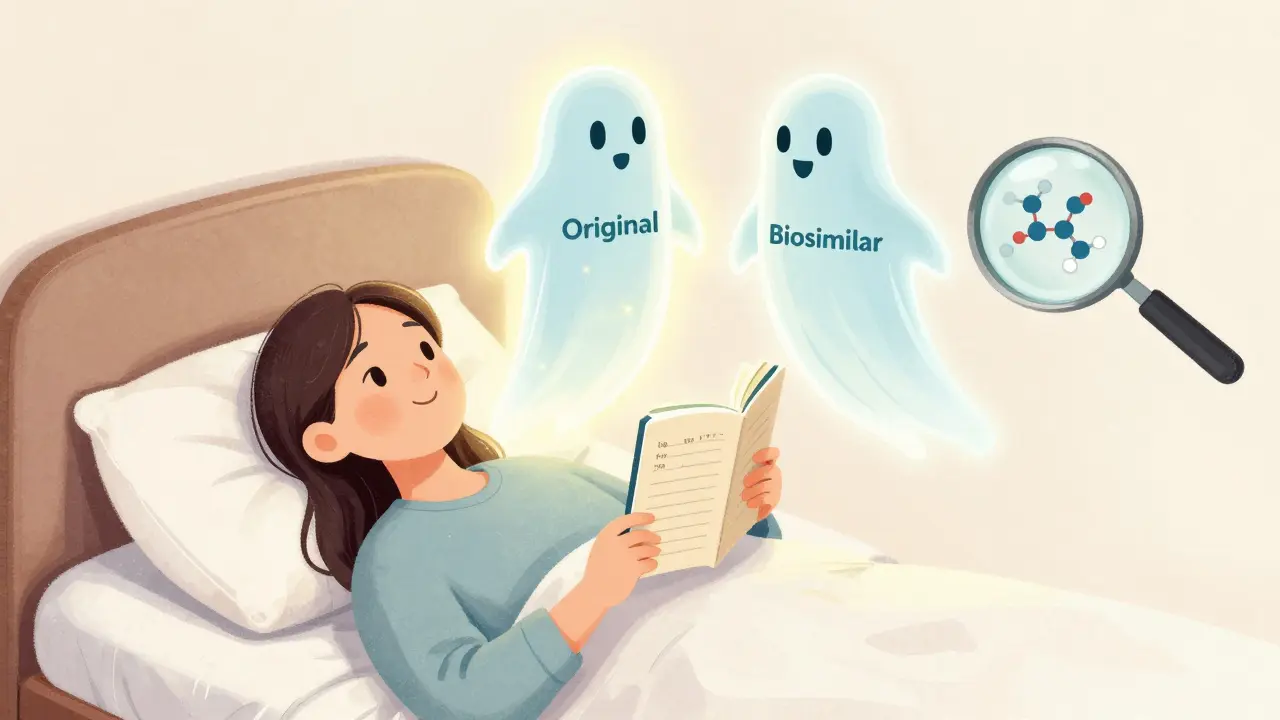
State Laws Make It a Patchwork
Here’s where things get messy. Just because the FDA says a biosimilar is interchangeable doesn’t mean your pharmacist can automatically swap it. Each state has its own rules. Forty states, including Arizona and California, allow pharmacists to substitute interchangeable biosimilars without telling the prescriber - as long as they notify you and document the change. Six states and Washington D.C. only allow substitution if it saves you money. Four states - Alabama, Indiana, South Carolina, and Washington - require your doctor’s permission before any substitution happens. Puerto Rico also requires prescriber approval. This creates chaos for national pharmacy chains. A pharmacist in New York might be required to notify you and record the substitution. In Alabama, they can’t swap it at all unless the doctor says so. And your pharmacy’s computer system? It often doesn’t know the difference. One Reddit user summed it up: “In California, I have to check if it’s lower cost. In Arizona, I don’t. My system doesn’t tell me which state rule applies.”What Happens When You’re Switched Without Knowing?
Some patients report no issues. One person on the Psoriasis Foundation forum wrote: “I switched from Humira to Hyrimoz and saved $800 a month. No change in my symptoms.” But others aren’t so lucky. Another patient reported an adverse reaction after their pharmacy automatically substituted Hadlima for Humira. They didn’t know until they had a flare-up - and later found out they were allergic to an excipient (a non-active ingredient) in the new product. A 2022 survey by the National Psoriasis Foundation found that 63% of patients were satisfied after being switched to biosimilars. But 28% said they were upset they weren’t told beforehand. That’s a big deal. Biologics treat serious conditions - rheumatoid arthritis, Crohn’s disease, psoriasis, cancer. Even small changes can trigger immune responses or reduce effectiveness.Why Do Pharmacists Struggle With This?
Pharmacists are expected to know not just which biosimilars are interchangeable, but which state laws apply, what insurance rules dictate, and whether the patient has a “dispense as written” restriction. They’re also expected to update their knowledge constantly. A 2023 survey found pharmacists spend an average of 8.7 hours per year just learning about biosimilar substitution rules. The American Pharmacists Association has trained over 12,000 pharmacists through its Biosimilars Certificate Program - but that’s still a fraction of the profession. Insurance plans add another layer. Nearly 80% of commercial health plans now require automatic substitution for interchangeable biosimilars when state law allows it. That means even if you don’t want to switch, your insurer might force it - unless your doctor writes “do not substitute.”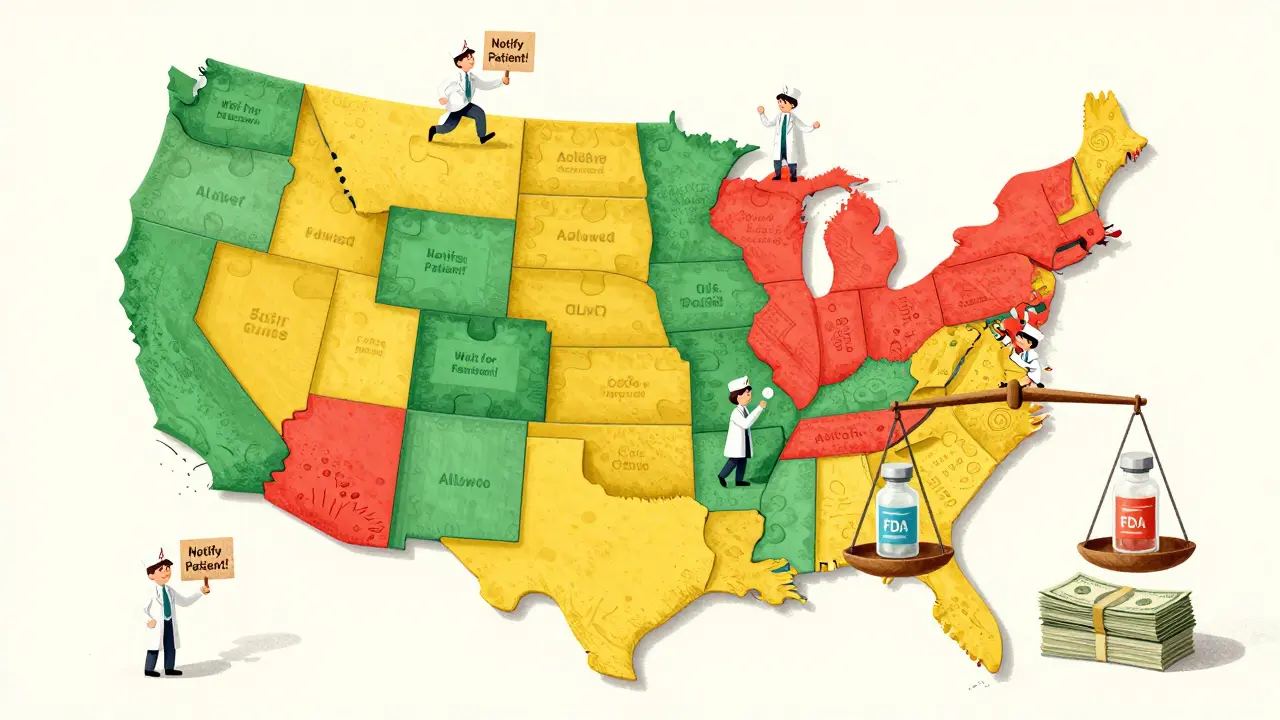
Will This Change?
There’s a bill in Congress - the Biosimilar Red Tape Elimination Act - that wants to scrap the switching studies entirely and make all FDA-approved biosimilars interchangeable. Supporters, including the Biosimilars Council, say this would cut costs faster. Opponents, like PhRMA, warn it could risk patient safety. The FDA is already moving toward streamlining requirements. In 2023, they released draft guidance suggesting less stringent switching study designs. But for now, the bar remains high. Meanwhile, the market is growing. Biosimilars captured 34% of the biologics market by volume in Q2 2023. Interchangeable biosimilars are moving faster - Semglee hit 17.3% market share within six months, compared to 9.8% for non-interchangeable versions.What Should You Do?
If you’re on a biologic:- Ask your doctor if your prescription is for a specific brand or if it allows substitution.
- Check your pharmacy’s label. Interchangeable biosimilars will have the same name as the original, plus a four-letter suffix (like adalimumab-adbm for Cyltezo).
- Know your state’s law. If you live in Alabama or South Carolina, your pharmacist can’t swap it without permission.
- Ask to be notified before any switch. Even if the law doesn’t require it, you have the right to know.
- Track your symptoms. If you feel different after a switch - worse fatigue, new rashes, joint pain - tell your doctor immediately.
Bottom Line
Interchangeability is meant to lower costs and increase access. And for many, it’s working. But it’s not a simple swap. It’s a complex system built on science, law, and patient trust. The FDA says all biosimilars are safe. But only one in four of them can be swapped without your doctor’s input. And even then, your state might say no. If you’re paying thousands for a biologic, this system could save you money. But if you’re one of the 28% who weren’t told about the switch - and then had a reaction - you might question whether the savings were worth the risk. Stay informed. Ask questions. And don’t assume a biosimilar is the same as a generic. They’re not.Can any biosimilar be automatically substituted at the pharmacy?
No. Only biosimilars that have received an FDA interchangeability designation can be substituted automatically. As of late 2023, only 10 out of 41 approved biosimilars in the U.S. have this status. All other biosimilars require a specific prescription from your doctor - your pharmacist cannot swap them without authorization.
Are interchangeable biosimilars safer or more effective than regular biosimilars?
No. The FDA states that all approved biosimilars - whether interchangeable or not - are equally safe and effective as the original biologic. The interchangeability designation only means the product has passed additional studies proving it can be switched back and forth with the reference drug without increasing risk. It doesn’t mean it’s a better drug.
Can a pharmacist substitute one biosimilar for another?
No. Interchangeability only applies to switching between a biosimilar and its specific reference product - not between two different biosimilars. For example, if you’re on Cyltezo (an interchangeable biosimilar for Humira), your pharmacist cannot swap it for Hadlima, even if both are interchangeable with Humira. Each biosimilar must be prescribed individually.
Why do some states block automatic substitution even if the FDA approves interchangeability?
Because U.S. drug laws are split between federal and state authority. The FDA sets the standard for safety and interchangeability, but states control how pharmacists dispense medications. Some states require prescriber consent to protect patient safety, others prioritize cost savings, and some have no clear rules. This creates a patchwork that makes national pharmacy operations difficult.
What should I do if my pharmacy substitutes my biologic without telling me?
First, check your prescription label - it should list the manufacturer and product name. If you see a different name than what your doctor prescribed, contact your pharmacy immediately. Ask for the reason and whether the substitution was allowed under your state’s law. If you experience new side effects or reduced effectiveness, contact your doctor right away. You have the right to be informed about any medication change, even if the law doesn’t require it.
Will insurance force me to switch to a biosimilar?
Yes - if your plan covers interchangeable biosimilars and your state allows automatic substitution. Many commercial insurers now require substitution to lower costs. But your doctor can prevent it by writing “dispense as written” or using a DAW code on your prescription. Always check your plan’s formulary and ask your pharmacist if your medication was changed.
david jackson
December 26, 2025 AT 06:16Okay, so let me get this straight - we’re talking about swapping life-saving biologics like they’re different brands of toilet paper? I mean, I get cost savings, but this isn’t a grocery store aisle. These drugs are engineered from living cells, not molded plastic. One tiny variation in glycosylation patterns, and your immune system might start treating your own cells like foreign invaders. I’ve seen patients go from stable to flare-ups in weeks after an automatic swap. And no one told them? That’s not innovation - that’s pharmaceutical Russian roulette. The FDA says it’s safe, sure, but safety isn’t just a number on a spreadsheet. It’s a mother with Crohn’s who can finally hug her kid without pain. And if that mom gets switched to a biosimilar with a different excipient she’s allergic to? No one’s accountable. No one’s even tracking it. This system is built on trust, and we’re burning that trust one pharmacy substitution at a time.
Jody Kennedy
December 27, 2025 AT 04:39Y’all are overcomplicating this. Biosimilars are cheaper. Cheaper = more people get treated. Period. I’m not saying don’t pay attention - I’m saying stop acting like every switch is a horror movie. My cousin switched from Humira to Cyltezo and saved $1,200/month. No side effects. No drama. She’s still hiking every weekend. If you’re scared, ask your doc to write ‘dispense as written.’ Done. It’s not magic. It’s math. And math is on the side of access, not fear.
Alex Ragen
December 28, 2025 AT 20:17Ah, yes - the grand illusion of ‘interchangeability.’ A linguistic sleight-of-hand designed to mask the fundamental epistemological rupture between chemical identity and biological equivalence. The FDA, in its infinite bureaucratic wisdom, has redefined ‘sameness’ through statistical tolerance intervals, thereby reducing the ontological complexity of human immunology to a p-value. One might argue that this is not science - but rather, a neoliberal technocratic fantasy, wherein cost-efficiency is fetishized over phenomenological continuity. The patient, once a subject of care, is now a data point in a supply-chain optimization algorithm. And we wonder why trust in medicine is collapsing? It’s because we’ve outsourced meaning to the ledger.
Lori Anne Franklin
December 29, 2025 AT 20:54im so glad this post exists!! i had no idea about the state laws thing!! i live in cali and my pharmacy switched me without telling me, and i was like… wait why is my pen different?? i had to call my doc and then the pharmacy and it was a mess. but i saved $900!! so… i guess its a win? just… maybe send a text or something?? like ‘hey your med got swapped’?? 🙃
wendy parrales fong
December 30, 2025 AT 07:29I think we’re all just trying to do the right thing here. People need medicine. Medicine is expensive. Biosimilars help. But we also need to respect people’s bodies and their right to know what’s going into them. It’s not about being scared - it’s about being respected. If I’m on a drug that keeps me alive, I want to know if it changes. Even if it’s ‘the same.’ Because my body remembers. And sometimes, that’s all that matters. Let’s make sure the system serves people, not just profits.
Jeanette Jeffrey
December 31, 2025 AT 20:37Oh wow. So we’re letting pharmacists play doctor now? Because apparently, your ‘insurance plan’ knows better than your rheumatologist. And let’s not pretend this isn’t a corporate power grab disguised as ‘affordability.’ The same companies that charge $70,000 a year for Humira are now selling biosimilars for $15,000 - and they’re the ones lobbying for automatic substitution. The math is simple: profit > patient. You think this is about access? It’s about margins. And you’re letting them rewrite your treatment protocol because you’re too tired to fight. Wake up.
Kuldipsinh Rathod
January 2, 2026 AT 09:37as someone from india where biosimilars are the norm, i just want to say - this is not new. we’ve been using them for 15+ years. yes, some people react, but most don’t. the key is documentation and follow-up. if your doctor knows you switched, they can monitor. the real problem is the lack of communication, not the science. let’s fix the system, not fear the solution.
carissa projo
January 3, 2026 AT 17:17Let me tell you something - when I was diagnosed with rheumatoid arthritis, I cried because I thought I’d never be able to hold my grandkids again. Then I got on Humira. Then I got switched to a biosimilar. I didn’t know. I didn’t feel different. But I also didn’t know if I should’ve felt something. That’s the problem. We need transparency. Not fear. Not corporate spin. Just… honesty. Tell me what I’m getting. Let me choose. I’m not a statistic. I’m a person who just wants to be seen. And if that means my pharmacist calls my doctor before swapping? So be it. My life is worth that call.
christian ebongue
January 4, 2026 AT 09:16lol the FDA says it’s safe, states say no, insurers say swap, and pharmacists are just trying not to get sued. 🤦♂️
Zina Constantin
January 4, 2026 AT 20:31As a nurse who’s seen patients switch and thrive - and others who didn’t - I can tell you: the issue isn’t the science. It’s the silence. No one tells patients. No one trains pharmacists properly. No one tracks outcomes. We’re building a system on trust, but we’re not teaching anyone how to earn it. Let’s fix the communication, not the biosimilars.
Dan Alatepe
January 6, 2026 AT 09:03bro… i just want to live… why is this so complicated?? 😭 i just want my meds to work and not cost my rent… but also… i dont wanna die… can we just… make it simple?? 🤔
Michael Bond
January 7, 2026 AT 23:54Interchangeable ≠ interchangeable between biosimilars. Important distinction.
Matthew Ingersoll
January 9, 2026 AT 15:38My dad’s on an interchangeable insulin. Switched twice. No issues. Saved $1,800 a year. He’s 72. He’s alive. That’s the bottom line. If you’re scared, ask for a hold. But don’t let fear stop progress.