
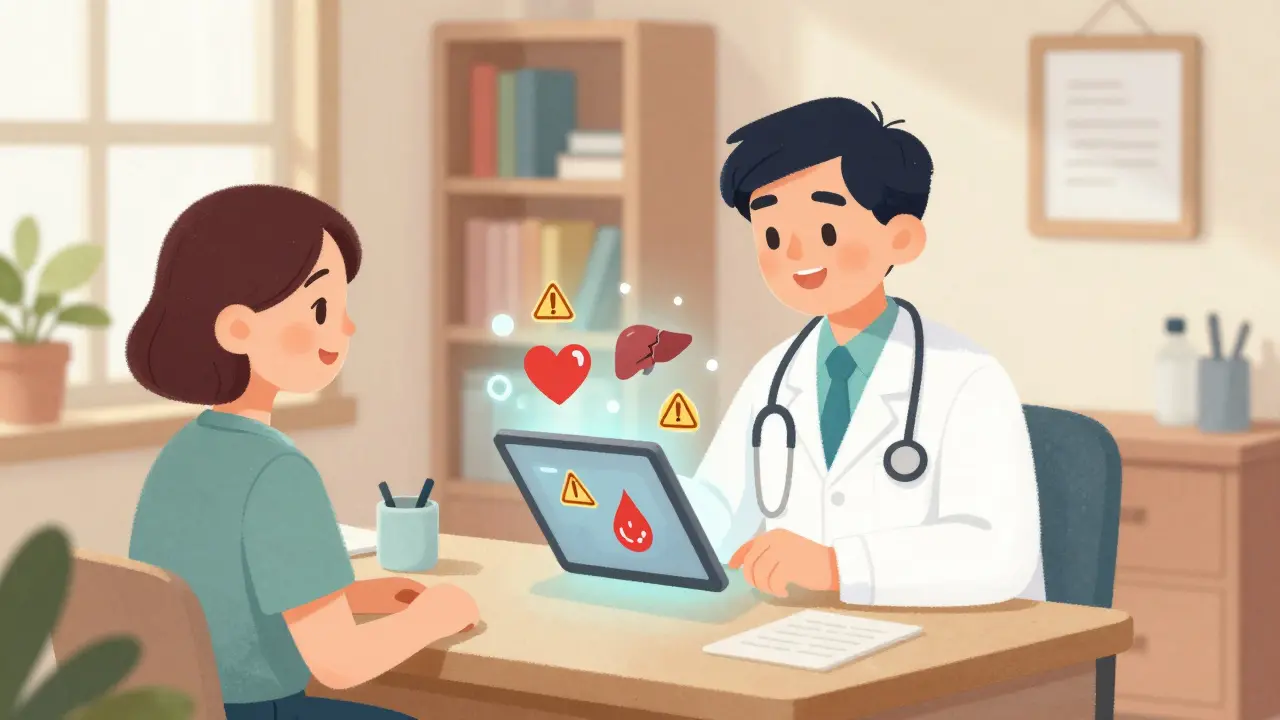
Every time a patient takes a new medication, there’s a risk-sometimes small, sometimes serious-that something unexpected happens. A rash. A drop in blood pressure. Liver damage. These are adverse drug reactions, and they’re one of the leading causes of hospital admissions in the U.S. But here’s the problem: most of these reactions don’t show up in clinical trials. They emerge only after thousands of people start using the drug in real life. That’s where clinician portals and apps for drug safety monitoring come in. They’re not fancy gadgets. They’re essential tools that turn scattered, silent reports into actionable safety signals-fast.
What These Tools Actually Do
These platforms don’t replace doctors. They don’t diagnose. They don’t decide if a drug should be pulled from the market. What they do is collect, organize, and highlight patterns that humans might miss. Imagine a hospital where 200 patients take a new blood thinner. One develops internal bleeding. Another gets a strange rash. A third has elevated liver enzymes. Without a monitoring system, these are three isolated incidents. With a portal, the system flags: “Three cases of bleeding or liver injury in 30 days with Drug X-unusual pattern.” That’s the difference between waiting for a report to be mailed in and catching a problem before it spreads.
Modern systems pull data directly from electronic health records (EHRs), clinical trial databases, and pharmacy logs. They use standards like FHIR and HL7 to talk to other systems. Some even scan unstructured notes-like a doctor’s free-text comment: “Patient seemed confused after starting new statin”-and turn that into structured safety data. That’s huge. Because most adverse events are never formally reported unless someone takes the time to fill out a form. These apps make reporting automatic, or at least, much easier.
Choosing the Right Platform for Your Setting
Not all tools are built the same. Your choice depends on where you work and what you need.
If you’re in a large hospital with 500+ beds, you’re likely using something like Medi-Span by Wolters Kluwer. It’s embedded in your EHR. When a pharmacist prescribes a drug, the system pops up a warning: “High risk of interaction with Patient’s current medication-lisinopril and simvastatin.” In one 500-bed hospital, this feature prevented 187 dangerous interactions in six months. But there’s a catch: too many alerts. Clinicians start ignoring them. That’s alert fatigue. The best systems let you tune the sensitivity-reduce noise, keep the real threats.
If you’re running a clinical trial for a new cancer drug, you’re probably on Cloudbyz. It connects directly to your trial’s data capture system. Every lab result, every symptom log, every dose change flows in. Within 15 minutes, it’s on the safety dashboard. One biotech company cut their safety report prep time from three weeks to four days. But getting there? It took 11 weeks of data mapping. You need IT support. You need someone who understands CDISC standards. It’s powerful, but not for small teams.
If you’re in a rural clinic in Kenya or Laos, you’re likely using PViMS. It’s free. It works on a basic laptop with slow internet. It has pre-filled forms based on MedDRA terminology-no typing needed. One clinician said it cut their data entry time by 60%. But it can’t do AI predictions. It can’t link to a national registry. It’s simple, reliable, and gets the job done when resources are thin.
And then there’s clinDataReview, an open-source tool used by researchers and regulators. It runs on R, a programming language. It generates detailed, reproducible reports that meet FDA 21 CFR Part 11 rules. If you need to prove your analysis was accurate and unchanged, this is the gold standard. But if you don’t know how to code? You’ll need a data scientist on your team.
How to Start Using One
Getting started isn’t about downloading an app. It’s about integration.
- Identify your goal. Are you trying to catch interactions in your hospital? Monitor trial participants? Report to the FDA? Your goal shapes your tool.
- Check what’s already in your EHR. Many modern systems like Epic or Cerner have built-in safety alerts. Don’t buy a new tool if your current system can do 80% of what you need.
- Map your data sources. Where does patient data live? Pharmacy? Lab? Paper charts? You need to connect them. This step causes most delays. Expect 4-12 weeks depending on complexity.
- Train your team. Not just IT. Nurses, pharmacists, physicians. Everyone who sees a patient needs to know how to spot a red flag in the portal. A 2024 survey found 87% of users need at least 80 hours of training to use advanced features.
- Start small. Pilot with one drug or one unit. Don’t roll out hospital-wide on day one. Watch how alerts behave. Adjust thresholds. Reduce false positives.
What You Can’t Ignore: Human Judgment Still Matters
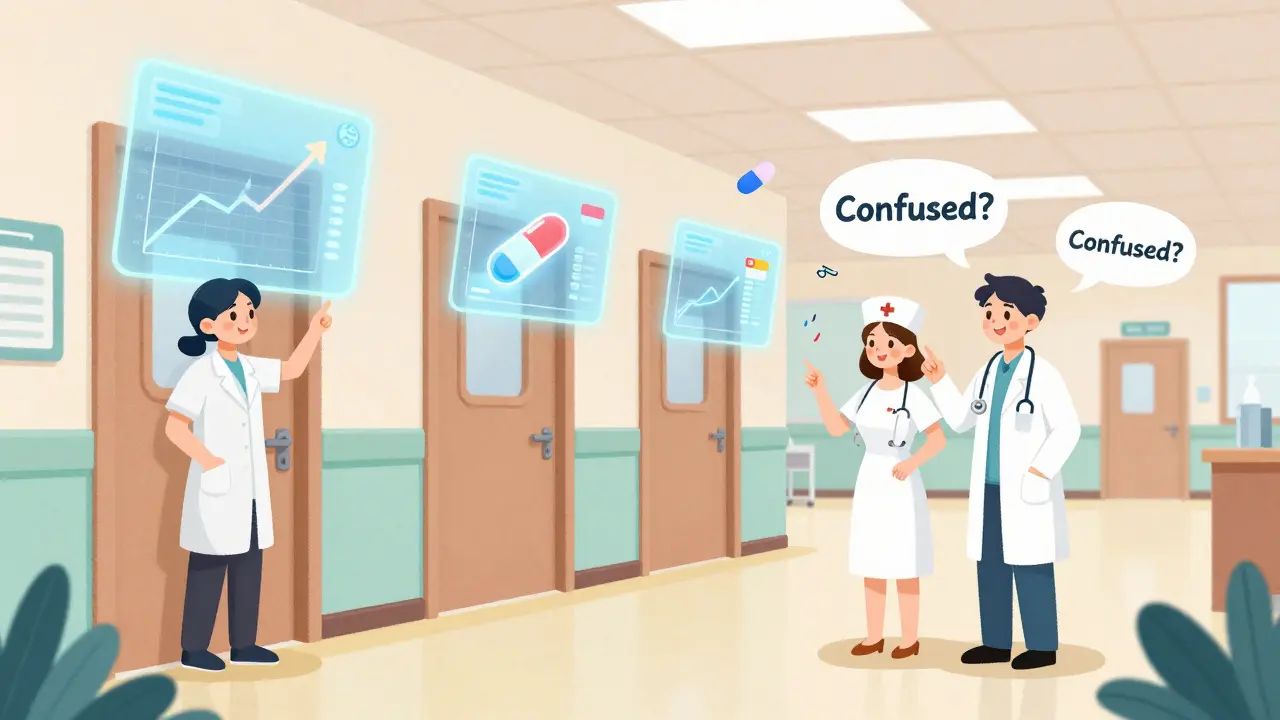
AI can flag patterns. But it can’t understand context. A patient on a new drug has a headache. The system says: “Possible adverse reaction.” But you know they’ve had migraines for 20 years. Or their child just got sick. Or they slept poorly. That’s why the FDA found that 22% of automated signals in 2023 were false positives-because the software didn’t know the patient’s full story.
Dr. Elena Rodriguez at IQVIA says it best: “AI is transforming drug safety monitoring, but LQPPVs remain indispensable as strategic stewards of these tools.” LQPPVs-Qualified Persons for Pharmacovigilance-are the experts who interpret the data. They’re the bridge between the algorithm and the patient. No portal replaces them. They’re the ones who decide: Is this a real signal? Should we warn other doctors? Should we report it to the FDA?
Even the most advanced system can’t replace clinical judgment. It can only give you more time to use it.
What’s Changing Right Now
Things are moving fast. In late 2024, Cloudbyz released version 5.0 with predictive analytics. It doesn’t just report what happened-it tries to predict what might happen next. It looks at lab trends, vital signs, and medication changes together. If a patient’s creatinine levels start rising slowly while on a new antibiotic, it flags: “High risk of kidney injury in next 72 hours.” That’s not just monitoring. That’s prevention.
IQVIA is testing an “AI co-pilot” that reads through patient histories and suggests evidence during safety reviews. It cuts evaluation time by 35%. But the FDA is cracking down. Their 2026 guidance will require all AI tools to explain how they reached a conclusion. No black boxes. If a system says “high risk,” it must show you why.
And regulatory pressure is rising. The EU’s Clinical Trial Regulation now requires real-time safety data submission by 2025. The FDA’s Sentinel Initiative is expanding. If you’re not using these tools now, you will be soon.

Common Pitfalls and How to Avoid Them
- Too many alerts → Turn off low-risk flags. Focus on serious, unexpected events.
- Bad data in, bad data out → If your EHR has messy notes or missing fields, the portal won’t help. Clean your data first.
- Training only once → Safety tools evolve. Hold quarterly refreshers. New staff? Train them.
- Thinking it’s automated → Someone must review every flagged case. Don’t outsource responsibility to software.
- Ignoring connectivity → In low-resource settings, internet drops break reporting. Have offline modes or backup forms.
Who Should Be Using This?
Not just pharmacovigilance teams. Not just researchers.
Every clinician who prescribes medication should have access. A primary care doctor needs to know if a new anticoagulant interacts with a patient’s herbal supplement. An oncologist needs to track rare immune reactions. A psychiatrist needs to spot serotonin syndrome early.
Right now, 63% of U.S. physicians have some form of safety tool in their EHR. But only 32% of mid-sized pharmaceutical companies use integrated platforms. That’s a gap. Smaller companies can’t afford the $185,000/year price tag of Cloudbyz. But they can use free tools like PViMS for basic reporting, or even open-source options like clinDataReview if they have a data-savvy team.
Bottom line: If you’re involved in patient care or drug development, you’re already part of the safety network. These tools just make your role clearer, faster, and more effective.
What’s Next?
The future isn’t about more alerts. It’s about smarter alerts. Systems that learn from your feedback. If you mark a signal as “false,” the system remembers. If you add context-“Patient had recent surgery”-it uses that next time. That’s the next leap.
But the core won’t change. Technology gives you speed. Data gives you patterns. But only a human can decide what it means for a patient’s life.
Do I need special hardware to use these clinician portals?
No. Most modern platforms run in a web browser. You just need a standard computer or tablet with internet access. Systems like PViMS work on older machines and even low-bandwidth connections. Cloud-based tools don’t require high-end servers or IT infrastructure on your end.
Can these apps replace pharmacovigilance professionals?
No. They’re decision-support tools, not replacements. AI can flag patterns, but only trained professionals can interpret them in context. A rise in liver enzymes could mean a drug reaction-or it could mean the patient drank alcohol or has hepatitis. Human judgment is required to determine causality, severity, and whether to report it. Regulatory agencies like the FDA still require human review for all safety submissions.
Are these tools only for big hospitals and pharmaceutical companies?
No. While enterprise platforms like Cloudbyz target large organizations, there are options for smaller settings. PViMS is free and used in clinics across Africa and Southeast Asia. Open-source tools like clinDataReview can be used by academic institutions or small biotechs with technical support. Even basic EHR-integrated alerts in systems like Epic or Cerner are available to most U.S. clinicians.
How long does it take to implement one of these systems?
It varies. Hospital-based tools like Medi-Span take 4-6 weeks if your EHR is already modern (like Epic). Clinical trial platforms like Cloudbyz can take 8-12 weeks due to complex data mapping. Free tools like PViMS can be set up in 3-5 weeks, but training and connectivity issues in remote areas may slow adoption. The biggest delays come from data integration-not the software itself.
What if the system gives me a false alert?
Mark it as false in the system. Most advanced platforms learn from your feedback. If you consistently override a certain alert, the system will reduce its frequency. Also, adjust alert thresholds if they’re too sensitive. Alert fatigue is real-too many false alarms make clinicians ignore real ones. Fine-tuning is part of the process.
Is my patient data safe in these portals?
Yes, if you use compliant platforms. Tools like Cloudbyz, Medi-Span, and clinDataReview are built to meet HIPAA, GDPR, and FDA 21 CFR Part 11 standards. They use encryption, role-based access, and audit trails. Always verify the vendor’s compliance certifications before implementation. Avoid unregulated or consumer-grade apps-these aren’t designed for clinical safety use.
LALITA KUDIYA
January 8, 2026 AT 07:52Emma Addison Thomas
January 10, 2026 AT 05:09Anthony Capunong
January 11, 2026 AT 00:01Rachel Steward
January 12, 2026 AT 22:02Alex Danner
January 12, 2026 AT 22:46Sai Ganesh
January 14, 2026 AT 09:30Aparna karwande
January 15, 2026 AT 16:27Jonathan Larson
January 16, 2026 AT 08:09Ayodeji Williams
January 16, 2026 AT 20:49Katrina Morris
January 18, 2026 AT 17:52Paul Mason
January 20, 2026 AT 05:37