
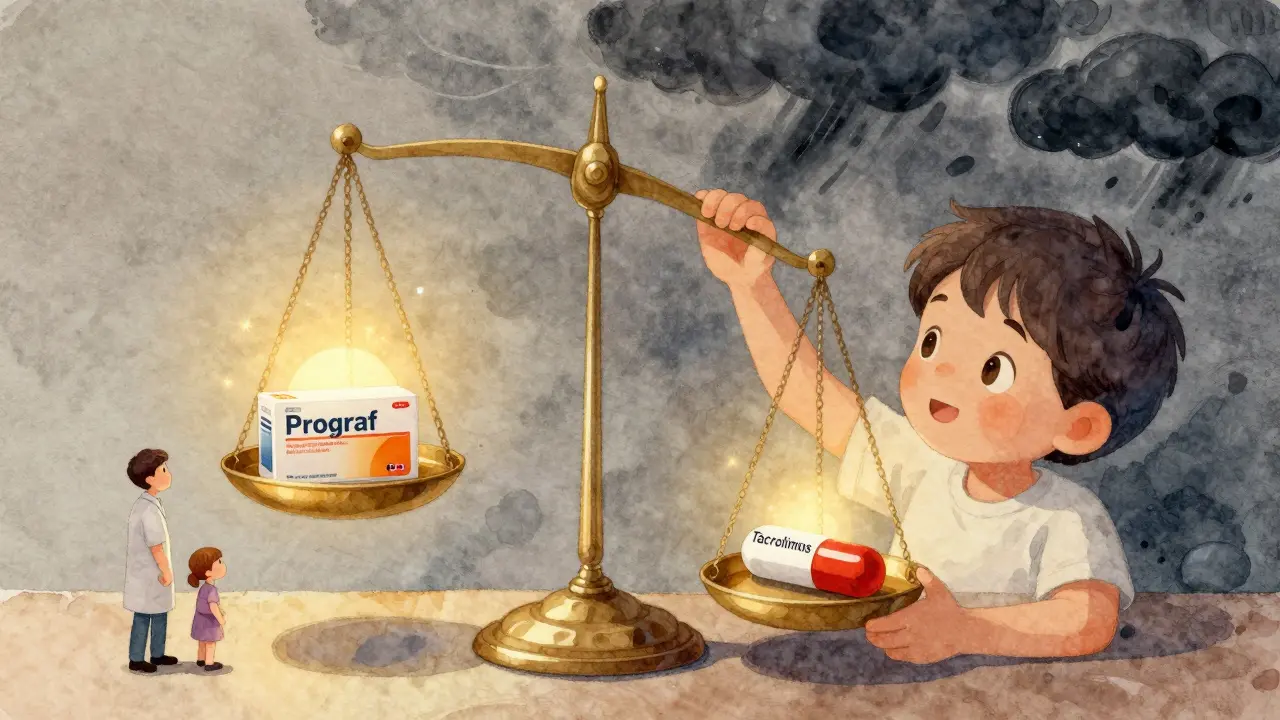
When you’re on a medication that keeps you alive - like a transplant patient on tacrolimus, someone with epilepsy taking phenytoin, or a person managing blood thinning with warfarin - the difference between a safe dose and a dangerous one can be as small as a fraction of a milligram. These are narrow therapeutic index drugs, or NTI drugs. And when it comes to switching from a brand-name version to a generic, the stakes couldn’t be higher.
What Exactly Is a Narrow Therapeutic Index Drug?
An NTI drug is one where the gap between a helpful dose and a harmful one is tiny. The FDA defines them as medications where even small changes in blood concentration can lead to serious harm - like organ rejection, toxic seizures, or life-threatening bleeding. It’s not just about being strong; it’s about being precise.
Think of it like driving a race car at 200 mph. You can’t afford a slight misstep in steering or fuel flow. The same goes for drugs like cyclosporine, digoxin, or levothyroxine. A 10% drop in blood levels might mean the drug stops working. A 10% rise might land you in the ICU.
The FDA has officially listed 33 drug products - covering 14 active ingredients - as NTI drugs as of early 2024. That includes:
- Immunosuppressants: tacrolimus, cyclosporine, sirolimus
- Anticonvulsants: phenytoin, carbamazepine
- Anticoagulants: warfarin
- Antiarrhythmics: flecainide, digoxin
- Thyroid hormone: levothyroxine
- Cancer drugs: axitinib, nilotinib, neratinib
These aren’t obscure medications. Millions of Americans rely on them daily. And if you’re on one, you need to know how generics work - and don’t work - with them.
Why Generic NTI Drugs Are Different
For most medications, the FDA says a generic must be within 80% to 125% of the brand’s blood concentration to be considered equivalent. That’s a wide window. But for NTI drugs, that’s not enough.
For these high-risk drugs, the FDA requires much tighter standards. If a drug has low variability in how patients absorb it, the generic must stay within 90% to 111% of the brand. For some, like levothyroxine, the bar is even higher - 95% to 105%. That’s less than a 10% variation. In practical terms, that means the generic can’t be significantly different in how fast it’s absorbed or how long it lasts.
Why such strict rules? Because these drugs don’t have room for error. A study in Clinical Pharmacology & Therapeutics showed that even small shifts in blood levels of immunosuppressants can trigger acute organ rejection. In epilepsy patients, a slight dip in phenytoin can cause a seizure. These aren’t theoretical risks - they’re documented, real-world events.
Real Stories: When Substitution Goes Wrong
Behind the numbers are people. On the American Transplant Foundation forum, a kidney transplant patient wrote: “After my insurance switched me from Prograf to generic tacrolimus, my creatinine levels doubled in three weeks. I ended up hospitalized.” That’s not an outlier. Pharmacists across the country report similar cases.
A pharmacist on Reddit with 10 years of hospital experience shared: “I’ve seen patients on levothyroxine have TSH levels swing wildly after a generic switch - sometimes needing three dose adjustments just to get back to stable.”
But it’s not all bad. Another patient with epilepsy wrote on PatientsLikeMe: “I’ve been on generic phenytoin for five years. No seizures. Stable blood levels. Saved $300 a month.”
The difference? Consistency. Many patients who do well on generics stay on the same manufacturer’s version. Problems arise when they’re switched back and forth - brand to generic, generic A to generic B. That’s when blood levels start bouncing around.
What Pharmacists and Doctors Do About It
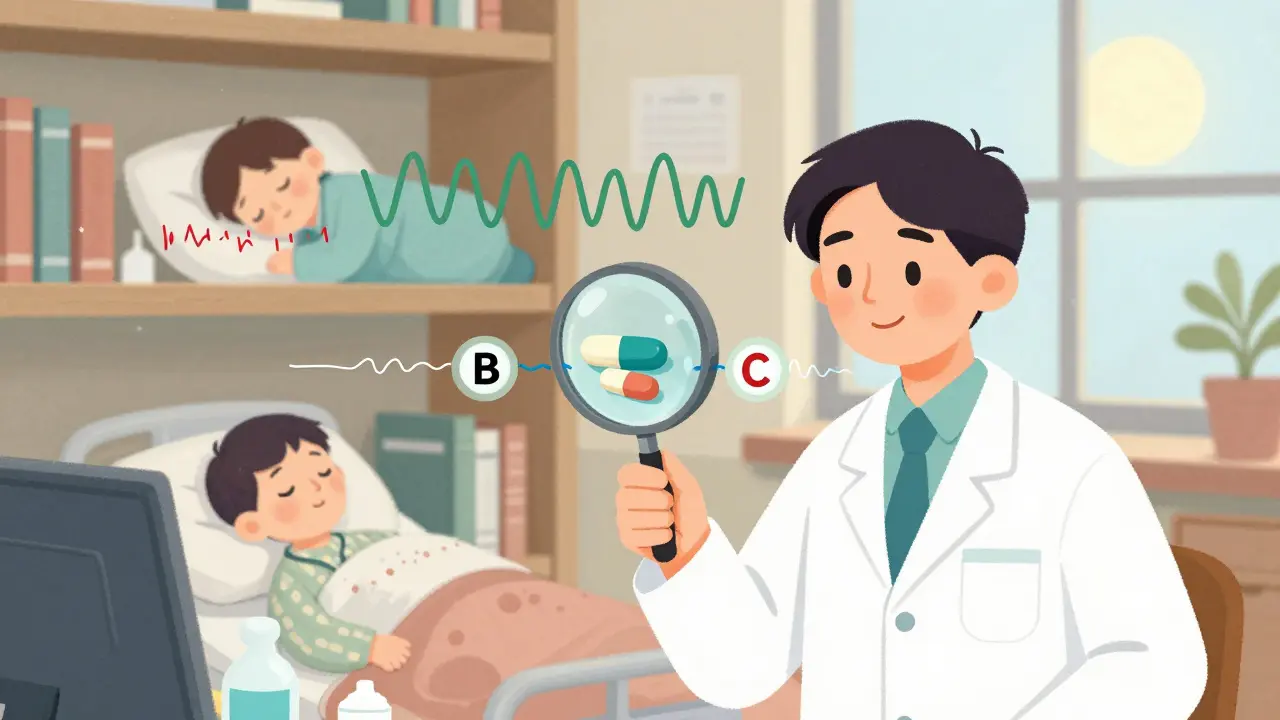
Pharmacists are the frontline defense. A national survey found only 28% of pharmacists will automatically substitute a generic for an NTI drug - compared to 78% for regular medications. Why? Because 64% believe substitution could lead to therapeutic failure. That’s not caution - it’s experience.
Doctors often write “dispense as written” on prescriptions for NTI drugs. That means the pharmacy can’t swap the brand for a generic without calling them first. In 42 states, laws either restrict or require extra steps before substituting NTI drugs. But the rules vary wildly. In some places, pharmacists can switch unless the doctor says no. In others, they can’t switch at all.
Therapeutic drug monitoring (TDM) is critical. If you’re on an NTI drug, your doctor should be checking your blood levels regularly - not just once a year, but every few months, especially after any switch. For transplant patients, that might mean monthly blood draws. For someone on warfarin, it’s frequent INR checks.
The American Society of Health-System Pharmacists recommends pharmacists get at least 16 hours of continuing education each year just to manage NTI drugs properly. That’s not a suggestion - it’s a necessity.
The Market and the Future
The global market for NTI drugs hit $137.4 billion in 2022 and is expected to grow to nearly $186 billion by 2027. Why? Because more targeted cancer drugs, biologics, and precision medicines are being classified as NTI. These aren’t old-school pills - they’re complex, expensive treatments with narrow safety margins.
Companies like AbbVie, Novartis, and Pfizer dominate this space. But as patents expire, more generics enter. The challenge? Making sure they’re truly equivalent - not just legally approved, but clinically safe.
The FDA is working on 12 new product-specific guidances for NTI drugs by 2025, focusing on newer oncology agents. They’re also pushing for international alignment with Europe and Japan, but differences still exist. Japan doesn’t even have a formal definition for “narrow therapeutic range drugs.” That makes global drug development harder.
Looking ahead, pharmacogenomics could change the game. By 2028, nearly 40% of NTI drug prescriptions may include genetic testing to predict how a patient metabolizes the drug. That means dosing could be personalized from day one - reducing the need for constant blood tests and minimizing substitution risks.
What You Should Do If You’re on an NTI Drug
If you’re taking one of these medications, here’s what matters:
- Know your drug. Is it on the FDA’s NTI list? Ask your pharmacist or check the FDA’s website.
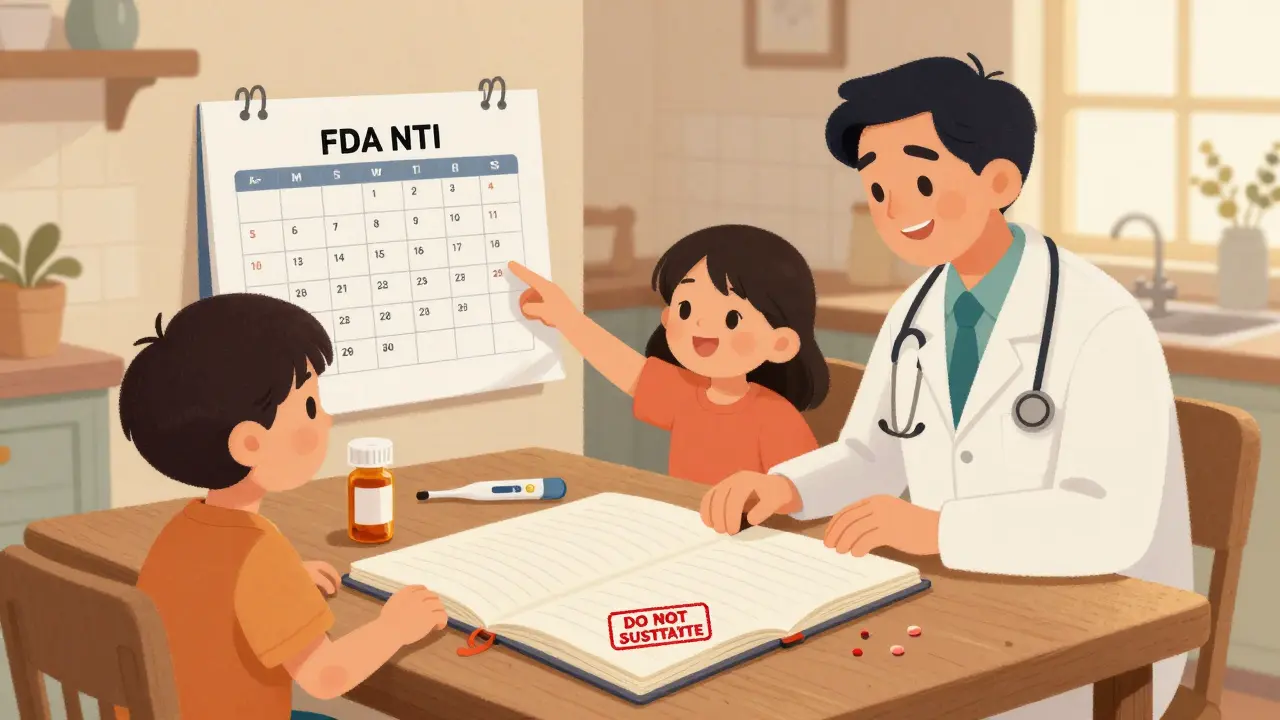
- Ask for “dispense as written.” If your doctor agrees, have them write it on your prescription. That stops automatic substitution.
- Don’t switch brands or generics without talking to your provider. Even if the label says “generic,” different manufacturers can have different fillers or coatings that affect absorption.
- Get your blood levels checked regularly. Don’t wait for symptoms. Stable levels mean stable health.
- Keep a log. Write down when you switch medications, what dose you’re on, and any side effects. Bring it to every appointment.
Cost matters. Generic NTI drugs can save hundreds a month. But if you’re paying less now and end up in the hospital later, you’ve lost more than money. The goal isn’t just affordability - it’s safety.
Final Thought: Trust, But Verify
Generics are safe - for most drugs. But NTI drugs are different. They’re not just cheaper versions of brand names. They’re precision tools that demand precision handling. The FDA, doctors, and pharmacists aren’t being overly cautious - they’re being responsible.
If you’re on an NTI drug, you’re not just taking medication. You’re managing a tightrope. The best way to stay safe? Stay informed. Stay consistent. And never assume a generic is interchangeable without checking with your care team.
Are all generic drugs the same as brand-name drugs?
No - not when it comes to narrow therapeutic index (NTI) drugs. For most medications, generics must be within 80-125% of the brand’s blood concentration. For NTI drugs, the FDA requires a much tighter range - often 90-111% or even 95-105%. Even small differences in absorption can lead to serious side effects or treatment failure.
Can I switch between different generic versions of an NTI drug?
It’s not recommended. Switching between different generic manufacturers of an NTI drug - even if both are FDA-approved - can cause your blood levels to fluctuate. Many patients report changes in symptoms, lab values, or side effects after switching. The safest approach is to stay on the same manufacturer’s product once you’re stable.
Why do some pharmacists refuse to substitute NTI generics?
Because they’ve seen the consequences. A national survey found 64% of pharmacists believe substituting NTI generics can lead to therapeutic failure, compared to just 22% for non-NTI drugs. Many have witnessed patients experience organ rejection, seizures, or dangerous bleeding after a switch. Their hesitation isn’t about profit - it’s about patient safety.
Does insurance cover brand-name NTI drugs if generics are available?
It depends. Many insurers will cover the brand if your doctor writes “dispense as written” or if you’ve had a bad reaction to a generic. You may need prior authorization. Always check with your insurer and keep a copy of your doctor’s note. Some states also have laws protecting access to brand-name NTI drugs under certain conditions.
How often should blood levels be checked for NTI drugs?
After starting or changing an NTI drug, blood levels are typically checked every 1-4 weeks until stable. Once stable, monitoring may drop to every 3-6 months. But if you switch manufacturers, start a new medication, or change your dose, recheck within 2-4 weeks. For transplant patients, monthly checks are common. Always follow your provider’s specific plan.
Are there state laws that restrict generic substitution for NTI drugs?
Yes. As of 2023, 42 U.S. states have laws that restrict or regulate automatic substitution of NTI drugs. Some require prescriber approval, others require patient consent, and a few ban substitution entirely. Rules vary widely - so even if you know the rules in one state, they may not apply where you live. Always confirm your state’s current regulations.
Juan Reibelo
January 24, 2026 AT 07:33Just had my tacrolimus switched last month-no warning, no discussion. My creatinine spiked. Ended up in the ER. Now I have a note on my file: ‘DO NOT SUBSTITUTE.’ I don’t care if it saves $200 a month-I’m not risking my kidney again. Seriously, folks: if your doctor doesn’t write ‘dispense as written,’ ask them to. It’s not paranoia. It’s survival.
Dolores Rider
January 24, 2026 AT 10:31They’re lying to us. I know it. The FDA? Big Pharma’s puppet. Generics are just rebranded factory scraps. I’ve seen the pills-different colors, different shapes. How can they be the same?! They’re testing on us. And they call it ‘cost-saving.’ LOL. I’ve been on the same brand for 8 years. My TSH is perfect. They want to kill us with generics. 😡💊
Vatsal Patel
January 25, 2026 AT 17:37Ah, the great capitalist illusion: ‘equivalence.’ You think a pill is a pill? No. A pill is a philosophy. A ritual. A contract between chemistry and the soul. The body doesn’t read FDA guidelines-it reads rhythm. Consistency. Faith. You swap generics like you swap partners-then wonder why your life falls apart. The real drug isn’t in the capsule. It’s in the routine. And routine? That’s sacred.
Sharon Biggins
January 26, 2026 AT 06:15Thank you for writing this. I’m so glad someone finally gets it. I’ve been on levothyroxine for 12 years and switched generics twice-both times I felt like I was drowning. I cried for a week. I’m back on the brand now. My doctor gets it. You’re not crazy for needing stability. You’re smart. 💕
John McGuirk
January 27, 2026 AT 05:52Wait. So you’re telling me the government lets companies make pills that are 10% off and calls it ‘safe’? And we’re supposed to trust that? The same people who gave us OxyContin? Yeah right. This is a slow genocide. They want us on the cheap stuff so we die quietly. No one talks about this. But I do. I’m not alone.
lorraine england
January 27, 2026 AT 13:47I’m a nurse and I’ve seen this firsthand. One patient switched from brand to generic warfarin and ended up with a GI bleed. Another went from generic A to generic B and had a seizure. I’ve had to explain to families why their loved one’s INR went from 2.5 to 6.8 because of a pill change. It’s not about cost. It’s about trust. And we’re breaking it.
Himanshu Singh
January 28, 2026 AT 01:18My cousin has been on generic phenytoin for 7 years-no issues. But he never switches. Same manufacturer. Same pharmacy. Same routine. Maybe the problem isn’t generics. Maybe it’s chaos. Stability is the real medicine. 🙏
Jamie Hooper
January 28, 2026 AT 10:23so like… i just got switched to a generic for my digoxin and now i’m dizzy and my heart feels like it’s doing the cha-cha?? like… why is this happening?? also my pill looks like a tiny yellow moon now?? is that normal?? 🤔
Husain Atther
January 29, 2026 AT 00:39It’s worth noting that in countries like Canada and the UK, pharmacists are required to document every substitution of NTI drugs, and patients are notified in writing. Transparency is the baseline. In the U.S., we treat patient safety like an afterthought. The system isn’t broken-it was designed this way. Change requires policy, not just awareness.
Helen Leite
January 29, 2026 AT 18:58They’re hiding the truth. I found a leaked document from 2021. The FDA knew generics of tacrolimus had 15% variability in some batches. They didn’t tell anyone. 🕵️♀️💉 I’m not paranoid. I’m informed. And I’m not taking another generic until Congress forces them to label the manufacturer on every bottle. #NTItruth
Izzy Hadala
January 31, 2026 AT 18:00While the clinical evidence supports tighter bioequivalence thresholds for NTI drugs, the regulatory framework remains fragmented. The current 90–111% range, while narrower than standard generics, still permits pharmacokinetic variance exceeding 20% in some cases due to intra-individual fluctuation. A prospective, multi-center pharmacogenomic study is warranted to determine whether fixed-dose substitution protocols are clinically defensible.
Elizabeth Cannon
February 2, 2026 AT 07:08you are NOT alone. i was scared to speak up but now i’m telling everyone. my doc wrote DAW on my script and my insurance fought me. but i won. you deserve to be safe. don’t let them bully you into saving money if your life’s on the line. i’m proud of you for reading this. 💪❤️
Marlon Mentolaroc
February 4, 2026 AT 04:44Look, I get the fear. But let’s be real-90% of people on generics are fine. You’re the 10% who had a bad experience, and now you’re acting like everyone else is doomed. That’s not helpful. It’s fearmongering. The system’s imperfect, but it’s not a death trap. Get your levels checked. Don’t panic. And stop scaring people who are doing fine.
Gina Beard
February 5, 2026 AT 16:48Consistency > cost.