
Medication Disposal Guide
Check Your Medication Disposal Method
Why Safe Medication Disposal Matters More Than You Think
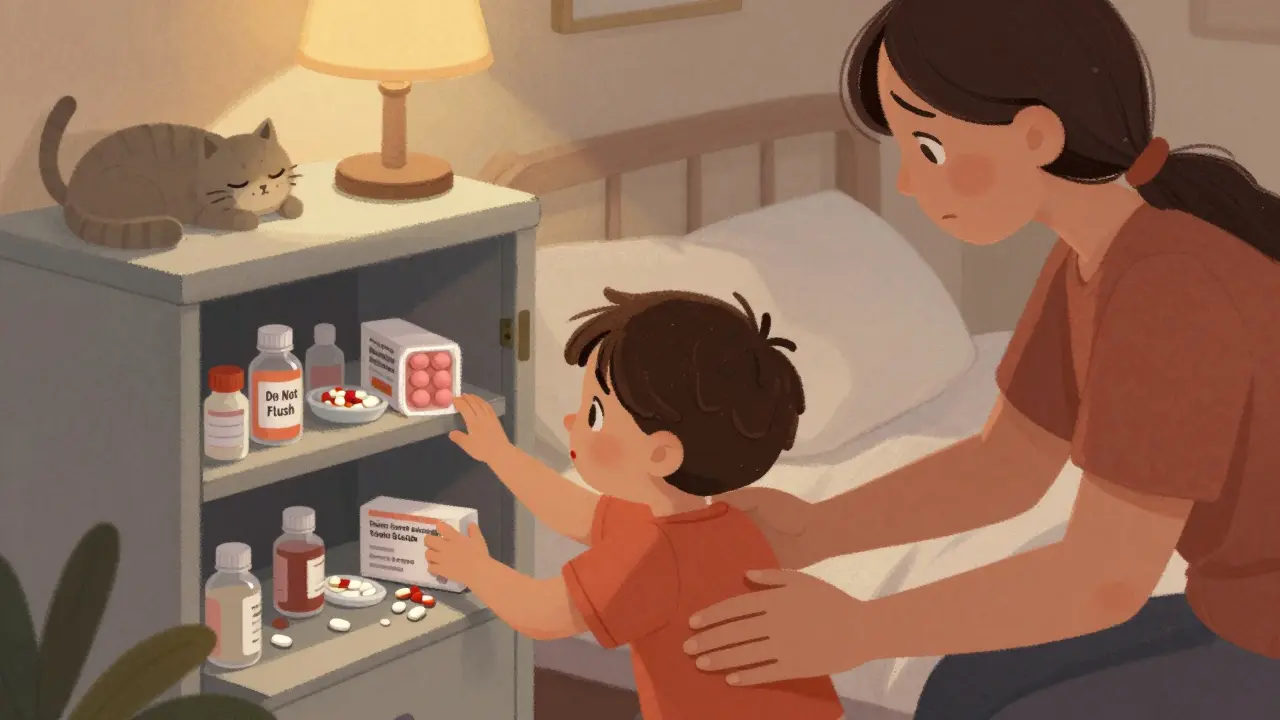
Every year, millions of unused pills sit in bathroom cabinets, kitchen drawers, and medicine chests across the U.S. Many people don’t realize how dangerous this is-not just for kids or pets, but for the entire community. In 2022, over 70,000 people died from drug overdoses in the U.S., and nearly 13,500 of those involved prescription opioids left in homes. The problem isn’t just misuse-it’s accessibility. When medications aren’t properly disposed of, they become easy targets for theft, accidental ingestion, or environmental harm.
The FDA, DEA, and EPA have spent years building a clear system to fix this. It’s not complicated, but most people still get it wrong. You might think flushing pills down the toilet is harmless, or that throwing them in the trash is fine. Neither is true for most drugs. The safest, most effective way to get rid of expired or unwanted medications is through take-back programs. And if you don’t have one nearby, there are still safe, step-by-step ways to handle it yourself.
The Three FDA-Approved Ways to Dispose of Medications
The FDA doesn’t leave you guessing. They’ve laid out exactly three methods, ranked by safety and environmental impact. Here’s how they break down:
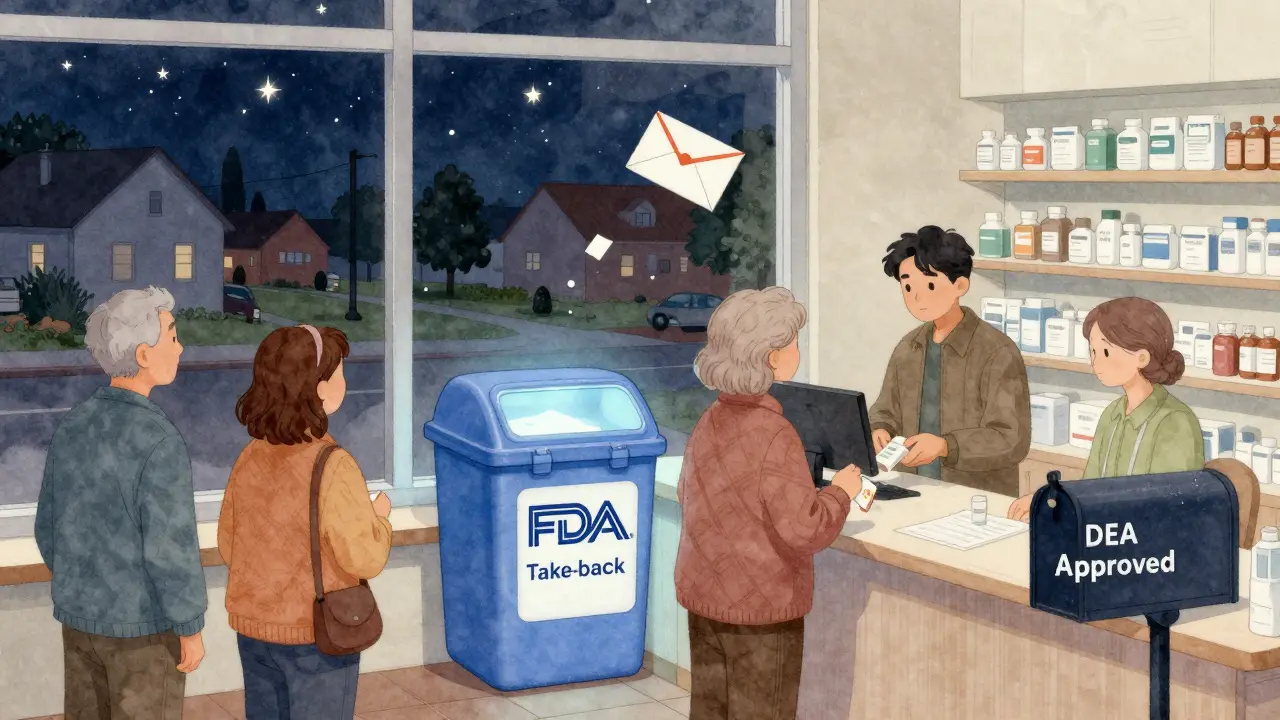
- Drug Take-Back Programs - The #1 choice. These are secure collection bins at pharmacies, hospitals, or law enforcement sites. Over 14,352 retail pharmacies in the U.S. now have them, including Walmart, CVS, and Walgreens. In 2024, these programs collected over a million pounds of unused meds. This is the gold standard because it prevents diversion, protects water supplies, and ensures proper destruction.
- Prepaid Mail-Back Envelopes - A great option if you live in a rural area or can’t get to a drop-off site. Companies like DisposeRx and Sharps Compliance provide FDA-compliant envelopes you can mail for free or a small fee ($2-$5). The DEA and FDA both approve these, and they’re used by the VA and Medicare Advantage plans. One study found 94% of users were satisfied with this method.
- Home Disposal (Trash Only) - Only for medications that aren’t on the FDA Flush List. This isn’t ideal, but it’s better than flushing or leaving them lying around. You have to follow exact steps to make it safe.
What’s on the FDA Flush List? (And When You Should Flush)
Flushing is not a free-for-all. The FDA only allows it for 13 specific drugs that are extremely dangerous if misused-especially by children or people with no prescription. These are mostly powerful opioids and other high-risk medications. As of October 2024, the list includes:
- Fentanyl (patches and injections)
- Oxycodone (OxyContin, Percocet)
- Hydrocodone (Vicodin)
- Buprenorphine (Suboxone)
- Alprazolam (Xanax)
- Methadone
- Meperidine (Demerol)
- Tapentadol (Nucynta)
- Tramadol (Ultram)
- Remifentanil
- Levorphanol
- Phenazepam
- Desmopressin (for rare cases)
That’s it. If your medication isn’t on this list, do not flush it. Flushing anything else contributes to water contamination-even if the amount is tiny. The EPA estimates pharmaceuticals in water make up less than 0.0001% of total pollution, but that’s still avoidable. And remember: flushing is never allowed in hospitals, clinics, or nursing homes under federal law.
How to Dispose of Non-Flush List Medications at Home
If you can’t get to a take-back bin or mail-back envelope, here’s exactly how to do it right. The FDA’s 5-step process isn’t optional-it’s the only way to make sure your meds won’t hurt someone else.
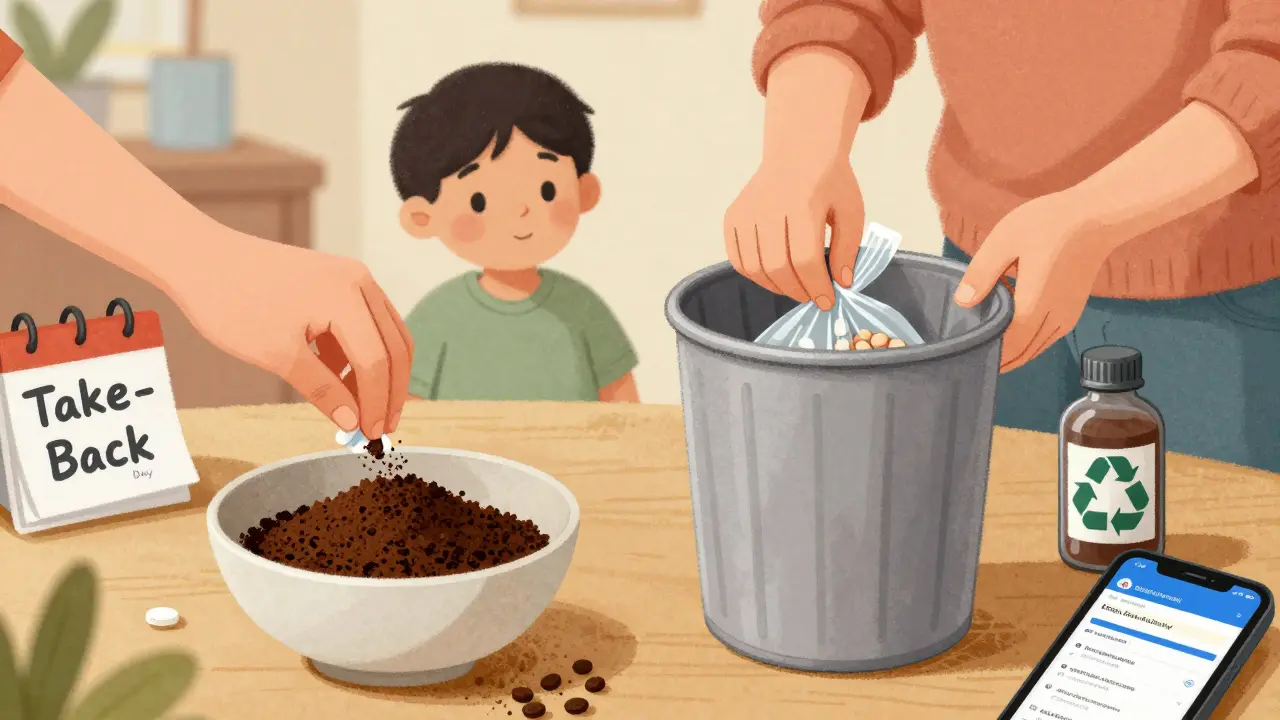
- Remove personal info - Use a permanent marker to black out your name, prescription number, and dosage. Or wipe the bottle with alcohol. Don’t just peel off the label-someone can still read what’s underneath.
- Mix with unpalatable stuff - Take your pills or liquid meds and mix them with something gross. Coffee grounds work best (78% of people prefer them). Cat litter, dirt, or even used paper towels are fine too. The key is a 1:1 ratio-don’t just sprinkle a few grounds on top. If you have 10 pills, mix them with 10 tablespoons of grounds.
- Seal it tight - Put the mixture in a plastic bag or container that won’t leak. The FDA recommends at least 0.5mm thickness. Ziplock bags work. A small Tupperware works better. Don’t use flimsy packaging.
- Put it in the trash - Not the recycling bin. Not the compost. Trash. Make sure it’s not visible or easily accessible to kids, pets, or scavengers.
- Recycle the empty container - Once it’s completely empty and de-identified, you can recycle the bottle. Most plastic prescription bottles are recyclable, but check your local rules.
Pro tip: Liquid medications are the trickiest. Never pour them down the sink. Always mix them with absorbent material like kitty litter or sawdust before sealing. A 2024 survey found 44% of home disposal failures happened because people didn’t mix liquids properly.
Where to Find a Take-Back Location Near You
You don’t have to guess. The DEA has a searchable map of over 14,000 permanent collection sites. Just go to dea.gov/diversion/drug_disposal and enter your zip code. Most major pharmacies participate:
- Walmart - All 4,700 U.S. pharmacies have kiosks.
- CVS - Over 9,700 locations offer drop-off bins.
- Walgreens - All stores have take-back boxes near the pharmacy counter.
- Local police stations - Many have 24/7 drop boxes.
- Hospitals and clinics - Especially VA facilities.
If you’re in a rural area, 31% of residents report no site within 25 miles. That’s where mail-back envelopes become essential. Some insurers, like Express Scripts, offer free mailers to members. Check with your pharmacy or Medicare plan.
What About National Take-Back Days?
The DEA runs two big collection events each year: April 26 and October 25, 2025. These are great for getting rid of old meds, especially if you’ve been putting it off. In October 2024, over a million pounds of drugs were collected nationwide-up nearly 29% from the year before.
But don’t wait for these days. Permanent take-back bins are open year-round. These events are meant to raise awareness, not replace regular disposal. If you’ve got expired meds, don’t wait for April.
Why Most People Get This Wrong
A 2024 Consumer Reports survey of 1,200 households found 78% tried to dispose of meds at home. Of those, 34% flushed something they shouldn’t have. Another 18% just tossed pills in the trash without mixing them. Only 19% used a take-back program.
Why? Lack of awareness. A nurse who’s worked in pharmacy for over a decade told Reddit users: “Sixty-three percent of patients don’t even know take-back bins exist.” Pharmacy leaflets often give incomplete info-only 72% accurate, according to the FDA. Meanwhile, FDA.gov is 94% accurate.
And it’s not just about being lazy. People think flushing is quick and clean. But the environmental cost is real. Even tiny amounts of opioids in waterways can affect fish behavior and hormone systems. Plus, if your meds end up in landfills, they can leach into groundwater.
What’s Changing in 2025 and Beyond
The rules are getting tighter-and better. In March 2025, the DEA announced plans to expand permanent take-back sites to 20,000 locations nationwide. The EPA just proposed a $37.5 million grant program to help rural communities set up collection points. Walmart and CVS are investing millions more in kiosks and mail-back systems.
The FDA’s goal? 90% of Americans using take-back programs by 2030. Right now, only about 36% do. That’s a big gap, but it’s closing. The key is making it easy. Free mailers, more bins, better labeling on bottles-these are all happening.
One big change: buprenorphine (Suboxone) was added to the Flush List in October 2024. Oxymorphone was removed. Always double-check the current list before flushing.
Final Takeaway: Do It Right, Every Time
Disposing of expired meds isn’t a chore-it’s a responsibility. The system is simple: take-back first, mail-back second, home disposal only as a last resort. And never flush unless your med is on the official list.
Check your medicine cabinet today. Look at the labels. Find your nearest drop-off location. If you’re unsure, call your pharmacist. They’ll tell you exactly what to do. You’re not just protecting your family-you’re helping stop the opioid crisis before it starts.
Can I flush any expired medication down the toilet?
No, only medications on the FDA’s official Flush List should be flushed. That list includes 13 specific drugs, mostly powerful opioids like fentanyl, oxycodone, and hydrocodone. Flushing anything else can contaminate water supplies. If your medication isn’t on the list, use a take-back program or dispose of it in the trash using the FDA’s mixing method.
Where can I find a drug take-back location near me?
The DEA maintains a searchable map of over 14,000 permanent collection sites. Go to dea.gov/diversion/drug_disposal and enter your zip code. Most Walmart, CVS, and Walgreens pharmacies have take-back bins near the pharmacy counter. Local police stations and hospitals also often host drop-off boxes. If you’re in a rural area, mail-back envelopes are a reliable alternative.
What if I can’t get to a take-back site?
Use a prepaid mail-back envelope. Companies like DisposeRx and Sharps Compliance offer FDA-compliant envelopes you can order online or get through your pharmacy or insurer. Many Medicare Advantage and VA plans provide them for free. If that’s not an option, follow the FDA’s home disposal steps: remove labels, mix with coffee grounds or cat litter, seal in a plastic container, and throw it in the trash.
Is it safe to throw pills in the trash without mixing them?
No. Throwing pills in the trash without mixing them is dangerous. Someone could find them, especially children or pets. Even if you remove the label, pills can still be identified and misused. The FDA requires mixing with an unpalatable substance like coffee grounds or cat litter in a 1:1 ratio, then sealing in an impermeable container. Skipping this step increases the risk of accidental poisoning or drug abuse.
Can I recycle my empty pill bottles?
Yes, but only after you’ve completely removed all personal information. Use a permanent marker or alcohol swab to obliterate your name, prescription number, and dosage. Once the bottle is fully de-identified, most plastic prescription bottles are recyclable. Check your local recycling rules-some programs require removing the cap or rinsing the bottle.
Do I need to dispose of over-the-counter meds the same way?
Yes. The same rules apply to over-the-counter medications like ibuprofen, acetaminophen, or allergy pills. Even if they seem harmless, they can still be misused or cause harm if ingested accidentally. Always use a take-back program if possible. If not, mix them with coffee grounds or cat litter, seal them, and throw them in the trash. Never flush OTC drugs unless they’re on the FDA Flush List-which they almost never are.
Antwonette Robinson
February 3, 2026 AT 13:11Ed Mackey
February 4, 2026 AT 05:05Jhoantan Moreira
February 6, 2026 AT 00:32Prajwal Manjunath Shanthappa
February 7, 2026 AT 03:50One wonders whether the FDA’s guidelines should be mandated with fines. Or perhaps, mandatory pharmacy literacy courses. The ignorance is not just inconvenient-it’s catastrophic.
rahulkumar maurya
February 8, 2026 AT 04:39pradnya paramita
February 9, 2026 AT 01:42Alex LaVey
February 9, 2026 AT 21:11caroline hernandez
February 10, 2026 AT 10:58Joseph Cooksey
February 11, 2026 AT 12:54Meenal Khurana
February 13, 2026 AT 10:00Sherman Lee
February 13, 2026 AT 12:53Amit Jain
February 15, 2026 AT 08:47Mandy Vodak-Marotta
February 17, 2026 AT 05:20Nathan King
February 17, 2026 AT 17:49Janice Williams
February 17, 2026 AT 21:29