
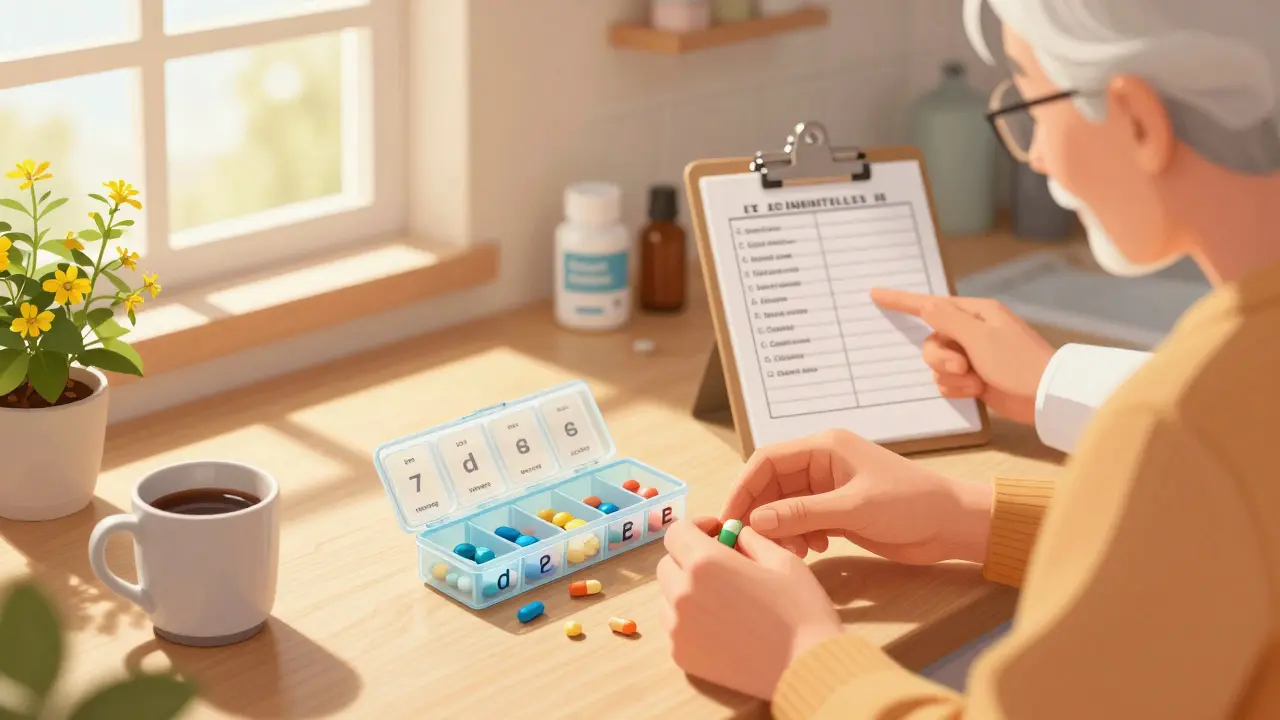
Managing multiple medications is harder than it looks. If you’re taking five or more drugs a day - and nearly 40% of adults over 65 do - you’re at risk for harmful drug interactions. These aren’t just theoretical risks. Every year, medication errors send over a million people to the emergency room in the U.S. The good news? You can drastically reduce those risks with a simple, well-designed medication schedule.
Start with a Complete Medication List
Before you even think about timing, you need to know exactly what you’re taking. This includes prescription drugs, over-the-counter pills like ibuprofen or antacids, vitamins, and herbal supplements. Many people forget the last two. St. John’s Wort can interfere with antidepressants. Calcium supplements block thyroid medication. Even common pain relievers like aspirin can cause dangerous bleeding when mixed with blood thinners. Write everything down. Include the name, dose, why you’re taking it, and when you last refilled it. Bring this list to every doctor visit. Pharmacists call this a “brown bag review.” In one study, pharmacists found an average of 3.2 medication errors per patient just by looking at what was actually in their bags - not what they were told.Use the Universal Medication Schedule (UMS)
Forget vague instructions like “take twice daily” or “with meals.” Those lead to confusion. A 2016 study found that 34% of patients misinterpreted such directions - especially older adults or those with low health literacy. The Universal Medication Schedule fixes this. It uses four clear time windows:- Morning: 6 AM - 10 AM
- Noon: 10 AM - 2 PM
- Evening: 2 PM - 6 PM
- Bedtime: 8 PM - 12 AM
Group Medications by Time, Not by Condition
Don’t organize your pills by “heart meds,” “diabetes meds,” or “pain meds.” That’s how mistakes happen. Instead, group them by when you take them. For example:- Morning: Thyroid pill (on empty stomach), blood pressure med, daily aspirin
- Noon: Diabetes pill, multivitamin
- Evening: Cholesterol statin (with dinner), muscle relaxant
- Bedtime: Sleep aid, pain reliever
Watch Out for Critical Timing Rules
Not all meds can be grouped. Some need strict spacing.- Thyroid medication (levothyroxine): Must be taken on an empty stomach, at least 30-60 minutes before food or other meds. Calcium, iron, and even coffee can block absorption.
- Antibiotics (like doxycycline): Should be taken 1-2 hours before or after dairy, antacids, or iron supplements.
- Statins: Work best taken at night, when your liver makes most cholesterol.
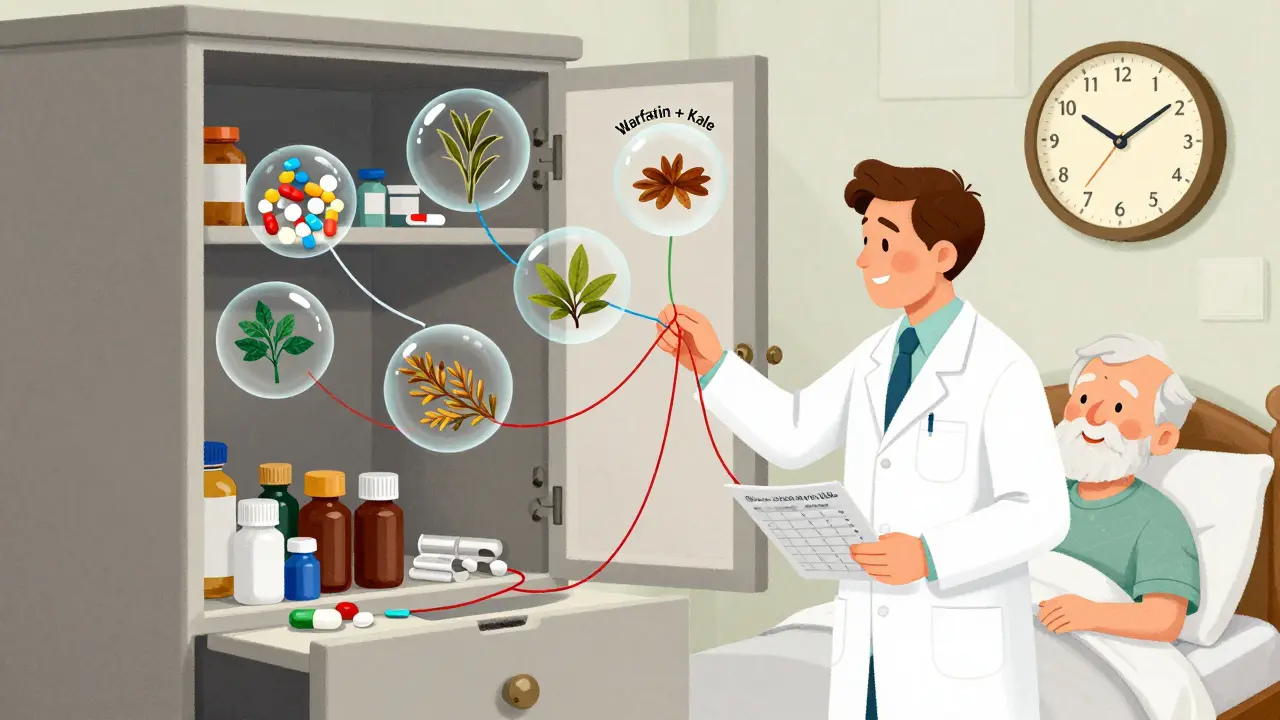
- Warfarin: Keep vitamin K intake consistent. Don’t suddenly eat a lot of kale or spinach.
Use a Pill Organizer - But Choose the Right One
A simple pill box can cut dosing errors by 45%, according to a 2018 meta-analysis. But not all organizers work the same.- AM/PM boxes: Good for 2-4 meds per day.
- 7-day boxes with 4 compartments (morning, noon, evening, bedtime): Best for 5+ meds. Look for ones with labels or color-coded slots.
- Smart dispensers: Devices like Hero Health beep, flash, and even notify family if a dose is missed. In a 2022 trial, they boosted adherence to 92%.
Sync Your Refills - Save Time, Avoid Gaps
Running out of one med while still having others? That’s a recipe for missed doses or dangerous overdoses. The “90 x 4” method solves this. Instead of refilling each prescription on a different day, ask your doctor to prescribe 90-day supplies. Then, schedule all refills for the same day every three months. This saves doctors up to two hours per day on administrative work and cuts refill gaps by over half. It doesn’t work for meds that need frequent dose changes - like insulin or blood thinners - but for stable conditions like high blood pressure or cholesterol, it’s a game-changer.Track It - But Keep It Simple
A medication calendar isn’t just for memory. It’s a safety net. Write down each dose you take, with the date and time. Use a printed chart taped to your bathroom mirror or a simple app like Medisafe or MyTherapy. People who use calendars improve adherence from 50% to 75% - even with chronic illnesses. Apps work well - but only if you use them. Only 38% of adults over 65 consistently use smartphone reminders. If tech isn’t your thing, stick with paper. A 2020 AHRQ report found 72% of patients with limited tech access still succeed with a printed schedule.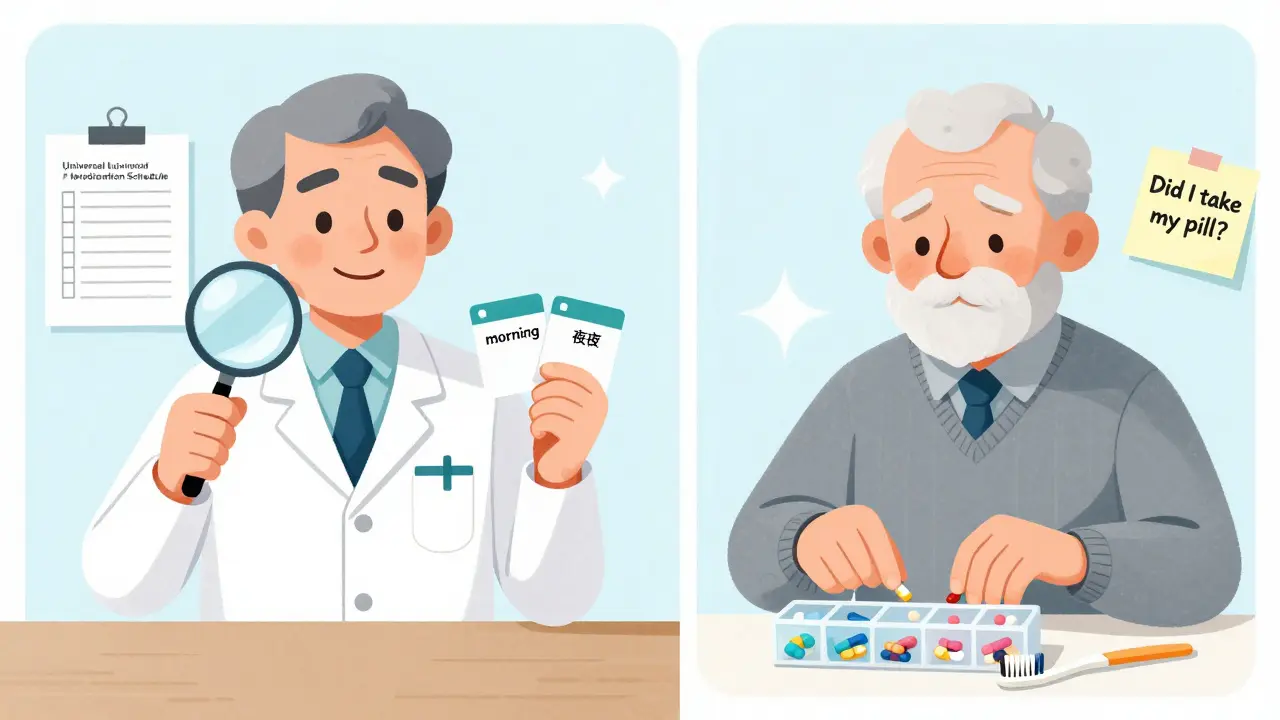
Know the Warning Signs of Interactions
Even the best schedule won’t catch everything. Watch for these red flags:- Dizziness or fainting
- Unusual bruising or bleeding
- Severe stomach pain or nausea
- Confusion or memory lapses
- Swelling in hands or feet
- Rapid or irregular heartbeat
Work With Your Pharmacist - Not Just Your Doctor
Your doctor prescribes. Your pharmacist protects. Pharmacists are trained to spot interactions your doctor might miss. They review your full list - including supplements - and can suggest alternatives, timing adjustments, or combination pills to reduce your daily count. One study showed pharmacist-led medication reviews cut emergency visits by 24% and drug interactions by 32%. Don’t wait for your annual checkup. Go in every time you get a new prescription. Ask: “Is this safe with everything else I take?”What If You See Conflicting Instructions?
It happens. One doctor says “take in the morning.” Another says “take at night.” A 2022 survey found 67% of patients get conflicting advice from different specialists. When this happens, don’t guess. Call your primary care provider or pharmacist. Say: “I have two different instructions for this med. Can you help me figure out which one is safest?” There’s often a reason for the difference - like a lab result or new condition - but you shouldn’t be the one connecting the dots.Final Tip: Make It Routine
The best schedule in the world fails if it’s not part of your daily life. Link your meds to something you already do: brush your teeth, eat breakfast, turn off the TV. Put your pill box next to your coffee maker. Set a phone alarm labeled “AM Meds.” Use a sticky note that says “Did I take my pill?” It takes about 2-4 weeks to build the habit. After that, it’s automatic. And that’s what keeps you safe.Can I just take all my pills at once to make it easier?
No. Taking all your pills together can cause dangerous interactions. For example, calcium supplements can block thyroid medication if taken at the same time. Antibiotics may not absorb properly if taken with dairy. Always follow the timing rules for each drug. If you’re overwhelmed, ask your pharmacist to help you create a safe schedule.
Do I need to use an app, or can I stick with paper?
You don’t need an app. Many people do better with a printed chart and pill organizer. Apps work well for tech-savvy users, but only 38% of seniors use them consistently. If you’re more comfortable with paper, use it. What matters is consistency - not the tool.
What if I forget to take a pill?
Check the label or ask your pharmacist. Some meds can be taken late; others should be skipped. Never double up unless instructed. For example, if you miss your blood pressure pill in the morning, you can usually take it by evening. But if you miss a blood thinner, don’t guess - call your doctor.
How often should I update my medication list?
Update it every time you see a doctor, get a new prescription, or stop a medication. Even if you think it’s minor - like a new vitamin or pain reliever - add it. Many dangerous interactions come from over-the-counter items people forget to mention.
Are there any free tools to check for drug interactions?
Yes. The FDA’s MedSafety app and websites like Drugs.com and MedlinePlus offer free interaction checkers. But they’re not a substitute for talking to your pharmacist. They can’t know your full medical history or how your body responds. Always double-check with a professional.
Can my pharmacist change my schedule?
Pharmacists can’t change your prescription, but they can recommend adjustments - like switching to a combination pill or changing the time of day - and then suggest you talk to your doctor. Many doctors welcome this input. In fact, pharmacist-led medication reviews are now covered by Medicare Part D for patients on multiple drugs.
If you’re managing five or more medications, you’re not alone. But you don’t have to manage it alone either. With a clear schedule, the right tools, and a trusted pharmacist, you can take control - and avoid the risks that come with confusion.
Chris Urdilas
January 28, 2026 AT 08:14So let me get this straight - we’re paying doctors thousands to write prescriptions, then expecting us to be pharmacists too? And if we mess up, it’s *our* fault? Classic. I’ve got 7 meds and a pill organizer that looks like a Rubik’s Cube. I just take them all at once and hope for the best. 🤷♂️
Jeffrey Carroll
January 29, 2026 AT 07:59While the approach outlined here is methodical and evidence-based, it is important to acknowledge the systemic barriers that many elderly patients face in implementing such schedules - including cognitive decline, limited access to pharmacy services, and socioeconomic constraints. A structured regimen is ideal, but accessibility must precede optimization.
Phil Davis
January 29, 2026 AT 14:12Wow. A 34% misinterpretation rate? And we wonder why people end up in the ER. Honestly, if your doctor says ‘take twice a day’ and you don’t know if that means 8am and 8pm or 8am and 2pm, maybe you shouldn’t be taking pills at all. Just sayin’.
Irebami Soyinka
January 30, 2026 AT 21:23This is why Africa still struggles with health outcomes - people here don’t even have pill organizers, let alone smart dispensers! 😒 You Americans think you’re so advanced, but your meds are killing you because you’re too lazy to read the label. Take your pills like adults! 🌍💊
doug b
January 31, 2026 AT 12:35Simple wins. Morning, noon, evening, bed. That’s it. No apps. No charts. Just do it. Your body doesn’t care if it’s Epic or MyTherapy - it just wants you to be consistent. Start small. One time a day. Then build from there.
Mel MJPS
January 31, 2026 AT 21:15I love this. My grandma started using the UMS after I printed out the four time slots and taped them to her fridge. She hasn’t missed a dose in 6 months. She even calls it ‘her daily rhythm.’ It’s sweet. And it works.
Katie Mccreary
February 2, 2026 AT 17:59You forgot to mention that 80% of people who use pill organizers still mix up their doses because they’re too lazy to label them. Also, ‘ask your pharmacist’ is code for ‘you didn’t pay enough attention in med school, doc.’
SRI GUNTORO
February 2, 2026 AT 20:58Why do people even need all these pills? In my village, we used herbs and prayer. Now everyone is addicted to chemicals. This schedule is just another way to profit off fear. God gave us bodies to heal - not to be managed like machines.
Kevin Kennett
February 3, 2026 AT 19:41Look - if you’re on five or more meds, you’re not just managing health, you’re managing a full-time job. That’s why this guide matters. The UMS isn’t fancy, it’s functional. And if you think your doctor knows everything your pharmacist doesn’t, you’re living in a fantasy. Go talk to your pharmacist. Now. They’re the real MVPs.
Jess Bevis
February 5, 2026 AT 10:42My dad took his statin at breakfast for 10 years. Turned out it was less effective. Nighttime only. One change. His LDL dropped 40%. Simple stuff, but nobody told him.
Rose Palmer
February 6, 2026 AT 02:18The implementation of a standardized medication schedule represents a critical advancement in patient safety and pharmacological stewardship. The empirical data supporting the Universal Medication Schedule, particularly the reduction in misinterpretation rates from 34% to 6%, is statistically significant and clinically meaningful. Institutional adoption of such protocols is not merely advisable - it is imperative.
Howard Esakov
February 7, 2026 AT 20:16Of course you need a smart dispenser. If you’re using paper, you’re basically playing Russian roulette with your liver. And if you don’t have an app that syncs with your EHR, you’re not serious about health. 🤓📱
Kathy Scaman
February 9, 2026 AT 11:00My sister uses a sticky note on her mirror that says ‘DID I TAKE IT?’ and she swears by it. No tech. No stress. Just a note. Sometimes the dumbest thing works the best.