
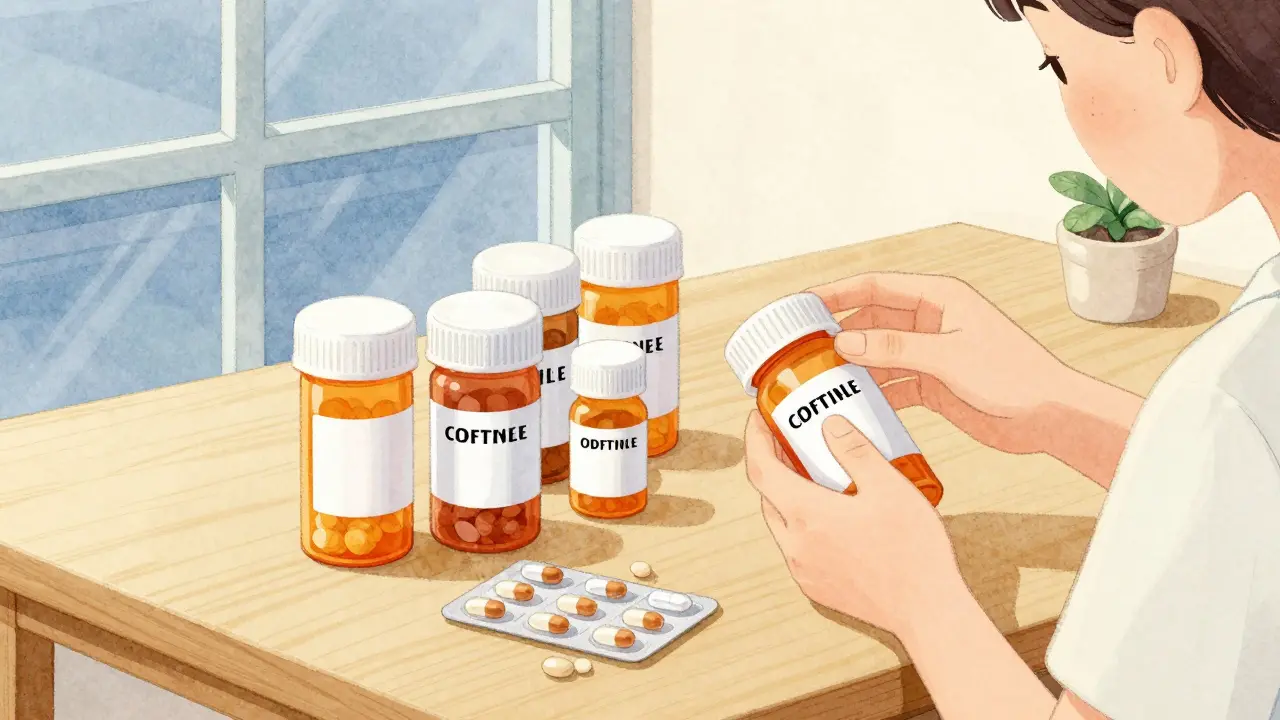
Creating a medication expiration schedule is a critical step in ensuring medication safety. Every year, over 125,000 deaths in the U.S. stem from improper medication use, including expired drugs. The FDA states that expired medications can lose potency or even become harmful. For example, insulin may not control blood sugar properly past its expiration date, while nitroglycerin tablets can fail during a heart attack. Yet a 2023 Pharmacy Times survey found 68.3% of patients have taken expired meds at least once. This isn't just about waste-it's about safety.
Step 1: Gather and Organize Your Medications
Start by collecting all your medications-prescription, OTC, supplements. Check each label for the expiration date, National Drug Code (NDC), and lot number. Store them in a cool, dry place away from sunlight. Avoid keeping meds in bathrooms where humidity affects stability. For liquid antibiotics or eye drops, note the "use by" date after opening, which is often shorter than the bottle's expiration date. A 2022 AHRQ report found 76.4% of home medication errors involved expired drugs, with asthma inhalers and epinephrine auto-injectors being the most common culprits. Organize medications by type: keep refrigerated items together, room-temperature pills in a separate container, and emergency supplies like EpiPens in a dedicated bag.
Step 2: Prioritize High-Risk Medications
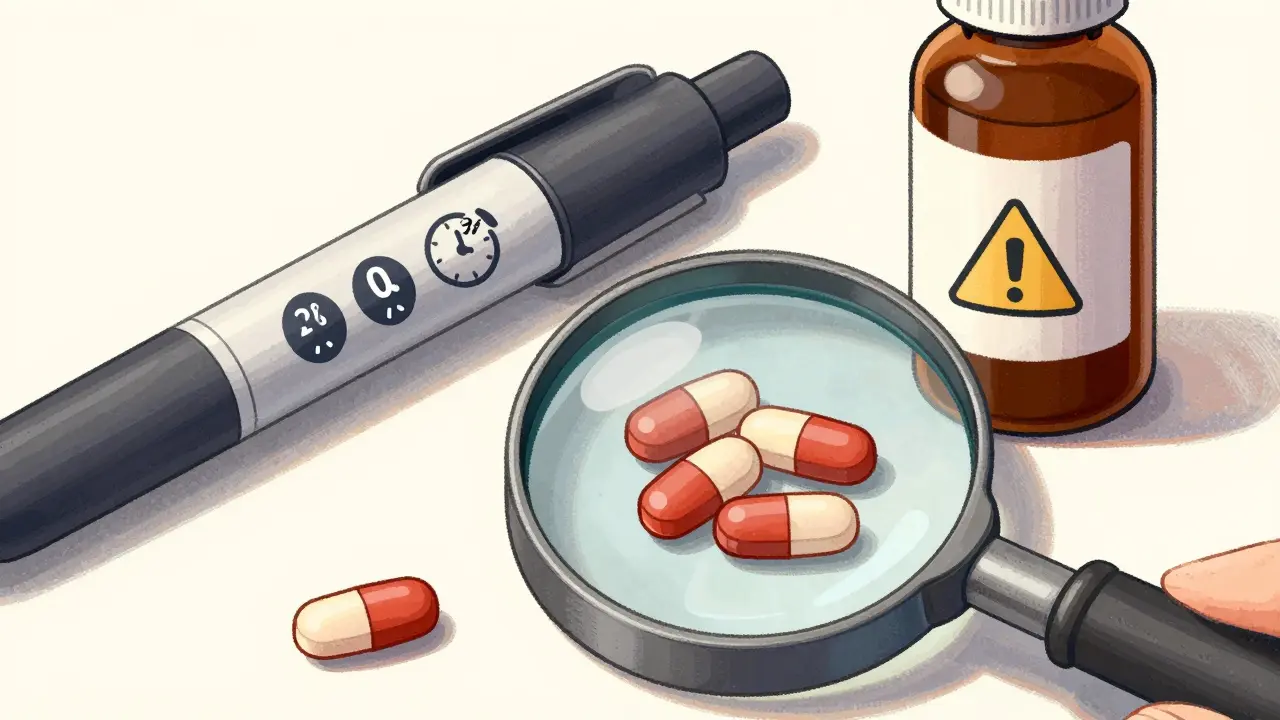
Not all medications degrade at the same rate. The Institute for Safe Medication Practices (ISMP) updated guidelines in January 2022 highlight insulin, nitroglycerin, and liquid antibiotics as high-risk. Insulin pens typically last only 28 days after first use, even if the bottle says 12 months. Nitroglycerin tablets lose effectiveness within 3 months of opening and must be stored in dark glass bottles. Liquid antibiotics like amoxicillin degrade rapidly, often within 14 days after mixing. The NIH 2020 study confirmed these degrade significantly faster than solid pills. If your medicine looks cloudy or has particles, discard it immediately. For epinephrine auto-injectors, check for discoloration or floating particles monthly-these are critical for allergic reactions.
Step 3: Set a Smart Review Schedule
Use the FDA's guidelines to create a review rhythm. Refrigerated medications (like insulin) need monthly checks. Room-temperature meds (pills, creams) can be reviewed quarterly. Emergency meds like epinephrine should be checked semi-annually. A CVS Health case study in 2022 showed a 37.2% reduction in expired medication incidents when patients used automated reminders. Tools like the Medisafe app (free version available) send alerts for each medication's expiration. For manual tracking, use a calendar with red markers for critical dates. The USP guidelines also recommend labeling pill organizers with expiration dates to avoid confusion.
Step 4: Store Medications Properly
Storage affects shelf life. Keep medications in their original containers with child-proof caps. Avoid temperature extremes-don't leave them in cars or near windows. The FDA recommends 20°-25°C (68°-77°F) for most drugs. Refrigerated items need consistent 2°-8°C (36°-46°F). AARP surveys found 48.7% of seniors struggle to read small print on expiration dates, so consider using a magnifying glass or digital tools like the Hero Health dispenser that auto-logs dates. For repackaged meds in amber vials, the shelf life is typically one year from fill date if stored correctly. Never store pills in humid environments like bathrooms-this accelerates degradation.
Step 5: Dispose of Expired Medications Safely
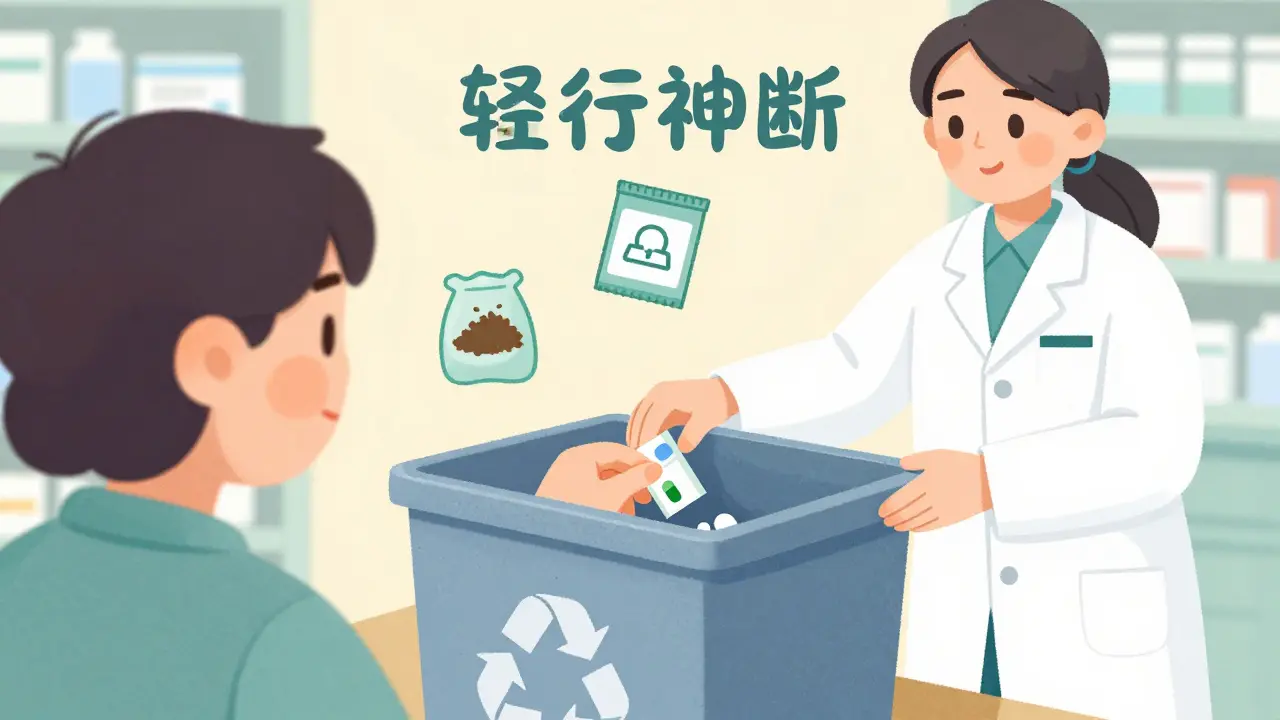
Never flush meds down the toilet. The DEA National Prescription Drug Take Back Day provides free disposal sites nationwide. Many pharmacies also accept expired drugs. For example, Southwestern Vermont Medical Center's MedSafe program has 93.7% success in reducing waste. If no take-back is available, mix pills with coffee grounds or cat litter in a sealed bag before throwing away. This prevents misuse and environmental harm. Liquid medications should be poured into absorbent material like paper towels before disposal. Always check local regulations-some states like California require specific disposal methods for controlled substances.
Common Mistakes to Avoid
Many people confuse "manufacture date" with "expiration date." The FDA says expiration dates are based on stability testing, not when the drug was made. Also, repackaged meds in pill organizers often lose their original labels. Always keep the manufacturer's container. Another mistake is storing meds in humid areas-bathrooms are the worst place. A 2022 FDA MedWatch report found 63.2% of home medication errors involved improper storage. A 2023 AARP survey revealed 48.7% of seniors struggle to read small print on expiration dates, leading to accidental use of expired drugs. For chronic medications like blood pressure pills, don't assume "it still works"-always check the date. The ISMP warns that even if a pill looks fine, it may have lost potency. Always consult a pharmacist before using expired medications.
How often should I check my medications?
The FDA and AHRQ recommend monthly checks for refrigerated medications like insulin, quarterly for room-temperature pills and creams, and semi-annually for emergency supplies like epinephrine auto-injectors. For example, if you store insulin in the fridge, check it every 4 weeks. Room-temperature medications like blood pressure pills can be reviewed every 3 months. Emergency meds should be checked before each season change.
Can I use expired allergy medication?
Antihistamines like Benadryl or Zyrtec may retain potency for up to a year past expiration if stored properly, but this isn't guaranteed. The FDA advises against using expired allergy meds during severe reactions. For example, if you have anaphylaxis, always use a fresh epinephrine auto-injector. A 2023 Pharmacy Times survey found 42.7% of patients took expired allergy meds because "they looked normal," but this can lead to ineffective treatment. Consult a pharmacist before using any expired medication.
What should I do with expired insulin?
Insulin loses effectiveness quickly past its expiration date. The FDA states it should be discarded immediately after expiration. If unopened, insulin may last up to 12 months from manufacture, but once opened, most vials last 28 days. Always check for cloudiness or particles before use. For disposal, take expired insulin to a pharmacy or DEA Take Back Day event. Never pour it down the sink-this contaminates water supplies. A 2022 Kaiser Family Foundation survey found insulin accounts for 31.5% of medication waste due to confusion about expiration guidelines.
How do I read expiration dates on pills?
Expiration dates on pills are typically printed as MM/YYYY (e.g., 09/2025). Some labels show "EXP" followed by the date. The NDC code on the label includes lot numbers and manufacturing dates, but the expiration date is separate. For repackaged meds in pill organizers, always refer to the original container's label. A 2023 AARP survey found 48.7% of seniors struggle to read small print on expiration dates-use a magnifying glass or smartphone camera to zoom in. If the date is unclear, contact your pharmacist.
Where can I safely dispose of expired meds?
The DEA National Prescription Drug Take Back Day hosts events at police stations and pharmacies nationwide. Many pharmacies like CVS and Walgreens have permanent drop-off boxes. For home disposal, mix pills with coffee grounds or cat litter in a sealed bag before throwing away. Liquid medications should be absorbed into paper towels. The Southwestern Vermont Medical Center MedSafe program has 93.7% success in reducing waste. Check local regulations-some states require specific disposal methods for controlled substances. Never flush meds down the toilet or sink.
Bella Cullen
February 5, 2026 AT 20:17I never check my meds and never had issues
Sam Salameh
February 5, 2026 AT 22:10America's meds are always safe. You're overthinking this
Dina Santorelli
February 7, 2026 AT 08:44This is why people die from meds. You're so careless. I've seen it happen
Jenna Elliott
February 8, 2026 AT 00:05Expired meds work fine stop worrying about it
Cole Streeper
February 8, 2026 AT 02:40The FDA is lying. They want you to buy new drugs every time. Big Pharma controls everything
Katharine Meiler
February 9, 2026 AT 03:59Per ISMP 2022 guidelines, insulin pens have a 28-day shelf life post-activation. Storage conditions significantly impact stability
Danielle Vila
February 11, 2026 AT 00:44The expiration dates are a scam! They want you to buy more drugs. I know for a fact that most meds last way longer. Pharma companies are greedy
Thorben Westerhuys
February 12, 2026 AT 18:57Oh my goodness this is so important!!! Did you know expired insulin can be dangerous??? I had a friend who almost died because of it!!! We need to spread awareness!!!
Matthew Morales
February 13, 2026 AT 23:59This is reallly helpful! I'll use the Medisafe app. Thanks! 😊
Kieran Griffiths
February 14, 2026 AT 05:20Great guide! I always check my meds monthly. It's easy to forget but so important for safety
Tehya Wilson
February 14, 2026 AT 10:03The information provided is adequate however the necessity of such a schedule is debatable
Laissa Peixoto
February 16, 2026 AT 07:20The concept of medication expiration dates is fascinating from a chemical stability perspective. While some drugs retain potency beyond the labeled date, it's prudent to follow guidelines for critical medications like epinephrine
Elliot Alejo
February 18, 2026 AT 00:04This guide is helpful. I've started using Medisafe app for tracking. It's easy to set reminders
one hamzah
February 18, 2026 AT 13:01This is awsome! 🌟 Always check your meds expiration dates! 💊✨ #StaySafe 😊
Pamela Power
February 19, 2026 AT 14:42This guide is overly simplistic. Real experts know expiration dates are arbitrary. The FDA is just trying to control the market