
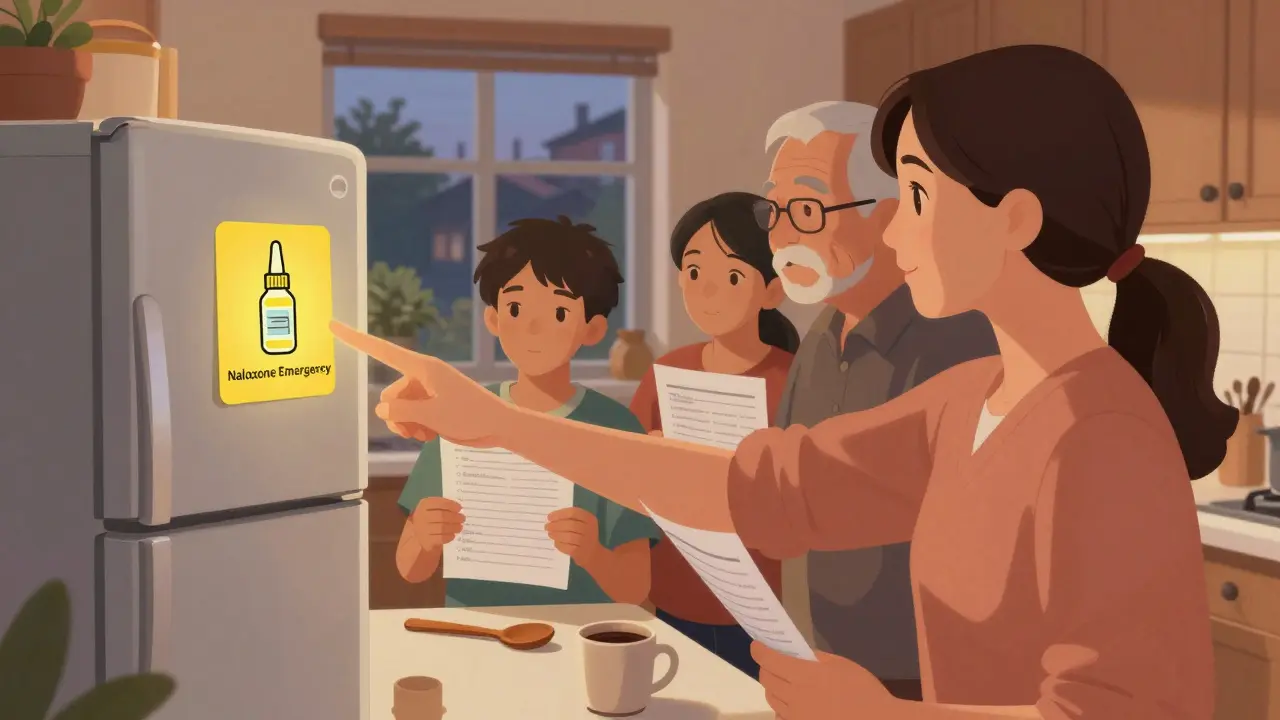
Why Your Family Needs an Overdose Emergency Plan
Every year, over 100,000 people in the U.S. die from drug overdoses. Most of those deaths involve opioids - especially synthetic ones like fentanyl. And here’s the hard truth: overdose doesn’t always happen to strangers or people you think are at risk. It can happen to your child, your parent, your sibling - someone you love - even if they’re taking a prescription exactly as directed. The difference between life and death often comes down to one thing: whether someone in the room knows what to do in the first few minutes.
Most families don’t talk about overdose. They avoid it. They think, "It won’t happen to us." But the data doesn’t lie. In 2022, over 51 million U.S. adults were prescribed opioids. And in nearly 9 out of 10 overdose deaths, synthetic opioids were involved. The window to save a life is short - 4 to 6 minutes after breathing stops. If no one acts, brain damage or death follows. But if someone has naloxone and knows how to use it, survival rates jump to 93%.
This isn’t about fear. It’s about preparedness. Just like you keep a fire extinguisher in the kitchen or a first aid kit in the bathroom, your home should have a clear, practiced plan for an opioid overdose. You don’t need to be a doctor. You don’t need to understand pharmacology. You just need to know three things: how to recognize it, how to respond, and where to find the medicine that can reverse it.
What an Overdose Looks Like - The Three Signs
People often mistake an overdose for someone just passed out from sleep or intoxication. That’s dangerous. An overdose doesn’t always involve loud noises or frantic movements. Often, it’s terrifyingly quiet. Here are the three unmistakable signs you need to memorize:
- Unresponsive: Try shaking their shoulder and shouting their name. If they don’t wake up, even after a firm shake, they’re unresponsive. No reaction to pain, sound, or touch.
- Abnormal breathing: Look at their chest. Are they taking fewer than 12 breaths per minute? Or worse - are they gasping, snoring, or not breathing at all? This is a sign their brain isn’t getting oxygen.
- Pinpoint pupils: Shine a light into their eyes. If the pupils are tiny, like pinpricks, that’s a classic sign of opioid overdose. It’s not a guarantee, but when combined with the other two signs, it’s a red flag.
Don’t wait for all three. If you see two, act. Fentanyl can knock someone out in under 3 minutes. Waiting for "proof" costs lives.
Building Your Family Plan: The Core Steps
A good overdose plan isn’t a document you print and forget. It’s a living system. Here’s how to build one that works.
- Know your medications. Make a list of every opioid or sedative in your home - even if it’s just one pill left in a bottle. Include the name, dosage, and who it’s prescribed to. Keep this list on your phone and a printed copy in your wallet or fridge.
- Get naloxone. Naloxone (brand name Narcan) is the only medicine that can reverse an opioid overdose. It’s safe, non-addictive, and works only if opioids are in the system. You can get it without a prescription at most pharmacies in 46 states. Many offer it for $25 or less with insurance. Some pharmacies give it away free. Ask for the nasal spray version - it’s the easiest to use.
- Keep it accessible. Don’t lock it in a medicine cabinet. Store it where everyone can reach it - the kitchen counter, the nightstand, the car glove box. Make sure teens, grandparents, and houseguests know where it is. Use a bright sticker or label: "Overdose Emergency - Do Not Move."
- Train everyone. Watch a 15-minute video from the American Red Cross or attend a free local training. Practice with a training kit (many pharmacies give them out for free). Everyone in the household - including kids over 12 - should know how to open the package, insert the nozzle, and press the plunger. You don’t need to be strong. Just push.
- Plan the call. After giving naloxone, call 911 immediately. Don’t wait to see if they wake up. Naloxone wears off in 30 to 90 minutes. Opioids can last longer. The person can slip back into overdose. EMS needs to be on the way.
- Keep extra doses. Fentanyl is so strong that one dose of naloxone often isn’t enough. Keep at least two or three nasal spray kits on hand. Store them in different rooms if your home is large.
- Check expiration dates. Naloxone lasts 18 to 24 months. Mark the date on the box. Replace it before it expires. Expired naloxone won’t hurt - it just won’t work as well.

What to Do During an Overdose - The A.N.C.H.O.R. Protocol
When you find someone unresponsive and not breathing, follow this simple sequence:
- Assess: Check for the three signs. No response, slow or no breathing, pinpoint pupils?
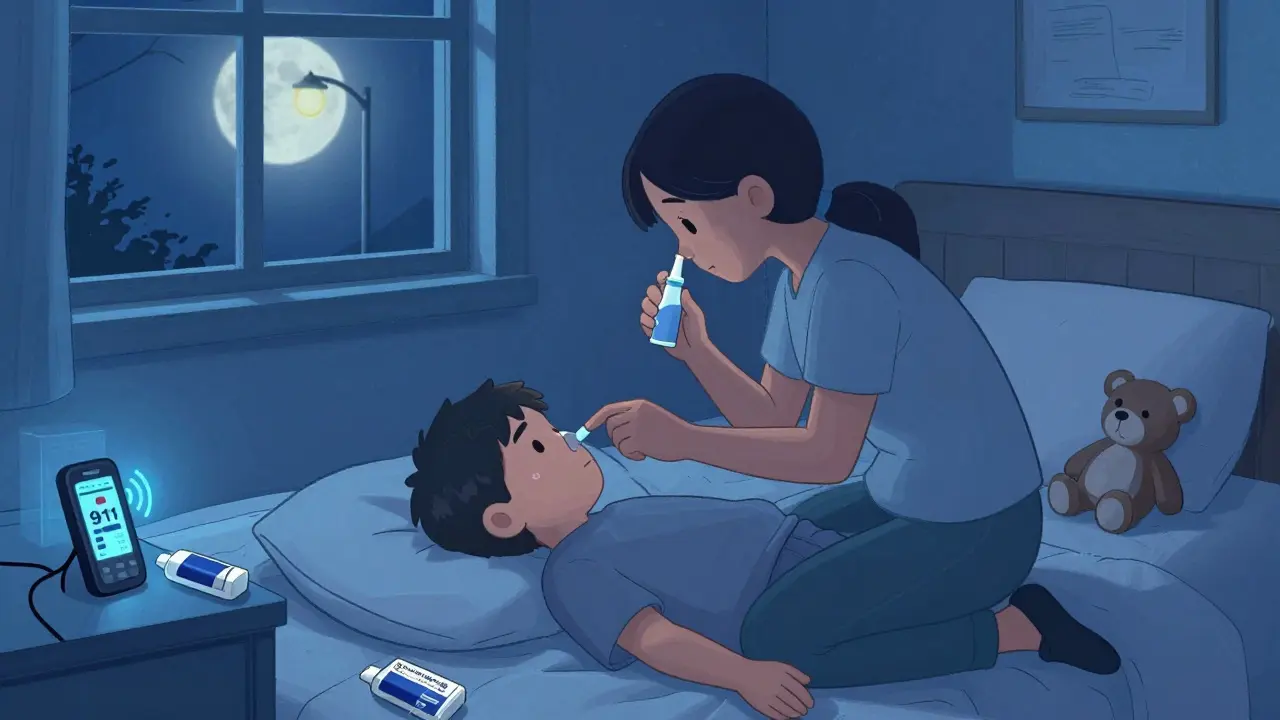
- Naloxone: Grab the nasal spray. Tilt their head back slightly. Insert the nozzle into one nostril. Press the plunger firmly. That’s one dose.
- Call 911: Put your phone on speaker. Tell them: "I’m at [address]. Someone is unresponsive and not breathing. I gave naloxone. They took opioids."
- Have more ready: If they don’t wake up in 3 minutes, give a second dose in the other nostril. Keep the second kit open and ready.
- Observe: Turn them on their side. This keeps their airway open. Stay with them. Watch their breathing. Even if they wake up, don’t let them walk around or say they’re fine. They need medical care.
- Review: After EMS arrives, talk to them. Ask if you did everything right. Ask if you should get a new kit. This is how you improve.
This is called the A.N.C.H.O.R. method - and it’s used by emergency responders across the country. It’s simple. It’s proven. And it works.
Common Mistakes Families Make - And How to Avoid Them
Even with the best intentions, families mess up. Here’s what goes wrong - and how to fix it.
- "I thought they were just sleeping." 19% of families delay action because they don’t recognize the signs. Train everyone. Practice. Use real-life examples.
- "The naloxone expired." 31% of failed attempts involve outdated kits. Set a calendar reminder. Replace it every 18 months.
- "I didn’t know where it was." If only one person knows where it is, it’s useless. Put it in three places. Tell everyone. Write it on the fridge.
- "I was too scared to do it." Fear paralyzes. That’s normal. But remember: naloxone can’t hurt someone who didn’t take opioids. If you’re wrong, you’ve given them a harmless nasal spray. If you’re right, you’ve saved a life.
- "We didn’t call 911." Too many families think, "They woke up, so we’re fine." But naloxone wears off. The person can overdose again. Always call. Always wait for EMS.
Who Should Have This Plan - And Who Might Need It More
You don’t need to be a drug user to need this plan. Here are the households that benefit most:
- Anyone with a prescription for opioids: Oxycodone, hydrocodone, morphine, fentanyl patches - if it’s prescribed for pain, keep naloxone.
- Households with someone in recovery: Even if they’re clean, relapse is common. The risk is highest in the first 30 days after stopping.
- Families with teens or young adults: 34% of youth aged 14-17 know someone who’s overdosed. Fentanyl is now mixed into fake pills sold as Xanax or Adderall. Your child might not even know what they’re taking.
- Households with elderly members: Many older adults take multiple medications. Interactions can cause overdose, even with legal prescriptions.
- Anyone living with chronic pain: Pain management often means long-term opioid use. That increases risk.
If you have any of these situations, you’re not being paranoid. You’re being smart.
Where to Get Help - Free Resources and Tools
You don’t have to do this alone. There are free, reliable resources available right now:
- Free naloxone: CVS, Walgreens, and many local health departments give out free nasal spray kits. Just ask. No ID or prescription needed in most states.
- Training videos: The American Red Cross offers a free 15-minute online course. Search "Red Cross Overdose Training" - it’s video-based and takes less than 20 minutes.
- Mobile apps: The "Overdose Guardian" app (launched Jan 2024) sends alerts if overdose cases spike in your ZIP code. It also shows nearby free naloxone locations.
- Telehealth support: Many doctors now offer overdose planning during virtual pain management visits. Ask yours.
- Community programs: Many counties run free training sessions. Check your local health department website.
And remember: all 50 states have Good Samaritan laws. If you call 911 during an overdose, you can’t be arrested for drug possession - even if you’re the one who used the drugs.
What Happens After - Recovery and Prevention
Surviving an overdose doesn’t mean the story ends. In fact, it’s often the beginning of change. Studies show that 89% of people who survive with naloxone go on to seek treatment - whether it’s counseling, medication-assisted therapy, or support groups. That’s not a coincidence. Being saved creates a turning point.
But prevention doesn’t stop at naloxone. Talk to your doctor about non-opioid pain options. Ask about tapering plans. If you’re caring for someone with addiction, learn about harm reduction. This plan isn’t about judgment. It’s about keeping people alive so they have a chance to heal.
Final Thought: This Isn’t About Fear - It’s About Love
Creating a family overdose plan isn’t morbid. It’s one of the most caring things you can do. It means you’re willing to face the hard things. It means you’re ready to act when others freeze. It means you’re not waiting for someone else to save your loved one - you’re becoming the person who does.
There’s no shame in preparing. There’s no weakness in having a plan. And there’s no greater gift than giving someone a second chance - by knowing exactly what to do before it’s too late.
Stephen Tulloch
January 16, 2026 AT 06:09Melodie Lesesne
January 16, 2026 AT 13:53Corey Sawchuk
January 17, 2026 AT 13:55Joie Cregin
January 17, 2026 AT 19:46Allen Davidson
January 18, 2026 AT 18:14john Mccoskey
January 19, 2026 AT 03:34Ryan Hutchison
January 19, 2026 AT 13:25Samyak Shertok
January 20, 2026 AT 11:01Rob Deneke
January 20, 2026 AT 19:30