
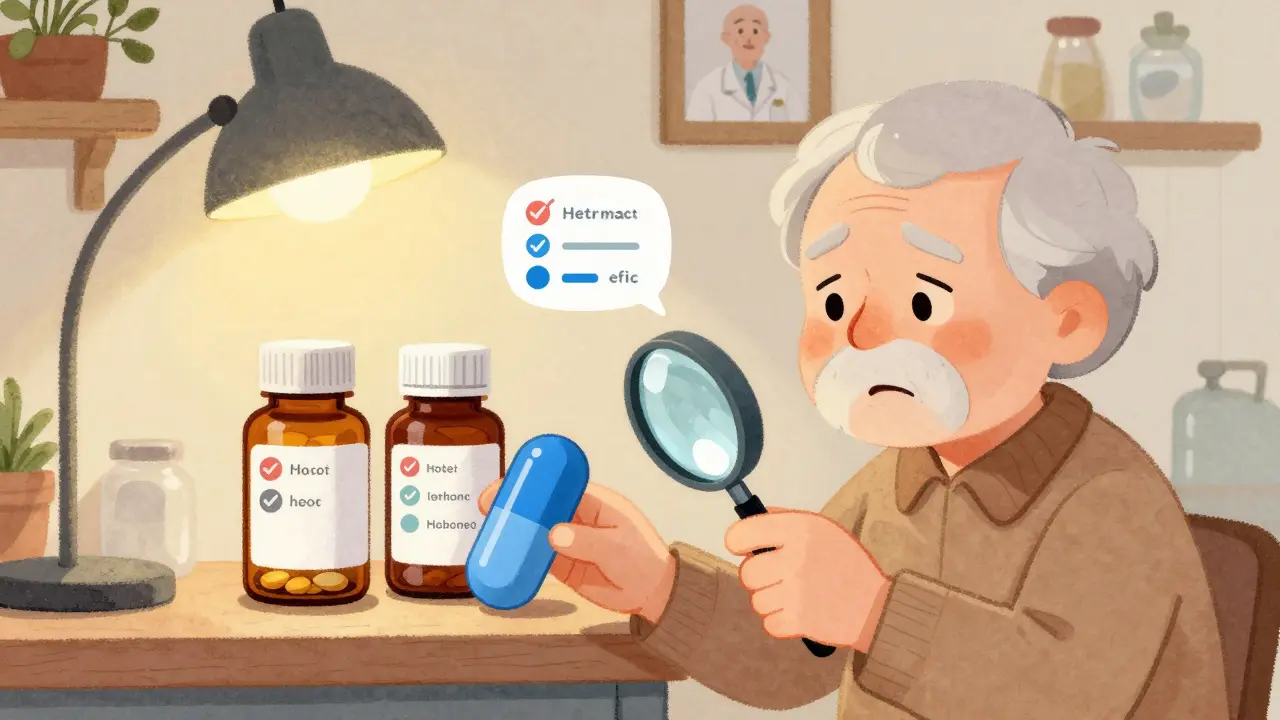
Every time you pick up a new prescription, there’s a chance the pills look different. Maybe they’re a different color, shape, or size. You might even see a new company name on the label. This isn’t a mistake - it’s normal. But if you don’t check, you could accidentally take the wrong dose, double up on medication, or even confuse one drug for another. That’s why comparing your new prescription label with your old one isn’t just a good idea - it’s a safety must.
Why This Matters
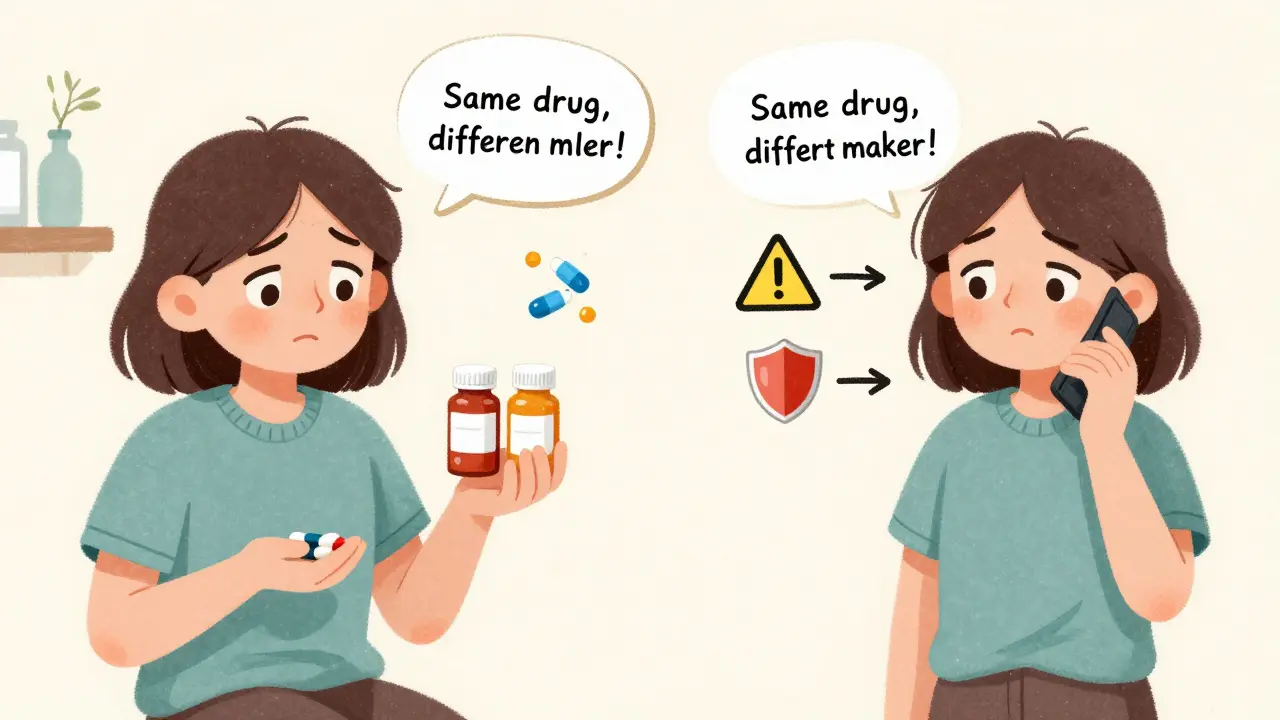
In the U.S., about 9 out of 10 prescriptions are filled with generic drugs. These aren’t fake or weaker versions - they contain the exact same active ingredients as brand-name drugs. But here’s the catch: generic manufacturers aren’t allowed to copy the look of brand-name pills. So a pill made by one company might be a small white oval, while the same drug from another company could be a large blue capsule. If you rely on how your pills look to know what you’re taking, you’re at risk.According to the FDA, medication errors cause at least 1.5 million preventable health problems every year. Many of these happen because patients didn’t notice a change in their medication. For drugs like blood thinners, seizure meds, or thyroid pills, even tiny differences in how the body absorbs the drug can cause serious harm. That’s why comparing labels every time you refill is one of the simplest, most effective ways to protect yourself.
What to Check on the Label
Don’t just glance at the name and move on. Take a minute to compare these six key details on your new label against your old one:- Patient name - Double-check that it’s spelled exactly right. A typo here could mean you get someone else’s medicine.
- Medication name - Look for both the brand name (like “Lipitor”) and the generic name (like “atorvastatin”). Make sure both match what you’ve been taking.
- Dosage strength - This tells you how much of the drug is in each pill. Is it 10mg? 20mg? Even a small change here can be dangerous. If your old bottle said 5mg and the new one says 10mg, stop and call your pharmacist.
- Prescriber and Rx number - The Rx number is unique to your prescription. If it’s different from last time, that’s normal - it just means it’s a new fill. But if the prescriber’s name changed unexpectedly, ask why.
- Manufacturer - You’ll often see something like “Mfg: ACCORD HEALTHCARE.” If this changes from your last fill, it just means a different company made the generic. That’s okay - unless you’re on a narrow-therapeutic-index drug (more on that below).
- Instructions and refills - Did the directions change? Did you used to take one pill twice a day, and now it says one pill once a day? Are there fewer refills left than before? These changes need to be explained.
What If the Pills Look Different?
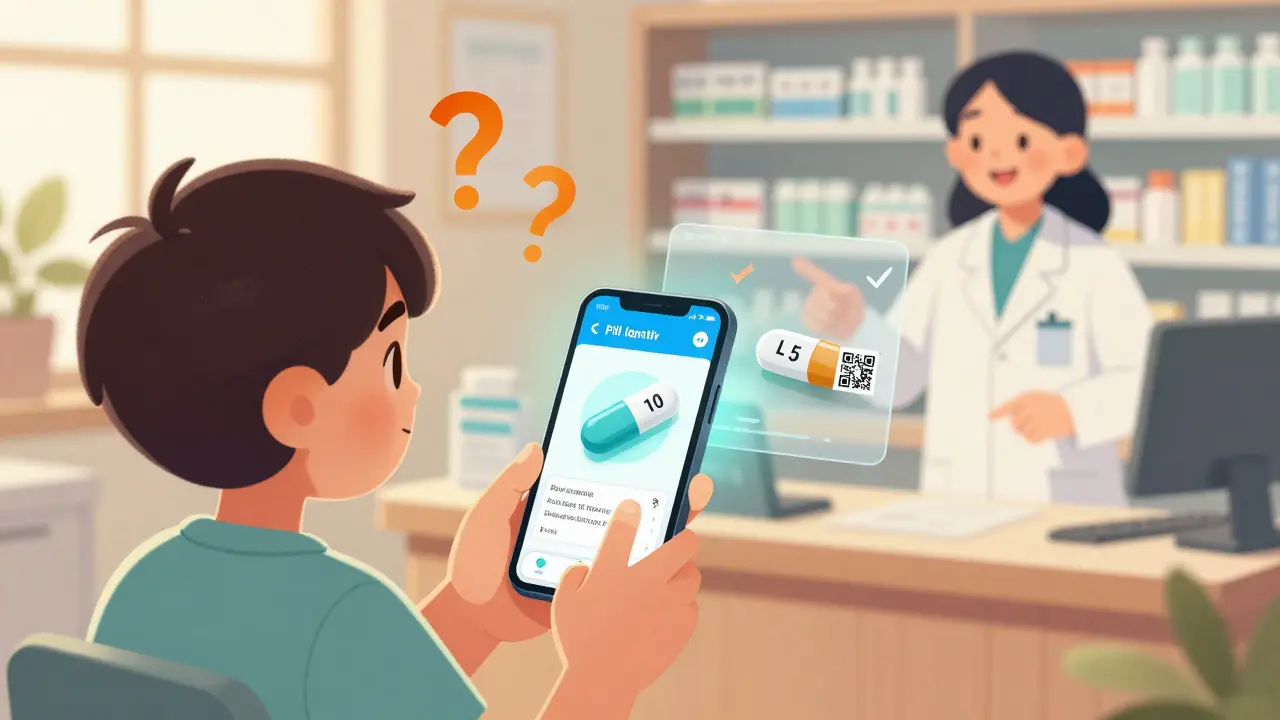
It’s normal. Generic drugs can look totally different depending on who made them. A pill from one manufacturer might be round and white; from another, it could be oval and yellow. The FDA allows this because the active ingredient is what matters - not the color or shape.But here’s what you need to do: Don’t assume it’s the same drug just because it’s the same name. Use the pill imprint. Look for letters or numbers stamped on the pill. If your new pills say “L 10” and your old ones said “L 5,” that’s a red flag. You can use the FDA’s free Pill Identifier tool (or apps like Drugs.com’s Pill Identifier) to search by shape, color, and imprint. If you’re not sure, call your pharmacy. They can confirm whether the change is normal.
One patient in Manchester told me she started taking photos of each pill bottle the moment she got it. When her new pills looked twice as big, she compared the photos - and caught a dosage error before she took one. That’s the kind of habit that saves lives.
Red Flags You Can’t Ignore
Some changes are warning signs. Stop and call your pharmacist if you notice:- The active ingredient changed (e.g., your old label said “amlodipine,” and the new one says “nifedipine” - these are different blood pressure drugs).
- You’re on a narrow-therapeutic-index drug - like warfarin, levothyroxine, or phenytoin - and the manufacturer switched. For these drugs, even tiny differences in how your body absorbs the drug can cause side effects or reduce effectiveness. Ask if you can stick with the same generic maker.
- The dosage form changed - e.g., from a tablet to a capsule, or from daily to twice-daily dosing - without your doctor’s approval.
- The label says “Brand substitution not permitted” and you still got a generic. This means your doctor specifically asked for the brand name. If you got a generic anyway, the pharmacy made a mistake.
How to Make This Routine
You don’t need to be a pharmacist to do this. Just make it part of your routine:- When you get your prescription, lay the new bottle next to the old one (or a photo of it).
- Read both labels out loud - hearing it helps you catch mistakes.
- Write down the Rx number, manufacturer, and pill imprint on a sticky note and keep it with your meds.
- Set a reminder on your phone: “Check new pill label every refill.”
- Ask your pharmacist: “Is this the same drug I’ve been taking? Has the manufacturer changed?” They’re trained to help.
Most pharmacies now use electronic prescriptions, which cut down on errors. But even with barcode scanning and digital records, mistakes happen. Your eyes and brain are still the final safety check.
What About Expiry Dates and Refills?
The expiry date on your prescription label isn’t always the same as the pill’s real shelf life. Pharmacies often assign a “beyond-use date” based on when they dispensed it - usually 6 to 12 months from the fill date. Don’t rely on this date alone. If you have leftover pills from last time, don’t mix them with new ones. Store them separately and track which bottle is which.Also, check how many refills are left. If you used to have 3 refills and now you have 1, ask why. It could mean your doctor changed your treatment plan - or it could be a computer error.
When to Call Your Doctor or Pharmacist
If anything feels off - even a little - don’t guess. Call your pharmacist. They can tell you:- Whether the new pill is a generic version of your old one
- If the manufacturer change is normal
- Whether the dosage is correct
- How to identify the pill if the imprint is hard to read
And if you’re still unsure, call your doctor. Never take a pill if you can’t be 100% sure what it is.
Final Tip: Use Technology
There are free tools out there that make this easier. The FDA’s Pill Identifier, Drugs.com’s tool, and apps like MedSnap let you take a photo of your pill and get instant info. Some pharmacies now even put QR codes on labels that link to digital instructions. If you’re tech-savvy, use them. If not, stick with the old-school method: read, compare, ask.Medication safety doesn’t require a degree. It just requires attention. One extra minute every time you refill could stop a mistake before it starts.
Why do my pills look different every time I refill my prescription?
Because different generic manufacturers make the same drug, and they’re not allowed to copy the color, shape, or size of brand-name pills. The active ingredient is identical, but the appearance changes. This is normal and legal. Always check the label to confirm the drug name and dosage match your previous prescription.
Can I switch between different generic brands of the same drug?
For most medications, yes. But for drugs with a narrow therapeutic index - like warfarin, levothyroxine, or phenytoin - even small differences in how your body absorbs the drug can matter. If you’re on one of these, ask your pharmacist if you can stick with the same manufacturer. Some patients do better with one brand over another.
What should I do if my new prescription label has a different dosage than my old one?
Stop. Don’t take the pills. Call your pharmacy immediately. A dosage change could be a mistake - or it could be intentional. Either way, you need to confirm it with your doctor. Never assume the change is correct just because it’s on the label.
Is it safe to mix old and new pills in the same bottle?
No. Mixing pills from different fills can lead to confusion, especially if the appearance, dosage, or manufacturer changed. Always keep each bottle separate and clearly labeled. Use a pill organizer only if you’re certain each compartment contains the correct medication.
How can I tell if a pill is counterfeit or wrong?
Check the imprint, color, shape, and size against the FDA’s Pill Identifier tool or Drugs.com. If the pill has no marking, looks damaged, or doesn’t match the description, don’t take it. Call your pharmacy and ask them to verify the prescription. If you suspect fraud, report it to the FDA’s MedWatch program.
Nicholas Gama
March 11, 2026 AT 10:13Dan Mayer
March 11, 2026 AT 21:27Janelle Pearl
March 12, 2026 AT 02:47APRIL HARRINGTON
March 14, 2026 AT 02:37Leon Hallal
March 15, 2026 AT 22:34Erica Santos
March 17, 2026 AT 13:27George Vou
March 18, 2026 AT 18:37Scott Easterling
March 18, 2026 AT 20:44Mantooth Lehto
March 19, 2026 AT 17:16Melba Miller
March 21, 2026 AT 06:03Katy Shamitz
March 22, 2026 AT 09:39Mary Beth Brook
March 23, 2026 AT 03:53