
Getting the right medication isn’t just about picking up a prescription. It’s about making sure you’re taking the exact drug, at the right strength, in the right form - every single time. A single mistake can lead to serious harm, or even death. In the U.S. alone, medication errors cause at least 1.5 million preventable adverse events each year. Many of these errors happen because someone didn’t check the basics: the drug name, the strength, or the dosage form. The good news? You can stop most of these mistakes before they start - if you know what to look for.
Why Checking Medication Details Matters
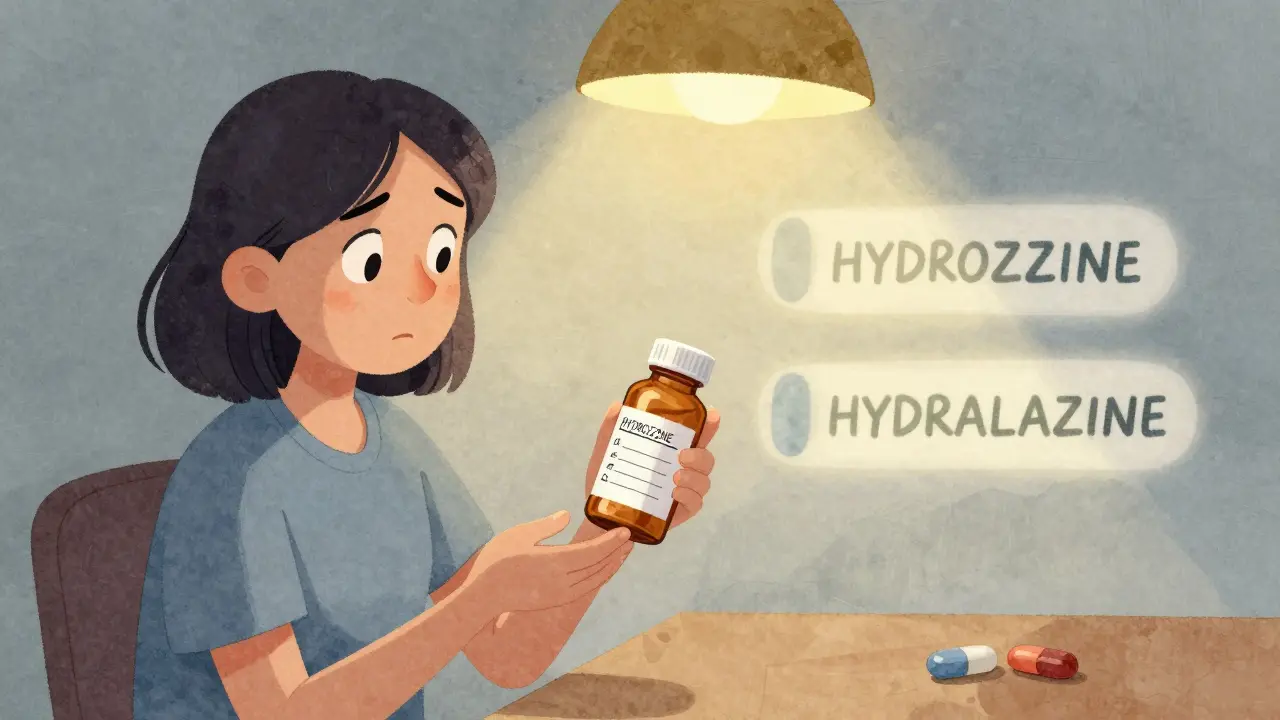
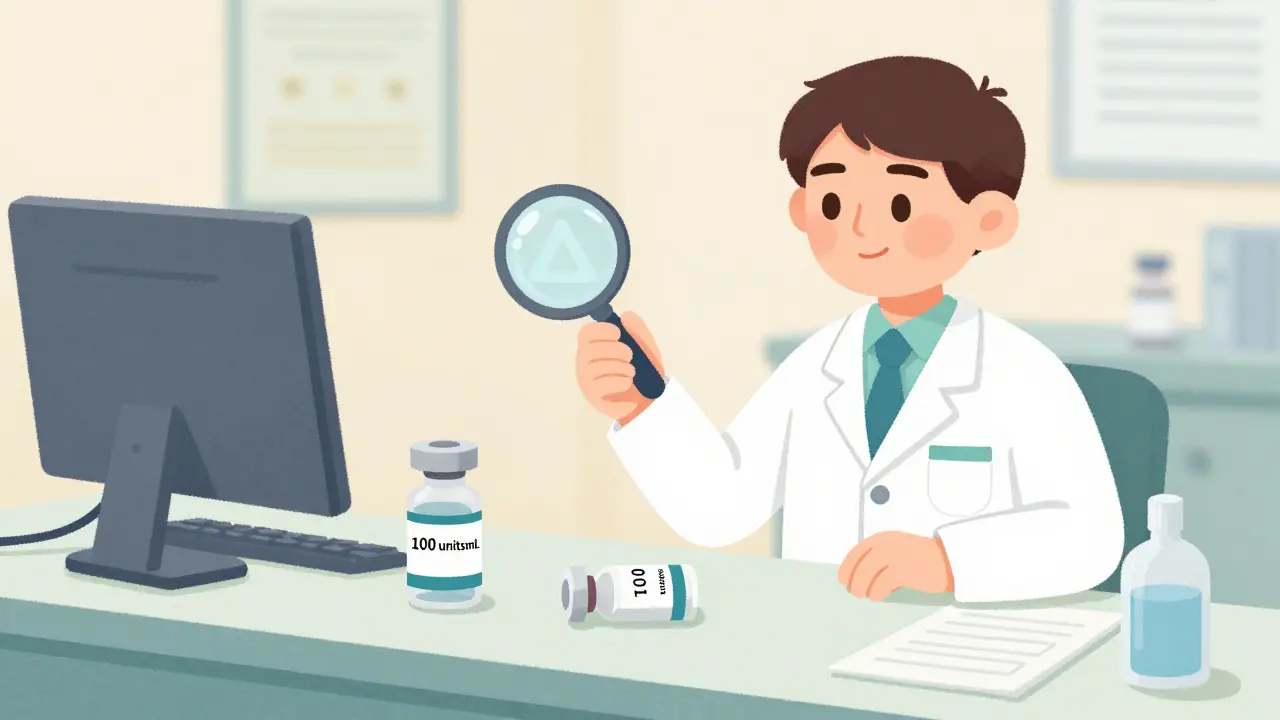
It’s easy to assume that if a pill looks familiar, it’s the right one. But that’s where things go wrong. Two drugs can sound alike - like hydroxyzine and hydralazine - and look almost identical. One treats anxiety, the other high blood pressure. Mix them up, and you could trigger a dangerous reaction. Or consider insulin: a vial labeled 100 units/mL might be confused with one labeled 10 units/mL. That’s a tenfold overdose. And it’s happened - often.
The FDA and the Institute for Safe Medication Practices (ISMP) have spent decades studying these errors. Their data shows that 87% of drug name confusion happens when strength or dosage form is missing from the prescription. That means a doctor writes “Lisinopril” but forgets to say “10 mg tablet.” The pharmacist fills it. The nurse gives it. The patient takes it. And no one checks if it matches what was meant.
Step 1: Verify the Drug Name
Start with the name. Always compare the label on the bottle or package with the prescription or electronic order. Don’t rely on memory. Even small spelling differences matter. For example:
- Prednisone vs. Prednisolone - both steroids, but used differently
- Morphine vs. Magnesium sulfate - both abbreviated as “MS” in handwritten notes, leading to deadly mix-ups
Use “Tall Man” lettering to spot look-alike names. This means capitalizing the different parts: HYDROXYZINE and HYDRALAZINE. Many pharmacies and hospitals use this system because it cuts confusion by 76%, according to ISMP. If you’re reading a printed label and the letters aren’t capitalized this way, ask why.
Also, avoid abbreviations. “U” for units? That’s dangerous - it can be mistaken for “0” or “cc.” Always write “units.” “mcg” for micrograms? Yes. “μg”? Too easy to misread. Stick to what’s clear.
Step 2: Confirm the Strength
Strength isn’t just a number. It’s a number + unit + context. Look at the label: “5 mg,” “500 mcg,” “100 units/mL.” That’s the full picture. Missing any part changes everything.
Here’s what you need to check:
- Units are written out: “10 mg” not “10mg.” A space between the number and unit prevents misreading - and according to ISMP, this simple rule cuts 12% of errors.
- Leading zeros are used: “0.5 mg” not “.5 mg.” Without the zero, it’s easy to miss the decimal and give five times too much.
- No ratios for injectables: Epinephrine should be labeled “0.1 mg/mL,” not “1:10,000.” The ratio format has caused 236 documented errors between 2010 and 2015.
- Compare to the original order: If the prescription says “Lisinopril 20 mg,” but the bottle says “10 mg,” stop. Don’t assume it’s a mistake on the label. Go back to the source.
High-alert medications - like insulin, heparin, opioids, and IV potassium - need extra scrutiny. These drugs have caused the most deaths from errors. Always double-check their strength, even if you’ve given them a hundred times before.
Step 3: Identify the Dosage Form
The form tells you how to take the medicine. A tablet you swallow isn’t the same as a capsule you open and sprinkle on food. A liquid you drink isn’t the same as a topical gel you rub on your skin.
Common dosage forms include:
- Tablet
- Capsule
- Oral liquid
- Injection
- Topical cream or gel
- Suppository
- Transdermal patch
One nurse in Manchester shared how she caught a dangerous error: a patient was prescribed a topical antibiotic cream, but the label said “oral suspension.” The pharmacist had mislabeled it. The patient was about to swallow it. That’s not a rare mistake. In fact, 18% of medication errors reported on Reddit’s r/Pharmacy community involved giving oral meds when topical was meant - or vice versa.
Always check the dosage form on the prescription, the label, and the physical package. If the form doesn’t match - for example, the order says “tablet” but you’re handed a liquid - ask for clarification. Never guess.
When to Check: Three Critical Moments
You don’t just check once. You check three times:
- When you receive the order: Is the drug name complete? Is the strength written clearly? Is the form specified? If not, ask for clarification before filling or preparing.
- When you prepare the medication: Compare the medication you’re holding with the original order. Read the label out loud. Use barcode scanning if available - it reduces dispensing errors by 83% in pharmacies.
- Before you give it to the patient: Confirm the patient’s name, the medication, the strength, and the form. Say it out loud: “This is Lisinopril 20 mg tablet. You’re taking it by mouth once a day.”
This is called the “three-check system.” It’s used in hospitals and clinics across the UK and U.S. because it works. A Mayo Clinic study found that using this method with high-alert drugs cut errors by 94% over 18 months.
The Read-Back Method: Your Best Tool
One of the most powerful techniques you can use is the “read-back.” When a doctor calls in an order, or a pharmacist hands you a new prescription, ask them to repeat it back to you. Say: “Can you please read the name, strength, and form again?”
Studies show this simple step catches 89% of errors before they reach the patient. It works because it forces you to listen - not assume. It works for nurses, pharmacists, and even patients at home. If you’re managing your own meds, read the label aloud before taking it. If something sounds off - pause.
What to Do When Something Feels Wrong
Trust your gut. If a medication looks different than usual - different color, shape, size, or taste - don’t take it. Call your pharmacist or doctor. Ask: “Is this the same medication I’ve been taking?”
Also, watch out for:
- Missing or unclear labels
- Labels with poor contrast (text too light to read)
- Electronic systems that don’t flag obvious mistakes
One 2023 survey found that 41% of pharmacists said their electronic systems failed to warn them about dangerous strength combinations. If your system doesn’t catch it, you have to.
What’s Changing Now
The FDA is pushing for digital drug labels with machine-readable data by 2026. That means labels will include embedded codes that scanners can read - reducing human error. AI tools are also being tested. Google Health’s pilot system used image recognition to spot label mismatches with 99.2% accuracy.
But technology isn’t a cure-all. A 2020 study found that 18% of errors happened because clinicians trusted the system too much - even when the label clearly said something different. That’s called “automation bias.” So even as tech improves, your eyes and your questions still matter most.
Final Checklist: Your Safety Routine
Before you take, give, or dispense any medication, run through this quick checklist:
- Name: Is the drug name spelled correctly? Are there any look-alike names? Use Tall Man lettering in your head.
- Strength: Is the number followed by a space and the unit? Is there a leading zero? Is it written in standard form (e.g., 0.1 mg/mL, not 1:10,000)?
- Dosage form: Is it a tablet, liquid, patch, or something else? Does it match what was ordered?
- Read it aloud: Say the full name, strength, and form out loud - even if you’re alone.
- Compare: Always compare the label to the original order or prescription.
If you’re unsure - stop. Ask. Double-check. It’s not a waste of time. It’s your best defense.
What should I do if the medication label looks different from last time?
Don’t take it. Even small changes in color, shape, or size can mean a different drug or strength. Call your pharmacist or prescriber and ask if the medication was changed. Compare the label to your prescription. If you’re still unsure, ask for the original packaging or a second verification. It’s better to be safe than sorry.
Can I rely on my pharmacist to catch errors?
Pharmacists are trained to catch mistakes - but they’re not infallible. Human error still happens. A 2020 study showed that community pharmacies using barcode scanning reduced dispensing errors by 83%, but even then, some mistakes slipped through. You are your own best safety net. Always check the name, strength, and form yourself before taking any medication.
Why are abbreviations like “U” for units dangerous?
“U” can be mistaken for “0,” “4,” or “cc.” For example, “5U” might be read as “50” or “5 cc.” This led to 10-fold dosing errors in insulin and other medications. That’s why the FDA and ISMP banned “U” in prescriptions. Always write “units” in full. Same goes for “mcg” instead of “μg” - the micro symbol is too easy to miss.
How do I know if a medication is a high-alert drug?
High-alert medications have a higher risk of causing serious harm if misused. Common examples include insulin, heparin, opioids (like morphine), IV potassium, and concentrated sodium chloride. If you’re unsure, ask your pharmacist or check the ISMP’s official list. When in doubt, treat it as high-alert - double-check the name, strength, and form, and use the read-back method.
Do electronic health records always prevent errors?
No. While EHRs reduce errors by about 55%, they can create new problems. Clinicians sometimes ignore alerts because they’re overloaded - this is called “alert fatigue.” One study found that 18% of errors happened because people trusted the system even when the label clearly contradicted it. Always verify the physical label against the screen. Don’t assume the computer got it right.
What’s Next: Staying Safe Beyond the Prescription
Medication safety doesn’t end at the pharmacy counter. Keep an updated list of all your medications - including over-the-counter drugs and supplements. Share it with every provider you see. Ask questions: “Why am I taking this?” “What does it do?” “What happens if I miss a dose?”
And if you’re helping someone else - a parent, an elderly relative, a friend - don’t just hand them the pills. Walk them through the name, strength, and form. Use simple words. Show them the label. Make sure they know what to expect.
Medication errors are preventable. Not because of technology. Not because of rules. But because you took a second to look, listen, and ask.
Alexander Erb
March 10, 2026 AT 21:51Shourya Tanay
March 11, 2026 AT 17:04Denise Jordan
March 12, 2026 AT 02:09Adam Kleinberg
March 12, 2026 AT 07:52Bridgette Pulliam
March 14, 2026 AT 07:08Chris Bird
March 14, 2026 AT 10:57Tom Bolt
March 16, 2026 AT 06:30Miranda Varn-Harper
March 17, 2026 AT 13:52LiV Beau
March 18, 2026 AT 03:41Gene Forte
March 18, 2026 AT 16:29Mike Winter
March 18, 2026 AT 20:28David L. Thomas
March 20, 2026 AT 04:50Randall Walker
March 20, 2026 AT 10:20Kenneth Zieden-Weber
March 20, 2026 AT 15:10