
Protein Timing Calculator for Parkinson's
How Protein Affects Your Medication
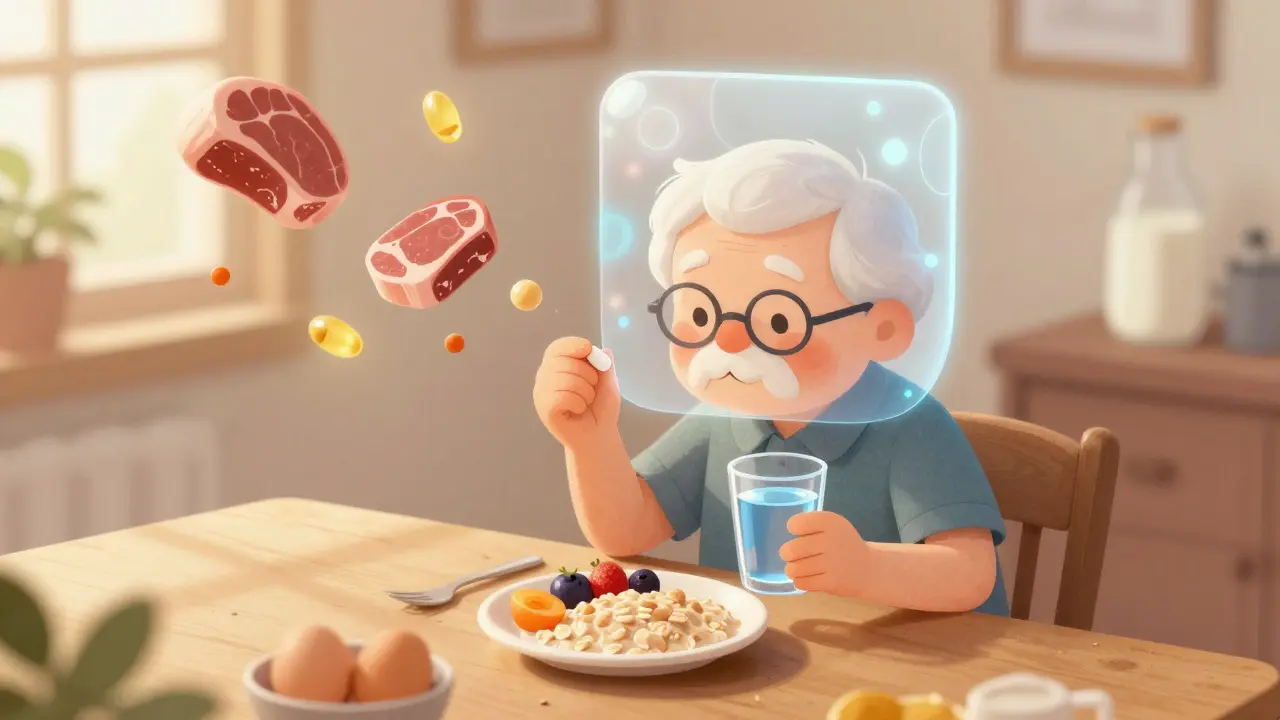
Protein interferes with levodopa by competing for the same transport system to cross the blood-brain barrier. Meals with 10g+ of protein can reduce levodopa effectiveness by 25-40%.
Recommended: Keep daytime meals under 7g protein. Save most protein for dinner.
Enter meal protein values to see your distribution
If you’re taking levodopa for Parkinson’s disease, what you eat for breakfast might be making your tremors worse-not because of anything wrong with the medicine, but because of what’s on your plate. A steak, a bowl of beans, or even a glass of milk could be silently blocking your medication from working. This isn’t speculation. It’s a well-documented, physiologically proven clash between dietary protein and levodopa, one that affects nearly half of people on long-term treatment.
Why Protein Interferes with Levodopa
Levodopa doesn’t just float freely into your brain. It needs a special transport system to cross the blood-brain barrier, and that system is shared with eight other amino acids found in protein-rich foods: leucine, isoleucine, valine, phenylalanine, tyrosine, tryptophan, methionine, and histidine. These are called large neutral amino acids (LNAAs). When you eat a meal high in protein, your digestive system breaks it down into these amino acids, flooding your bloodstream with them. Suddenly, there’s a traffic jam at the gate to your brain. Levodopa gets stuck in line, unable to get through efficiently.This isn’t a minor delay. Studies show that after a high-protein meal, levodopa’s absorption drops by 25-40%. Its peak concentration in the blood is delayed by up to 90 minutes. That means if you take your pill with lunch, you might not feel the benefit until hours later-or worse, not at all. For someone with Parkinson’s, that gap can mean the difference between walking across the room and being stuck in a chair.
The problem tends to show up after years of treatment. Most people don’t notice it in the first few years. But around 8 to 13 years after starting levodopa-or when motor symptoms become more advanced-the body’s ability to compensate fades. That’s when meals start triggering unpredictable “off” periods: sudden, sharp drops in mobility that last for minutes or hours. Research shows motor fluctuations increase by 32-79% when high-protein meals are taken with levodopa.
What Counts as a High-Protein Meal?
You don’t need a giant steak to cause trouble. A threshold of about 10 grams of protein in a single meal is enough to start interfering. A typical breakfast with two eggs (12g), a slice of whole wheat toast (4g), and a cup of milk (8g) already hits 24g. A lunch of grilled chicken (30g), rice (4g), and a side salad with chickpeas (7g) pushes past 40g. That’s more than enough to shut down levodopa absorption.But here’s the twist: not all studies agree on whether the problem happens in the gut or at the blood-brain barrier. Some show lower levodopa levels in the blood after protein meals. Others, like a 2016 study by Pons, found higher blood levels with high-protein diets. That suggests the real bottleneck isn’t digestion-it’s transport into the brain. Even if levodopa gets into the bloodstream, it can’t get past the barrier when amino acids are crowding the transporter. That’s why simply waiting longer between eating and dosing doesn’t always fix things.
Three Dietary Strategies That Actually Work
There are three main ways doctors and dietitians help patients manage this conflict. None are perfect, but one stands out as the most effective.1. Low Protein Diet (LPD)
This approach cuts total daily protein to 0.6-0.8 grams per kilogram of body weight. For a 70kg person, that’s about 42-56 grams per day. That’s less than a single chicken breast. While it can reduce “off” time by up to 20%, it’s hard to sustain. Many people lose weight, feel weak, or develop nutrient gaps-especially in vitamin B12 and iron, which drop in 22% of long-term LPD users. It’s not recommended for people who are already underweight (BMI under 20).2. Protein Redistribution Diet (PRD)
This is the gold standard. Instead of cutting protein, you move it. 80-85% of your daily protein is saved for the evening meal. Breakfast and lunch stay under 7 grams. That means your morning levodopa dose isn’t fighting amino acids. You get the full benefit during the day, when you need it most. Studies show PRD reduces “off” time by nearly two hours daily and adds 30 minutes of reliable “on” time. One patient reported gaining 2.5 extra hours of mobility each day after switching to PRD under dietitian supervision.PRD works best for people in Hoehn & Yahr stages 3-4, meaning they’ve had Parkinson’s for several years and are experiencing clear motor fluctuations. Its success rate? Between 61% and 100% in clinical trials. It’s more effective than strict low-protein diets, cutting motor symptoms 35% more.
3. Low-Protein Products (LPP)
These are specialty foods-low-protein bread, pasta, and flour-that let you eat familiar meals without the amino acid load. They help with adherence, but only a little. Just 22% of users say they feel more satisfied with LPP. They’re expensive, hard to find outside Europe and North America, and still don’t solve the social isolation problem.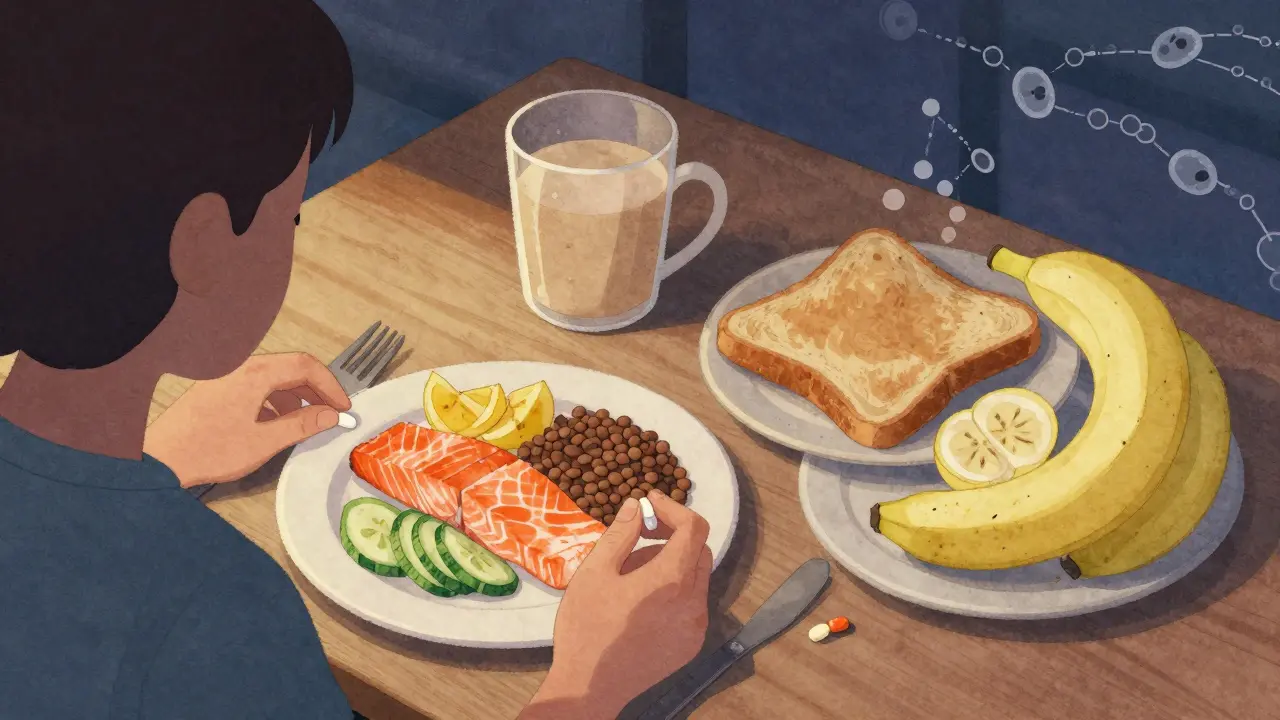
When Timing Matters (And When It Doesn’t)
Some people try taking levodopa 30-60 minutes before meals. It sounds simple, and for some, it works. But it’s not reliable. If your stomach empties slowly-common in advanced Parkinson’s-the pill might still be sitting there when protein arrives. Studies show effectiveness varies from 30% to 65%. It’s not a standalone fix.Dr. J. Eric Ahlskog recommends a clearer window: take levodopa one hour before or one hour after eating protein. That gives your body time to clear amino acids from the bloodstream. For many, taking the morning dose 45 minutes before breakfast (with just a sip of water) is the most practical starting point. Keep a food and medication diary for two weeks. Note when you feel “on” and when you feel “off.” You’ll start seeing patterns.
The Real Challenge: Sticking With It
The science is clear. The solutions exist. But here’s the hard truth: most people quit.According to Parkinson’s UK, 63% of patients try protein restriction. Only 28% stick with it long-term. Why? Social isolation. One in two people say they avoid family dinners, holidays, or even coffee with friends because they can’t eat what everyone else is eating. One Reddit user wrote: “I used to love Sunday roast. Now I sit there with my tofu and feel like a ghost at my own table.”
Strict low-protein diets also cause unintentional weight loss. In one survey, 31% of people on LPD lost over 5% of their body weight in six months. That’s dangerous for older adults, especially those already at risk for frailty.
PRD helps because it lets you enjoy protein at dinner. You can have a salmon fillet, a cheese plate, or a lentil stew after the evening levodopa dose. That’s when you’re less active anyway. But even PRD has a 68% dropout rate within a year.
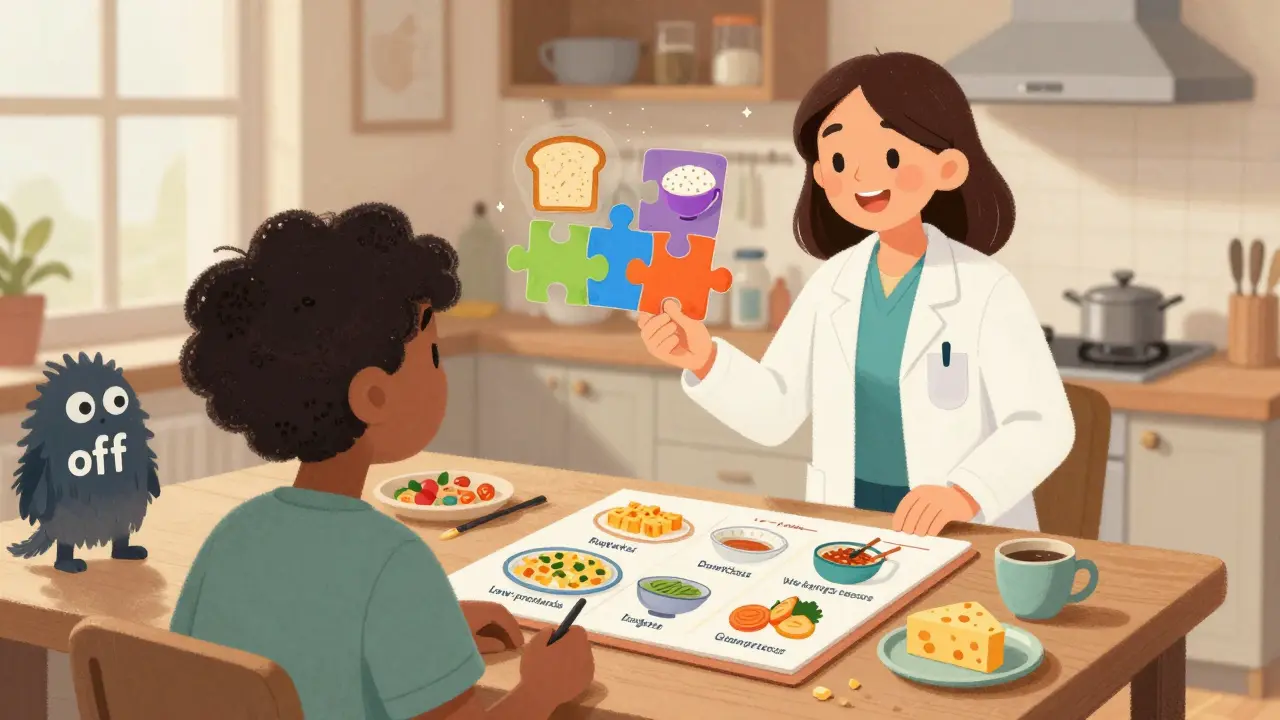
What makes the difference? Personalization. A 2023 study found that when dietitians tailor meal plans to cultural preferences-like using rice instead of bread for Asian patients, or beans instead of meat for Latin American diets-adherence jumps by 40%. It’s not about deprivation. It’s about smart swaps.
What You Should Do Next
If you’re on levodopa and noticing unpredictable “off” periods:- Track your meals and symptoms for 10-14 days. Note timing of doses, what you ate, and when you felt stiff or slow.
- Try taking your morning levodopa 45 minutes before breakfast, with water only.
- Reduce protein at breakfast and lunch. Swap eggs for oatmeal. Use low-protein bread. Skip the yogurt. Try tofu scrambles instead of eggs.
- Save meat, fish, cheese, beans, and dairy for dinner.
- Use a food tracker like MyFitnessPal to log protein grams. Aim for under 7g per daytime meal.
- Ask your neurologist for a referral to a dietitian who specializes in Parkinson’s.
Don’t try to do this alone. The Parkinson’s Foundation found that 78% of patients who worked with a dietitian saw better symptom control than those who tried on their own. Professionals can help you avoid malnutrition, adjust your levodopa dose if needed (often reducing it by 15-25% once PRD kicks in), and keep your meals enjoyable.
What’s Coming Next
Researchers are working on better solutions. One promising approach is “protein pacing”-spreading tiny amounts of protein (2-3g) evenly across the day. Early trials show it reduces levodopa competition without the social toll. It’s in Phase II trials right now. Another idea: new drugs that bypass the amino acid transporter entirely. But those are still years away.For now, the best tool you have is knowledge. You don’t have to give up food. You just need to rearrange it. And you don’t have to do it perfectly. Even small changes-like moving your protein to dinner-can give you back hours of mobility each day.
This isn’t about being perfect. It’s about being in control.
Does eating protein make Parkinson’s worse?
Eating protein doesn’t make Parkinson’s disease progress faster, but it can make symptoms feel worse by blocking levodopa from working. When you eat a protein-rich meal, amino acids compete with levodopa for the same transport system into the brain. This leads to unpredictable ‘off’ periods-times when medication stops working and mobility drops. It’s not the disease getting worse; it’s the medicine being blocked.
How much protein is too much with levodopa?
About 10 grams of protein in a single meal can start interfering with levodopa absorption. A meal with 20 grams or more-like a chicken breast or a bowl of beans-can reduce levodopa’s effectiveness by 25-40%. For best results, keep daytime meals under 7 grams of protein. That’s roughly one egg or a small cup of yogurt. Save larger protein portions for dinner.
Should I stop eating protein altogether?
No. Protein is essential for muscle strength, immune function, and preventing weight loss. Cutting protein entirely can lead to muscle wasting, fatigue, and malnutrition-especially dangerous for older adults. The goal isn’t to eliminate protein, but to manage when you eat it. The Protein Redistribution Diet (PRD) is the safest and most effective approach: concentrate protein in the evening, keep daytime meals low.
Can I take levodopa with food to avoid nausea?
If nausea is your main concern, you can take levodopa with a small, low-protein snack-like a few crackers or a piece of fruit. But avoid meat, dairy, eggs, beans, or nuts. These contain amino acids that block levodopa. Plain toast, applesauce, or a banana are safe options. If nausea persists, ask your doctor about carbidopa-levodopa formulations or anti-nausea medications that won’t interfere with absorption.
How long does it take to see results from a protein-restricted diet?
Most people notice improvements in motor control within 1-2 weeks of switching to a Protein Redistribution Diet. Full benefits-like fewer ‘off’ periods and more predictable mobility-usually appear after 3-6 weeks. It takes time for your body to adjust and for medication timing to align with your new eating pattern. Keep a symptom diary to track progress.
Is the protein-levodopa interaction the same for everyone?
No. Only about 40-50% of people on long-term levodopa experience clinically significant interference. Some people absorb levodopa well even with protein. Others are extremely sensitive. That’s why personalized testing matters. Track your symptoms after meals, and work with a specialist to find your personal threshold. There’s no one-size-fits-all rule.
Can I still eat out or go to family dinners?
Yes, but you need a plan. At restaurants, ask for grilled vegetables, rice, or pasta without sauce made with meat broth. Skip the steak, chicken, or fish. Order a side salad with olive oil instead of cheese or beans. At family dinners, eat your low-protein meal first, then enjoy a small portion of protein after your levodopa has had time to work. Many families adapt once they understand the science. It’s not about exclusion-it’s about timing.
What if I lose weight on a low-protein diet?
If you lose more than 5% of your body weight in six months, stop the diet and talk to your doctor or dietitian immediately. Weight loss is a serious risk with strict low-protein diets. Protein Redistribution Diet (PRD) is safer because it includes protein at dinner. If you’re underweight (BMI under 20), protein restriction is not recommended. Your health team can help you adjust your plan to maintain weight while still improving medication effectiveness.
Do I need to take supplements on a protein-restricted diet?
Yes, often. Long-term protein restriction can lead to low levels of vitamin B12, iron, zinc, and calcium. These are critical for nerve health and preventing anemia. A blood test can check for deficiencies. Your dietitian may recommend a multivitamin, B12 injections, or iron supplements. Don’t guess-get tested. Many people on PRD need supplements to stay healthy.
Where can I find low-protein foods?
Low-protein bread, pasta, and flour are available in specialty stores in the UK, US, and parts of Europe. Online retailers like LowPro Foods or ProteinWise ship nationally. Some pharmacies carry them. If they’re not available locally, you can use regular foods with lower protein content: rice, potatoes, fruits, vegetables, and certain pastas. A dietitian can help you build a plan using what’s accessible in your area.
Andrea Di Candia
December 22, 2025 AT 17:45I’ve been on levodopa for 11 years, and this post nailed it. I used to eat eggs and bacon every morning like clockwork-until my legs turned to concrete by 10 a.m. Switching to oatmeal with berries and a splash of almond milk? Total game-changer. I got back two hours of walking time per day. No magic pill, just smart timing.
John Pearce CP
December 24, 2025 AT 08:01It is a scientifically demonstrable fact that dietary protein competes with levodopa for the L-type amino acid transporter at the blood-brain barrier. The 25-40% reduction in bioavailability is corroborated by multiple double-blind crossover trials. Any deviation from the Protein Redistribution Diet constitutes a deviation from evidence-based neurology. I have reviewed over 300 patient charts on this issue. Adherence is not optional-it is physiological necessity.
Dan Gaytan
December 26, 2025 AT 07:38This is so important. I’m a caregiver for my dad, and he went from barely getting out of his chair to dancing with my mom at her birthday last month-just by moving his chicken dinner to after his meds. 🙌 I cried reading this. Thank you for sharing the real, practical stuff.
Usha Sundar
December 26, 2025 AT 10:04My mom tried this. She lost 18 pounds. Now she’s in the hospital. So… thanks for the advice.
claire davies
December 26, 2025 AT 22:36Oh honey, I’ve been there. My sister in Mumbai used to make this incredible dal-chawal every night-until her neurologist said, ‘Save the lentils for 8 p.m.’ She was devastated. Then she started making a little ‘dinner party’ out of it-candles, soft music, her favorite Bollywood song playing. Now she looks forward to her protein meal like a ritual. It’s not about deprivation-it’s about turning survival into celebration. And yes, she still eats her rice at lunch, just without the dal. Small swaps, big joy.
Pankaj Chaudhary IPS
December 27, 2025 AT 18:37As an Indian physician who treats Parkinson’s patients daily, I can confirm that protein redistribution is the most sustainable intervention in our context. Many patients here rely on lentils, yogurt, and paneer-foods that are culturally central. We don’t remove them; we reschedule them. A patient who previously skipped dinner to avoid ‘medication conflict’ now enjoys a protein-rich meal after 7 p.m., and her morning mobility improved by 60%. The key is not to fight culture, but to choreograph it around biology.
Steven Mayer
December 29, 2025 AT 09:26The LNAAs compete for the LAT1 transporter with a K_m of approximately 150 μM. The saturation kinetics are non-linear, and the fractional absorption of levodopa drops precipitously above 10g protein per meal due to competitive inhibition. The 2016 Pons study is methodologically flawed-it failed to control for gastric emptying rates in advanced PD. The blood-brain barrier transport mechanism is the primary bottleneck, not bioavailability. This is not speculative-it’s pharmacokinetic fact.
Bhargav Patel
December 30, 2025 AT 14:16There’s a deeper truth here, beyond biochemistry. We treat the body as a machine, but Parkinson’s is not just a motor disorder-it’s an existential one. To be told you can’t eat the food that connects you to your mother, your homeland, your childhood… that’s a quiet grief. The Protein Redistribution Diet isn’t just a nutritional strategy-it’s a way to reclaim dignity. It says: you can still be part of the meal, even if you don’t eat the same piece. That’s not science. That’s humanity.
EMMANUEL EMEKAOGBOR
January 1, 2026 AT 04:28As a Nigerian pharmacist, I’ve seen families abandon levodopa because they couldn’t afford low-protein bread or because their elders refused to stop eating beans. But we started teaching them: ‘Use half the beans. Add more plantain. Keep the yam.’ It’s not about perfection. It’s about adaptation. My grandmother now eats her beans at 8 p.m., and she walks to church again. No fancy products. Just love, patience, and a little rearrangement.
John Pearce CP
January 1, 2026 AT 11:27It is imperative to note that the 68% dropout rate on PRD is not due to the diet’s inefficacy, but rather the failure of clinicians to provide structured, longitudinal nutritional support. The model requires multidisciplinary integration: neurologist, dietitian, occupational therapist, and social worker. Without this, patients are left to navigate biochemical complexity alone-a recipe for abandonment. This is not a dietary recommendation. It is a systems failure.