
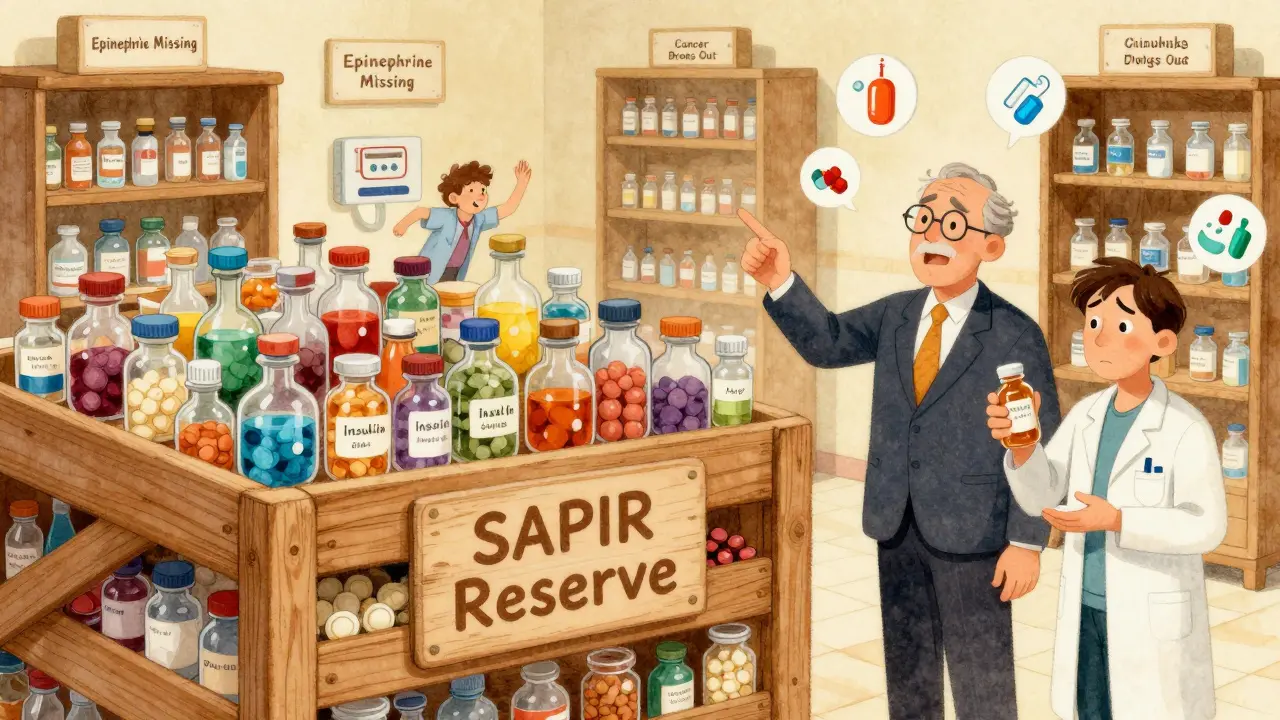
As of late 2025, the U.S. is facing one of its worst drug shortage crises in history. More than 277 drugs remain in short supply, from life-saving antibiotics to cancer treatments. Hospitals are scrambling. Pharmacists are spending hours every week tracking down alternatives. Patients are skipping doses or delaying care. And the federal government’s response? It’s a mix of bold moves, broken promises, and glaring blind spots.
The SAPIR Reserve: Stockpiling Raw Materials, Not Medicines
In August 2025, President Trump signed Executive Order 14178, expanding the Strategic Active Pharmaceutical Ingredients Reserve (SAPIR). This isn’t about hoarding pills-it’s about stockpiling the raw chemical building blocks, called APIs, that go into making drugs. The logic is simple: APIs cost 40-60% less than finished medicines, last 3-5 years longer, and take up far less space. The goal? To have enough of these ingredients on hand to quickly produce 26 critical drugs during a crisis.
The list includes essential medicines like epinephrine, insulin, morphine, and key oncology drugs. But here’s the catch: 98% of all drug shortages involve medications not on this list. Oncology drugs alone make up 31% of all shortages, yet only 4% of the SAPIR targets are cancer medications. That’s like stocking up on fire extinguishers but ignoring the fact that most house fires start in the kitchen.
The FDA reports that 85% of shortages are resolved through direct talks with manufacturers-fast-tracking inspections, allowing temporary imports, or approving alternative suppliers. But these fixes are reactive. They don’t stop shortages from happening. They just try to clean up the mess after the fact.
The Broken Reporting System
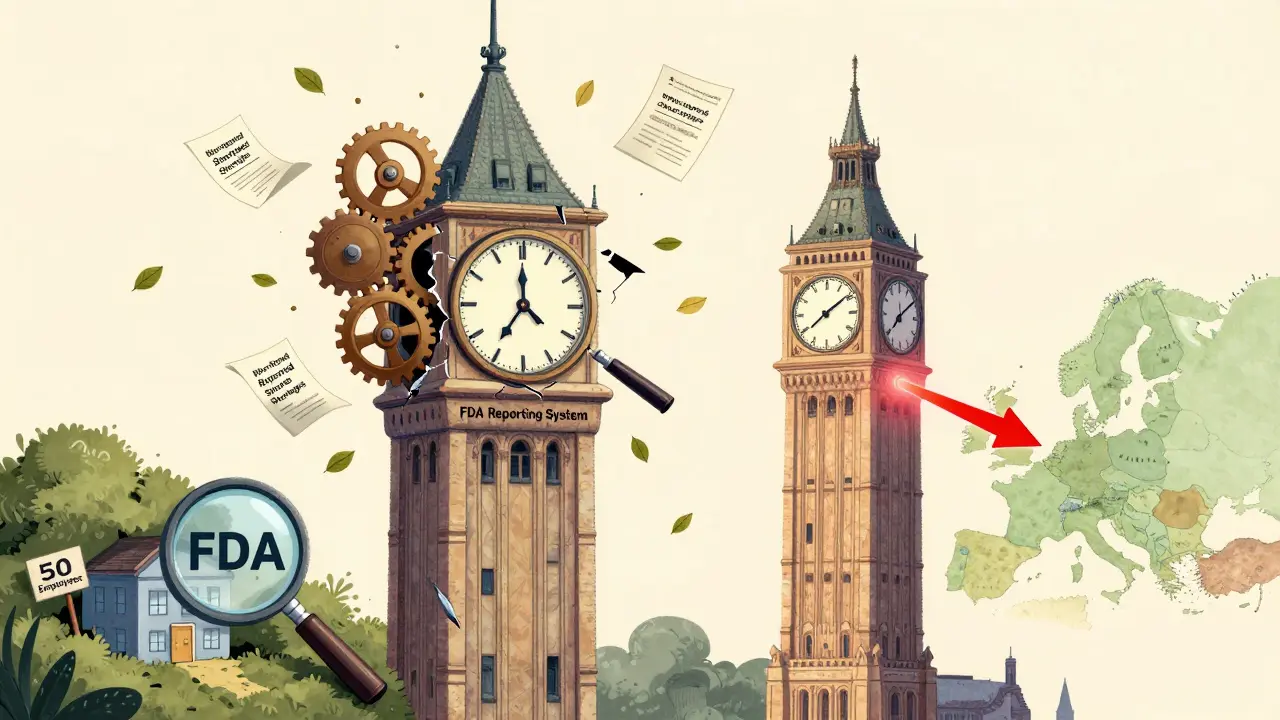
Since 2012, manufacturers have been legally required to notify the FDA six months before a shortage is expected. But compliance? Only 58%. Small companies-those with fewer than 50 employees-are even worse, with 82% failing to report at all. Why? Because there’s no penalty. No fines. No consequences.
The FDA issued just 17 warning letters for non-reporting between 2020 and 2024. In the EU, under similar rules, they issued 142. That’s not a difference in effort-it’s a difference in enforcement. Without teeth, the law is just a suggestion.
Meanwhile, the FDA’s public Drug Shortage Database tracks over 1,200 past and current shortages. But most hospitals don’t use it effectively. A survey of healthcare providers found that 62% of reports submitted to the portal were for drugs already listed-meaning they didn’t know the drug was already in short supply. The system is there, but no one’s trained to use it.
Why Domestic Production Isn’t Working
The government keeps saying it wants to bring drug manufacturing back to the U.S. But the numbers tell a different story. In 2024, the FDA approved 56 new manufacturing facilities for critical drugs. Forty-two percent of them were in Ireland and Singapore-not America.
Why? Because building a new API plant in the U.S. takes 28 to 36 months to get FDA approval. In the EU, it’s 18 to 24 months. That’s a two-year delay just to start making medicine. And even when facilities are built, they’re not always used. Only 12% of critical API production has been successfully moved to U.S. soil in seven years of federal efforts.
Then there’s the money problem. Sterile injectables-the most common type of shortage-have razor-thin profit margins. Why invest millions in a second production line if you can barely break even? Three companies control 68% of the U.S. sterile injectable market. One factory goes down, and hospitals nationwide run out of saline or antibiotics.
The Real Cost: Hospitals, Pharmacists, and Patients
The federal government talks about policy. But the people on the ground are paying the price.
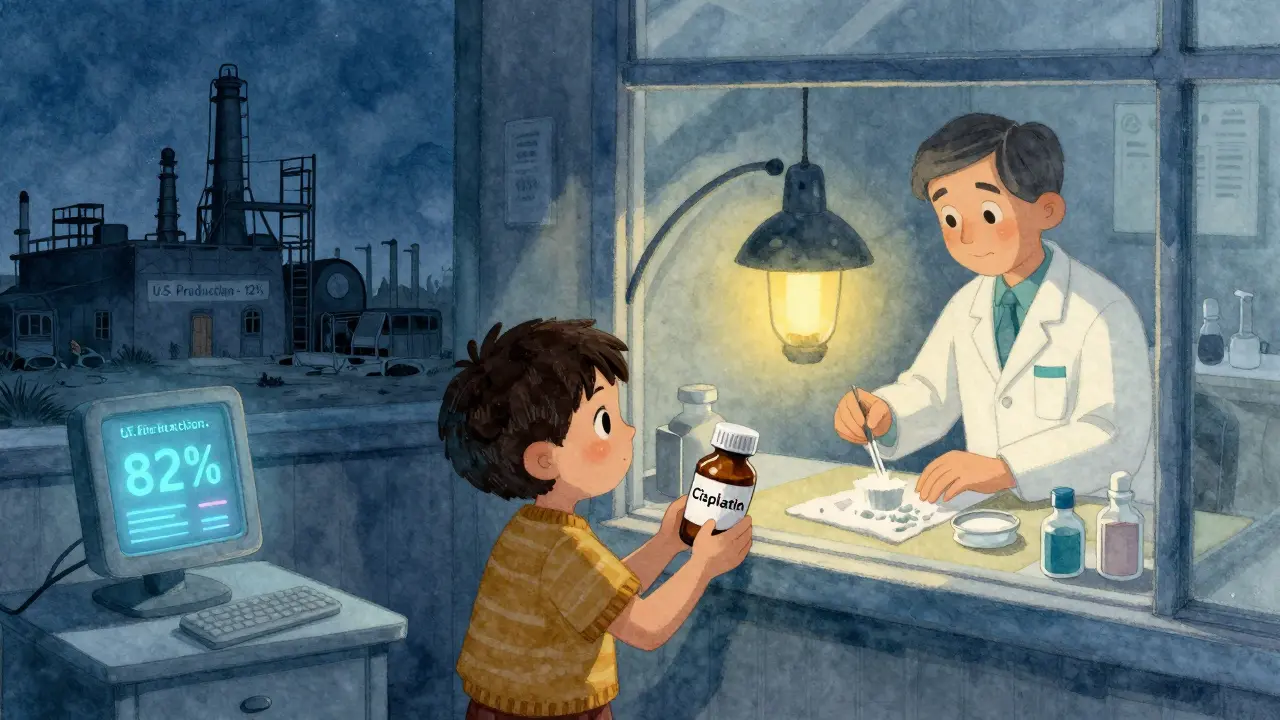
Hospitals now spend an average of $1.2 million a year just managing drug shortages. Pharmacists work 10+ hours a week tracking down alternatives. One pharmacist on Reddit said they had to compound cisplatin-a cancer drug-from raw chemicals because the pre-made version wasn’t available. Another said they switched between five different manufacturers for the same drug in a single week.
Patients aren’t just inconvenienced-they’re at risk. A 2025 survey by the National Comprehensive Cancer Network found that 68% of oncology patients had their treatment changed due to drug shortages. Nearly 3 in 10 Americans skipped doses because the medicine wasn’t there. That’s not about cost. That’s about availability.
Medication errors are rising. Forty-two percent of hospitals report errors directly tied to substitution. A patient gets a different antibiotic because the original is gone. The dose is wrong. The side effects are worse. The system is designed to keep people alive. But right now, it’s making things riskier.
What’s Missing: Prevention Over Reaction
The 2025-2028 HHS Draft Action Plan talks about four goals: Coordinate, Assess, Respond, Prevent. But “Prevent” is the weakest link. The plan pushes for better data and faster responses. It doesn’t fix the core problem: the market doesn’t reward companies for making cheap, essential drugs.
Dr. Luciana Borio, former FDA Acting Chief Scientist, put it bluntly: “The U.S. approach is reactive rather than preventative.” Stockpiling APIs helps in a crisis. But if the factory that makes the API shuts down because it’s not profitable, the stockpile runs out-and you’re back to square one.
Meanwhile, funding for innovation is falling. NIH’s drug development budget dropped 18% from 2024 to 2025. That’s the pipeline for the next generation of manufacturing tech-like continuous production, which can make drugs in days instead of months. But without investment, those solutions won’t come.
The EU Comparison: A Better Model?
While the U.S. is focused on stockpiles and executive orders, the European Union took a different path. They made member states legally required to maintain emergency drug reserves. They created a centralized system to track shortages across all 27 countries. And they enforced reporting with real penalties.
The result? A 37% drop in drug shortages between 2022 and 2024. No flashy press releases. No new reserve funds. Just consistent rules, clear accountability, and shared responsibility.
The U.S. could do the same. But political will is lacking. The Trump administration’s 2025 budget cut $1.2 billion from FEMA’s emergency response and $850 million from state public health grants. It also rolled back Biden-era rules that forced drug companies to disclose supply chain risks. So while the government builds a reserve, it’s tearing down the early warning system.
What’s Working-and What’s Not
There are glimmers of progress. The FDA launched an AI-powered monitoring system in November 2025 that predicts shortages 90 days in advance with 82% accuracy. It uses data from shipping logs, hospital orders, and manufacturing records. That’s powerful.
And the FDA is now speeding up approvals for second-source manufacturers. Fourteen applications are already in the pipeline, which could add backup supply for eight critical drugs by mid-2026. That’s the kind of move that actually reduces risk.
But these are small fixes. The real solution? Change the economics. Pay manufacturers fairly for making low-margin but essential drugs. Fund domestic production properly. Enforce reporting. And stop pretending that stockpiling raw chemicals is enough.
What Comes Next?
Two bills are moving through Congress. H.R.5316, the Drug Shortage Act, would make it easier for hospitals to use compounded versions of shortage drugs. The Drug Shortage Prevention and Mitigation Act would give Medicare bonuses to hospitals that maintain backup supply chains. Both could help. But neither tackles the root cause.
Until the government decides that saving lives is worth more than saving a few cents on a pill, shortages will keep happening. Stockpiles won’t fix that. Regulations won’t fix that. Only a system that values essential medicines-not just profitable ones-will.
For now, hospitals are improvising. Pharmacists are working overtime. Patients are taking risks. And the federal response? Still playing catch-up.
Jim Rice
December 30, 2025 AT 14:42Let’s be real - stockpiling APIs is just government theater. You think hoarding chemicals fixes a broken market? The real problem is that no one makes money on generics anymore. Pharma’s not evil - it’s capitalist. If you want drugs, pay for them. Stop pretending bureaucracy can fix economics.
Alex Ronald
January 1, 2026 AT 01:11I’ve worked in hospital pharmacy for 18 years. This isn’t just about policy - it’s about human cost. I’ve had to reconstitute chemo drugs from powder because the pre-mixed vials were gone. Patients cry when they hear we can’t get their med. No one talks about the trauma nurses feel when they’re forced to guess doses. The system’s not broken - it’s been abandoned.
Louis Paré
January 1, 2026 AT 14:38Wow. Another ‘U.S. is terrible, EU is perfect’ take. The EU’s system works because they have 27 countries to spread the burden. We have 330 million people. Also, your ‘37% drop’ statistic? That’s because the EU forced everyone to hoard stockpiles too - just under different names. Stop romanticizing centralized control. It’s not efficiency - it’s authoritarianism dressed in beige.
Marie-Pierre Gonzalez
January 2, 2026 AT 02:55Thank you for writing this. 🙏 I’m a nurse in Toronto and we’re seeing the same issues. Our supply chain is tied to the U.S. so when they fail, we fail too. I just wish more people understood that this isn’t politics - it’s life or death. Please, someone fix this before someone dies because we ran out of insulin. 💔
Janette Martens
January 3, 2026 AT 11:39EU? LOL. They can’t even keep their own trains running on time. And now you want us to copy their broken system? We don’t need more red tape. We need AMERICA FIRST. Build the plants here. Pay the workers. Make the pills here. Stop outsourcing our health to Singapore and Ireland. This is a national security issue. Make it happen, Trump. 💪🇺🇸
Manan Pandya
January 3, 2026 AT 14:20Interesting analysis. In India, we face similar issues but with different root causes - mostly supply chain fragmentation and underinvestment in cold-chain logistics. But one thing stands out: the U.S. has the capital and tech to fix this. Why isn’t anyone using AI to predict demand patterns at regional levels? Or incentivizing local compounding labs? It’s not just about manufacturing - it’s about distribution intelligence.
Aliza Efraimov
January 3, 2026 AT 15:20I cried reading this. My mom’s on a drug that’s been unavailable for 11 months. We’ve tried everything - specialty pharmacies, mail-order, even calling manufacturers directly. One pharmacist told me, ‘We’re not failing you. The system is.’ That’s not a system. That’s a death sentence wrapped in bureaucracy. And the worst part? No one’s listening. Not really. Not until it’s their turn.
Emma Duquemin
January 4, 2026 AT 04:30Let’s be dramatic for a sec - this is the healthcare equivalent of a zombie apocalypse where the only weapons are spreadsheets and half-baked executive orders. We’ve got AI that can predict shortages but no one’s training the nurses to use it. We’ve got factories in Ireland making our lifesaving drugs but we’re cutting FEMA’s budget. We’re not just incompetent - we’re tragically, beautifully, horrifyingly irrational. Someone please send help. Or at least a new law that doesn’t sound like a PowerPoint slide from 2012.
Kevin Lopez
January 4, 2026 AT 16:32Supply chain fragility + thin margins + regulatory latency = systemic failure. SAPIR is a band-aid on a hemorrhage. The real issue is market distortion: price controls disincentivize production. Solution: remove price caps, subsidize volume-based production, and implement tiered FDA review tiers for critical APIs. Done. No more theater.
Samar Khan
January 6, 2026 AT 09:18So... we're all just gonna keep crying over empty shelves? 😭 I'm tired. My cousin's kid needed epinephrine last year and we had to drive 3 states away because the local pharmacy was out. And now we're debating whether the EU is better? Can we just... fix it? Please? I'm so done.