
What Is GERD, Really?
GERD isn’t just occasional heartburn. It’s when stomach acid keeps flowing back into your esophagus - often more than twice a week - and starts damaging the lining. About 1 in 5 adults in the U.S. deals with this daily. Left unchecked, it can lead to painful inflammation, trouble swallowing, or even a rare but serious condition called Barrett’s esophagus, which slightly raises the risk of esophageal cancer.
The good news? Most people can get control of GERD without surgery. It starts with understanding what triggers it and how to stop it.
Food and Drink That Make GERD Worse
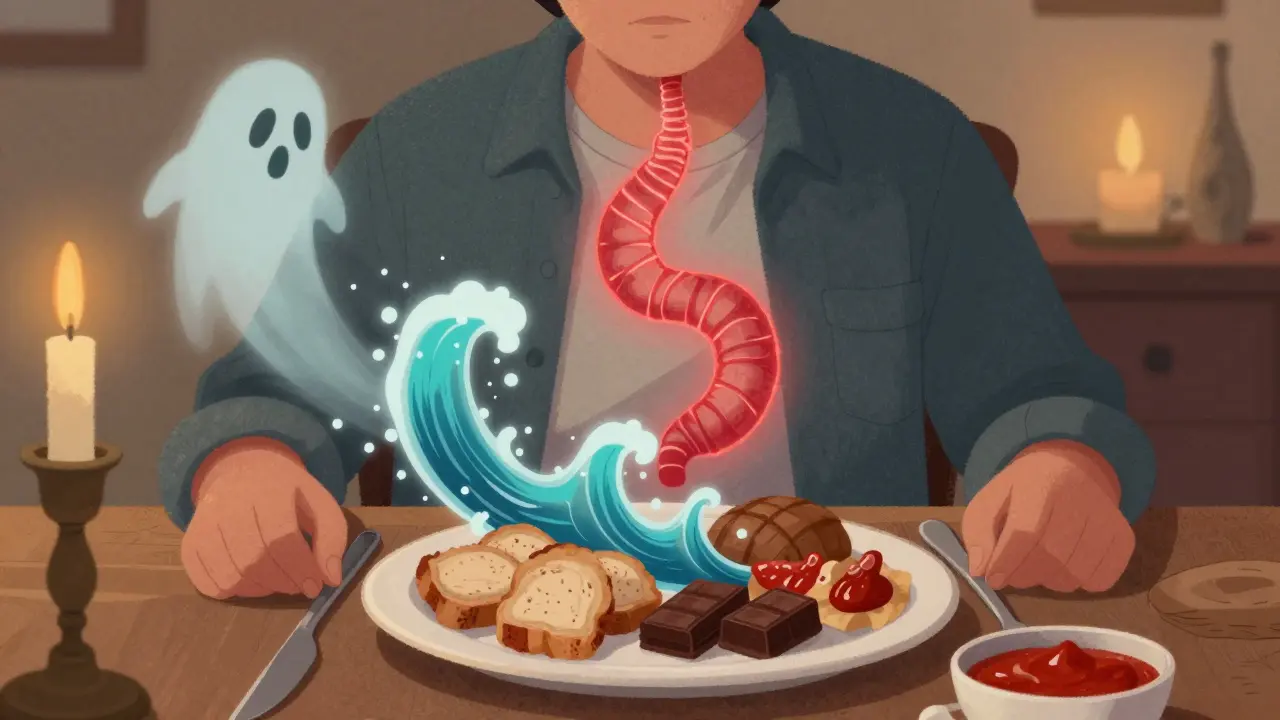
Not all foods affect everyone the same way, but some are almost universal troublemakers. High-fat meals slow down digestion, letting acid sit longer in your stomach. A meal with more than 30 grams of fat can delay emptying by up to an hour, giving acid more time to creep up.
Coffee, tea, energy drinks - anything with caffeine - boosts acid production by 23% within 30 minutes. Chocolate? It contains methylxanthine, which relaxes the valve between your stomach and esophagus. Peppermint does the same. Citrus fruits like oranges and lemons are acidic enough (pH 2-4) to burn your esophagus directly. Tomato sauce, salsa, and even ketchup? They’re not just spicy - they increase stomach acid.
Carbonated drinks inflate your stomach, pushing pressure upward. Alcohol relaxes the lower esophageal sphincter by 25%, and smoking cuts its strength by 30-40% within minutes. Even chewing gum after meals can help, but only if it’s sugar-free - the act of swallowing saliva helps clear acid from the esophagus.
Simple Lifestyle Shifts That Work
You don’t need a complete lifestyle overhaul. Small, consistent changes make the biggest difference.
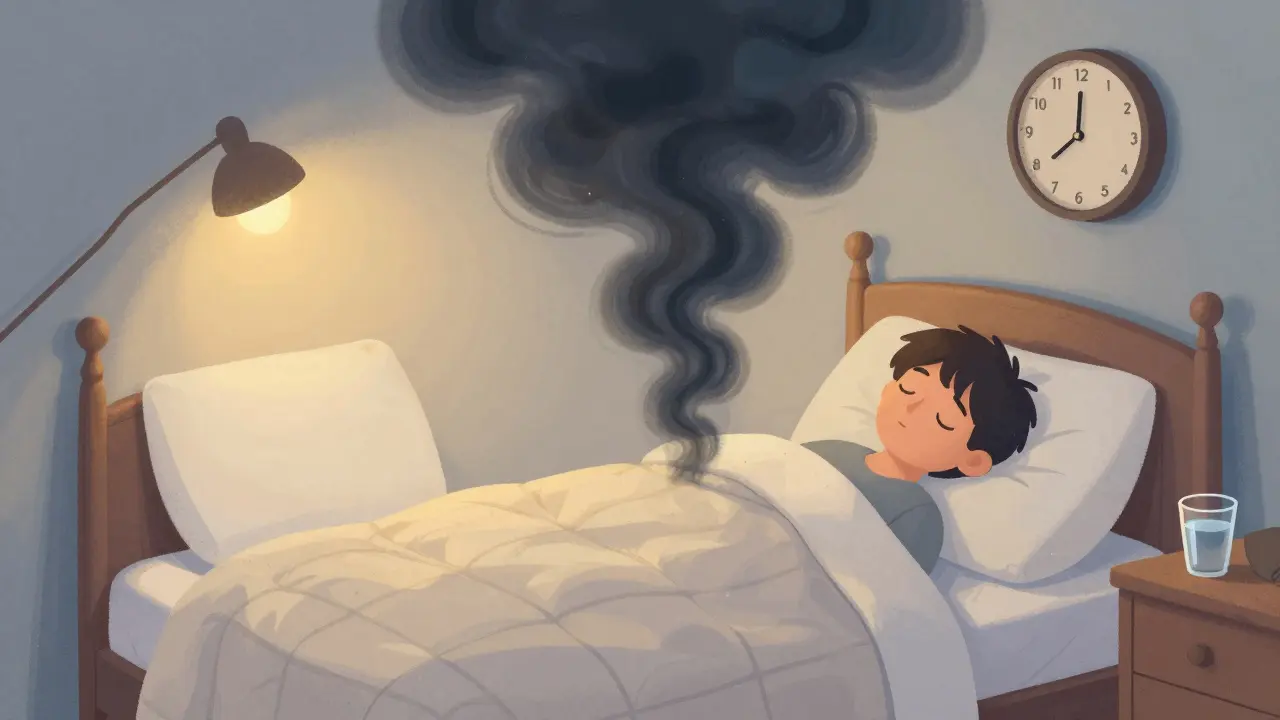
- Elevate your head while sleeping. Put 6-inch blocks under the bedposts or use a wedge pillow. Gravity keeps acid where it belongs. Lying flat right after eating increases reflux by 50%.
- Wait three hours after eating before lying down. This gives your stomach time to empty. Eating late and going to bed? That’s a recipe for nighttime heartburn.
- Loosen your belt. Tight clothes around your waist squeeze your stomach, forcing acid upward. Even a small reduction in waist size helps.
- Lose weight if you’re overweight. Losing just 10% of your body weight cuts GERD symptoms by 40%. Belly fat increases pressure on the stomach, pushing acid into the esophagus.
- Quit smoking. It’s not just about acid - smoking reduces saliva production, and saliva is your body’s natural acid neutralizer.
One patient on Reddit reported going from daily heartburn to zero symptoms after switching to a low-fat diet (under 20g per day) and raising his bed. No pills. Just changes.
Medications: From Quick Fixes to Long-Term Control
Medications fall into three main categories, and they’re not all created equal.
Antacids like Tums or Rolaids work fast - they neutralize acid right away. But their effect lasts only 30 to 60 minutes. Great for a quick fix after a big meal, useless for long-term control.
H2 blockers like famotidine (Pepcid) cut acid production by 60-70%. They kick in within an hour and last 10-12 hours. Useful for mild symptoms or as a backup when PPIs aren’t enough.
Proton pump inhibitors (PPIs) are the gold standard for moderate to severe GERD. Drugs like omeprazole (Prilosec), esomeprazole (Nexium), and pantoprazole (Protonix) block acid at the source. They reduce acid by 90-98%. But they don’t work instantly. You need to take them daily for 2-5 days before feeling real relief. And timing matters: take them 30-60 minutes before your first meal, when acid pumps are most active. Taking them after eating? You’re wasting your money.
Long-term PPI use comes with risks. The FDA warns of higher chances of pneumonia, C. diff infection, kidney issues, and low magnesium levels after a year of use. That’s why doctors now recommend the lowest effective dose for the shortest time possible.
The New Kid on the Block: P-CABs
In December 2023, the FDA approved vonoprazan (Voquezna), the first potassium-competitive acid blocker (P-CAB) for GERD. Unlike PPIs, which need to activate in the stomach, P-CABs work immediately and stay active longer. In studies, 95% of patients on vonoprazan kept stomach pH above 4 for a full 24 hours - compared to just 65% on standard PPIs.
This is a game-changer for people who still get nighttime heartburn on PPIs. Up to 70% of PPI users experience acid breakthrough at night. Vonoprazan cuts that dramatically. In early 2024, over 120,000 new prescriptions were filled, showing how quickly it’s being adopted.
Surgery: When Pills Aren’t Enough
For 10-15% of people, medications don’t work - or they can’t tolerate the side effects. That’s when surgery comes in.
The most common procedure is laparoscopic Nissen fundoplication. Surgeons wrap the top of the stomach around the lower esophagus to reinforce the valve. Success rates are high - 90-95% at five years. But about 1 in 5 people end up with bloating, trouble burping, or trouble swallowing large bites.
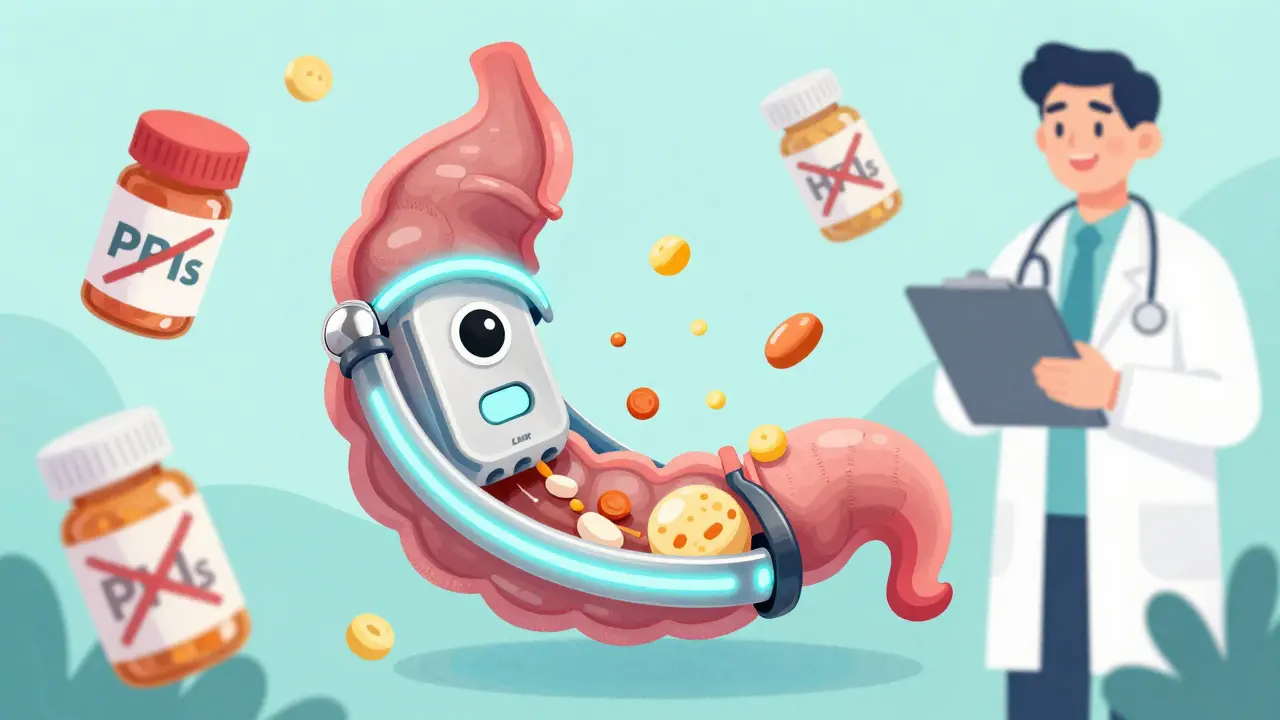
The LINX device is a newer option: a tiny bracelet of magnetic titanium beads implanted around the esophagus. It lets food pass through but snaps shut to block acid. In 85% of patients, it eliminates the need for daily PPIs after five years. Only 2-3% need another surgery. But you can’t get an MRI after having LINX implanted.
A less invasive option is TIF (Transoral Incisionless Fundoplication), done through the mouth with no cuts. It works in 70-75% of cases after three years, but only 127 doctors in the U.S. are trained to do it as of early 2025.
What Works for One Person Might Not Work for Another
One person finds relief by cutting out coffee. Another needs to avoid chocolate and tomatoes. A third finds that even a small glass of wine ruins their night. That’s why keeping a food and symptom diary for two weeks is one of the best tools you have.
Studies show 65% of people identify 2-3 specific triggers through tracking. Write down what you eat, when you eat it, and how you feel two hours later. Patterns emerge fast.
Also, don’t ignore breathing. Diaphragmatic breathing - slow, deep breaths from the belly - can reduce GERD symptoms by 35% when done for 15 minutes after meals. It reduces pressure on the stomach. But only 30% of people stick with it long-term.
What’s Next for GERD Treatment?
The GERD market is growing fast, driven by rising obesity rates and an aging population. By 2030, nearly half of U.S. adults are expected to be overweight or obese - a major risk factor.
Doctors are moving toward more personalized care. Not all GERD is caused by acid. Some people have normal acid levels but extra-sensitive nerves in their esophagus. For them, PPIs won’t help much. New guidelines coming in late 2025 will focus more on identifying these non-acid causes and tailoring treatment.
Meanwhile, the LINX device is now approved for people with BMI up to 40, opening it up to more patients. And research continues on safer, longer-term alternatives to PPIs.
Final Thoughts: You Have More Control Than You Think
GERD isn’t something you just live with. You don’t have to rely on pills forever. Start with diet and lifestyle - they’re the foundation. Track your triggers. Adjust your habits. Take medications correctly. And if things don’t improve, talk to your doctor about surgery.
The goal isn’t to eliminate every symptom overnight. It’s to build a system that keeps acid out of your esophagus - so you can eat, sleep, and live without fear of heartburn.
Can GERD be cured without medication?
Yes, for many people. Lifestyle changes - like losing weight, avoiding trigger foods, not lying down after meals, and elevating the head of the bed - can fully control symptoms without drugs. About 70% of patients achieve good control with these steps alone. But it requires consistency. If symptoms return after stopping medication, it usually means triggers weren’t fully addressed.
How long should I take PPIs for GERD?
Start with the shortest course possible - usually 4 to 8 weeks for healing. If symptoms improve, try reducing the dose or switching to an H2 blocker or antacid on an as-needed basis. Long-term use (over a year) increases risks like kidney problems, infections, and nutrient deficiencies. Always work with your doctor to taper off safely rather than stopping suddenly.
Is vonoprazan better than omeprazole?
For many people, yes. Vonoprazan works faster, lasts longer, and suppresses acid more completely than omeprazole. It’s especially helpful for nighttime reflux and people who don’t respond well to PPIs. But it’s newer and more expensive. Insurance coverage varies. For mild GERD, omeprazole is still effective and cheaper. For severe or persistent cases, vonoprazan is often the better choice.
Can I drink alcohol with GERD?
It’s not recommended. Even small amounts - one drink - can relax the valve between your stomach and esophagus and increase acid production. If you must drink, limit it to one standard drink (12 oz beer, 5 oz wine, 1.5 oz spirits) and never on an empty stomach. Avoid red wine and spirits - they’re worse than white wine or light beer.
Does chewing gum help with GERD?
Yes - but only sugar-free gum. Chewing increases saliva, which helps neutralize and wash away acid. It also encourages swallowing, which clears acid from the esophagus. Do it for 30 minutes after meals. Avoid mint-flavored gum - peppermint relaxes the lower esophageal sphincter and makes reflux worse.
When should I consider surgery for GERD?
Consider surgery if you’ve tried lifestyle changes and two different medications for at least 3 months with no relief, or if you have complications like Barrett’s esophagus, strictures, or chronic lung issues from reflux. Also, if you’re tired of taking daily pills and want freedom from medication, surgery may be worth discussing. LINX and fundoplication are both effective - the choice depends on your health, preferences, and surgeon’s expertise.
Maggie Noe
January 8, 2026 AT 20:09Jacob Paterson
January 9, 2026 AT 03:55Diana Stoyanova
January 10, 2026 AT 10:42Angela Stanton
January 11, 2026 AT 02:25Pooja Kumari
January 12, 2026 AT 11:04Gregory Clayton
January 13, 2026 AT 21:50Kiruthiga Udayakumar
January 15, 2026 AT 19:17Jenci Spradlin
January 16, 2026 AT 05:58Patty Walters
January 17, 2026 AT 20:48Jerian Lewis
January 19, 2026 AT 20:41Catherine Scutt
January 21, 2026 AT 00:05Johanna Baxter
January 22, 2026 AT 17:36Elisha Muwanga
January 24, 2026 AT 06:12