
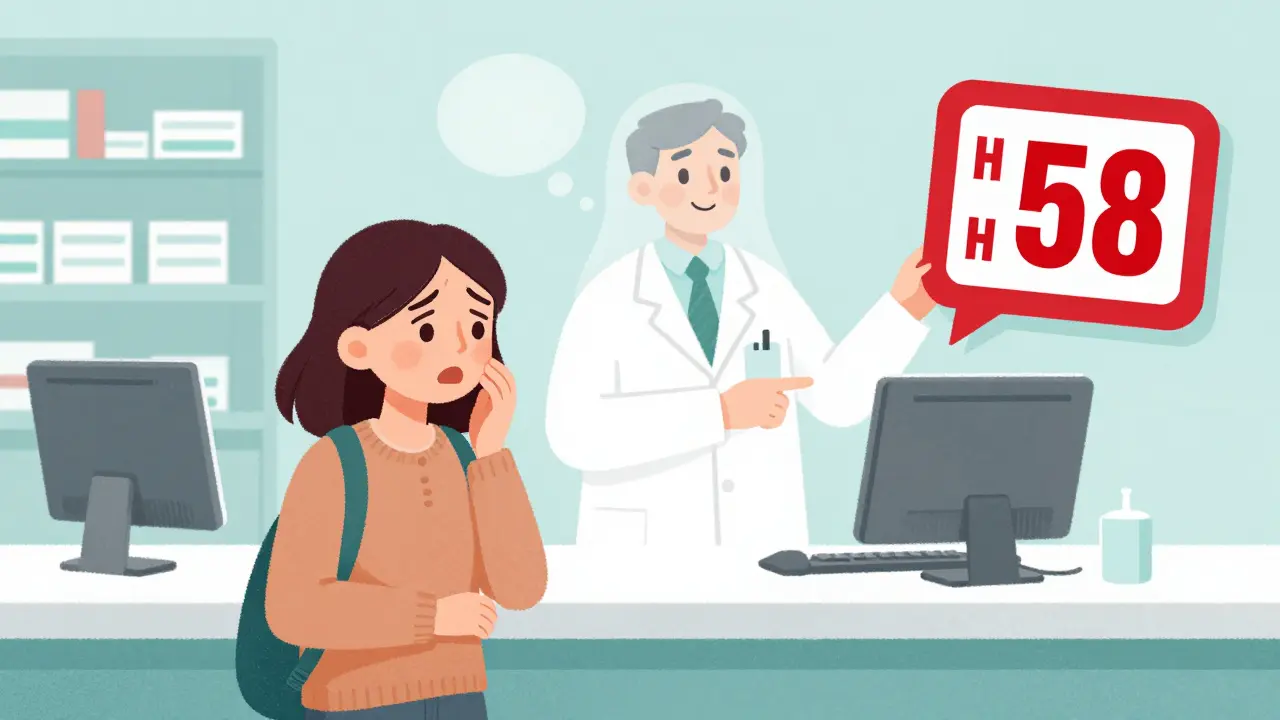
The problem is that most healthcare providers are trained in pathology and pharmacology, not pharmacy billing. When we talk about cost awareness, we aren't just talking about knowing a number. It's about understanding the relative value of a treatment versus its price tag. If a clinician doesn't know the price, they can't truly advocate for the most cost-effective treatment for their patient, often leading to medication non-adherence where patients simply stop taking their meds because they can't afford them.
The Shocking Reality of Cost Estimation
If you asked a room full of physicians to guess the price of a common drug, you'd likely see a wild range of answers, most of them wrong. Research has shown a consistent pattern: doctors tend to overestimate the cost of cheap drugs and drastically underestimate the cost of expensive ones. One foundational systematic review analyzed nearly 1,700 physicians across several countries and found that doctors overestimated inexpensive medications by about 31%, while they underestimated expensive drugs by a whopping 74%.
This creates a dangerous dynamic. When a provider thinks a cheap generic is more expensive than it is, they might steer a patient toward a more costly brand-name alternative. Conversely, when they underestimate a high-cost drug, they unwittingly set the patient up for a "sticker shock" at the pharmacy counter. A more recent study from 2016 found that only about 5% of generic drug costs were estimated accurately within a 25% margin of the actual price. This isn't a lack of effort; it's a lack of data.
Why the Knowledge Gap Persists
Why aren't doctors just looking up the prices? The short answer is time. The modern clinic environment is a pressure cooker. Many primary care physicians report that checking a drug's cost manually can take 3 to 5 minutes per prescription. In a packed day, that adds over 30 minutes of administrative work to an already overbooked schedule. Most providers simply don't have that luxury.
Beyond the clock, there is an educational void. A significant number of U.S. medical schools-over 50%-don't have formal curriculum components dedicated to drug pricing. Students enter the workforce knowing how a drug interacts with a receptor, but they have no idea how it interacts with an insurance formulary. Interestingly, while medical students' knowledge improves as they progress through school, many still struggle with the basics. For example, fewer than half of medical students understand that drug prices usually have very little to do with the actual research and development costs of the drug, despite a common public belief that R&D is the primary price driver.
| Metric | Medical Students | Practicing Physicians |
|---|---|---|
| Ability to identify cost sources | ~40% | ~84% |
| Cost Consciousness Score (0-24) | 15.56 | 17.81 |
| Accuracy of High-Cost Drug Estimation | Low | Moderate |

The Role of Technology in Closing the Gap
The most effective way to fix this isn't by forcing doctors to memorize price lists-which change weekly-but by putting the data directly in their workflow. This is where Electronic Health Records (or EHRs) come into play. When cost information is integrated into the EHR, the results are immediate. Physicians with access to out-of-pocket cost data perform significantly better on cost estimation tasks than those who are flying blind.
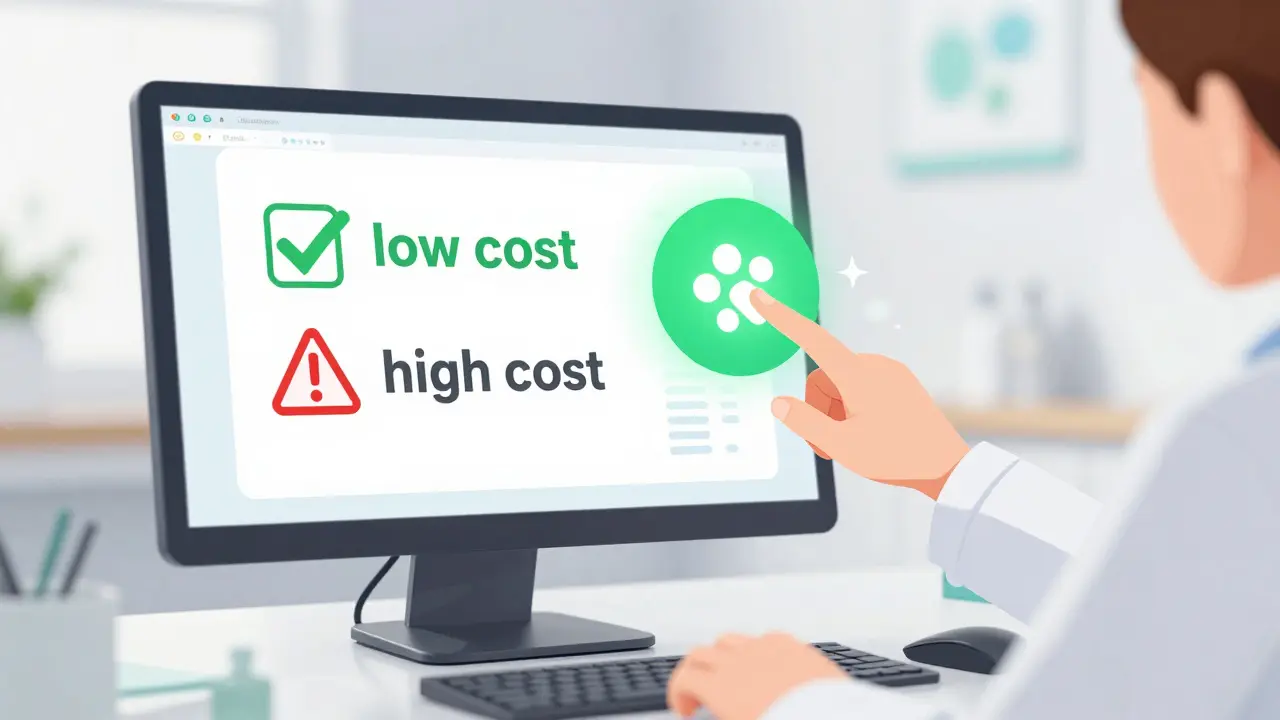
One of the most promising developments is the use of Real-Time Benefit Tools (RTBTs). These tools act like a "price check" during the prescribing process. For instance, at UCHealth, the implementation of these alerts led to a 12.5% modification rate in prescriptions. In other words, when a doctor saw a high cost alert, they actively changed the medication to a cheaper, equally effective alternative. Some studies show that one in six primary care physicians will revise a prescription if the potential savings exceed $20.
However, tech isn't a magic wand. Implementation is expensive and slow. Building a robust RTBT system can take over a year and cost millions of dollars. There's also the issue of accuracy; some clinicians have noted that EHR alerts show general insurer pricing but ignore patient-specific copays, which can lead to confusing or misleading information.
Moving from Absolute Cost to Value Assessment
Knowing that a drug costs $1,000 is useful, but knowing if that drug is *worth* $1,000 is the real goal. This is the shift from "absolute cost awareness" to "value assessment." For example, if a medication costs $500 but prevents a $50,000 hospital stay, the value is high regardless of the price. But if a drug's price increases by 5% without any new clinical benefits or indications, as has been seen with some major biologics, the value drops.
Organizations like the American Medical Association (AMA) and the American College of Physicians (ACP) have been pushing for "high-value care" since the early 2010s. The goal is to move toward a model where clinicians are empowered to choose the most effective drug at the lowest possible cost, reducing the financial burden on the patient and the healthcare system.
The Patient Impact and Future Outlook
Why does this matter to the average person? Because drug spending in the U.S. is astronomical, reaching over $600 billion annually. When doctors lack cost awareness, patients pay the price-literally. Roughly 28% of adults report that they've skipped or failed to take a medication because of the cost. If a doctor knows a drug is prohibitively expensive at the moment of prescribing, they can find an alternative immediately, rather than the patient discovering the problem days later at the pharmacy.
The landscape is shifting. The Inflation Reduction Act has introduced provisions that allow Medicare to negotiate prices, which is a move supported by a vast majority of the public. Combined with new rules requiring manufacturers to provide out-of-pocket cost estimates, the pressure for transparency is mounting. Experts project that by 2027, about 75% of U.S. health systems will have advanced RTBTs in place.
Do doctors usually know how much drugs cost?
Generally, no. Research shows that clinicians struggle to accurately estimate drug prices. They frequently overestimate the cost of cheap generics and significantly underestimate the cost of expensive brand-name medications, often missing the actual price by a wide margin.
What are Real-Time Benefit Tools (RTBTs)?
RTBTs are software integrations within Electronic Health Records (EHRs) that provide clinicians with the actual cost of a medication for a specific patient based on their insurance coverage at the point of prescribing. This allows doctors to choose cheaper alternatives before the patient ever reaches the pharmacy.
Why don't medical schools teach drug pricing?
Medical education traditionally focuses on clinical efficacy and patient safety rather than the economics of pharmacy. Over 50% of U.S. medical schools lack a formal curriculum on drug pricing, leaving students to learn about costs through experience during residency or practice.
Does knowing the cost actually change what a doctor prescribes?
Yes. Data indicates that when physicians see a high-cost alert in their system, about 1 in 8 to 1 in 6 will switch the prescription to a more affordable alternative, especially if the potential savings for the patient are greater than $20.
How does this affect patients in safety-net clinics?
Patients in safety-net clinics often face higher financial barriers. Preliminary data suggests that cost-awareness tools have an even bigger impact here, with higher rates of prescription modification compared to private practices, which helps reduce health disparities.
Next Steps for Improving Care
For clinicians, the first step is advocating for better EHR integration and utilizing existing resources like the Mayo Clinic's Drug Cost Resource Guide. For administrators, the focus should be on implementing RTBTs despite the high initial cost, as these tools reduce long-term patient non-adherence. For patients, the best approach is to be open with your provider about your budget; if they don't know the price of a drug, your feedback can prompt them to look for a more affordable option.