
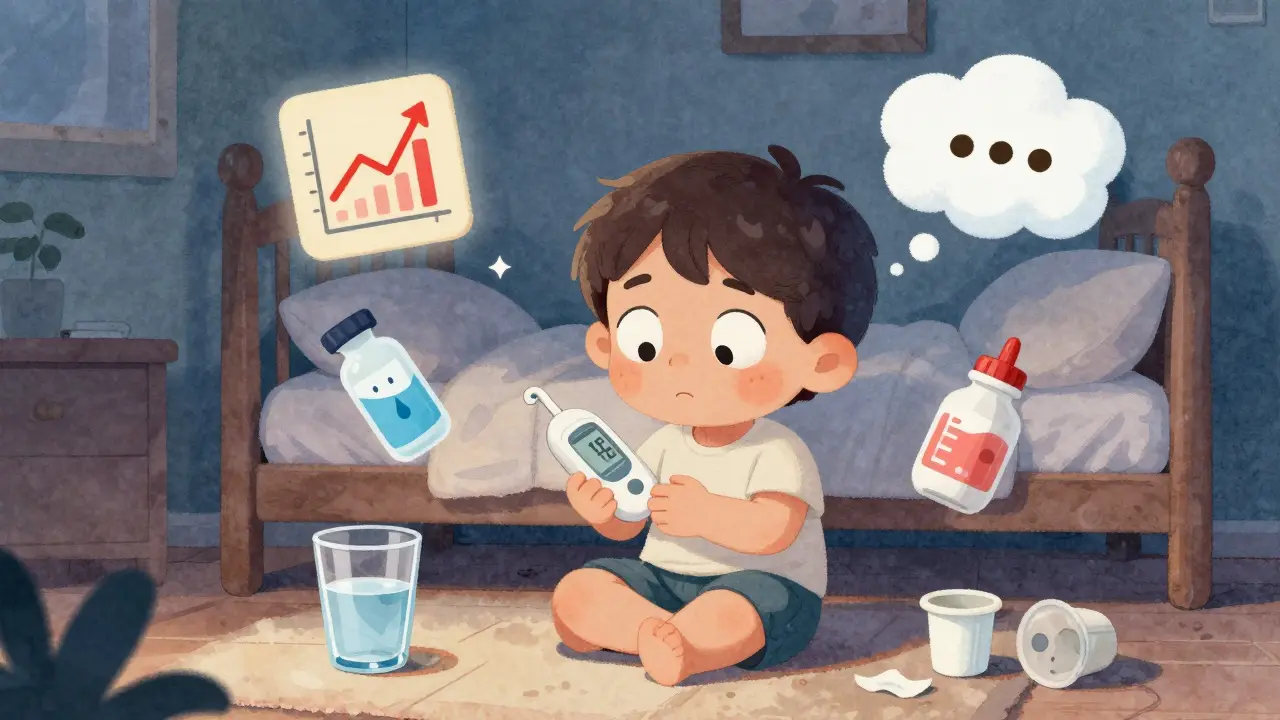
Diabetic ketoacidosis, or DKA, isn’t just a complication-it’s a medical emergency that can kill within hours if ignored. It doesn’t discriminate by age or income. You can be a 12-year-old with newly diagnosed type 1 diabetes, a 45-year-old who skipped insulin because they couldn’t afford it, or someone with type 2 who got sick and stopped their meds. What happens when your body runs out of insulin? Your cells starve. So your liver starts breaking down fat for energy, flooding your blood with toxic acids called ketones. Blood sugar soars, your body tries to flush out the sugar through urine, and you start vomiting, breathing hard, and slipping into confusion. By the time you realize something’s wrong, it might already be too late.
What DKA Really Looks Like: The Warning Signs
Most people don’t recognize DKA until it’s advanced. That’s because the early signs look like common illnesses: thirst, frequent urination, fatigue. But when these symptoms hit hard and fast, they’re your body screaming for help.
Early symptoms usually show up over 4 to 12 hours. You’ll feel extremely thirsty-drinking 4 or 5 liters of water a day and still not satisfied. You’re peeing nonstop, sometimes more than 3 liters in 24 hours. Your mouth feels like sandpaper. Your blood sugar is over 250 mg/dL. But here’s the trap: about 1 in 10 cases, called euglycemic DKA, happen with blood sugar under 250. If you’re on an SGLT2 inhibitor like Jardiance or Farxiga and feel sick, don’t assume your sugar is safe. Test for ketones.
By 12 to 24 hours, things get worse. Nausea and vomiting hit 75% of patients. Abdominal pain is common-so common that many end up in the ER thinking they have appendicitis or food poisoning. You’re too weak to stand. Your grip feels weak. Your energy is gone. Then comes the breath: a sharp, fruity smell like nail polish remover. That’s acetone. It’s not just a weird odor-it’s a red flag. Clinicians spot it in 7 out of 10 cases.
When you’re this far along, you’re in crisis. Breathing becomes deep and fast-25 to 30 breaths per minute. This is Kussmaul breathing. Your body’s trying to blow off acid. You feel confused. Disoriented. Some people pass out. In kids, this is especially dangerous. Cerebral edema, or brain swelling, is the top cause of death in children with DKA. It happens when fluids are given too fast. That’s why hospitals now follow strict rules.
What Happens in the Hospital: The Treatment Protocol
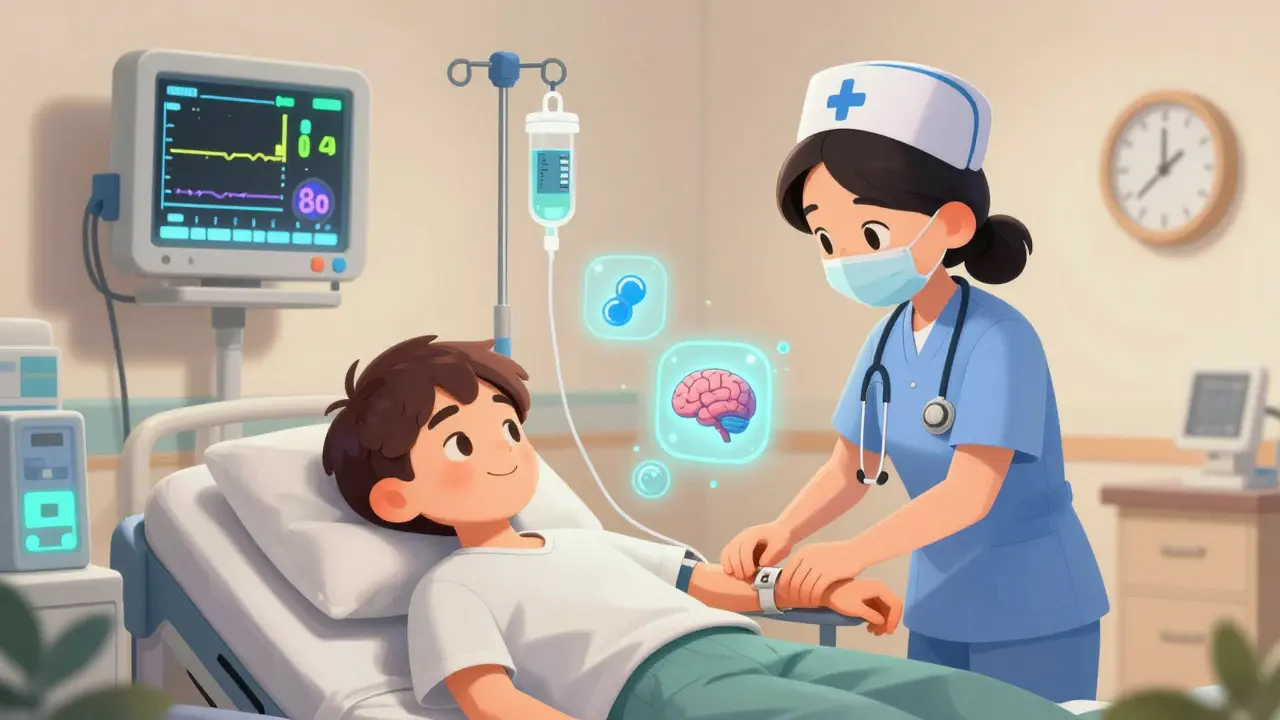
If you’re admitted for DKA, you’re not just getting a shot and sent home. You’re in a monitored unit, often the ICU, for at least 24 hours. Treatment follows a precise, science-backed sequence. There’s no guessing.
First: fluids. You’re dehydrated. Your kidneys are working overtime to flush sugar. So you get 15 to 20 mL of saline per kilogram of body weight in the first hour. For a 70 kg adult, that’s about 1 to 1.5 liters. After that, fluids slow to 250 to 500 mL per hour. Too fast? You risk brain swelling. Too slow? You stay in danger.
Second: insulin. Not a big bolus. Not a shot every few hours. A steady drip. A 0.1 unit per kg bolus, then continuous infusion at the same rate. Blood sugar should drop 50 to 75 mg/dL per hour. If it drops faster, you’re at risk for cerebral edema. Slower? The acidosis doesn’t resolve. Insulin shuts down ketone production. That’s the goal.
Third: potassium. Even if your blood test shows normal potassium, you’re likely dangerously low. Insulin pushes potassium into cells. So while your blood level looks fine, your body is starving for it. You’ll get 20 to 30 mEq per hour through IV. This isn’t optional. Heart rhythm problems can kill you if potassium isn’t replaced.
Bicarbonate? Rarely. Only if your blood pH is below 6.9. That’s rare. Most hospitals used to give it. Now, guidelines say it doesn’t help and can even make things worse. Less than 5% of patients get it. The European Association for the Study of Diabetes says 22% of U.S. hospitals still use outdated methods. Don’t let that be you.
Underlying triggers get treated too. Half of DKA cases are caused by infection-pneumonia, UTI, flu. The rest? Missing insulin, pump failures, or undiagnosed diabetes. If you’re a teenager with vomiting and high sugar and no history of diabetes? They’re testing for type 1. One in five pediatric DKA cases is the first sign of diabetes.
Monitoring: It’s Not Over Until the Ketones Are Gone
Hospital staff check your blood sugar every hour. Ketones every 2 to 4 hours. Electrolytes every 2 to 6 hours. You’re not discharged until three things are true: your blood ketones are below 0.6 mmol/L, your bicarbonate is over 18 mmol/L, and your pH is above 7.3. And you need two consecutive readings. Many patients get sent home too early. Mayo Clinic data shows 12% of DKA cases come back within 72 hours because treatment was stopped before ketones fully cleared.
Length of stay? Average is 2.5 to 4 days. But if your pH was 7.0 or lower, expect closer to 4 days. If your pH was 7.1, you might be out in 2 days. The numbers don’t lie. Your initial acid level predicts your recovery time.

Why DKA Keeps Rising-and How to Stop It
DKA cases in the U.S. are rising by 5.3% every year. Why? Cost. Insulin costs $374 a month on average. People ration. One Reddit user wrote: “I skipped my basal for two days because I couldn’t afford the refill. I woke up in the ER.” That’s not rare. Uninsured patients get DKA over three times more often than those with insurance.
Technology is changing this. Continuous glucose monitors (CGMs) like Dexcom G7 reduce DKA by 76%. Why? Because they alert you when your sugar climbs and ketones start rising-hours before you feel sick. 92% of users say those alerts saved them from the ER.
Insulin pumps? Great-but they fail. If you’re sick, your body resists insulin. If your infusion set gets blocked? You’re at risk. Tandem Diabetes Care advises switching to injections during illness. Don’t wait until you’re vomiting to change your plan.
And then there’s the new frontier: prediction. The FDA approved a DKA prediction algorithm in 2023. It looks at your CGM trends and warns you 12 hours before DKA hits. It’s 89% accurate. This isn’t science fiction-it’s in the Tidepool Loop system now. The future isn’t just treating DKA. It’s stopping it before it starts.
What You Should Do Right Now
If you have diabetes, here’s what you need to know:
- Test for ketones whenever your blood sugar is over 240 mg/dL. Use a blood ketone meter if you can. Urine strips are outdated.
- If ketones are moderate or large, call your doctor or go to the ER. Don’t wait.
- If you’re on an SGLT2 inhibitor and feel unwell, check ketones even if your sugar is normal.
- Never skip insulin because you can’t afford it. Talk to your provider. There are patient assistance programs.
- Make sure your CGM is set to alert you for high glucose and ketones. Don’t ignore those beeps.
DKA isn’t a mystery. It’s predictable. It’s preventable. But it doesn’t care about your knowledge. It only cares about your action. The difference between life and death isn’t a fancy hospital. It’s whether you recognized the signs before it was too late.
Can DKA happen without high blood sugar?
Yes. This is called euglycemic DKA and accounts for about 10% of cases. It’s most common in people using SGLT2 inhibitors (like Jardiance or Farxiga), especially during illness or fasting. Blood sugar may be under 250 mg/dL, even normal, but ketones are dangerously high. If you’re on one of these drugs and feel sick, test ketones immediately-even if your glucose looks fine.
How long does DKA treatment take in the hospital?
Most patients stay 2.5 to 4 days. But it depends on how severe it was. If your blood pH was above 7.1, you might be discharged in 2 days. If it was below 7.0, expect 3 to 4 days. Treatment continues until ketones drop below 0.6 mmol/L, bicarbonate rises above 18 mmol/L, and pH is above 7.3 on two consecutive tests. Rushing discharge increases the risk of recurrence.
Is DKA only a problem for type 1 diabetes?
No. While 80% of cases occur in type 1 diabetes, DKA can happen in type 2, especially when insulin production is severely low. This is more common during serious illness, infection, or when insulin is stopped due to cost or misunderstanding. About 30% of pediatric DKA cases are the first sign of undiagnosed diabetes-often type 1, but sometimes type 2 in adolescents with obesity and insulin resistance.
Why do hospitals avoid giving bicarbonate for DKA?
Bicarbonate was once standard, but studies showed it doesn’t improve outcomes and may cause harm. It can worsen low potassium levels, increase the risk of brain swelling, and even lead to more acid production. The American Diabetes Association now recommends bicarbonate only if blood pH is below 6.9-a rare situation. Less than 5% of DKA patients receive it today. Most hospitals have updated their protocols, but some still use outdated practices.
Can I treat DKA at home?
No. DKA is a medical emergency. Even if you feel okay, your body is in severe metabolic crisis. Home treatment with extra insulin and fluids won’t fix the acidosis, electrolyte imbalance, or dehydration properly. Delaying hospital care increases mortality risk by 15% per hour. If ketones are moderate or large and you have symptoms like vomiting, confusion, or trouble breathing, go to the ER immediately. There’s no safe home alternative.
DKA doesn’t care how much you know. It only cares how fast you act. Know the signs. Test ketones. Don’t wait. Your life depends on it.
jared baker
March 17, 2026 AT 15:39Just wanted to say this post saved my life. I’m type 1 and had a near-DKA episode last month. I thought my sugar was ‘just high’-no vomiting, no fruity breath, just tired. But my CGM flagged ketones at 1.2. I called my endo, got into the ER, and they said if I’d waited another 6 hours, I’d have been intubated. Test ketones. Always. Even if you feel fine. No exceptions.
Also-SGLT2 inhibitors are a silent killer for some. If you’re on Farxiga or Jardiance and feel off? Check ketones. Even if your glucose is 180. I didn’t know that until I almost died.
Thank you for writing this. Seriously.
Michelle Jackson
March 18, 2026 AT 02:47So let me get this straight-people are dying because they can’t afford insulin? Wow. I guess we should just give everyone free healthcare then. Oh wait, that’s what the left wants. Guess what? I pay for my own insulin. I work two jobs. I don’t get handouts. Why should they?
Also-why are we even talking about this? Why not just tell people to stop being lazy? If you skip insulin, you’re asking for it. No one forced you to have diabetes.
Suchi G.
March 19, 2026 AT 14:29I’m from India and I’ve seen this happen so many times. A young man, 19, diabetic since 14, his father lost his job last year, no insurance, no savings. He skipped insulin for three days because the vial was 2,000 rupees. He came to the hospital in coma. They saved him, but his kidneys are damaged now. He’ll need dialysis for life.
And here’s the thing-they told him to use a cheaper insulin. But it’s not the same. It doesn’t last. It spikes. He got DKA again two months later. Now his mom sells vegetables at the market to afford his meds. No one talks about this. No one cares. We’re told to ‘be responsible’ but no one gives us the tools. The system is broken. It’s not about willpower. It’s about survival. And we’re failing people.
I cry every time I see a kid in the ER with DKA. They don’t even know what’s happening. They just think they’re sick. And we let them be sick because we’re too busy arguing about who deserves help.
I just wanted someone to know this isn’t just data. It’s children. It’s mothers. It’s fathers who cry in the parking lot after the doctor says ‘we can’t give you more insulin until next month.’
Andrew Mamone
March 19, 2026 AT 17:27Amazing breakdown. I’ve been using a Dexcom G7 for 8 months now and the ketone alerts literally changed my life. I had one episode where it beeped at 3 a.m. with ketones at 1.8 and glucose at 280. I took a correction, drank water, and checked again in an hour. It dropped to 0.3. I didn’t go to the hospital. I didn’t panic. I just acted. That’s the power of tech.
Also-thank you for calling out bicarbonate. So many older docs still default to it. I had a resident try to give it to me last year. My nurse shut it down immediately. ‘Not in protocol.’ Best nurse I’ve ever had.
CGMs aren’t luxury items. They’re life insurance. And yes, the FDA-approved prediction algorithm is real. I’ve had two warnings from Tidepool Loop. Both were accurate. Zero false alarms. This is the future, and it’s here.
MALYN RICABLANCA
March 21, 2026 AT 11:07OH MY GOD. I JUST HAD A DKA EPISODE LAST WEEK AND NO ONE TOLD ME ABOUT EUGLYCEMIC DKA. I WAS ON FARXIGA. MY BLOOD SUGAR WAS 210. I THOUGHT I WAS FINE. I WAS VOMITING, HAD A HEADACHE, FELT LIKE I WAS DROWNING IN MY OWN BODY. I WENT TO THE ER AND THEY SAID ‘YOU’RE LUCKY YOU MADE IT.’
THEY GAVE ME 4 LITERS OF SALINE. I CRIED. I WAS SO ANGRY. WHY DIDN’T ANYONE TELL ME? WHY DIDN’T MY ENDO? WHY IS THIS NOT ON EVERY PACKAGING? WHY ISN’T THERE A WARNING LABEL ON THE BOTTLE THAT SAYS ‘IF YOU FEEL SICK, CHECK KETONES EVEN IF YOUR SUGAR IS NORMAL’?
AND THEN THE NURSE SAID ‘WELL, YOU’RE LUCKY YOU HAD INSURANCE.’ I DIDN’T KNOW I WAS LUCKY. I THOUGHT I WAS JUST A DIABETIC. NOW I KNOW I WAS A LUCKY DIABETIC.
THIS POST IS A REVOLUTION. I’M TELLING EVERYONE. EVERY SINGLE PERSON. I’M MAKING A POSTER. I’M PRINTING IT AND TAPING IT TO MY FRIDGE. I’M TELLING MY SISTER WHO HAS TYPE 2. I’M TELLING MY BOYFRIEND WHO THINKS DIABETES IS ‘JUST A DIET THING.’
WE NEED TO CHANGE THIS. NOW.
gemeika hernandez
March 23, 2026 AT 00:10Ugh. I’ve been diabetic for 12 years. I’ve been in the hospital twice for DKA. First time, I was 17. Second time, I was 28. Both times, I skipped insulin because I was too tired to deal with it. I thought, ‘I’ll just take it tomorrow.’
Turns out, tomorrow doesn’t come. It’s always ‘today’ that kills you.
Also-CGMs are expensive. Mine cost $1,200 a year. Insurance covers half. The rest? I work overtime. I skip coffee. I don’t buy clothes. I don’t go out. I don’t have friends.
So yeah. I get it. I get why people skip. I’ve done it. I’m not proud. But I’m alive. And I’m telling you: don’t wait. Test. Now. Don’t think. Just do it.
Nicole Blain
March 23, 2026 AT 17:41Just read this on my lunch break. Took a deep breath. Put my phone down. Looked out the window. Thought about my cousin who passed last year from DKA. She was 22. Had type 1. Didn’t have insurance. Couldn’t afford insulin. I didn’t even know she was struggling until after she was gone.
Thank you for writing this. I’m sharing it. I’m crying. I’m not okay. But I’m doing something now.
❤️
Kathy Underhill
March 24, 2026 AT 11:39The science here is clear. The emotional weight is heavier.
DKA is preventable. But prevention requires access, education, and compassion-not just glucose meters.
People aren’t failing because they’re careless. They’re failing because systems fail them.
Let’s stop blaming and start building.
-
Srividhya Srinivasan
March 24, 2026 AT 13:35Did you know the government is hiding the real cost of insulin? Big Pharma is in cahoots with the FDA. They don’t want you to know that insulin could be made for $2 a vial. But they’re making $374. Why? Because they want you to suffer. They want you to die so they can sell you more machines. CGMs? They’re designed to fail. So you buy new ones. Every 3 months. That’s $1,500. That’s a profit margin of 700%. They’re not saving lives. They’re harvesting them.
And don’t even get me started on SGLT2 inhibitors. They were approved because the trials were rigged. They know about euglycemic DKA. They’ve known for 10 years. And they didn’t warn you. Why? Because they profit from ER visits. From ICU beds. From dialysis. This isn’t medicine. It’s a business.
Wake up. This isn’t diabetes. It’s a trap.
Prathamesh Ghodke
March 24, 2026 AT 13:37Man, I’ve been a nurse for 15 years. I’ve seen DKA in toddlers. In grandmas. In people who skipped insulin to feed their kids.
I’m not gonna lie-I get mad. But I don’t blame. I’ve held a 12-year-old’s hand while they cried because they didn’t understand why their body was breaking. I’ve seen a mom cry because she had to choose between insulin and rent.
This post? It’s truth. Not just facts. Real pain.
One thing I’ll add: if you’re on an insulin pump and you’re sick? Switch to shots. Seriously. Even if you think it’s fine. Pumps fail. Infusion sets clog. It’s not your fault. It’s just how it is.
And if you’re reading this and you’re scared? Call your provider. Ask for help. There are programs. I’ve helped 37 people get free insulin this year alone. You’re not alone. You just think you are.
Kendrick Heyward
March 24, 2026 AT 18:18Look. I’m not gonna sugarcoat this. If you skip insulin? You’re asking for death. You’re being selfish. You’re putting your family through hell. You think it’s ‘just diabetes’? No. It’s a choice. And if you make the wrong one? You die. And then your kid has to grow up without a parent because you couldn’t be bothered to take a shot.
Stop whining about cost. There are programs. There are charities. There are people who will help you. But you have to ask. You have to care. Or you deserve what happens.
And if you’re on an SGLT2 inhibitor? You’re playing with fire. You think you’re safe? You’re not. You’re a walking time bomb. Test ketones. Or don’t. But don’t come crying to me when your kid loses their mom.
It’s not rocket science. It’s basic responsibility.
💀