

When Diabetes and Thyroid Disease Happen Together
It’s not rare for someone with diabetes to also have a thyroid problem-and vice versa. These two conditions don’t just coexist by chance. They’re linked through shared biology, similar symptoms, and the way they mess with each other’s balance. If you’ve been struggling with unexplained fatigue, weight changes, or mood swings despite managing your blood sugar, your thyroid might be part of the puzzle.
Studies show that about 30% of people with diabetes also have some form of thyroid dysfunction. Meanwhile, roughly 13-15% of those with thyroid issues also have diabetes. The link is strongest between Type 1 diabetes and autoimmune thyroid disease like Hashimoto’s or Graves’ disease. Both are caused by the immune system attacking the body’s own tissues-in one case, the insulin-producing beta cells in the pancreas; in the other, the thyroid gland. This shared autoimmune trigger is why having one condition makes you far more likely to develop the other.
How Thyroid Problems Change Blood Sugar Control
Thyroid hormones directly influence how your body uses glucose. When your thyroid is underactive (hypothyroidism), your metabolism slows down. Glucose is processed more slowly, insulin clearance drops, and insulin resistance increases. This can cause your blood sugar to creep up-even if you’re eating the same way and taking your usual insulin or diabetes meds.
On the flip side, when your thyroid is overactive (hyperthyroidism), your body burns through glucose faster. Your liver releases more sugar, your muscles use it up quicker, and your body clears insulin out of your bloodstream faster. This means you might need 20-30% more insulin than usual just to keep your numbers stable. Some patients report sudden spikes in insulin needs without any change in diet or activity-and the root cause turns out to be an undiagnosed case of Graves’ disease.
Even subclinical thyroid issues-where TSH is slightly off but thyroid hormone levels look normal-can impact diabetes control. One 2024 study found that Type 2 diabetic patients with subclinical hypothyroidism had a 37.2% higher risk of developing diabetic retinopathy, a serious eye complication. That’s not a small risk. It’s a signal that even mild thyroid imbalance needs attention.
Symptoms That Look Like Diabetes-but Aren’t
Many symptoms of thyroid disease look exactly like complications of diabetes. That’s why so many people get misdiagnosed or delayed in treatment.
- Weight changes: Unexplained weight gain or loss happens in 65-70% of people with both conditions. In diabetes, it’s often blamed on poor control. In thyroid disease, it’s a direct result of metabolic speed.
- Fatigue: Reported in 78% of combined cases. People assume it’s from high blood sugar or sleep issues-but it could be low thyroid hormone.
- Hair loss: Affects 42% of those with both conditions. Often dismissed as stress or aging, but thyroid-related hair thinning is distinct-diffuse, not patchy.
- Mood swings and depression: Present in over half of cases. Diabetics are told their mood is from ‘burnout’-but thyroid dysfunction is a known cause of depression.
- Temperature intolerance: Feeling cold all the time? Could be hypothyroidism. Feeling hot and sweaty without reason? Could be hyperthyroidism. Both get mistaken for diabetic autonomic neuropathy.
There are also red flags that suggest you might have both: muscle cramps, hoarse voice, poor memory, or dry skin that doesn’t improve with better glucose control. These aren’t typical diabetes symptoms. They’re thyroid clues.
The Dangerous Masking Effect
One of the most dangerous overlaps is how hypothyroidism can hide low blood sugar. When your metabolism is sluggish, your body doesn’t release adrenaline the way it should during hypoglycemia. That means you don’t get the warning signs-shaking, sweating, racing heart. You just feel tired, confused, or foggy. And that’s when things get life-threatening.
According to clinical data from Tampa Bay Endocrine Institute, 41% of diabetic patients with undiagnosed hypothyroidism have had at least one episode of unrecognized hypoglycemia severe enough to require help. Some patients didn’t even realize their blood sugar had dropped until they passed out. This isn’t theoretical-it’s happening in real people.
And then there’s the reverse: hyperthyroidism can make you feel like your diabetes is getting worse when it’s really your thyroid speeding things up. You might think you need more insulin, but what you really need is treatment for your overactive thyroid.
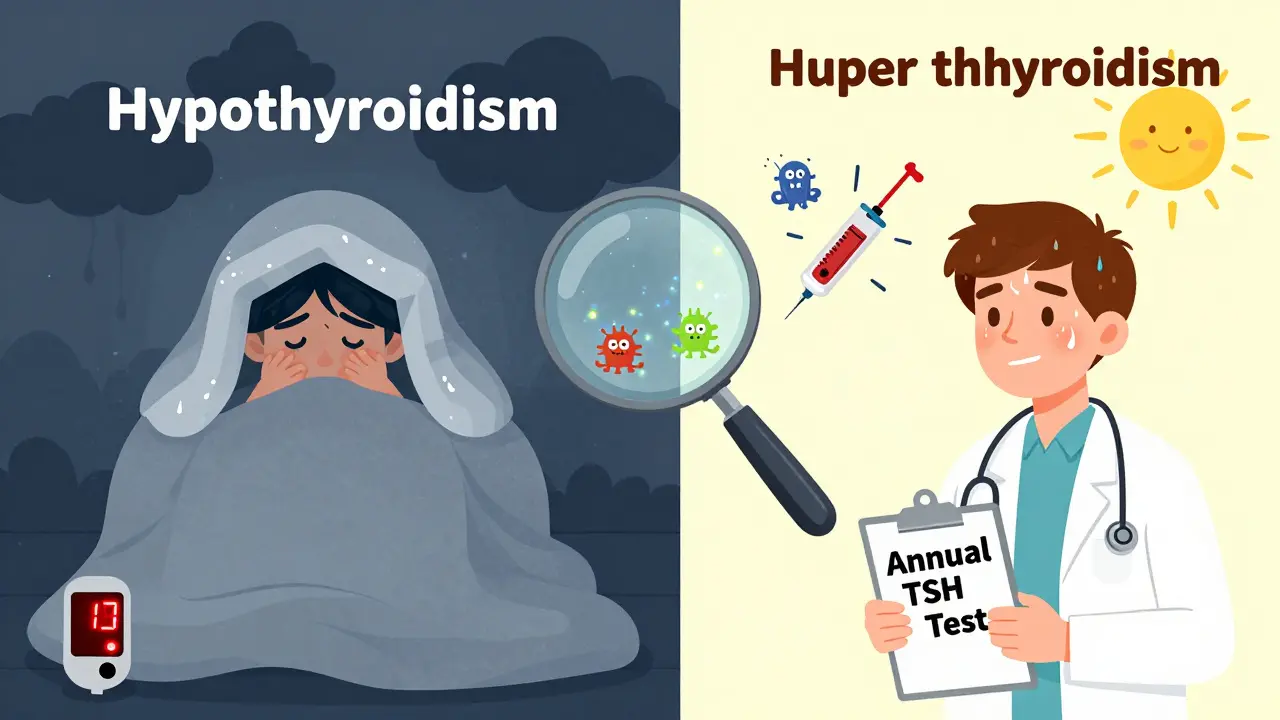
What Doctors Should Be Testing
It’s not enough to just check your HbA1c and fasting glucose. If you have diabetes, your doctor should also be checking your thyroid function-regularly.
The American Diabetes Association now recommends:
- Annual TSH testing for all Type 1 diabetes patients.
- Annual TSH testing for Type 2 patients with risk factors: family history of thyroid disease, female gender, age over 50, or presence of other autoimmune conditions.
- Thyroid antibody testing (anti-TPO and anti-thyroglobulin) at diagnosis for Type 1 patients to identify autoimmune risk early.
For those already diagnosed with thyroid disease and diabetes, testing should be more frequent. The Tampa Bay Endocrine Institute recommends quarterly TSH checks until levels stabilize, then every 6 months. If you’re on levothyroxine, your dose may need adjustment every few months as your insulin needs change.
Also, if you have diabetic gastroparesis (delayed stomach emptying), your body absorbs thyroid medication less efficiently. That means your levothyroxine dose might need to be higher-or taken differently (like on an empty stomach, 30-60 minutes before eating).
How Lifestyle Choices Help Both Conditions
Managing both diabetes and thyroid disease isn’t just about pills. What you eat and how you live affects both systems.
A 2022 study in PMC8787293 followed 200 patients with both conditions for six months on a Mediterranean diet. Results showed:
- HbA1c dropped by 0.8-1.2%
- TSH levels improved by 0.5-0.7 mIU/L
- Triglycerides fell by 25-30 mg/dL
- LDL cholesterol dropped by 18-22 mg/dL
The diet’s high fiber, healthy fats, and antioxidant content reduce inflammation-something that helps both autoimmune thyroid disease and insulin resistance. Cutting out processed sugar and refined carbs helps your blood sugar. Getting enough selenium (from Brazil nuts, fish, eggs) supports thyroid hormone conversion. Vitamin D deficiency is common in both conditions-getting sunlight or supplementing can improve immune balance.
Exercise matters too. Moderate activity improves insulin sensitivity and helps regulate thyroid hormone production. But don’t overdo it-excessive endurance training can stress the thyroid and worsen symptoms.
Medication Interactions and Real-Life Mistakes
Medication errors are common when both conditions are present. A 2022 survey by the American Association of Clinical Endocrinologists found that 58% of patients with both diabetes and thyroid disease had at least one medication mistake.
Here are common pitfalls:
- Levothyroxine taken with coffee, calcium, or iron supplements-this cuts absorption by up to 20%.
- Insulin doses not adjusted after starting or changing thyroid meds.
- Ignoring symptoms because they’re blamed on ‘diabetes complications’ instead of thyroid imbalance.
- Stopping thyroid meds because ‘I feel fine’-even if your TSH is still off.
One patient on DiabetesDaily.com, ‘SugarFree87,’ shared: ‘After my hypothyroidism diagnosis, my insulin needs dropped by 30% overnight. I had three hypoglycemic episodes in a week before my doctor figured it out.’ That’s not an isolated story. It’s a pattern.

What’s New in Treatment and Research
Science is catching up. A 2024 pilot study in Nature Communications found that GLP-1 receptor agonists-meds like semaglutide used for diabetes and weight loss-actually improved thyroid function in 63% of patients with subclinical hypothyroidism. The exact mechanism isn’t fully understood, but it’s promising.
The NIH-funded TRIAD study, launched in January 2023, is tracking 5,000 people with Type 1 diabetes and autoimmune thyroid antibodies to see if early thyroid treatment can slow or prevent diabetes progression. Early data suggests it might.
By October 2024, the American Association of Clinical Endocrinologists will release new guidelines with specific algorithms for managing thyroid dysfunction in Type 1, Type 2, and gestational diabetes. This is the first time these conditions will be addressed together in official protocols.
Why This Matters: Cost, Risk, and Quality of Life
People with both diabetes and thyroid disease spend $4,872 more per year on healthcare than those with diabetes alone. Why? More hospital visits, more complications, more emergency trips. A 2023 analysis estimated that better integrated care could save the global healthcare system $12.7 billion annually.
But beyond money, it’s about quality of life. Patients who get both conditions properly managed report fewer mood swings, more energy, better sleep, and fewer hospitalizations. One study showed that proper thyroid treatment reduced diabetes-related hospital stays by 22% and ER visits by 17%.
If you have diabetes and feel like something’s still off-even if your numbers look okay-ask about your thyroid. It’s not just another lab test. It could be the missing piece.
Can thyroid problems cause high blood sugar even if I’m on insulin?
Yes. Hypothyroidism slows down how your body uses glucose and makes you more resistant to insulin, which can raise blood sugar levels. Even if you’re taking insulin, your body may not respond as well. That’s why some patients need to increase their insulin dose when their thyroid is underactive.
Should I get my thyroid checked if I have Type 2 diabetes?
Yes-if you have risk factors like being female, over 50, have a family history of thyroid disease, or have other autoimmune conditions. The American Diabetes Association recommends annual TSH testing for these groups. Even if you don’t have symptoms, screening can catch early problems before they affect your blood sugar control.
Why do I feel worse when I start thyroid medication?
Starting levothyroxine can cause temporary changes in how your body uses glucose. If you have diabetes, your insulin needs may drop suddenly, leading to low blood sugar. It’s not the medication itself causing the problem-it’s the change in your metabolism. Always work with your doctor to adjust your diabetes meds when starting or changing thyroid treatment.
Can I manage both conditions with diet alone?
Diet helps a lot-but it’s not enough on its own. A Mediterranean-style diet improves both blood sugar and thyroid function, but most people still need medication for one or both conditions. Medication fixes the hormone imbalance; diet supports the system. They work best together.
Does stress make both conditions worse?
Yes. Chronic stress raises cortisol, which interferes with both insulin sensitivity and thyroid hormone conversion. It can also trigger autoimmune flares. Managing stress through sleep, mindfulness, or gentle movement isn’t optional-it’s part of your treatment plan.
What to Do Next
If you have diabetes and haven’t had your thyroid checked in the last year, ask your doctor for a TSH test. If you’ve been diagnosed with thyroid disease and your blood sugar is harder to control than it used to be, bring up your diabetes management. Don’t assume symptoms are just from one condition-ask if the other could be involved.
Keep a symptom journal: note fatigue, weight changes, mood shifts, and temperature sensitivity. Bring it to your appointment. These details matter more than you think.
And if you’re on both insulin and levothyroxine, make sure your pharmacist knows about both. Some medications interfere with absorption. Timing matters-take thyroid meds on an empty stomach, at least 30 minutes before food or other supplements.
This isn’t about adding more pills. It’s about understanding how your body really works. When you treat both systems together, you don’t just manage symptoms-you regain control.
Kacey Yates
January 30, 2026 AT 02:00Also, stop taking it with coffee. I learned that the hard way.
Sheryl Dhlamini
January 31, 2026 AT 14:09Doug Gray
February 1, 2026 AT 12:05But let’s be real: most clinicians are still operating in silos. We need a paradigm shift.
Laura Arnal
February 2, 2026 AT 14:20Keith Oliver
February 4, 2026 AT 13:13kabir das
February 5, 2026 AT 20:23Kristie Horst
February 7, 2026 AT 02:07Andy Steenberge
February 7, 2026 AT 23:17Doctors, please: screen annually. It’s not extra work-it’s basic care. And if you’re a patient reading this? Ask for the test. Even if you ‘feel fine.’ Your future self will thank you.
Eli In
February 9, 2026 AT 10:26Andy Steenberge
February 10, 2026 AT 21:02