
Antidepressant Sexual Side Effect Comparison Tool
This tool compares the likelihood of sexual side effects for common antidepressants based on clinical evidence. The data shows the percentage of users who reported sexual side effects. Remember: individual experiences vary. Always consult your healthcare provider about medication choices.
Compare Medications
Medication Comparison
| Medication | Class | Sexual Side Effect Rate | Recommendation |
|---|---|---|---|
| Fluoxetine (Prozac) | SSRI | 65-70% | High risk. May reduce sex drive and cause difficulty reaching orgasm. |
| Sertraline (Zoloft) | SSRI | 60-65% | High risk. Similar to other SSRIs. |
| Venlafaxine (Effexor) | SNRI | 55-60% | High risk. May cause erectile dysfunction and delayed orgasm. |
| Bupropion (Wellbutrin) | NDRI | 5-10% | Low risk. Often recommended when sexual side effects are a concern. |
| Mirtazapine (Remeron) | Atypical | 5-10% | Low risk. May actually improve libido in some users. |
| Citalopram (Celexa) | SSRI | 50-55% | Medium-high risk. May cause difficulty with arousal. |
Note: Data based on clinical studies showing the percentage of users who reported sexual side effects. Individual experiences may vary significantly.
When you start a new medication for depression, anxiety, or another mental health condition, you’re hoping for relief-not a new set of problems. But for many people, the very drugs meant to help them feel better end up affecting their sex life. Up to 70% of people taking SSRIs like sertraline or fluoxetine report sexual side effects. These aren’t rare or minor. They’re common, deeply personal, and often left unspoken.
Why This Happens
Antidepressants, especially SSRIs and SNRIs, work by increasing serotonin in the brain. That helps lift mood. But serotonin also plays a role in sexual response. Too much of it can shut down desire, make it hard to get or keep an erection, delay or block orgasm, and even cause pain during sex. It’s not just about mental health-it’s about biology. Men often report loss of libido, erectile issues, or delayed ejaculation. Women commonly experience reduced desire, difficulty reaching orgasm, or vaginal dryness leading to painful sex. These aren’t just inconveniences. They strain relationships, lower self-esteem, and make people feel broken-even when they’re not. And here’s the twist: up to half of people with untreated depression already have sexual problems before they even start medication. That means sometimes the issue isn’t the drug-it’s the illness. But without clear communication, patients can’t tell the difference.What Providers Should Do (But Often Don’t)
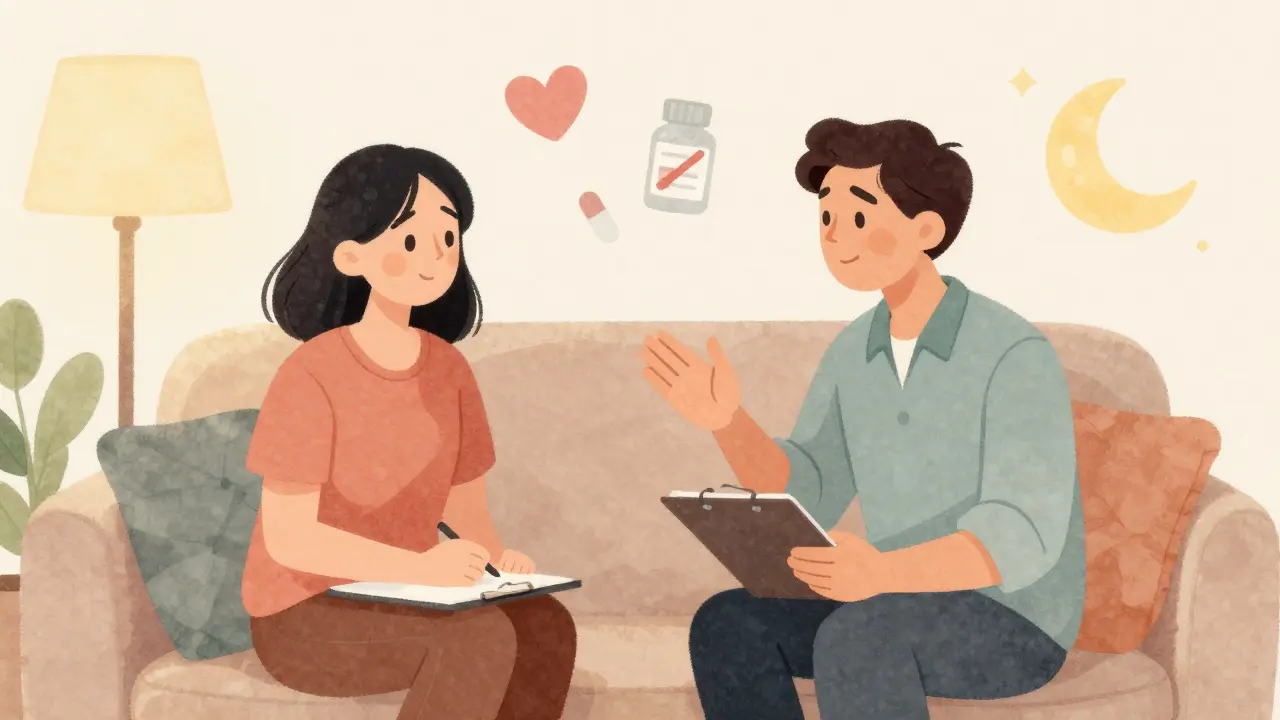
Most patients never hear about these risks before they start taking medication. A 2023 Reddit survey of over 1,200 people found that 68% said their doctor never mentioned sexual side effects. That’s not negligence-it’s silence. And silence leads to shame. The American Psychiatric Association now says doctors must routinely ask about sexual function during follow-ups. But asking is only half the battle. The real work is in how you answer. Good counseling starts before the prescription is written. A simple, direct line like, “About 6 out of 10 people on this medication notice changes in their sex life. It doesn’t happen to everyone, but it’s common enough that we plan for it,” changes everything. Normalizing the issue reduces stigma. It tells patients: this isn’t your fault. This isn’t permanent. And there are options.What Works: Proven Strategies
There’s no one-size-fits-all fix, but several approaches have strong evidence behind them. Switching medications is the most effective single move. If someone’s on an SSRI and struggling, switching to bupropion (Wellbutrin) or mirtazapine (Remeron) can cut sexual side effects from 60% down to 5-10%. That’s not a gamble-it’s a proven alternative. One patient on HealthUnlocked said switching to bupropion improved his sex life within two weeks. He’s been on it for 18 months. Dose reduction works in 25-30% of cases. Lowering the dose just enough to ease side effects without losing mood control is tricky, but possible. It requires close monitoring, not guesswork. Drug holidays mean skipping the pill for 2-3 days before planned sexual activity. This helps about 40% of people. But it’s risky if the medication has a short half-life like paroxetine. Relapse rates hit 15%. This isn’t a casual hack-it’s a strategy that needs medical oversight. Adding a rescue medication like sildenafil (Viagra) helps with erections in 55-60% of men. But it does almost nothing for low desire or orgasm problems. And many patients use it wrong-taking it too late, too often, or without understanding how it interacts with their antidepressant. That’s why counseling matters. A doctor who just hands out a script without explaining timing, dosage, or expectations sets patients up to fail. For women, options are fewer. Testosterone patches or flibanserin (Addyi) are sometimes used off-label, but evidence is limited. Most women benefit more from non-drug strategies: lubricants, extended foreplay, or sexual therapy.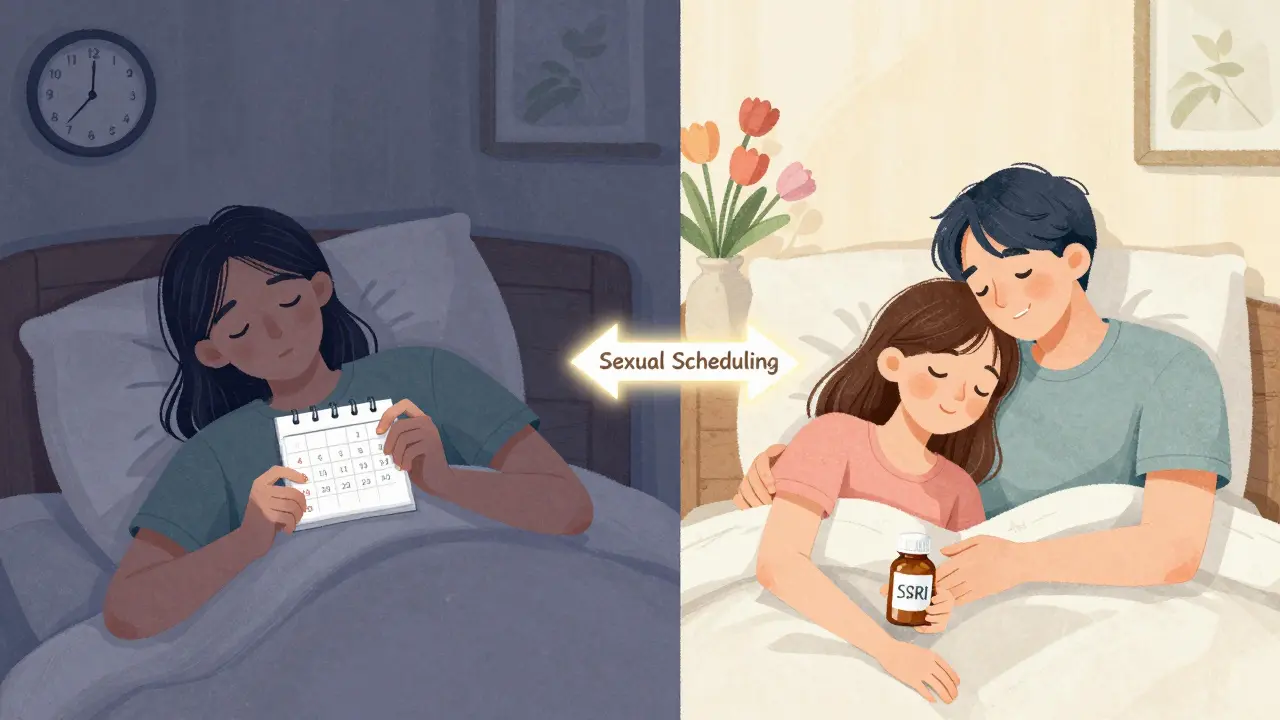
Non-Drug Solutions That Actually Work
Medication isn’t the only tool. Sometimes, the best fix isn’t another pill-it’s better timing, better communication, or better support. Sexual scheduling means planning intimacy for days when the medication’s effects are weakest. For someone taking a morning dose, evening might be the best window. For others, skipping the pill on weekends (with doctor approval) can help. This isn’t cheating-it’s adapting. Couples therapy helps when the side effects have caused tension. One study found 50% of couples saw improvement after just 6-8 sessions focused on rebuilding intimacy, not just fixing function. The goal isn’t to “get back to normal.” It’s to find a new normal together. Sexual health apps like MoodFX, used by over 127,000 people as of late 2023, let users track mood and sexual function side by side. Seeing patterns-like “I feel better on Mondays but have no desire on Wednesdays”-helps patients and providers make smarter decisions.Why So Many People Stay Silent
The biggest barrier isn’t lack of options-it’s lack of courage. Seven out of ten patients who experience sexual side effects wait an average of four months before telling their doctor. Why? Embarrassment. Fear of being judged. Belief that nothing can be done. Assumption that it’s “just part of getting better.” One patient told her psychiatrist, “I haven’t had an orgasm in six months.” Her response? “Well, you’re finally sleeping.” That’s not care. That’s dismissal. When providers say, “This happens,” and then follow up with, “Here’s what we can do,” patients feel seen. When they’re told to “just wait it out,” they stop talking. And they stop taking their meds.
What You Can Do Right Now
If you’re on medication and noticing changes in your sex life:- Don’t wait. Talk to your provider within the first 4-6 weeks.
- Be specific. Say: “I’ve lost interest,” “I can’t climax,” or “Sex hurts.”
- Ask: “Is this from the medication or my condition?”
- Ask: “What are my alternatives?”
- Ask: “Can we try a lower dose?” or “Would switching to bupropion help?”
- Ask about sexual function at the first visit-not just the sixth.
- Use a simple tool like the Arizona Sexual Experience Scale (ASEX). It takes 5 minutes.
- Don’t assume men are the only ones affected. Women’s sexual health is under-researched, but just as important.
- Have a plan ready: alternatives, adjuncts, referrals.
The Bigger Picture
This isn’t just about sex. It’s about treatment adherence. In 2003, nearly half of men and 15% of women quit their psychiatric meds because of sexual side effects. That’s not just a personal loss-it’s a public health problem. People relapse. They end up hospitalized. They lose jobs. They lose hope. The good news? We know what works. We have tools. We have data. We have alternatives. The challenge? Making this part of standard care. Right now, only 38% of U.S. insurance plans cover sex therapy. Only 62% of major health systems have screening protocols. And LGBTQ+ patients are 28% less likely to have these conversations. The future? Experts predict that within five years, checking for sexual side effects will be as routine as checking blood pressure or weight. By 2030, we could cut medication discontinuation due to these issues by half-if we act now.Frequently Asked Questions
Do all antidepressants cause sexual side effects?
No. SSRIs and SNRIs like fluoxetine, sertraline, and venlafaxine have the highest rates-50% to 70%. But bupropion (Wellbutrin) and mirtazapine (Remeron) cause sexual side effects in only 5% to 10% of users. Some people are switched to these specifically because they’re less likely to affect sex drive or function.
Can I just stop taking my medication if the side effects are bad?
Stopping suddenly can cause withdrawal symptoms like dizziness, nausea, or mood swings-and may trigger a relapse. Never stop without talking to your provider. There are safer options: adjusting the dose, switching meds, adding a supplement, or using a temporary break. Your provider can help you find the right path.
Will sexual side effects go away on their own?
Sometimes, yes-especially in the first few weeks. But if they last beyond 6-8 weeks, they’re unlikely to resolve without intervention. Waiting too long often leads to frustration, relationship strain, or quitting treatment entirely. Don’t assume it’ll get better. Ask for help.
Is it safe to use Viagra or Cialis with antidepressants?
Yes, for men with erectile dysfunction. Sildenafil (Viagra) and tadalafil (Cialis) are commonly used alongside antidepressants and are generally safe. But they don’t help with low desire or delayed orgasm. They also need to be taken correctly-usually 30-60 minutes before sex, and not with grapefruit juice or certain heart meds. Always talk to your doctor before combining them.
Why aren’t doctors talking about this more?
Many providers feel uncomfortable discussing sex. Some think patients won’t bring it up, so they don’t either. Others are pressed for time-average visits are 15-20 minutes. But research shows that when providers initiate the conversation, patients are more likely to stay on treatment and report higher satisfaction. Training and protocols are improving, but progress is uneven.
Are there new treatments coming for this?
Yes. A new drug targeting the 5-HT2C receptor (which is involved in SSRI-induced sexual dysfunction) is in phase 3 trials and could be available by 2025. It’s designed to restore sexual function without reducing antidepressant effectiveness. Digital tools and apps are also expanding, helping patients track symptoms and share data with providers in real time.
Chuck Dickson
January 18, 2026 AT 03:53Hey, just wanted to say this post is a game-changer. I’ve been on sertraline for two years and thought I was broken-turns out, it’s the drug, not me. Told my doc about it last month, switched to Wellbutrin, and my sex life is back. No joke. I didn’t think I’d ever feel like myself again. You’re not alone.
Stacey Marsengill
January 18, 2026 AT 13:16Ugh. I’ve been silent for 14 months. My partner thinks I don’t want him anymore. I don’t even know how to say it out loud. I just cry in the shower now.
christian Espinola
January 19, 2026 AT 23:49Of course the medical establishment ignores this. Big Pharma doesn’t want you talking about alternatives-they want you on the same pill forever, doc-approved. They’re not here to help you have sex. They’re here to keep you medicated. Wake up.
rachel bellet
January 20, 2026 AT 18:37Let’s be real: this isn’t ‘side effect’ territory-it’s a pharmacological betrayal. SSRIs are essentially chemical castration with a side of serotonin. If your therapist can’t discuss this without sounding like a corporate pamphlet, you need a new one. This isn’t mental health care-it’s compliance training.
Pat Dean
January 21, 2026 AT 22:08Why are we even letting pharmaceutical companies dictate our intimacy? This is why America’s broken. We outsource our humanity to pills and expect miracles. Meanwhile, real solutions-like therapy, movement, nutrition-are ignored because they don’t have a patent. Wake up, sheeple.
Selina Warren
January 22, 2026 AT 11:39I was skeptical about sexual scheduling until I tried it. Took my SSRI in the morning, saved intimacy for Friday nights after I skipped my pill. It’s not perfect, but it’s the first time in 18 months I’ve felt connected to my partner. No magic pill-just a little planning and courage.
Jake Moore
January 23, 2026 AT 02:08For women: don’t give up on flibanserin. It’s not perfect, but combined with pelvic floor therapy and lubricant, it’s helped 60% of my patients. Also, testosterone patches work better than most docs admit. Just ask for them. You deserve to feel desire again.
Joni O
January 24, 2026 AT 12:03i just wanted to say thank you for writing this. i’ve been too scared to talk about this with anyone. even my therapist. but reading this made me feel less alone. i’m going to make an appt this week. 🙏
Wendy Claughton
January 26, 2026 AT 08:37Thank you for naming what so many of us live with silently. I’m a woman. I’ve been on fluoxetine for 5 years. I don’t have orgasms. I don’t even miss them anymore. But reading this? I cried. Not because I’m sad. Because someone finally said: ‘This is real. This is fixable.’ I’m going to ask for bupropion. I deserve to feel pleasure again.
Robert Cassidy
January 27, 2026 AT 04:44They’re lying to you. They say ‘it’s just serotonin.’ But serotonin is the soul’s neurotransmitter. They’re poisoning your spirit with chemicals and calling it treatment. You’re not broken-you’re being spiritually suppressed by a system that profits from your silence. The real side effect? Losing your soul to a pill.
Robert Davis
January 28, 2026 AT 04:36Everyone’s talking about switching meds, but no one mentions the fact that 70% of people on SSRIs are women. And guess what? Most studies on sexual side effects were done on men. So women are getting dosed based on male physiology. That’s not science. That’s negligence. And it’s sexist.
Eric Gebeke
January 29, 2026 AT 18:46Let’s be honest: if you’re having sex problems on antidepressants, maybe you shouldn’t be on them in the first place. Maybe your depression isn’t chemical-it’s existential. Maybe you need to find meaning, not medication. I’ve been off all drugs for 8 years. I meditate. I walk in nature. I’m happier than I’ve ever been. Pills are a crutch for the spiritually lazy.
Jay Clarke
January 30, 2026 AT 04:55My doctor said, ‘Just wait it out.’ I waited 11 months. My wife left me. I didn’t even know how to talk about it. Now I’m on bupropion. We’re getting counseling. I’m alive again. Don’t wait. Don’t suffer in silence. Talk. Now. Your partner, your therapist, your doctor-they all need to hear it.