
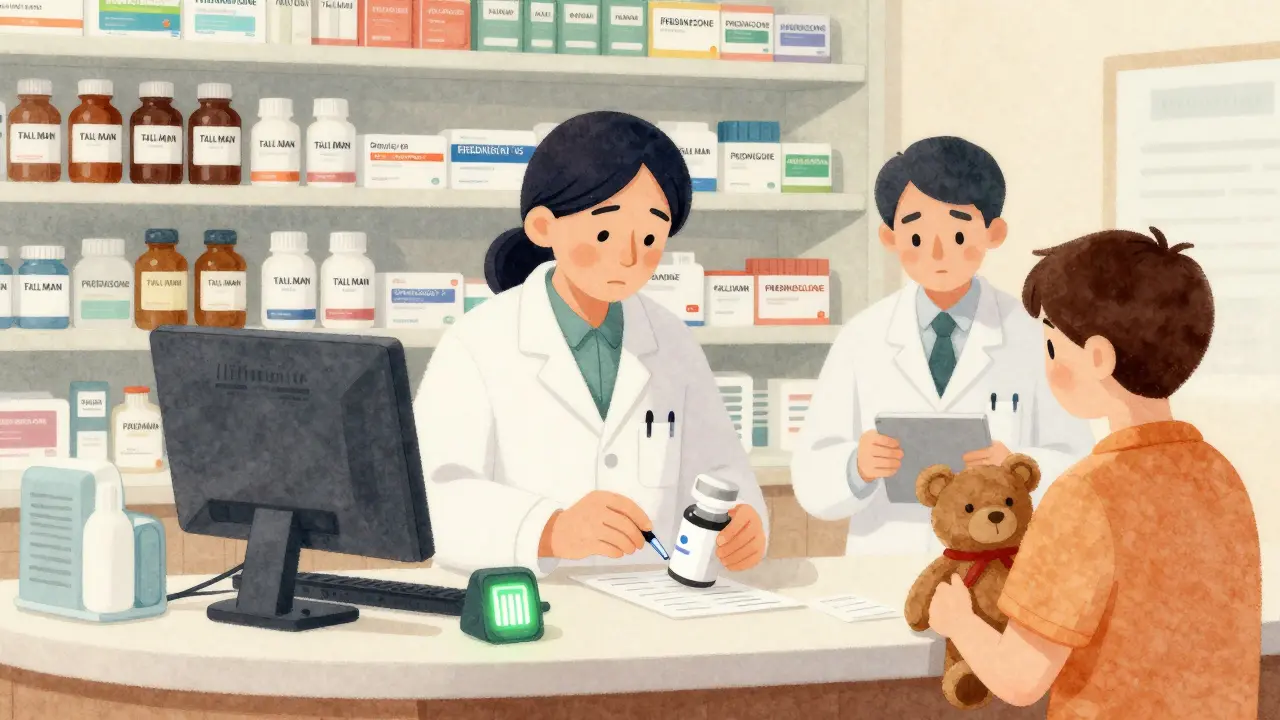
Every year, millions of patients in the U.S. receive the wrong medication, the wrong dose, or a drug that interacts dangerously with something they’re already taking. These aren’t hypothetical risks-they’re real, documented mistakes happening in pharmacies every day. According to a 2023 global review of 62 studies, dispensing errors occur in about 1.6% of all prescriptions filled. That might sound small, but it translates to over 7 million errors annually in the U.S. alone. And while many of these are caught before they reach the patient, others slip through-leading to hospitalizations, permanent harm, or even death.
What Are the Most Common Pharmacy Dispensing Errors?
Not all errors look the same. Some are simple mix-ups. Others stem from systemic flaws. The most frequent types, based on data from the Academy of Managed Care Pharmacy and StatPearls, include:- Wrong medication: Giving a patient drug A when they were prescribed drug B. This is the single most common error, often caused by similar-looking bottle labels or confusing drug names.
- Wrong dose or strength: Handing out 50 mg instead of 5 mg, or a 100-mg tablet instead of a 25-mg tablet. This happens often with high-alert drugs like insulin, warfarin, or opioids.
- Wrong dosage form: Dispensing a tablet when the prescription called for a liquid, or an extended-release capsule when an immediate-release version was needed.
- Incorrect duration: Giving a 30-day supply when only a 7-day supply was ordered-or vice versa.
- Missing allergy check: Failing to verify if the patient is allergic to the drug or one of its ingredients. Antibiotics are especially risky here-41% of antibiotic-related errors involved unverified allergies.
- Drug interactions missed: Not catching that the new prescription clashes with another medication the patient is already taking. Anticoagulants, antidepressants, and heart medications are common culprits.
- Dose miscalculations: Especially with pediatric or renal-dose medications, where weight, age, or kidney function must be factored in. One wrong decimal point can be deadly.
Some errors are more obvious than others. A patient might notice they got a different-looking pill. But others? A patient takes a pill labeled "Lisinopril 10 mg"-thinking it’s their blood pressure med-when it’s actually "Lisinopril-HCTZ 10/25 mg" (a combo drug). The difference seems small. The consequence? Severe low blood pressure, kidney damage, or worse.
Why Do These Errors Happen?
It’s easy to blame the pharmacist. But the truth? Most errors come from broken systems, not bad people.- Workload pressure: Pharmacists in community pharmacies often fill 200-300 prescriptions a day. When you’re rushing, your brain skips steps. One study found workload was the top cause in 37% of errors.
- Similar drug names: "Hydralazine" and "Hydroxyzine"? "Clonidine" and "Clonazepam"? These sound-alike, look-alike drugs cause 28% of errors. Even the packaging can be misleading.
- Interruptions: A nurse calls, a patient asks a question, a phone rings-each interruption increases error risk by 12.7%. One pharmacist described it like juggling knives while someone keeps tapping your shoulder.
- Illegible handwriting: Even in 2026, 43% of errors still start with a handwritten prescription. "5 mg" can look like "50 mg." "QD" (once daily) can be mistaken for "QID" (four times daily).
- Incomplete patient info: Missing lab values (like kidney function), undocumented allergies, or unknown drug interactions make it impossible to catch a dangerous prescription.
- Technology glitches: Computerized systems help-but they also create new problems. Alert fatigue is real. When a system pops up 20 warnings for every prescription, pharmacists start ignoring them. One hospital saw 3 critical interaction warnings missed in just three months because of this.
It’s not about laziness. It’s about human nature. We all make mistakes under pressure. The question isn’t "Why did this happen?" It’s "Why didn’t the system stop it?"
How to Prevent Dispensing Errors: Proven Strategies
The good news? Most of these errors are preventable. And we already know what works.1. Double-Check High-Alert Medications
Drugs like insulin, heparin, warfarin, and opioids are responsible for the majority of serious errors. Many pharmacies now require a second pharmacist to verify these before they’re handed out. One hospital reported a 78% drop in errors after implementing this rule. It’s simple, low-cost, and incredibly effective.2. Use Barcode Scanning
Barcode systems scan the prescription, the drug, and the patient’s ID-all before dispensing. A 2021-2023 survey of 127 hospitals showed this cut dispensing errors by 47.3%. Wrong drug? Scanned and flagged. Wrong dose? Caught before it leaves the counter. This isn’t futuristic tech-it’s standard in most hospitals now and becoming common in big retail chains.3. Implement Tall Man Lettering
This is a simple fix: make similar drug names visually distinct. Instead of "prednisone" and "prednisolone," pharmacies write "PREDNISONE" and "prednisoLONE." The capitalization draws the eye. Adoption across 214 pharmacies reduced sound-alike errors by 56.8%.4. Verify Allergies Every Time
Never assume. Even if the patient says they’re not allergic, check the electronic record. And if there’s no record? Ask again. Allergy-related errors dropped by 72% in pharmacies that made this a mandatory step.5. Use Clinical Decision Support
Modern pharmacy software can flag interactions, dose limits, and renal adjustments in real time. One study showed this reduced interaction errors by 53%. But don’t rely on it alone. Combine it with human judgment. The best systems don’t just alert-they explain why the warning matters.6. Standardize Processes and Reduce Interruptions
Designate "quiet zones" in the dispensing area. No phones. No unnecessary conversations. Create checklists for high-risk prescriptions. One pharmacy reduced errors by 38.7% in a year just by limiting interruptions and using a simple 5-step verification checklist.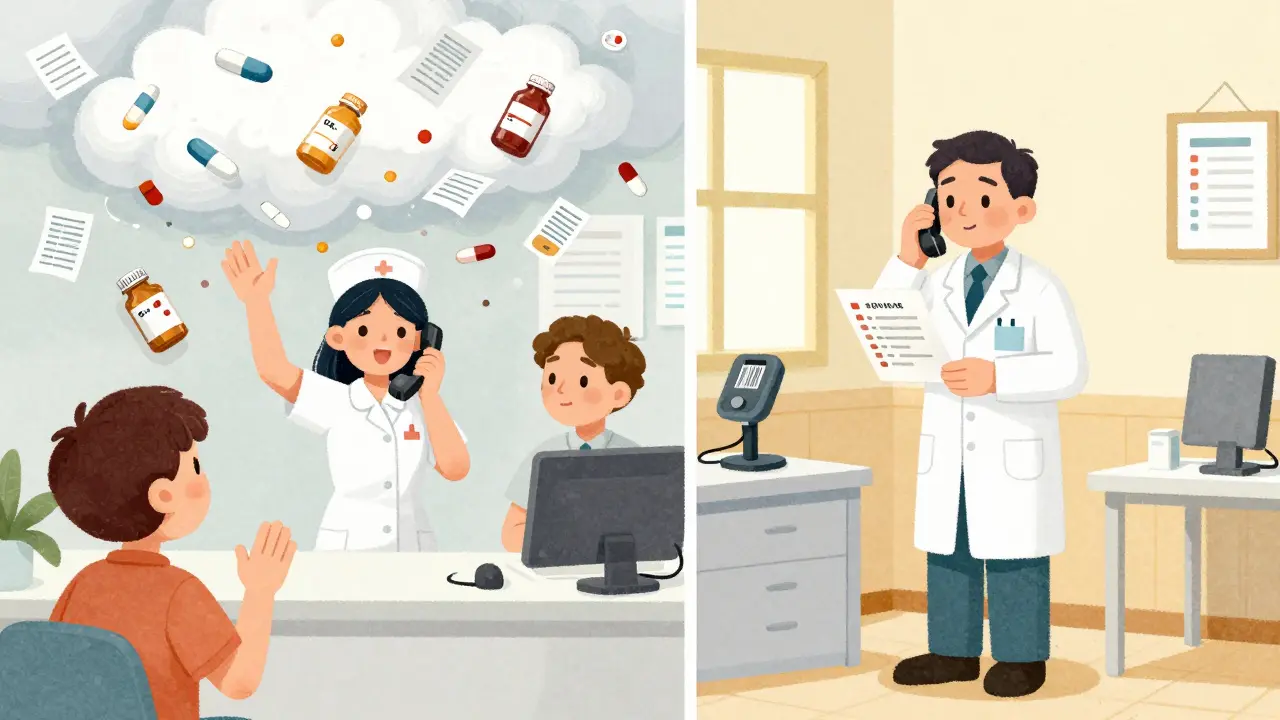
Technology Isn’t the Full Answer
You might think: "Just install AI and robots, and the problem’s solved." But it’s not that simple. Robotic dispensing systems cut errors by 63.2%-but they cost $150,000 to $500,000. Not every pharmacy can afford that. AI tools predict errors before they happen, but they need clean data and trained staff to work properly. And here’s the catch: technology can create new problems. One pharmacist on Reddit wrote: "Our new system gave us 15 alerts per script. We started clicking through them without reading. We missed three critical warnings in the first month."Human oversight still matters. The most successful pharmacies don’t replace people-they empower them. They use tech to reduce busywork, not to replace judgment.
What Patients Can Do to Protect Themselves
You’re not powerless. Even if the system fails, you can be the last line of defense.- Know your meds: Keep a list of every drug you take-name, dose, why you take it. Bring it to every appointment.
- Ask questions: "Is this the same as my last prescription?" "Why am I taking this?" "What side effects should I watch for?"
- Check the pill: Does it look right? Is the label clear? If it’s different, ask.
- Verify the dose: If you’re getting 10 pills but the label says "take 2 daily," that’s a 5-day supply. Did they mean 50 pills?
- Report suspicious errors: If something feels off, tell the pharmacist. If they brush you off, go to another pharmacy or contact your doctor.
One patient noticed her new blood pressure pill was a different color. She asked. Turns out, they’d given her her husband’s medication. He had the same name. Same birthday. Same doctor. Same pharmacy. She saved his life.

The Future: What’s Changing?
The field is moving fast. By 2025, 78% of U.S. pharmacies will use standardized error classification systems. The FDA is rolling out a new reporting format in 2024 that will make it easier to track patterns across pharmacies. The WHO and ISMP are working on a global error classification system to reduce confusion between countries.AI-powered tools are getting smarter. One hospital tested an AI that reviewed every prescription before it was filled and flagged 92% of potential errors before a human even saw them. But adoption is slow-only 38.7% of community pharmacies have fully integrated electronic health records.
Change isn’t coming because of technology. It’s coming because patients are demanding it. And because pharmacists are tired of being blamed for system failures.
Final Thought: It’s About Systems, Not Blame
Pharmacists aren’t careless. They’re overworked, under-supported, and often stuck in broken workflows. The goal isn’t to find the one person who messed up. It’s to fix the system so that no one can mess up-not because they’re perfect, but because the system won’t let them.The data shows: when you implement even a few of these simple fixes-double-checks, barcodes, allergy verification, quiet zones-you cut errors in half. That’s not magic. That’s basic safety engineering.
Medication errors are preventable. Not because we need more perfect people. But because we need better systems. And those systems are already here. We just need to use them.
Samuel Mendoza
January 20, 2026 AT 22:137 million errors a year? That’s not a system failure-that’s negligence on an industrial scale. If your pharmacy can’t get pills right, why are we letting them operate at all?
Glenda Marínez Granados
January 21, 2026 AT 04:37So we’re just supposed to trust the same people who gave me ibuprofen labeled as "sleep aid" in 2018? 😅
Steve Hesketh
January 22, 2026 AT 07:53Man, this hit hard. I lost my aunt to a mix-up like this-she got the wrong chemo drug because the labels looked too similar. They said "it was a one-in-a-million mistake." But one-in-a-million is still someone’s whole world. We gotta do better. Not just for stats-for people.
Malvina Tomja
January 23, 2026 AT 18:30Let’s be real-this entire system is a glorified game of Russian roulette with your life. Pharmacists are overworked, yes, but they’re also the last line of defense. If they’re skipping steps because they’re tired, that’s not a human error-it’s a corporate crime. The fact that we accept this as "normal" is the real tragedy. And don’t even get me started on how insurance companies force pharmacies to fill 300 scripts an hour. This isn’t about training-it’s about profit over people.
And yes, barcode scanners help. But if your system floods you with 20 alerts per script and you start ignoring them? That’s not tech failure-that’s design failure. Someone decided that overwhelming people is better than fixing the root problem. And that someone? They’re not in the pharmacy. They’re in a boardroom.
Patients aren’t powerless. But telling them to "check the pill" is like telling a child to check if the car is coming before crossing a highway. The system should be built so that even if you’re distracted, sleepy, or scared-you still can’t die because someone else skipped a step.
And why do we still accept handwritten scripts in 2026? That’s not tradition. That’s laziness. That’s a relic from a time when we didn’t care enough to fix it. Now we do. And if we don’t fix it, we’re just as guilty as the ones who made the mistake.
shubham rathee
January 25, 2026 AT 00:45MARILYN ONEILL
January 26, 2026 AT 06:15Ugh. I’ve been saying this for years. If you can’t even get a prescription right, you shouldn’t be allowed to sell gum. This is why I only get my meds from the VA. They actually care. Or at least they pretend to.
Dee Monroe
January 27, 2026 AT 12:44I’ve been thinking a lot about this lately-not just as a patient, but as someone who’s watched a loved one almost die from a misdispensed drug. It’s not just about barcodes or double-checks. It’s about dignity. The way we treat people in the healthcare system says everything about what we value. If we’re okay with someone almost dying because a pharmacist was rushed, then we’ve already decided that time is more valuable than life. And that’s not a system problem. That’s a soul problem.
Imagine if we treated every prescription like it was for our own mother. What if every pharmacist had to say out loud, "This is for someone’s mom," before they handed it over? Would we still have 7 million errors? Would we still ignore the alerts? Would we still let pharmacies run like fast-food joints?
I don’t think the answer is more tech. I think the answer is more heart. We need to rebuild the culture around pharmacy work-not just the tools. We need to pay pharmacists enough that they can breathe. We need to give them space. We need to silence the phones. We need to let them be healers again, not order processors.
And patients? We need to stop being grateful when we don’t die. We need to demand better. Not because we’re paranoid. Because we’re alive. And we deserve to stay that way.
Yuri Hyuga
January 28, 2026 AT 11:07Brilliant breakdown! 🙌 This isn’t just about medicine-it’s about human dignity. Every single one of these solutions is doable, affordable, and proven. The fact that we haven’t scaled them globally is a moral failure, not a technical one.
Let’s celebrate the pharmacies doing it right. Let’s reward them. Let’s pressure the ones that aren’t. And let’s stop pretending that "human error" is an excuse. It’s a symptom. The disease? A broken system that treats people like numbers.
We can fix this. But only if we stop looking for villains and start building better systems. And yes-patients, your voice matters. Speak up. Ask. Double-check. And if you see something wrong? Report it. You might save a life. 💪❤️
Kevin Narvaes
January 28, 2026 AT 20:10bro the whole thing is rigged like the fda just lets this happen so they can sell more drugs to people who get hurt from bad meds like its a business model lmao