
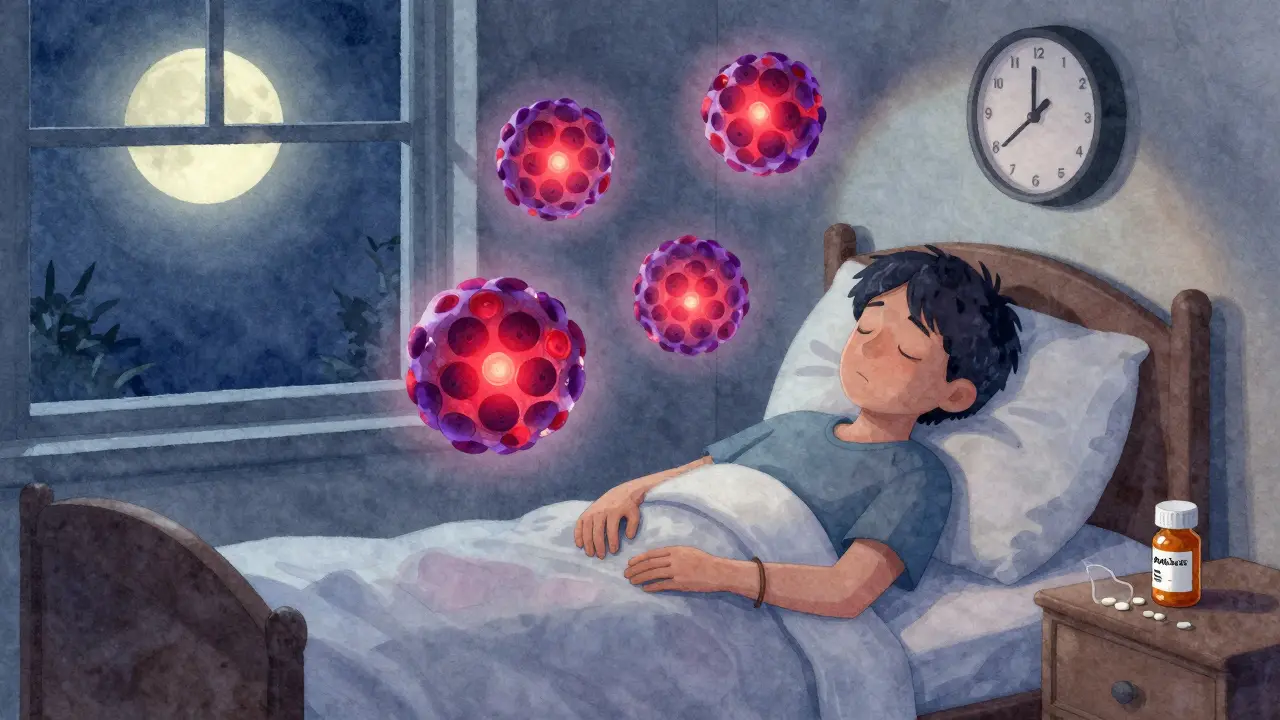
When hives don’t go away for more than six weeks-and you can’t pinpoint why-they’re not just annoying. They’re chronic spontaneous urticaria (CSU). No bug bites. No food triggers. No clear cause. Just recurring welts, swelling, and relentless itching that wreck sleep, work, and confidence. About 40% of people with CSU say their quality of life is severely damaged. And if standard antihistamines didn’t help, you’re not alone. Roughly 60% of patients need to move beyond first-line treatment. That’s where second-line options come in.
Why First-Line Treatments Often Fail
Most doctors start with second-generation antihistamines-drugs like cetirizine, loratadine, or fexofenadine. They’re safe, non-drowsy, and work well for some. But here’s the hard truth: only about 40% of people with CSU get meaningful relief at standard doses. Even if you double or quadruple the dose, as some guidelines suggest, you’re still looking at maybe 40% total success. That leaves the other 60% stuck in a cycle of flare-ups, frustration, and failed treatments.
CSU isn’t one disease. It’s a group of conditions hiding under the same name. About half of all cases involve autoantibodies-your immune system accidentally attacking your own skin cells. These are called autoimmune CSU. And that’s the key. Different subtypes respond differently to treatments. If your body is producing IgG antibodies that trigger mast cells, omalizumab might not help much. But if your problem is more about IgE-driven inflammation, it could be a game-changer.
Omalizumab: The Current Standard, But Not Perfect
Omalizumab (brand name Xolair) has been the go-to second-line treatment since it was approved for CSU in 2014. It’s a monoclonal antibody that binds to IgE, the antibody that sets off allergic reactions. By mopping up free IgE, it stops mast cells from releasing histamine. That means fewer hives, less swelling, and better sleep.
It works. In studies, 30-70% of patients see a big drop in symptoms. But here’s what most doctors don’t tell you: about 70% of people still don’t get complete control. That’s a major gap. And if you have IgG-mediated autoimmune urticaria-which affects at least 30% of CSU patients-omalizumab often falls short. You might feel a little better, but you’re still stuck with daily symptoms.
It’s also not convenient. You need a monthly injection under the skin. That means trips to the clinic. That means needles. That means cost and insurance hurdles. For many, it’s worth it-but for others, it’s just another barrier.
The New Contenders: Oral Options That Could Change Everything
By 2026, the CSU treatment landscape is shifting fast. Three new drugs are on the horizon, and they’re not just alternatives-they’re potential upgrades.
Remibrutinib is a Bruton tyrosine kinase (BTK) inhibitor. Unlike omalizumab, it’s taken as a pill. In two phase 3 trials (REMIX-1 and REMIX-2), it helped 28-32% of patients achieve complete symptom control after 24 weeks. That’s comparable to omalizumab’s best numbers. But here’s the big win: oral dosing. No injections. No clinic visits. Just a daily pill. For patients who’ve struggled with adherence, this could be a game-changer.
And remibrutinib doesn’t just block one pathway. It hits multiple targets: mast cells, basophils, and even the autoimmune B cells that make the bad antibodies. That’s why it may work better than omalizumab in autoimmune CSU cases. Early data suggests it’s effective even when omalizumab fails.
Dupilumab (Dupixent) is already approved for eczema and asthma. It blocks IL-4 and IL-13-two key inflammatory signals. In CSU trials, 30-31% of patients had complete clearance of hives at 24 weeks. That’s slightly better than omalizumab’s average. It’s not yet officially approved for CSU, but many specialists are prescribing it off-label. The big advantage? It works well in patients with type 2 inflammation, which overlaps with many autoimmune CSU cases. If you’ve tried omalizumab and didn’t respond, dupilumab might be worth a try.
Barzolvolimab is another promising option. In phase 2 trials, it delivered complete response rates of 38-51% in just 12 weeks. That’s higher than anything we’ve seen so far. But it’s still early. Phase 3 trials are underway, and approval isn’t expected until 2027 or later.

Why Cyclosporine Still Has a Role
Cyclosporine is an old-school immunosuppressant. It’s not new. But it’s still powerful. For patients with autoimmune CSU-especially those who didn’t respond to omalizumab-it can work wonders. Studies show 54-73% of patients see major improvement. That’s higher than most biologics.
But here’s the catch: it’s not safe for long-term use. It can raise blood pressure, damage kidneys, and increase infection risk. Most doctors use it as a third-line option-only after biologics fail-and for short bursts. It’s not a first choice anymore, but for someone with severe, treatment-resistant CSU, it’s still a lifeline.
What’s Not Working-and Why
Not every new drug makes it. Fenebrutinib, another BTK inhibitor, was dropped in 2023 because it caused liver enzyme spikes in some patients. That’s a red flag. Safety matters more than efficacy. Even if a drug works better, if it risks your liver, it won’t get approved.
That’s why the field is moving toward precision. We’re learning that CSU isn’t one-size-fits-all. About 40-50% of cases involve IgE or IgG autoantibodies. If you have IgG-mediated disease, omalizumab likely won’t cut it. But remibrutinib? It might. If you have high IL-4 levels? Dupilumab could be perfect. The future isn’t just about new drugs-it’s about matching the right drug to the right patient.

How Doctors Decide What Comes Next
There’s no single path. But here’s how most specialists think about it in 2026:
- Start with standard-dose antihistamines.
- If no improvement after 4 weeks, try doubling or quadrupling the dose (some patients respond, but don’t count on it).
- If still no relief, move to second-line.
- For most: omalizumab. It’s proven, covered by insurance, and widely available.
- For those with autoimmune features or poor response to omalizumab: consider remibrutinib or dupilumab (if accessible).
- For severe, refractory cases: short-term cyclosporine, with close monitoring.
Testing for autoantibodies isn’t routine yet-but it’s becoming more common. If your doctor can order an autologous serum skin test or a basophil activation test, it might help guide your treatment. You’re not just guessing anymore. You’re targeting.
What This Means for You
If you’ve been living with CSU for months or years, and antihistamines didn’t help, you’re not failing. The system is just catching up. The treatments available today are better than ever, but they’re still imperfect. The good news? We’re no longer stuck with one option. We have choices.
Remibrutinib could be the first oral, non-biologic option approved for CSU. That means easier access, lower cost, and better adherence. Dupilumab might be available off-label sooner than expected. And if you’re one of the 30% who didn’t respond to omalizumab, you’re not out of options-you’re just in the right group for the next wave of drugs.
The biggest shift? Moving from trial-and-error to targeted therapy. In the next 3-5 years, doctors will start testing for autoimmune subtypes before prescribing. That means fewer wasted months. Fewer side effects. More days without hives.
You’re not alone. And you’re not stuck. The treatment revolution is here.
What is the success rate of omalizumab for chronic spontaneous urticaria?
Omalizumab helps about 30-70% of patients with chronic spontaneous urticaria achieve a meaningful reduction in symptoms. However, only about 30% of patients achieve complete symptom control. About 70% still have some level of hives or swelling after treatment. Its effectiveness drops significantly in patients with IgG-mediated autoimmune urticaria, which affects at least 30% of CSU cases.
Is remibrutinib better than omalizumab for CSU?
Remibrutinib shows comparable efficacy to omalizumab, with 28-32% of patients achieving complete symptom control in phase 3 trials. The key advantage is that it’s taken orally, while omalizumab requires monthly injections. Remibrutinib also targets multiple immune pathways, making it more effective in autoimmune CSU cases where omalizumab often fails. It’s not yet approved, but it’s expected to be available in 2026-2027.
Can dupilumab be used for chronic spontaneous urticaria?
Yes, dupilumab is being used off-label for CSU, especially in patients who don’t respond to omalizumab. Phase 3 trials showed 30-31% complete response rates after 24 weeks. While it’s not yet FDA-approved for CSU (it’s approved for eczema and asthma), many allergists and dermatologists are prescribing it because of strong evidence and a favorable safety profile. It works best in patients with type 2 inflammation, which overlaps with many autoimmune CSU cases.
Why do some people not respond to omalizumab?
Omalizumab works by targeting IgE, but about 40-50% of CSU cases are driven by IgG autoantibodies instead. These antibodies directly activate mast cells, bypassing the IgE pathway. Since omalizumab doesn’t block IgG, it has little effect in these patients. That’s why up to 30% of people with CSU get little to no benefit from omalizumab. Testing for autoantibodies can help identify who’s likely to respond.
Are there any new CSU treatments coming soon?
Yes. Remibrutinib (an oral BTK inhibitor) and barzolvolimab (a new monoclonal antibody) are both in late-stage trials. Remibrutinib could be approved by late 2026. Barzolvolimab showed 38-51% complete response rates in phase 2, making it one of the most promising candidates. Dupilumab may also receive formal approval for CSU within the next 2 years. The focus is shifting toward oral therapies and personalized treatment based on autoimmune subtypes.
trudale hampton
March 21, 2026 AT 21:53Desiree LaPointe
March 21, 2026 AT 23:38Thomas Jensen
March 22, 2026 AT 07:53Johny Prayogi
March 23, 2026 AT 20:15Solomon Kindie
March 25, 2026 AT 13:23Natali Shevchenko
March 27, 2026 AT 10:13Sandy Wells
March 29, 2026 AT 08:51Chris Dwyer
March 30, 2026 AT 14:32Allison Priole
March 31, 2026 AT 01:03Jackie Tucker
March 31, 2026 AT 21:35Casey Tenney
April 1, 2026 AT 14:01matthew runcie
April 3, 2026 AT 01:23shannon kozee
April 3, 2026 AT 15:52Nicole James
April 5, 2026 AT 15:49Paul Cuccurullo
April 6, 2026 AT 06:05