

Living with celiac disease isn’t just about avoiding bread or pasta. It’s about protecting your body from ongoing damage that can lead to serious health problems - if you don’t get it right. For 1 in 100 people worldwide, eating gluten triggers an immune attack on the small intestine. That damage doesn’t just cause bloating or diarrhea. It stops your body from absorbing the nutrients you need to survive. Without proper management, celiac disease can lead to anemia, osteoporosis, nerve damage, and even rare forms of cancer. The good news? When you go completely gluten-free and fix your nutrient gaps, most people feel dramatically better within weeks.
What Happens When You Eat Gluten With Celiac Disease
Gluten isn’t just an irritant for people with celiac disease - it’s a trigger for an autoimmune war inside your body. When you eat wheat, barley, or rye, your immune system mistakes gluten proteins for invaders and attacks the lining of your small intestine. Over time, the finger-like projections called villi - responsible for absorbing vitamins, minerals, and calories - get flattened. That’s why so many people with undiagnosed celiac disease are underweight, tired, or anemic, even if they’re eating enough food.
The damage doesn’t show up overnight. Some people have severe symptoms right away - chronic diarrhea, weight loss, vomiting. Others have no digestive issues at all. Instead, they might have joint pain, skin rashes, infertility, or depression. That’s why so many cases go undiagnosed for years. The only way to confirm celiac disease is through blood tests and, in most cases, a biopsy. The standard test is tTG-IgA, which detects antibodies your body makes in response to gluten. It’s 98% accurate if you’re still eating gluten when tested. If you’ve already gone gluten-free, the test won’t work. That’s why doctors insist you don’t cut gluten out before testing.
What Exactly Is Gluten-Free? (And What’s Not)
Going gluten-free sounds simple - no bread, no pasta, no beer. But gluten hides everywhere. It’s in soy sauce, salad dressings, processed meats, and even some medications. You can’t just read “wheat-free” on a label and assume it’s safe. Wheat is just one source. Gluten also comes from barley (malt, malt vinegar) and rye. Oats are tricky. Most are contaminated during farming or processing. But certified gluten-free oats - tested to contain less than 20 parts per million of gluten - are safe for 95% of people. Start slow: 50 grams a day (about half a cup dry), and watch for symptoms. If you feel worse, stop.
Safe grains? Rice, corn, quinoa, buckwheat, amaranth, millet, teff, sorghum, and certified gluten-free oats. Potatoes, fruits, vegetables, meat, fish, eggs, nuts, and dairy are naturally gluten-free. But always check labels on packaged versions. A 2024 Consumer Reports study found that 1 in 10 “gluten-free” labeled products had detectable gluten from cross-contamination.
The Real Problem: Nutrient Deficiencies You Can’t See
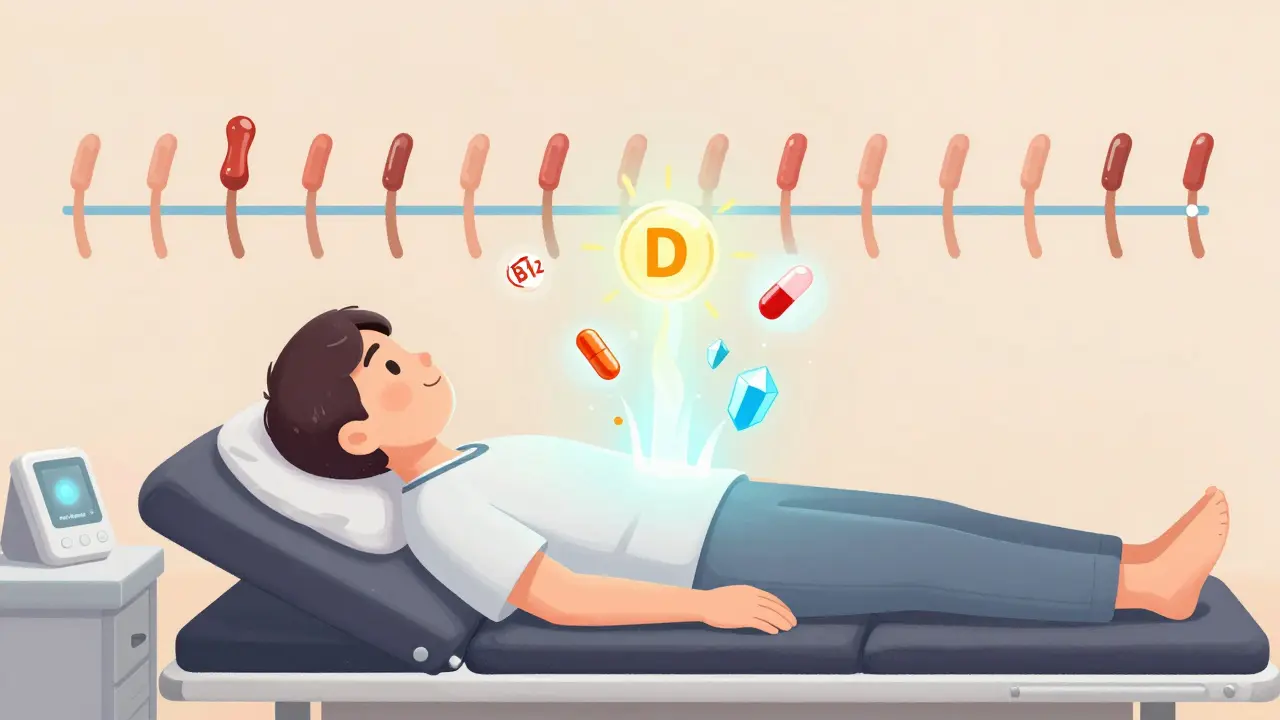
Even after going gluten-free, many people still feel off. Why? Because years of intestinal damage left them with serious nutrient gaps. These don’t fix themselves overnight. Iron deficiency is the most common - affecting 12% to 63% of people at diagnosis. That’s why fatigue and pale skin are so frequent. Vitamin D deficiency hits 37% to 75% of newly diagnosed patients. Without enough vitamin D, your body can’t absorb calcium, leading to weak bones. Calcium deficiency affects 25% to 40% of people with celiac disease. Bone density scans (DXA) show improvement in 1 to 2 years of strict dieting, but you need to supplement while healing.
Other common gaps: B vitamins (especially B12 and folate), magnesium, zinc, and copper. B12 deficiency can cause tingling in hands and feet or memory problems. Magnesium helps with muscle cramps and sleep. Zinc supports immunity and skin health. Most doctors don’t test for these unless you’re still symptomatic. But if you’re still tired after 6 months on a gluten-free diet, you should.
Typical supplement doses based on 2025 guidelines: Iron - 18mg daily for women, 8mg for men. Calcium - 1,000 to 1,200mg. Vitamin D - 600 to 800 IU, but many need 2,000 IU or more to correct deficiency. B12 - 250 to 500mcg daily, or 1,000mcg sublingual if absorption is poor. Folate - 400mcg. Magnesium - 400mg daily.

Gluten-Free Diet: What Works and What Doesn’t
The standard medical advice is simple: avoid gluten. That’s it. But functional medicine goes further. It tests for nutrient levels, checks for gut permeability (“leaky gut”), and analyzes your microbiome. Why? Because celiac disease doesn’t just damage your gut - it changes how your body functions long-term. A 2023 Rupa Health protocol found that patients who got nutrient testing and targeted supplements healed faster and had fewer lingering symptoms.
But here’s the catch: most insurance won’t cover these extra tests. Only 15% to 20% of functional medicine labs and supplements are reimbursed, according to Blue Cross Blue Shield Texas in 2025. So you’re paying out of pocket. Is it worth it? For many, yes. One patient on Dr. de María’s blog reported her chronic fatigue vanished after adding magnesium and sublingual B12 - even though she’d been gluten-free for two years.
Don’t assume gluten-free packaged foods are healthy. Many are loaded with sugar, fat, and refined starches to mimic texture. A 2024 analysis found gluten-free bread costs 159% more than regular bread - $5.99 per pound versus $2.31. And it’s often lower in fiber, protein, and nutrients. Focus on whole foods: vegetables, fruits, legumes, lean meats, eggs, nuts, and certified gluten-free grains. Cook at home. It’s cheaper and safer.
Hidden Gluten and Cross-Contamination: The Silent Killers
Even if you’re careful, gluten can sneak in. A shared toaster? Gluten-free toast gets crumbs from regular bread. A wooden spoon used for pasta? It can harbor gluten particles for years. Restaurants are the biggest risk. Only 28% of U.S. restaurants have verified gluten-free protocols, according to the National Restaurant Association in 2024. That means your “gluten-free” salad might be tossed in a bowl that held croutons, or your steak might be brushed with a sauce containing soy sauce (which has wheat).
Use the Celiac Disease Foundation’s restaurant cards - available in 30+ languages. They explain your needs clearly to kitchen staff. At home, get a separate toaster, cutting board, and colander. Wash pots and pans thoroughly. Don’t share condiments - a knife dipped in peanut butter then used on regular bread can contaminate the whole jar.
Medications and supplements are another hidden source. About 30% of prescription pills use gluten as a filler. Check the Gluten-Free Drug Database from the University of Chicago Celiac Center. It’s free and updated regularly.
Follow-Up: When and What to Test
Going gluten-free isn’t a one-time fix. You need check-ins. The 2025 European Society guidelines recommend: Month 1 - meet with a dietitian to confirm you’re avoiding hidden gluten. Month 3 - blood tests for CBC, iron, vitamin D, calcium, B12. Month 6 - repeat tTG-IgA antibody test. If levels drop, you’re healing. If they stay high, you’re still being exposed. Some people need a repeat biopsy after 2 years to check for intestinal healing. Studies show 40% to 60% of adults still have damaged villi after two years, even if they feel fine.
Children need special attention. Up to half present with failure to thrive - not gaining weight or growing properly. Growth charts, bone age scans, and nutrient panels are essential. The NASPGHAN guidelines stress regular monitoring every 6 months until growth normalizes.
What’s New in 2025: Better Tools, Still No Cure
There’s no pill to cure celiac disease. But tools are getting better. The Nima Sensor, a portable device you plug into your phone, can test food for gluten in minutes. It detects levels as low as 20ppm - the FDA standard - with 90% accuracy. It’s not perfect, but it’s a game-changer for dining out.
Enzyme therapies like Latiglutenase are in Phase 3 trials. They break down gluten in the stomach before it reaches the intestine. Early results show a 40% drop in symptoms during accidental exposure. But they’re not a license to eat bread - just a safety net.
And there’s hope on the horizon: Nexvax2, a vaccine targeting specific gluten peptides, showed promise in early trials but failed in Phase 2. Research continues. For now, the only proven treatment remains strict, lifelong gluten avoidance.
How Long Until You Feel Better?
Most people notice improvement in days to weeks. Bloating fades. Energy returns. Diarrhea stops. But full healing takes time. The small intestine renews itself every 3 to 5 days, but years of damage mean it can take 6 months to 2 years for villi to fully recover. Kids heal faster. Adults, especially those diagnosed later in life, take longer.
Don’t get discouraged if you still feel off after 6 months. It’s not your fault. You might need higher doses of supplements, or you might still be getting small amounts of gluten. Talk to a dietitian who specializes in celiac disease. They can help you find hidden sources.
Living Well With Celiac Disease
Celiac disease changes your life - but it doesn’t have to limit it. With the right approach, you can eat well, feel strong, and avoid long-term complications. Focus on whole foods. Test your nutrients. Avoid cross-contamination. Get regular follow-ups. And remember: you’re not alone. In 2024, 78% of people in a Reddit celiac community reported major quality-of-life improvements within three months of going gluten-free.
The cost is high - gluten-free food is expensive, testing isn’t always covered, and vigilance is exhausting. But the alternative - ongoing damage, chronic illness, or worse - is far worse. Stick with it. Your body will thank you.
Can you outgrow celiac disease?
No. Celiac disease is a lifelong autoimmune condition. You cannot outgrow it. Even if symptoms disappear, the immune system still reacts to gluten. Eating gluten again - even a small amount - will restart intestinal damage. Lifelong gluten avoidance is the only treatment.
Are gluten-free oats safe for everyone with celiac disease?
Most people - about 95% - can safely eat certified gluten-free oats (less than 20ppm gluten). But 5% develop intolerance, often with increased intestinal inflammation. Start with small amounts (50g per day), monitor symptoms, and stop if you feel worse. Always choose oats labeled “gluten-free,” not just “pure oats.”
Why do I still feel tired after going gluten-free?
Fatigue often means lingering nutrient deficiencies. Iron, vitamin D, B12, and magnesium are common culprits. Your gut may still be healing, or you might be getting hidden gluten. Get blood tests for these nutrients and talk to a dietitian. Many people need higher-dose supplements for 6 to 12 months to fully recover.
Can celiac disease cause weight gain?
Yes. Before diagnosis, many people are underweight due to malabsorption. After going gluten-free, the gut heals and the body starts absorbing nutrients properly - which can lead to weight gain. This is often a good sign of healing. But some people gain weight because they replace gluten-containing foods with high-calorie gluten-free snacks and baked goods. Focus on whole foods to avoid this.
Is it okay to eat gluten occasionally if I don’t feel symptoms?
No. Even tiny amounts of gluten - as little as 50mg per day - can prevent your intestine from healing, according to Dr. Alessio Fasano. That’s about a crumb of bread. You might not feel symptoms, but damage is still happening. This increases your risk for osteoporosis, anemia, and intestinal cancer. Strict avoidance is non-negotiable.
How do I know if my gluten-free diet is working?
Look for symptom improvement, but also get tested. Repeat tTG-IgA blood tests should drop significantly within 6 to 12 months. A follow-up biopsy may be needed after 2 years to confirm healing. Blood tests for iron, vitamin D, and B12 should normalize. If levels stay low, you may need stronger supplements or better dietary support.
anthony epps
December 15, 2025 AT 09:34Dan Padgett
December 16, 2025 AT 18:00Cassandra Collins
December 18, 2025 AT 04:29Elizabeth Bauman
December 18, 2025 AT 16:52Dylan Smith
December 19, 2025 AT 20:29Mike Smith
December 20, 2025 AT 10:37Ron Williams
December 21, 2025 AT 12:51Kitty Price
December 21, 2025 AT 14:05Colleen Bigelow
December 22, 2025 AT 00:16Billy Poling
December 22, 2025 AT 11:25sue spark
December 24, 2025 AT 01:40Tiffany Machelski
December 24, 2025 AT 12:44SHAMSHEER SHAIKH
December 25, 2025 AT 02:42Josias Ariel Mahlangu
December 25, 2025 AT 19:56