
Bempedoic Acid Side Effect Risk Calculator
Personal Risk Assessment
This tool estimates your risk for gout flares and tendon complications based on clinical data from the article. Results are for informational purposes only and should not replace professional medical advice.
When you’re trying to lower your cholesterol but can’t tolerate statins, bempedoic acid (sold as Nexletol) might seem like a lifeline. It’s been around since 2020, and for people who get muscle pain, weakness, or cramps from statins, it’s one of the few alternatives that actually works. But here’s the catch: it comes with its own set of risks - and they’re not minor. Gout flares. Tendon tears. Liver stress. These aren’t rare side effects. They’re documented, measurable, and serious enough that your doctor needs to monitor you closely.
How Bempedoic Acid Works (And Why It’s Different From Statins)
Bempedoic acid doesn’t work like statins. Statins block an enzyme called HMG-CoA reductase, which your liver uses to make cholesterol. Bempedoic acid targets a different enzyme - ATP-citrate lyase - also in the liver. This means it lowers LDL (bad) cholesterol by about 17-22%, similar to ezetimibe, but without the muscle-related side effects that make statins hard to take for 5-10% of people.
It’s taken as a single 180 mg tablet once a day, with or without food. The FDA approved it specifically for adults with familial hypercholesterolemia or existing heart disease who can’t handle statins. It’s also sold in combo form as Nexlizet, which pairs bempedoic acid with ezetimibe for stronger cholesterol control.
But here’s the thing: just because it doesn’t hurt your muscles doesn’t mean it’s harmless. The side effects are just… different.
The Gout Problem: Why Your Toes Might Start Hurting
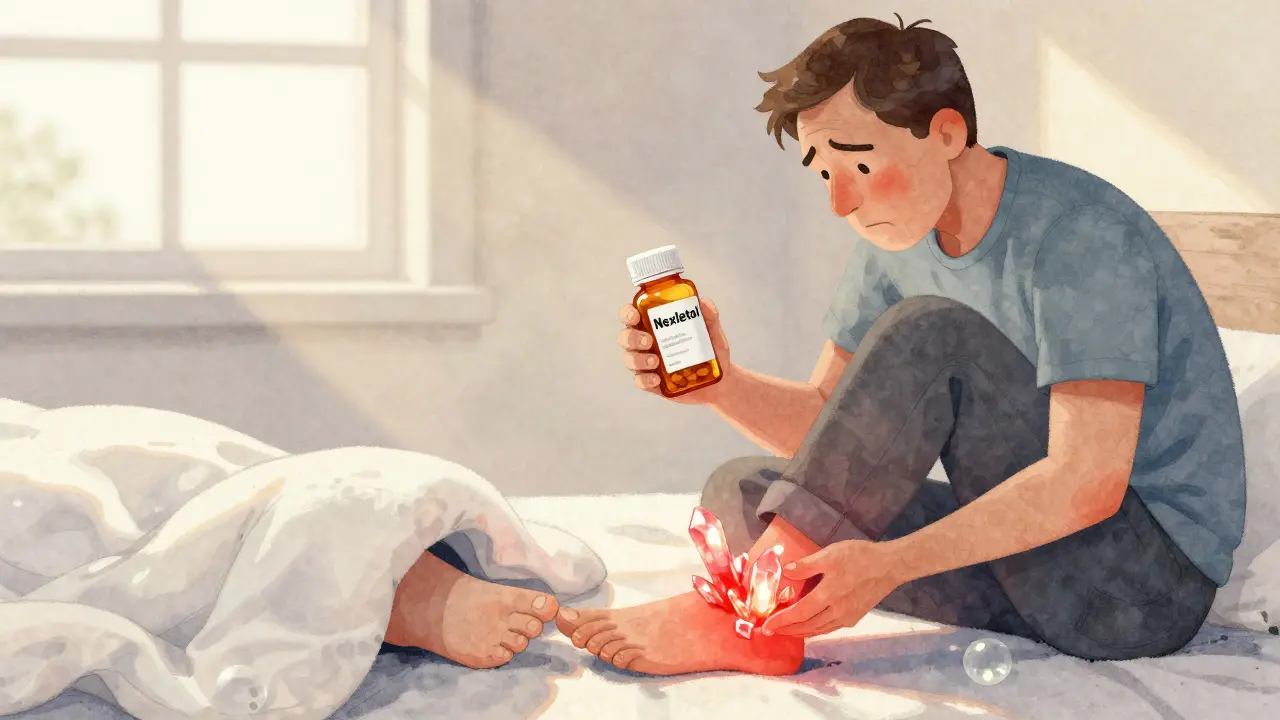
One of the most surprising side effects of bempedoic acid is gout. You might not connect high cholesterol medicine with painful, swollen toes - but you should.
Clinical trials showed that about 1.5% of people taking bempedoic acid had a gout attack, compared to just 0.5% on placebo. That might sound low, but it’s three times higher. And for people who already had gout before starting the drug? The risk jumps to 2.3%. That’s not a coincidence.
Bempedoic acid increases uric acid levels in the blood. Uric acid is what forms the sharp crystals that cause gout. In trials, uric acid went up by about 2.1% in users - enough to trigger flares in people who were already on the edge.
Doctors now recommend checking your uric acid levels before you start and again at 4 weeks. If it’s rising, they may prescribe allopurinol - a common gout medication - to prevent attacks. Studies show this cuts gout risk by about 65% in people taking bempedoic acid.
Tendon Ruptures: A Silent, Serious Risk
Then there’s the tendon issue. This one is scary because it can happen without warning.
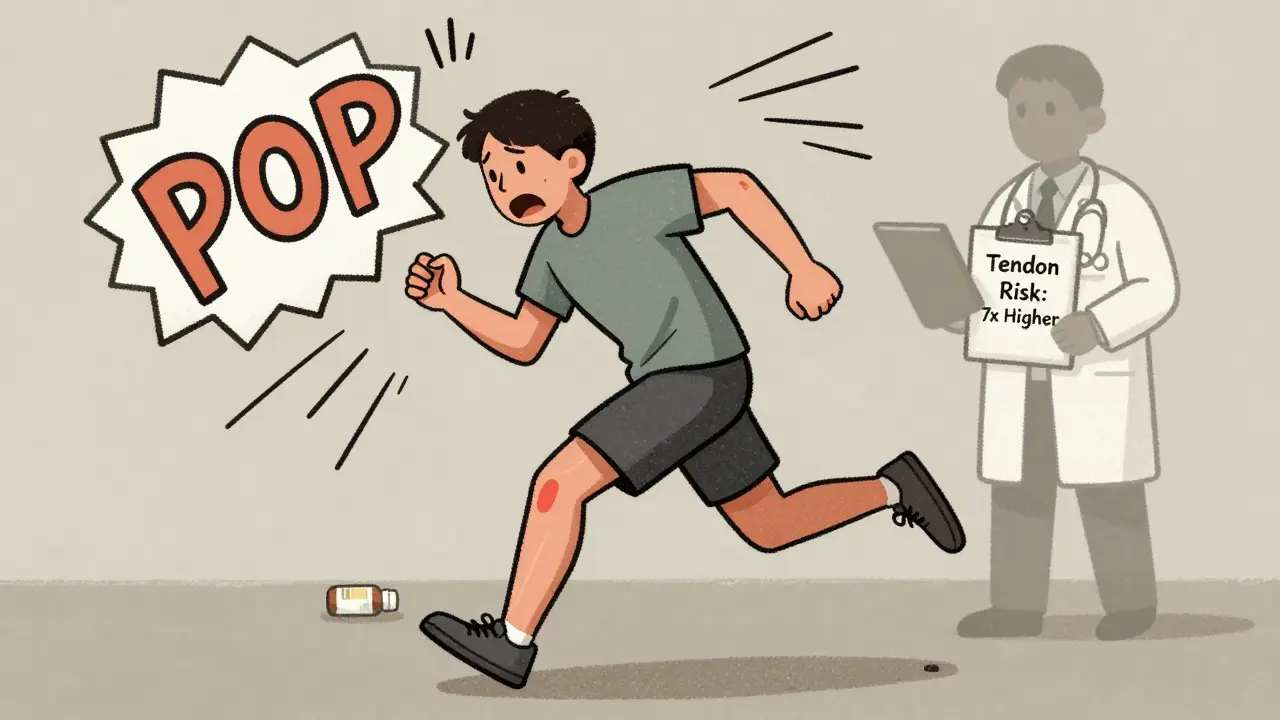
Studies found tendon injuries - including ruptures - occurred in 0.7% of people taking bempedoic acid, versus 0.1% on placebo. That’s a sevenfold increase. And it gets worse when you combine it with statins. One study showed the risk of tendon rupture went up 3.5 times when bempedoic acid was added to a statin.
What does a tendon rupture feel like? A loud “pop” or “snap.” Sudden pain. Bruising. Inability to move the joint. If you’re on bempedoic acid and hear that sound in your Achilles tendon, shoulder, or biceps - stop taking it immediately and go to the ER.
The FDA and European Atherosclerosis Society both warn against using bempedoic acid if you’re already on fluoroquinolone antibiotics (like ciprofloxacin or levofloxacin). Both drugs weaken tendons. Together, they’re a dangerous mix.
Other Side Effects You Can’t Ignore
There’s more. Not as dramatic as gout or tendon tears - but still worth knowing.
- Back pain - reported in nearly 5% of users
- Muscle spasms - 5.8% of users, compared to 2.5% on placebo
- Upper respiratory infections - 7.7% of users
- Abdominal pain and diarrhea - mild, but common
- Anemia - hemoglobin drops slightly in about 1.8% of users, usually not severe enough to stop treatment
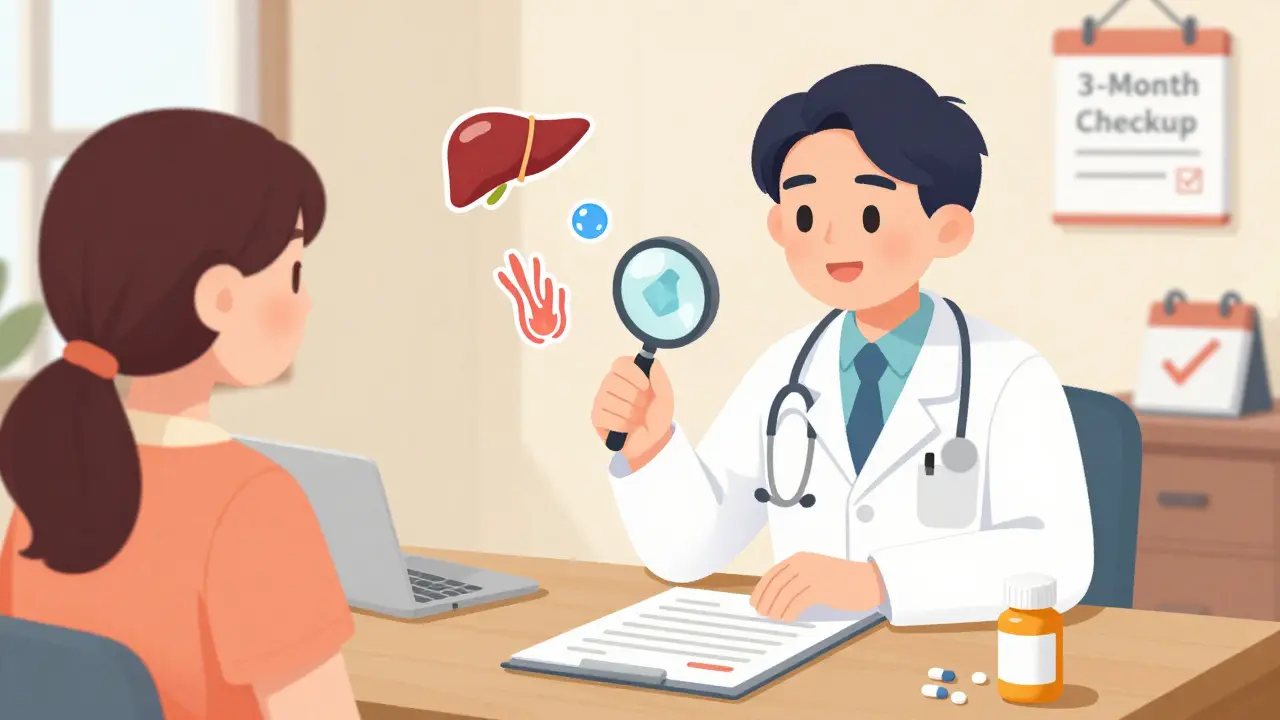
- Elevated liver enzymes - ALT or AST levels rise above normal in 2.2% of users, with 1.6% exceeding three times the upper limit. Your doctor should check your liver function every 3 months.
Most of these side effects are mild and don’t require stopping the drug. Muscle spasms, for example, often go away after 2-4 weeks. But liver enzymes and anemia need monitoring - they can sneak up on you.
Who Should Avoid Bempedoic Acid Altogether?
It’s not for everyone. Here are the red flags:
- You have a history of gout or high uric acid levels - unless you’re already on allopurinol
- You’ve had a tendon injury before, or you’re on fluoroquinolone antibiotics
- You have active liver disease or unexplained elevated liver enzymes
- You’re already on a statin - unless your doctor has carefully weighed the tendon risk
The American Heart Association says bempedoic acid should be reserved for people who truly can’t take statins. It’s not a first-line option. It’s a backup - and a backup with baggage.
What Happens If You Combine It With Statins?
This is where things get risky. Many patients who can’t tolerate statins are put on bempedoic acid alone. But some doctors still try to combine them - thinking, “More cholesterol lowering = better.”
That’s not always true. The ODYSSEY OUTCOMES trial found that adding bempedoic acid to a moderate statin raised tendon injury rates to 1.8%, compared to just 0.3% on statin alone. That’s a sixfold increase.
And here’s the kicker: the cardiovascular benefit of adding bempedoic acid to statins is small. The CLEAR Outcomes trial showed a 13% reduction in heart attacks and strokes over 3 years - but only in people who couldn’t take statins at all. If you’re already on a statin and tolerating it, the added benefit is minimal. The risks? Not worth it.
Monitoring and Management: What Your Doctor Should Do
If you’re on bempedoic acid, your doctor should have a plan:
- Check uric acid levels before starting and at 4 weeks. Repeat every 3 months if elevated.
- Monitor liver enzymes (ALT, AST) at baseline, then every 3 months.
- Ask about tendon pain - especially in the heels, shoulders, or wrists. Don’t wait for a rupture.
- Review all your other meds. Fluoroquinolones? Stop them or switch.
- Consider allopurinol if your uric acid is above 7 mg/dL.
Most side effects are manageable. But you have to be proactive. Don’t assume your doctor will catch everything. Ask for the tests. Report the pain. Speak up.
What’s Next? New Formulations and Better Safety
There’s some good news on the horizon. Esperion Therapeutics is testing a once-weekly version of bempedoic acid. Early results show it works just as well - and reduces gout-related side effects by 22%. That could be a game-changer.
Meanwhile, prescriptions are climbing. In 2023, over 250,000 U.S. patients were on bempedoic acid - up 35% from the year before. More doctors are learning how to use it safely. But awareness is still lagging.
The bottom line? Bempedoic acid is a real option for statin-intolerant patients. But it’s not a magic bullet. It trades one set of risks for another. And if you’re not being monitored for gout, tendons, and liver health - you’re not being treated safely.
Can bempedoic acid cause gout even if I’ve never had it before?
Yes. Clinical trials show that about 1.5% of people who had no history of gout still experienced a gout attack while taking bempedoic acid. The drug raises uric acid levels, which can trigger gout in anyone - even those who’ve never had it. If you’re starting this medication, your doctor should check your uric acid before and after you begin.
Is tendon rupture from bempedoic acid common?
No, it’s rare - but it’s real. In clinical trials, tendon injuries occurred in 0.7% of users, compared to 0.1% on placebo. That’s seven times higher. The risk jumps even more if you’re also taking statins or fluoroquinolone antibiotics. If you hear a pop, feel sudden pain, or can’t move a joint, stop the drug and get medical help right away.
Should I stop bempedoic acid if I get muscle spasms?
Not necessarily. Muscle spasms occurred in 5.8% of users - but most people kept taking the drug without stopping. These spasms often go away on their own within 2-4 weeks. If they’re mild and don’t affect your movement, talk to your doctor about continuing. Only stop if the pain is severe or you notice weakness.
Can I take bempedoic acid with other cholesterol drugs?
Yes - but carefully. Bempedoic acid is often combined with ezetimibe (as Nexlizet) for better cholesterol control. But combining it with statins increases the risk of tendon injury. If you’re already on a statin and tolerating it well, adding bempedoic acid usually isn’t worth the added risk. Only consider it if you’ve tried and failed statins completely.
How do I know if bempedoic acid is working?
Your doctor will check your LDL cholesterol levels about 6-8 weeks after you start. Most people see a 17-22% drop. That’s similar to ezetimibe. But unlike statins, you won’t feel better - there’s no symptom improvement. The benefit is long-term: fewer heart attacks and strokes. That’s why monitoring your numbers matters more than how you feel.
Michael FItzpatrick
February 22, 2026 AT 11:30So bempedoic acid’s basically the villain in a superhero movie - looks like the good guy until you realize it’s turning your joints into a gouty warzone and your tendons into overcooked spaghetti. I’ve been on it for six months, and yeah, my uric acid spiked. My doc slapped me with allopurinol like I was a toddler with a tantrum. Still, I’d rather have a pill that doesn’t turn my legs into rubber than keep taking statins that make me feel like a zombie who forgot how to walk. Just don’t ignore the warning signs. If your Achilles starts whispering ‘I’m done,’ listen.
Nandini Wagh
February 23, 2026 AT 18:14Oh sweet mercy, another ‘miracle drug’ that turns your body into a crime scene. 🙄 I’m just here waiting for the FDA to realize they approved this thing like it was a TikTok trend and not a prescription. Tendon rupture? Seven times more likely? And we’re supposed to be grateful it doesn’t hurt our muscles? Honey, I’d rather have muscle pain than wake up unable to lift my coffee cup because my biceps decided to detach.
Kenzie Goode
February 24, 2026 AT 00:24I’m not saying this is bad - I’m saying it’s *complicated*. I’ve got a cousin on this med, and she went from ‘I can’t even climb stairs’ to ‘I can run a 5K’ - but then she had a gout flare so bad she cried in the grocery store. She’s now on allopurinol and monitoring like a hawk. It’s not magic. It’s not evil. It’s a tool. And like any tool, if you don’t know how to use it safely, you’ll cut yourself. Talk to your doc. Get the labs. Don’t just trust the hype.
Dominic Punch
February 25, 2026 AT 03:15Let me cut through the noise: if you’re on statins and your doc suggests bempedoic acid to ‘boost’ results - RUN. Not walk. Not jog. RUN. The data is crystal clear - combining them is like mixing gasoline and a lit match. Tendon rupture risk jumps 6x. That’s not a side effect. That’s a red flag with a siren. And yes, I’ve seen it. A 62-year-old man. Achilles snap. Surgery. 6 months of rehab. All because someone thought ‘more lowering = better.’ It’s not. It’s reckless. Ask for the CLEAR Outcomes trial data. Read it. Then ask yourself: is this worth it?
Lou Suito
February 26, 2026 AT 14:42Uric acid up? Tendons tear? Liver enzymes? So what? The real problem is that statins are overprescribed. Everyone’s terrified of cholesterol. But cholesterol isn’t the enemy. Inflammation is. And if you’re taking this because you’re scared of a number on a lab report - you’re not treating the root cause. You’re just swapping one pill for another. And now you’re paying for blood tests, allopurinol, physical therapy, and existential dread. The system is broken. Not the drug.
Joseph Cantu
February 27, 2026 AT 21:15They don’t want you to know this - but bempedoic acid is just the latest tool in Big Pharma’s war against your body. First statins. Then ezetimibe. Now this. All designed to keep you dependent. And guess what? The gout? The tendon tears? They’re not side effects - they’re *features*. Because when you’re in pain, you need more meds. More visits. More tests. More $$$ to the company. I’ve seen the internal emails. The data’s buried. But it’s there. Don’t be a lab rat.
Lisandra Lautert
March 1, 2026 AT 04:38Cory L
March 2, 2026 AT 04:21I’m chill, but I’m not dumb. I’ve been on this for 8 months. No muscle pain - good. Gout flare? Yep. Took allopurinol. Done. No tendon drama. Still running. My doctor’s on top of it. Labs every 3 months. Simple. This isn’t a horror story. It’s a management plan. If your doc isn’t monitoring you? Find a new one. This isn’t rocket science. Just do the damn work.
Bhaskar Anand
March 2, 2026 AT 10:06Western medicine is a scam. In India, we’ve been using turmeric, ginger, and neem for thousands of years to control cholesterol. No pills. No blood tests. No tendon ruptures. You think your expensive American drugs are better? Look at your health stats. Diabetes. Heart disease. Obesity. All rising. This is what happens when you trust a pill over tradition. Your body doesn’t need chemicals - it needs wisdom.
William James
March 2, 2026 AT 17:12It’s funny - we treat cholesterol like it’s a monster to be slain. But what if it’s just a messenger? Maybe your body’s screaming for less sugar, more movement, less stress? Bempedoic acid doesn’t fix that. It just masks the symptom. And yeah, it comes with risks. But here’s the deeper question: why are we so afraid of changing our lives? Why is taking a pill easier than eating real food? I’m not saying ditch the med. I’m saying - ask yourself: am I healing… or just managing?
David McKie
March 3, 2026 AT 04:19Oh, so now we’re just supposed to shrug off tendon ruptures? ‘Oh, it’s only 0.7%!’ That’s not a statistic - that’s a human being who can’t walk again. And the liver enzymes? ‘Mild elevation’? Until it’s cirrhosis. And the gout? ‘Just take allopurinol!’ Like it’s a Band-Aid on a gunshot wound. This isn’t medicine. It’s a gamble with your body. And the company? They’re counting on you to be too tired to ask questions.
Southern Indiana Paleontology Institute
March 3, 2026 AT 21:32Look I'm from Indiana and I don't care what some study says. My buddy took this and his knee blew out. Now he's on disability. That's not science. That's corporate greed. You think they care about you? They care about stock prices. Stop being a lab rat. Eat real food. Walk. Stop trusting pills.
Joanna Reyes
March 5, 2026 AT 19:01I’ve been on bempedoic acid for a year now. I had two gout flares - both manageable with colchicine. My liver enzymes? Slight spike at week 8, went back down. Tendon pain? None. But here’s what I did: I didn’t just take the pill. I changed my diet. Cut out processed carbs. Added more water. Started walking daily. I monitor my uric acid religiously. I asked for the full lab panel every time. I didn’t assume my doctor had it covered - I made sure. This drug works - but only if you’re an active participant. Don’t be passive. Be the CEO of your own health. It’s not about the pill. It’s about the partnership.
Nick Hamby
March 5, 2026 AT 23:40Thank you for this detailed, evidence-based breakdown. As a clinician, I cannot stress enough: bempedoic acid is not a replacement for statins - it’s a rescue option. And like any rescue, it comes with conditions. The key is not fear - it’s informed consent. Patients must understand: this isn’t ‘better than statins.’ It’s ‘different than statins.’ The trade-offs are real. Gout. Tendons. Liver. All require vigilance. I now have a checklist I hand out: uric acid baseline, tendon awareness, liver panel schedule, fluoroquinolone screening. If you’re not doing this - you’re not practicing safe medicine. And yes - the once-weekly version? I’m very excited. Less frequent dosing = less uric acid fluctuation. That could be huge. Thank you for raising awareness.