
Boxed Warning Risk Assessment Tool
How This Tool Works
This assessment helps you understand if you might be at higher risk for serious side effects associated with boxed warnings. Based on factors like age and health conditions, it identifies potential risks based on the FDA's latest boxed warning criteria. This is not medical advice.
Important Note:
Boxed warnings indicate serious but rare risks. This tool helps identify potential risk factors, but it does not replace a conversation with your doctor about your specific situation.
Your Health Information
Every year, the FDA updates its list of boxed warnings-the most serious safety alerts for prescription drugs. These aren’t just fine print. They’re black borders on drug labels that scream: “This can kill you if used wrong.” In 2024, 47 new or revised boxed warnings were issued, up from 42 in 2023. That’s not noise. It’s a signal. The FDA is getting better at spotting hidden dangers after drugs hit the market, and what’s changing matters more than ever.
What Exactly Is a Boxed Warning?
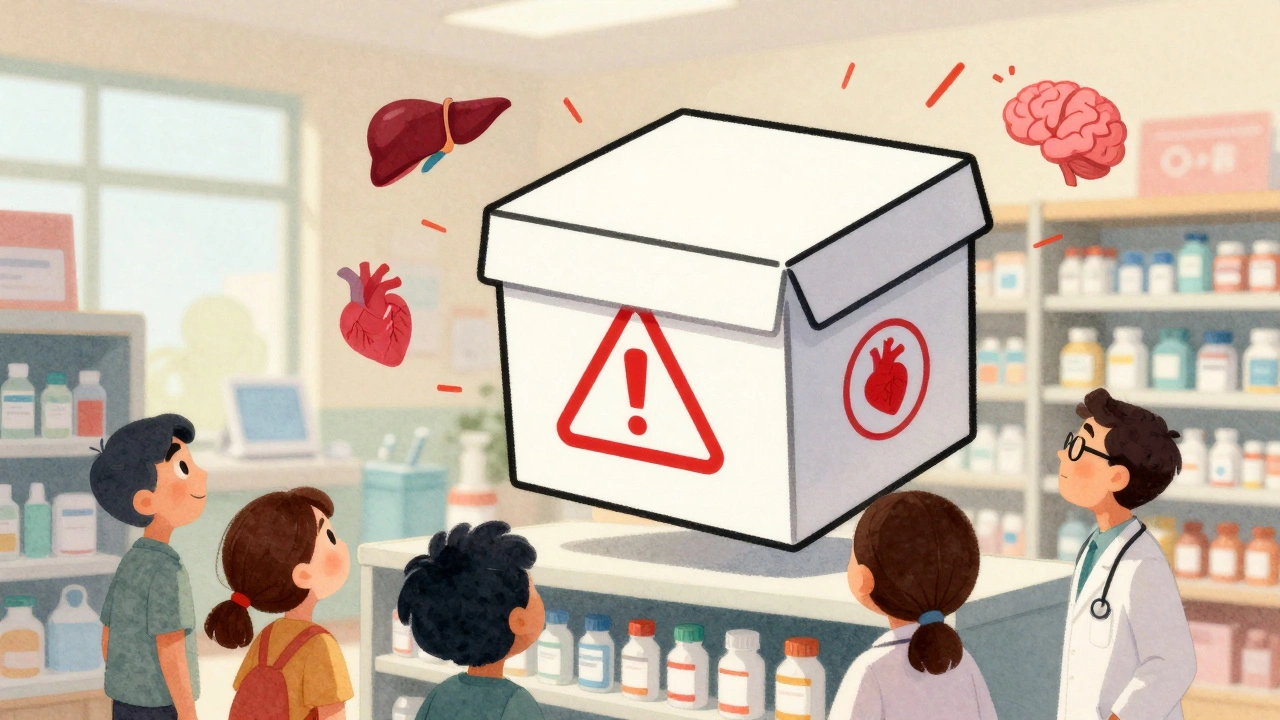
A boxed warning, sometimes called a black box warning, is the FDA’s strongest safety alert. It appears at the top of a drug’s prescribing information, surrounded by a thick black border. It’s not optional. It’s required when evidence shows a drug can cause serious, preventable, or even fatal side effects. Think: liver failure, heart attacks, suicidal thoughts, or sudden death from respiratory depression. These warnings aren’t guesses. They’re based on real-world data-thousands of patient reports, hospital records, and long-term studies. The FDA’s Sentinel Initiative now tracks over 200 million patient records to find patterns doctors might miss during clinical trials. That’s how they caught the link between certain immune checkpoint inhibitors and rare but deadly heart inflammation (myocarditis), leading to new boxed warnings in 2023.What Changed in 2024?
The biggest shift in 2024 wasn’t just the number of warnings-it was their precision. The FDA now demands specific, measurable actions. Gone are vague phrases like “monitor for liver toxicity.” New warnings now say: “Check ALT and AST levels at baseline, then monthly for the first six months.” That’s a game-changer. Here’s what actually changed:- GLP-1 agonists (like semaglutide and tirzepatide): New warnings now specify that patients under 30 have a 1.2% risk of acute pancreatitis, and those with a history of medullary thyroid cancer must avoid these drugs entirely.
- Immune checkpoint inhibitors (used in melanoma and lung cancer): Boxed warnings now include exact incidence rates for myocarditis (0.8% in patients over 65, 2.1% under 40) and require ECG and troponin testing before each dose.
- Antibiotics like moxifloxacin: The QT prolongation warning now includes a rule: “Do not prescribe if QTc interval exceeds 450 ms in men or 470 ms in women.”
- Valproic acid: The hepatotoxicity warning now requires liver enzyme tests at weeks 1, 4, and 12-not just “within six months.”
Why It Matters to Patients
You might think, “I’m not a doctor. Why should I care?” But here’s the truth: boxed warnings shape what drugs your doctor prescribes-and whether they prescribe anything at all. Take warfarin. It’s had a boxed warning for major bleeding since the 1990s. Yet it’s still widely used because there’s no good alternative. But now, newer blood thinners like apixaban carry their own boxed warnings-this time for spinal hematoma if you’re getting an epidural. That means your anesthesiologist might delay your knee surgery until you’ve been off the drug for five days. That’s a boxed warning changing your treatment timeline. Or consider isotretinoin (Accutane). Its boxed warning for birth defects led to the iPledge program, which requires two negative pregnancy tests before each refill. Patients hate it. But the system works: fetal exposure dropped by 97% since 2006. The problem? Many patients never see the warning. Doctors assume pharmacists explain it. Pharmacists assume doctors did. The result? A 2022 Medscape survey found that 38% of patients on drugs with boxed warnings didn’t know they had one.Why It Matters to Doctors
For clinicians, boxed warnings are both a shield and a burden. On one hand, they protect doctors from lawsuits. If you follow the exact monitoring steps in the warning and a patient still has a bad reaction, you’ve done your part. On the other hand, they create alert fatigue. A 2023 study in JAMA Internal Medicine found that 52% of primary care doctors ignore boxed warnings for common drugs like NSAIDs because they’ve seen them for decades. “It’s background noise,” one doctor told researchers. But that’s dangerous. A 2022 analysis showed that 68% of all fatal NSAID-related GI bleeds occurred in patients over 75 who had been on the drug for more than six months-exactly the group the warning targets. Worse, electronic health records (EHRs) often trigger the same warning for every patient, no matter their risk. A 2023 Reddit thread from pharmacists revealed that 61% of warfarin warning overrides happened because the EHR didn’t show the patient’s last INR result. The system didn’t fail-the data didn’t get in.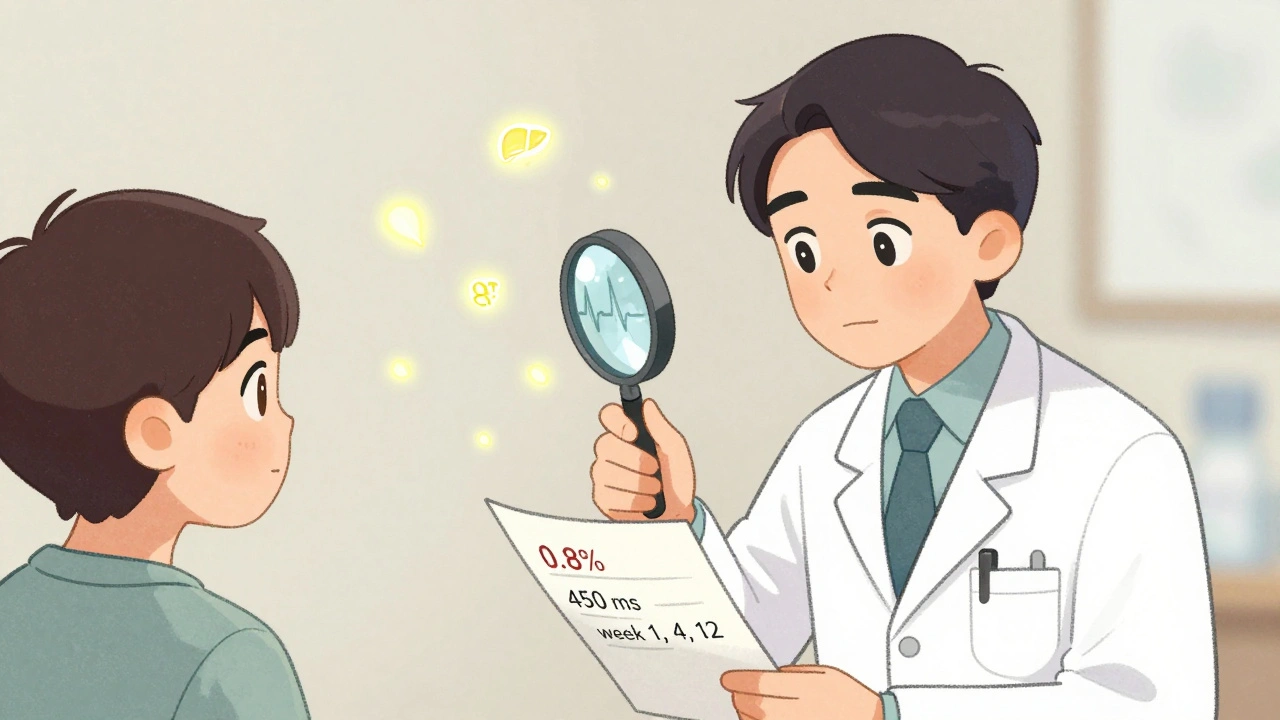
How Hospitals Are Adapting
Hospitals aren’t waiting for the FDA to fix this. They’re building their own safeguards. At Henry Mayo Newhall Hospital, every fentanyl patch prescription now requires three checks: the prescriber confirms opioid tolerance, the pharmacist verifies it, and the nurse double-checks before giving it. That’s triple verification for a single warning. The Joint Commission now requires all accredited hospitals to have written protocols for boxed warning drugs. That means training. That means checklists. That means documenting that the doctor acknowledged the warning in the EHR. And it’s working. A 2024 audit of 47 hospitals showed a 29% drop in preventable adverse events linked to boxed warning drugs since 2021.The Bigger Picture: Risk vs. Reward
Not all boxed warnings are created equal. Oncology drugs have the most warnings-112 in total. That’s because cancer treatments are brutal by design. A warning that says “fatal if injected into the spine” for vincristine isn’t a red flag-it’s a necessary boundary. Without it, someone might accidentally give it the wrong way. But for drugs like antidepressants or painkillers, the line blurs. A 2023 JAMA analysis found that 43% of boxed warnings lack clear, actionable steps. If a warning says “risk of suicidal thoughts,” but doesn’t say “screen at week 2 and week 6,” what’s a doctor supposed to do? That’s why the FDA’s 2024 rule requiring quantified risk data is so important. Instead of saying “may cause depression,” now it says: “1 in 80 patients under 25 developed suicidal ideation within 30 days.” That’s data. That’s clarity. That’s what lets doctors weigh real risk against real benefit.What Comes Next?
The FDA’s 2023-2027 plan aims to issue 25% more boxed warnings based on real-world data. That means more alerts for long-term risks of GLP-1 drugs, immune therapies, and even common pain relievers. They’re also testing “dynamic warnings”-digital alerts that change based on your age, kidney function, or other meds. If you’re on a blood thinner and your INR is high, your EHR might show a red alert. If your INR is stable? The warning fades to yellow. Early trials cut alert fatigue by 37%. The goal isn’t to scare people. It’s to make sure the right person gets the right drug at the right time-with the right safeguards.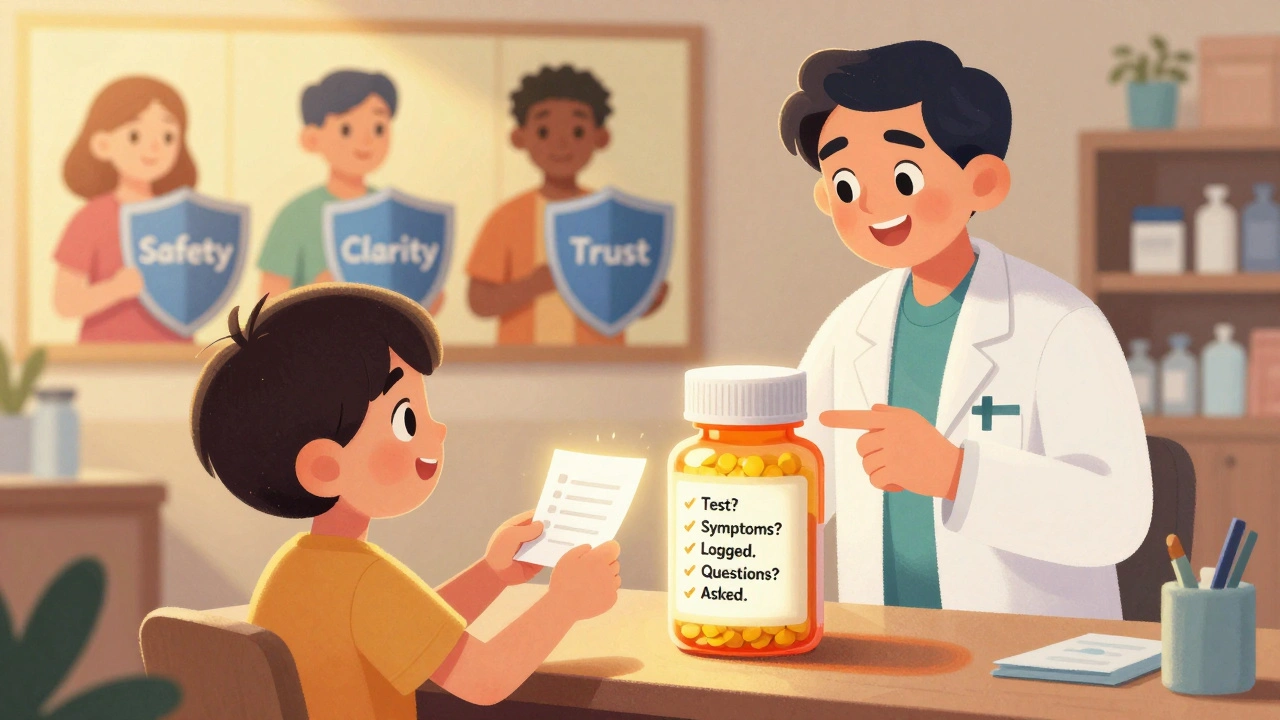
What You Should Do
If you’re on a prescription drug:- Ask your pharmacist: “Does this have a boxed warning?”
- Ask your doctor: “What exactly should I watch for?” and “How often do I need tests?”
- Keep a log of symptoms-fatigue, bruising, chest pain, mood changes.
- Don’t assume your doctor knows your full history. Bring a list of all meds, even OTC ones.
- Understand that a boxed warning doesn’t mean “don’t take this.” It means “take it carefully.”
- Ask for written instructions. Many hospitals now give patients a one-page summary of the warning and what to do.
Frequently Asked Questions
Are boxed warnings the same as side effects?
No. Side effects are common, mild reactions like nausea or dizziness. Boxed warnings are for rare but life-threatening risks-things like sudden death, organ failure, or severe allergic reactions. They’re not about discomfort. They’re about survival.
If a drug has a boxed warning, should I avoid it?
Not necessarily. Many life-saving drugs have boxed warnings. Warfarin, insulin, chemotherapy agents-they all carry serious risks. The question isn’t whether the warning exists, but whether the benefit outweighs the risk for you. Talk to your doctor about your personal risk factors: age, other conditions, kidney or liver function.
Why do some drugs get boxed warnings years after they’re approved?
Clinical trials involve thousands of patients. Real-world use involves millions. Rare side effects-like one in 10,000-only show up after years of use. That’s why the FDA monitors drug safety after approval. The 2022 discovery of myocarditis in young patients taking immune checkpoint inhibitors happened because doctors reported cases over time. That’s how the system works.
Can a boxed warning be removed?
Yes, but it’s rare. It usually happens when new data shows the risk is lower than thought, or when a safety protocol (like mandatory testing) makes the risk manageable. In 2021, the boxed warning for metformin was removed after decades of evidence showed it was safe for patients with mild kidney disease. That’s progress.
Do boxed warnings affect drug prices?
Sometimes. After a new boxed warning, sales can drop 15-70%, depending on the drug and how much media attention it gets. But if there’s no alternative-like with insulin or warfarin-sales barely budge. The price doesn’t change, but how often it’s prescribed might.
joanne humphreys
December 7, 2025 AT 05:18The FDA’s shift toward quantified risk data is long overdue. For years, warnings were vague enough to be meaningless-'may cause liver damage'-while clinicians scrambled to interpret what 'may' even meant. Now we have actual numbers: 1 in 80 young adults on GLP-1s develop suicidal ideation within 30 days. That’s not speculation. That’s data you can build a clinical decision around. Finally, the system is treating physicians like adults who can handle nuance.
Chris Park
December 7, 2025 AT 09:45Let’s be real-this is all theater. The FDA doesn’t care about patient safety. They care about covering their asses after another pharmaceutical scandal. They wait until people die, then slap on a black box like it’s a Band-Aid on a hemorrhage. Meanwhile, the same companies that made billions off these drugs get a pass. This isn’t regulation-it’s damage control with a PowerPoint.
Nigel ntini
December 9, 2025 AT 00:44Chris, I hear your frustration-but let’s not throw the baby out with the bathwater. Yes, the system’s flawed. But the fact that we’re now requiring ECGs before each checkpoint inhibitor dose? That’s progress. Real, measurable, life-saving progress. I’ve seen patients survive myocarditis because their doctor caught the troponin spike early. That didn’t happen before these warnings got specific. Keep pushing for better, but don’t dismiss the wins.
Kay Jolie
December 9, 2025 AT 05:27Oh honey, the FDA’s 'quantified risk' language? It’s not just a win-it’s a paradigm shift. We’ve moved from 'beware, this might kill you' to 'here’s your exact 2.1% risk profile if you’re under 40 with no cardiac history.' That’s not bureaucracy-that’s precision medicine dressed in regulatory garb. And let’s not forget: the 29% drop in preventable events? That’s not a statistic. That’s 29% of people who got to go home to their families because someone actually followed the protocol. This isn’t paperwork. It’s a lifeline.
pallavi khushwani
December 11, 2025 AT 02:05I’ve been on valproic acid for 8 years. My doctor never mentioned the new testing schedule-weeks 1, 4, 12. I just thought 'monthly blood tests' meant every 30 days. I didn’t know they changed it. Maybe the warnings are better now, but if patients don’t get them explained in plain language, what’s the point? I’m lucky I found out from a Reddit thread. Others aren’t so lucky.
Dan Cole
December 12, 2025 AT 06:38Here’s the uncomfortable truth no one wants to say: boxed warnings are a proxy for liability, not safety. The FDA doesn’t care if you live or die-they care if a lawyer can prove they 'knew and did nothing.' That’s why they demand 'check ALT/AST at baseline and monthly'-because if you skip one test and the patient dies, the hospital gets sued. It’s not about you. It’s about the legal shield. The fact that this saves lives is just a happy side effect.
Billy Schimmel
December 13, 2025 AT 07:34So basically, we’re paying doctors to be alarm clocks that go off every time a drug is prescribed. And half the time, they just hit snooze. Meanwhile, the patient’s left wondering if they’re supposed to be scared, or just confused. Maybe the real solution isn’t more boxes. Maybe it’s fewer drugs that need them.
Max Manoles
December 14, 2025 AT 08:03Just read the FDA’s 2023-2027 plan again. They’re testing dynamic warnings that fade based on INR stability. That’s not just smart-it’s revolutionary. Imagine your EHR adapting to *you*, not screaming the same warning for every 75-year-old on warfarin. This isn’t bureaucracy. It’s AI-assisted clinical judgment. The future isn’t just here-it’s being coded right now. And it’s quiet. And it’s working.