

ALS Doesn’t Have to Mean Giving Up
When someone is diagnosed with ALS, the word survival often feels like a distant goal. But the truth is, two simple, proven interventions-noninvasive ventilation and proper nutrition-can change the course of the disease. They don’t stop ALS from progressing, but they give people more time, more energy, and more control over their daily lives. This isn’t theoretical. It’s backed by decades of research, real patient outcomes, and clinical guidelines from neurologists and respiratory specialists across North America and Europe.
Consider this: without any intervention, the average life expectancy after diagnosis is 3 to 5 years. With noninvasive ventilation (NIV) and timely nutritional support, that number can stretch to 4, 5, even 6 years or more. That’s not just extra months-it’s extra birthdays, extra conversations, extra moments at the dinner table. And the best part? These strategies don’t require surgery or experimental drugs. They’re practical, accessible, and covered by most insurance plans.
Noninvasive Ventilation: Breathing Easier When Muscles Fail
ALS attacks the nerves that control your muscles-including the diaphragm, the main muscle that pulls air into your lungs. As it weakens, breathing becomes shallow. You wake up tired, with a headache. You get out of breath just talking. At night, oxygen levels drop. This isn’t just uncomfortable-it’s dangerous. Left unchecked, respiratory failure is the leading cause of death in ALS.
Noninvasive ventilation steps in to do the work your muscles can’t. A mask fits over your nose-or your nose and mouth-and delivers pressurized air through a machine. Most people use a BiPAP device, which gives you a stronger push of air when you inhale and less pressure when you exhale. This keeps your lungs inflated, clears out carbon dioxide, and lets you sleep deeply again.
The science is clear. A 2006 study showed ALS patients using NIV lived an average of 453 days longer than those who didn’t. Another analysis found a 7-month survival boost on average. These aren’t small numbers. They’re life-changing.
Doctors don’t wait until you’re gasping for air. Guidelines from the Canadian Thoracic Society and the American Academy of Neurology say to start NIV when you have symptoms like morning headaches, daytime sleepiness, or when your forced vital capacity (FVC) drops below 80% of what’s expected for your age and height. Some insurance companies in the U.S. still require FVC below 50% before approving coverage, which delays help-sometimes too late. Don’t wait for permission. Talk to your neurologist early.
How NIV Works in Real Life
Setting up NIV isn’t like buying a new phone. It takes patience, support, and a few tweaks.
Most people start with a nasal mask. It’s lightweight, quiet, and doesn’t cover the whole face. But if you breathe through your mouth at night-or if your nose gets stuffy-a full-face mask might be better. The machine settings are adjusted over time: initial pressure might be set at 12-14 cm H₂O for inhalation and 4-6 cm H₂O for exhalation, with a backup breathing rate of 12 breaths per minute. These aren’t fixed. They’re fine-tuned based on blood tests, sleep studies, and how you feel.
Adherence is the biggest hurdle. In the first 30 days, many patients use NIV only 5 to 10 hours a week. Skin redness, dry mouth, claustrophobia, and the feeling of fighting the air pressure are common complaints. But here’s what most people don’t tell you: those problems get better.
By the end of a year, 80% of patients who stick with it are using NIV over 27 days a month-often 6 to 8 hours a night. Why? Because they feel the difference. One ALS forum user wrote: “After two weeks, I stopped waking up with my head pounding. I could actually remember my dreams.” Another said, “I didn’t realize how exhausted I was until I wasn’t anymore.”
For those whose breathing declines further, portable ventilators like the Philips Trilogy 100 or 106 offer more flexibility. These machines can switch to volume-controlled modes, monitor oxygen levels, and run on battery for up to 12 hours. That means you can use them during the day-while watching TV, eating, or even walking around the house. They cost more-$6,000 to $10,000-but for many, the freedom they provide is worth it.

Nutrition: Keeping Weight and Strength When Swallowing Gets Hard
As ALS progresses, the muscles that control swallowing weaken. Eating becomes slow, tiring, and risky. Food can go down the wrong way, leading to pneumonia. Weight loss follows. And losing weight in ALS isn’t like losing weight from dieting. It’s a sign your body is running out of fuel to fight the disease.
The solution isn’t to eat more. It’s to eat smarter-and more safely. That’s where a percutaneous endoscopic gastrostomy (PEG) tube comes in. It’s a small tube placed directly into your stomach through a minor procedure. Food and liquids go straight in, bypassing your mouth and throat entirely.
Before PEG, many patients lost 12% or more of their body weight in six months. After PEG, that number drops to under 1%. Studies show that getting a PEG tube before your lung function falls below 50% or your BMI drops below 18.5 can add about four months to your life. And that’s not all. People report better energy, less choking, and the ability to enjoy meals with family again-even if they’re only tasting, not swallowing.
Some worry that a feeding tube means giving up. It’s the opposite. It’s taking back control. You’re not giving up food-you’re giving up the fear of it.
The procedure takes about 30 minutes under light sedation. Most people go home the same day. Recovery is quick. Within a week, you’re feeding through the tube. You can still eat by mouth if you want-just not as the main source of nutrition. Many patients say the best part? No more meals that last an hour. No more coughing fits. No more watching your favorite foods disappear because you’re too tired to chew.
Timing Is Everything
Both NIV and PEG work best when started early. But “early” doesn’t mean the day you’re diagnosed. It means before you’re in crisis.
For NIV: start when you have symptoms or your FVC drops below 80%. Don’t wait for oxygen levels to crash. Don’t wait for your doctor to bring it up. Ask for a sleep study or respiratory evaluation if you’re tired all day or snoring more than usual.
For PEG: get it done before your FVC falls below 50%. Why? Because if your lungs are too weak, the sedation for the procedure becomes riskier. If you’re already underweight, your body has less reserve to heal. If you’re struggling to swallow, you’re already losing ground.
One of the biggest mistakes families make? Waiting until the patient says, “I can’t eat anymore.” By then, it’s often too late for the best outcomes. The goal isn’t to wait for disaster. It’s to prevent it.
Combining Both: The Real Power Move
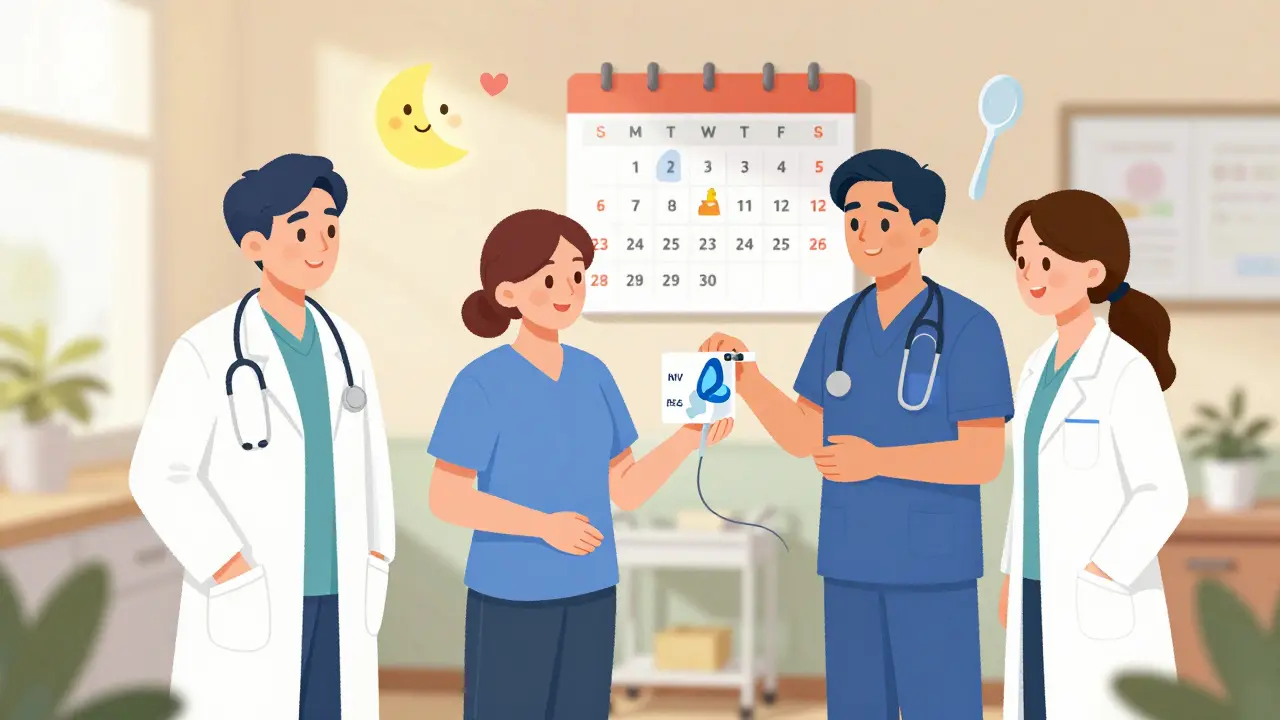
Using NIV alone helps. Using PEG alone helps. But using both? That’s where the biggest gains happen.
A 2021 multinational study found that ALS patients who received both interventions lived 12.3 months longer on average than those who received neither. That’s over a year. That’s a holiday season. That’s a grandchild’s first steps. That’s not luck-it’s strategy.
Why does this work together? Because nutrition gives your body the energy to handle breathing. And breathing lets you stay strong enough to keep eating. It’s a cycle. Break one, and the other suffers. Keep both going, and your body can keep fighting.
Specialized ALS clinics that offer both services-respiratory therapy, nutrition counseling, speech therapy, and physical therapy-see a 7.5-month survival advantage over general care. That’s why multidisciplinary care is now the gold standard.
What About the Challenges?
Yes, there are hurdles. NIV masks can irritate your skin. PEG tubes need cleaning. Both require daily attention. Insurance can be slow. Some family members resist, thinking it’s “giving up.”
But here’s what patients say after six months:
- “I didn’t know I was so tired until I wasn’t.”
- “I can laugh again without choking.”
- “I went to my granddaughter’s recital. I didn’t miss it.”
- “I slept through the night for the first time in a year.”
Mask discomfort? Try different types-silicone, gel cushions, nasal pillows. Skin breakdown? Change positions, use barrier creams, take short breaks. Difficulty exhaling? Adjust pressure settings. It’s not perfect, but it’s manageable.
And if you’re worried about being a burden? You’re not. These tools aren’t about prolonging suffering. They’re about preserving dignity, connection, and the ability to live-not just exist.
Where to Start Today
If you or someone you love has ALS, here’s what to do now:
- Ask your neurologist for a referral to a respiratory therapist and a dietitian who specialize in ALS.
- Get a baseline FVC test and sleep study-even if you feel fine.
- Discuss PEG tube placement before your FVC drops below 60%.
- Try NIV for a week, even if just at night. See how you feel.
- Join an ALS support group. Talk to people who’ve been there. Their stories are more powerful than any guideline.
You’re not alone in this. Thousands have walked this path. And many of them are still here-because they chose to act before it was too late.
Is noninvasive ventilation only for nighttime use?
No. While most people start with NIV at night, many switch to portable ventilators like the Philips Trilogy as their breathing weakens. These devices can be used during the day for walking, eating, or relaxing. Daytime use becomes necessary when lung function drops below 50%, and many patients report improved energy and reduced fatigue when using NIV throughout the day.
Does using a feeding tube mean I can’t eat by mouth anymore?
Not at all. A PEG tube supplements nutrition-it doesn’t replace eating. Many people continue to taste food, enjoy meals with family, and eat small amounts by mouth. The tube ensures you get enough calories and protein even when swallowing becomes difficult or unsafe. It’s about safety and sustainability, not giving up pleasure.
How do I know if I’m using NIV enough?
Modern NIV machines track usage. Look for data showing at least 4 hours of use per night, 5 or more nights a week. Studies show this is the minimum needed for survival benefit. If your device shows less than that, talk to your respiratory therapist. Adjusting the mask, pressure, or timing can make a big difference.
Can people with bulbar ALS use NIV successfully?
Yes. In the past, doctors thought bulbar ALS (affecting speech and swallowing) made NIV less effective. But a 2013 study showed no difference in survival benefit between bulbar and non-bulbar patients using NIV. The key is using the right mask-full-face masks often work better for those with weak jaw control or mouth breathing.
What if my insurance won’t cover NIV or PEG?
Insurance denials are common, especially if they require FVC below 50%. But you have options. Appeal the decision with your doctor’s letter citing AAN and CTS guidelines. Contact the ALS Association-they offer equipment loan programs and financial aid. Some manufacturers also have patient assistance programs. Don’t take “no” as final.
Are there alternatives to PEG for nutrition?
Nasogastric (NG) tubes are an option for short-term use, but they’re not ideal for long-term care. They’re uncomfortable, can slip out, and increase the risk of aspiration. PEG is the gold standard because it’s more stable, easier to manage, and safer over time. For those who can’t tolerate PEG, a radiologically placed gastrostomy (RIG) is another alternative, but PEG remains the most common and effective method.
Kacey Yates
January 29, 2026 AT 17:51Keith Oliver
January 30, 2026 AT 04:37Ryan Pagan
January 31, 2026 AT 18:38Robin Keith
February 1, 2026 AT 11:44ryan Sifontes
February 1, 2026 AT 18:43Sheryl Dhlamini
February 2, 2026 AT 08:04LOUIS YOUANES
February 3, 2026 AT 07:27Megan Brooks
February 3, 2026 AT 12:33Andy Steenberge
February 5, 2026 AT 10:49