
Hair Loss from Steroids: Causes, Fixes, and What Really Works
When people talk about hair loss from steroids, the thinning or shedding of hair caused by synthetic hormones like anabolic steroids or corticosteroids. Also known as steroid-induced alopecia, it’s not just bad luck—it’s a direct biological response to hormone shifts in your body. This isn’t the same as male pattern baldness, though the results can look similar. The difference? It’s preventable. And if you’re taking steroids—whether for bodybuilding, medical treatment, or performance—you need to know how they affect your scalp.
Anabolic steroids, synthetic versions of testosterone used to build muscle or treat hormonal deficiencies. Also known as testosterone derivatives, they’re the main culprits behind rapid hair thinning in men and women who use them regularly. These drugs don’t just increase muscle mass—they also boost levels of dihydrotestosterone (DHT), a hormone that shrinks hair follicles over time. Once follicles start shrinking, hair grows back thinner, then stops growing at all. It’s not magic. It’s chemistry. And it’s happening right now if you’re on a cycle and noticing more hair in your brush or shower drain.
Corticosteroids, anti-inflammatory drugs like prednisone used for asthma, eczema, or autoimmune conditions. Also known as systemic steroids, they can cause hair loss too—but in a different way. Instead of boosting DHT, they disrupt the hair growth cycle, pushing more follicles into the resting phase. This leads to diffuse shedding, not just a receding hairline. You might notice your whole scalp feels thinner, not just the temples or crown. It’s temporary for many, but not always. And if you’re taking these long-term, your scalp doesn’t get a break.
Women are just as vulnerable. Even small doses of steroids can trigger hormonal chaos. A rise in androgens can lead to fine, wispy hair across the scalp—not patchy bald spots, but overall reduction in volume. It’s easy to miss until it’s too late. And while some people think stopping the steroid fixes everything, that’s not always true. Once follicles are miniaturized, they may never recover without intervention.
What actually helps? First, stop the source if you can. But if you’re on steroids for health reasons, you can’t just quit. That’s where targeting DHT comes in. Finasteride blocks the enzyme that turns testosterone into DHT. Minoxidil wakes up dormant follicles. Neither is a magic bullet, but together, they’ve helped thousands hold onto their hair. Topical solutions work better than pills for some, especially if side effects are a concern. And yes, diet matters—zinc, biotin, and iron support follicle health, but they won’t undo steroid damage alone.
What you’ll find below isn’t theory. It’s real cases, real science, and real options people have tried. Some worked. Some didn’t. Some cost thousands. Others cost nothing but consistency. We’ve pulled together the most honest, no-BS insights from people who’ve been there. No marketing. No hype. Just what you need to know before your next brush, shower, or doctor’s visit.
1
Dec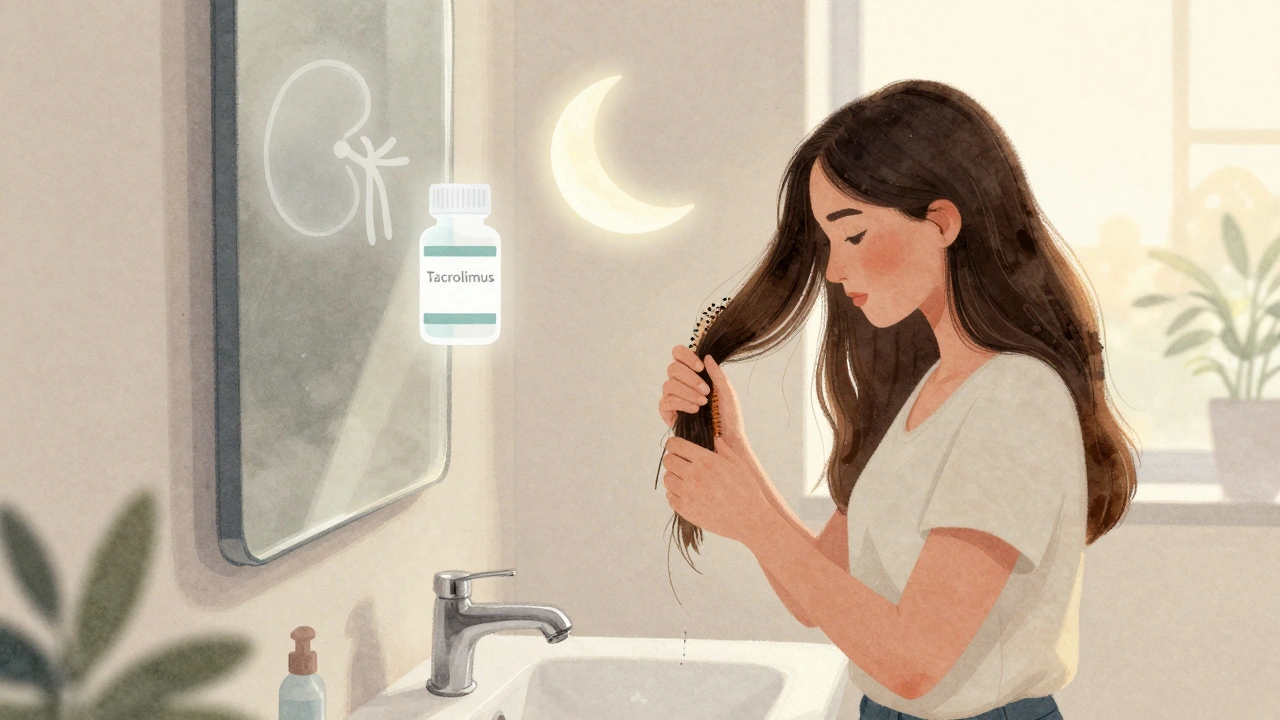
Hair Loss from Immunosuppressants: Causes and What You Can Do
Hair loss from immunosuppressants like tacrolimus is common, especially in women. Learn why it happens, which drugs cause it, and proven ways to cope - without stopping life-saving treatment.
READ MORE© 2026. All rights reserved.