
Drug-Induced Alopecia: Causes, Common Medications, and What You Can Do
When hair starts falling out after starting a new medication, it’s not always stress or aging—it could be drug-induced alopecia, hair loss triggered by pharmaceuticals rather than genetics or autoimmune conditions. Also known as medication-related hair loss, this type of shedding happens because certain drugs disrupt the normal hair growth cycle, pushing follicles into a resting phase too early. Unlike male or female pattern baldness, which creeps in slowly, drug-induced alopecia often shows up suddenly—sometimes within weeks of starting a new pill or injection.
This isn’t rare. chemotherapy, a treatment used for cancer that targets rapidly dividing cells, including hair follicles is the most well-known cause, but it’s not the only one. Blood pressure meds like beta-blockers, antidepressants such as SSRIs, acne drugs like isotretinoin, and even blood thinners can trigger shedding. Even minoxidil, a topical treatment meant to regrow hair can cause temporary shedding in the first few weeks before results appear. The key is recognizing the pattern: if your hair loss started after a new drug was added, it’s likely connected.
What makes this different from other types of hair loss is that it’s usually reversible. Once the drug is stopped—or sometimes even while still taking it, if the dose is adjusted—the follicles often bounce back. That’s why it’s critical not to quit meds on your own. Talk to your doctor. They might switch you to a different drug, lower the dose, or add a supportive treatment like biotin or gentle scalp care. The goal isn’t to avoid all meds—it’s to find the balance where your health improves without losing your hair.
You’ll find real stories and clear comparisons in the posts below: which drugs are most likely to cause shedding, how to tell if it’s drug-induced or something else, and what actually helps—like timing, supplements, or scalp massage. No fluff. Just what works, what doesn’t, and what to ask your provider next time you notice more hair in your brush than usual.
1
Dec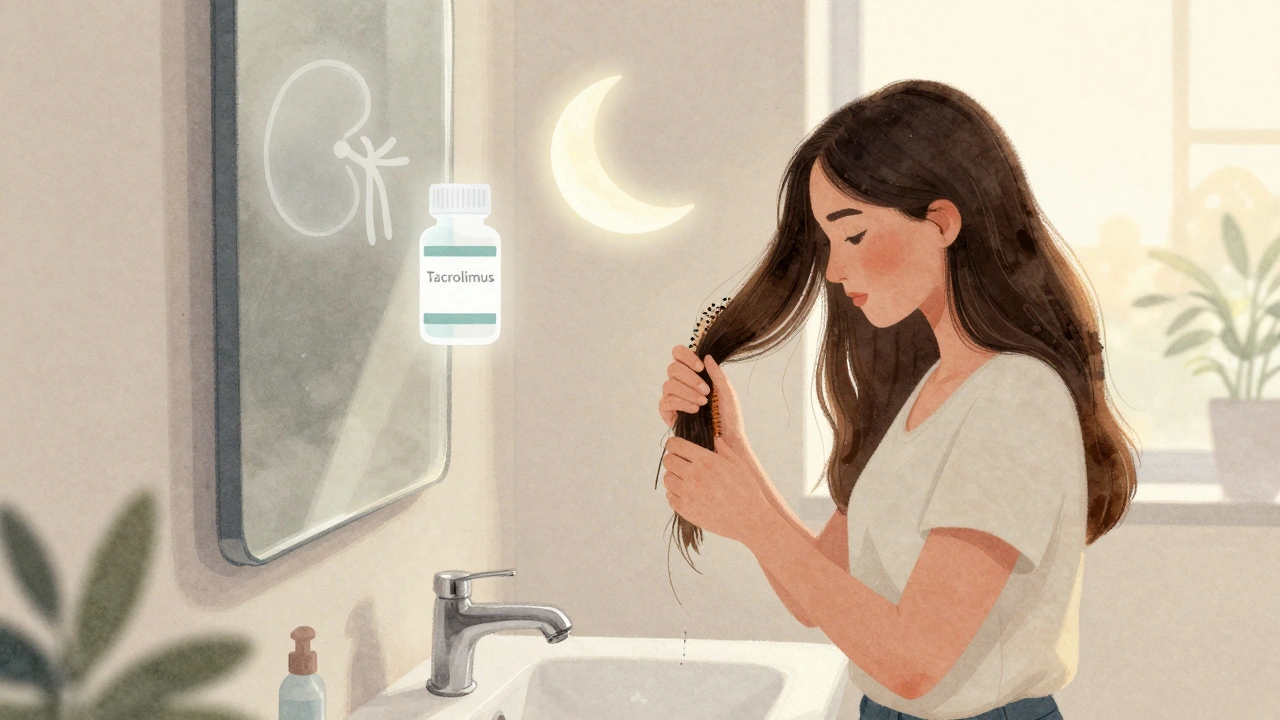
Hair Loss from Immunosuppressants: Causes and What You Can Do
Hair loss from immunosuppressants like tacrolimus is common, especially in women. Learn why it happens, which drugs cause it, and proven ways to cope - without stopping life-saving treatment.
READ MORE© 2026. All rights reserved.