
Coping with Medication Hair Loss
When you start a new medication and notice more hair in your brush or shower drain, it’s not just in your head—it’s medication hair loss, a known side effect of certain drugs that disrupt the hair growth cycle. Also known as drug-induced alopecia, it’s not rare, and it’s not always permanent. Many people assume hair loss means the drug is working, but that’s not true—it’s just a side effect, and you don’t have to live with it.
Some of the most common culprits include blood pressure meds like beta-blockers, antidepressants like SSRIs, acne treatments like isotretinoin, and even chemotherapy drugs. But here’s the thing: not everyone loses hair on these drugs. Genetics, dosage, and how long you’ve been taking the medication all play a role. If your hair started thinning within a few weeks or months of starting a new pill, there’s a good chance it’s linked. The good news? In most cases, hair grows back once you stop or switch the drug. You don’t need to wait months to see results—some people notice regrowth in as little as 3 months after adjusting their treatment.
What you can’t do is just grab any shampoo labeled "thickening" or start taking random biotin pills without knowing why the hair is falling out in the first place. That’s like trying to fix a leaky pipe by mopping the floor. You need to identify the cause. Talk to your doctor about alternatives—sometimes switching from one statin to another, or from an SSRI to a different class of antidepressant, makes all the difference. There are also proven topical treatments like minoxidil that can help slow the loss while your body adjusts. And if you’re on a long-term medication you can’t stop, like for autoimmune disease or epilepsy, there are still ways to support hair health without interfering with your primary treatment.
What you’ll find in the posts below aren’t just generic tips. These are real, specific stories and science-backed insights from people who’ve been there. You’ll see how someone managing multiple sclerosis found their hair loss stopped after switching medications. You’ll learn why a common antibiotic can trigger thinning in some, but not others. You’ll find out which supplements actually help—and which ones are just marketing hype. This isn’t about quick fixes. It’s about understanding your body’s response, knowing what questions to ask your doctor, and taking control before the stress of hair loss adds to the stress of your health condition.
1
Dec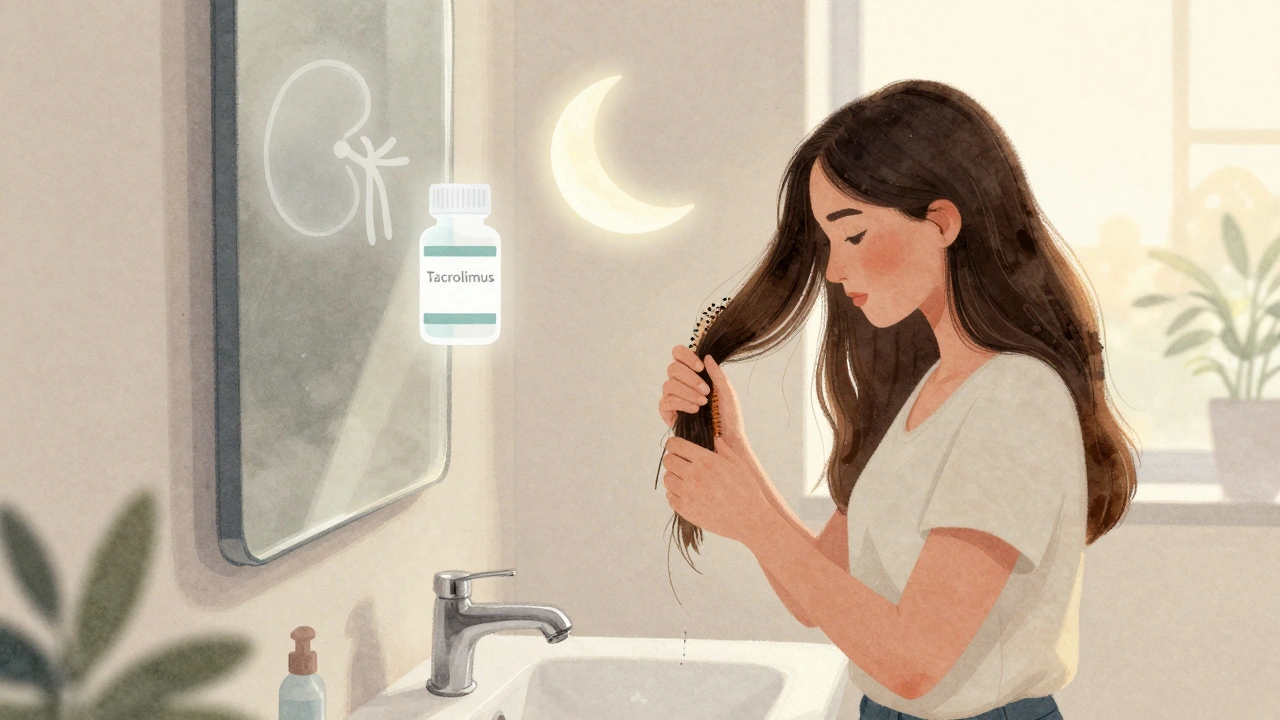
Hair Loss from Immunosuppressants: Causes and What You Can Do
Hair loss from immunosuppressants like tacrolimus is common, especially in women. Learn why it happens, which drugs cause it, and proven ways to cope - without stopping life-saving treatment.
READ MORE© 2026. All rights reserved.